
Side-by-Side IQ Profile: Deep Dive into Canine Cognition
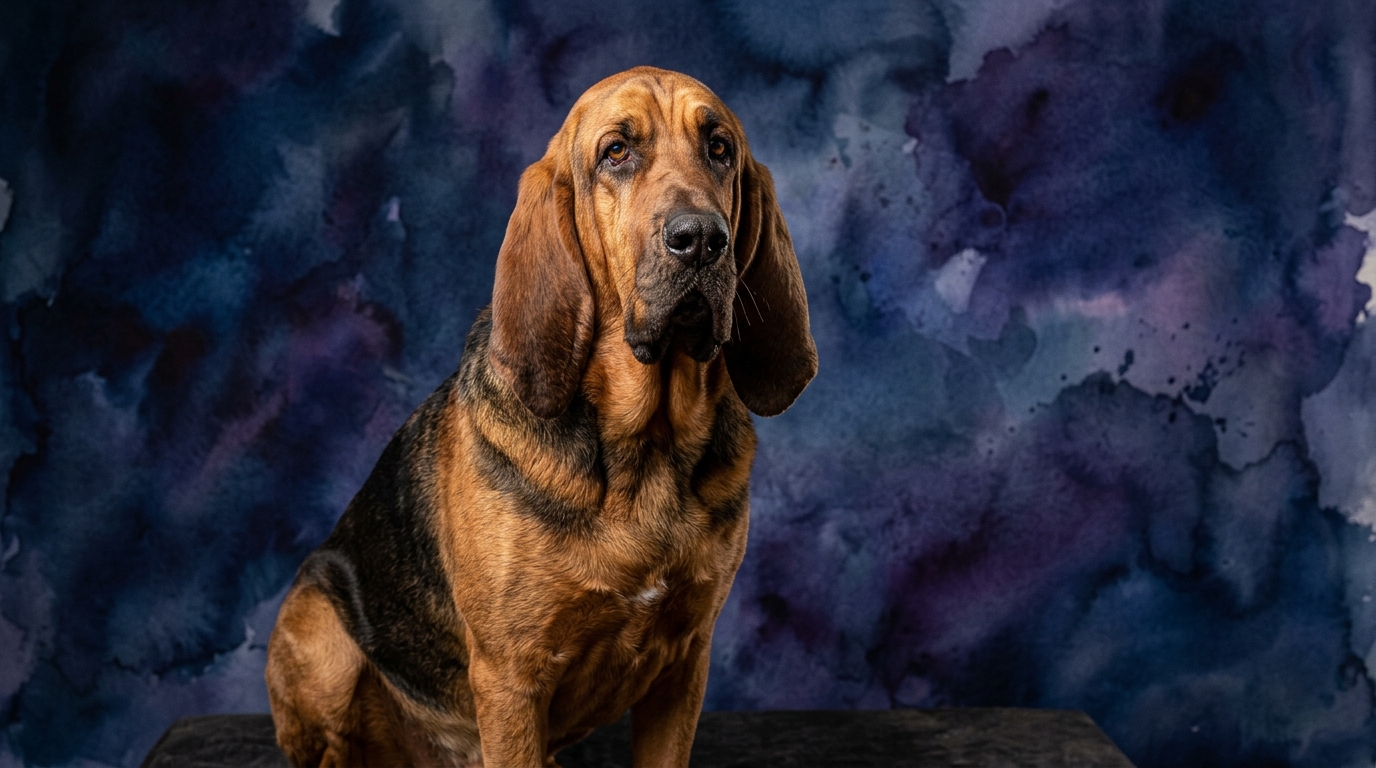
The Bloodhound's cognitive makeup is uniquely specialized, placing it at Coren rank #74. Its Problem Solving at 5/5 isn't about abstract puzzles, but an unparalleled capacity to decipher complex scent trails, piecing together fragments of information over vast distances and time. This remarkable ability is intrinsically linked to its Instinctive Drive, also a perfect 5/5, which fuels its relentless pursuit of a scent, often to the exclusion of all else. A Memory score of 5/5 further supports this, allowing it to retain and cross-reference scent profiles and spatial information for extended periods, crucial for successful tracking missions. However, its specialized focus comes with trade-offs in other areas; Training Speed registers at a low 1/5, indicating a breed that learns conventional commands slowly and often requires significant repetition and motivation aligned with its natural drives. Its Social Intelligence, at 2/5, reflects a dog that, while generally amiable, prioritizes its olfactory mission over human directives or complex social cues during work.
In contrast, the Flat-Coated Retriever presents a more balanced and cooperative cognitive profile, reflected in its Coren rank of #17. Its Problem Solving at 4/5 is robust, enabling it to quickly adapt to new situations, navigate obstacles to retrieve, and understand complex sequences of tasks. This practical intelligence is complemented by an impressive Training Speed of 4/5, meaning Flat-Coats grasp new commands and routines with relative ease and enthusiasm, eager to engage with their human partners. Their Social Intelligence, at 3/5, indicates a breed that is generally attuned to human moods and intentions, fostering strong bonds and a desire to please, making them cooperative companions. While their Instinctive Drive is a solid 3/5, guiding their natural retrieving and sporting talents, it is more amenable to direction than the Bloodhound's singular focus. Their Memory, like the Bloodhound's, is a perfect 5/5, allowing them to recall learned commands, retrieve locations, and social interactions with excellent retention.
Where the Bloodhound Excels Cognitively
The Bloodhound's cognitive strengths lie almost entirely within its extraordinary olfactory capabilities. Its 5/5 Problem Solving manifests as an unmatched ability to reconstruct a narrative from scent, identifying individual human or animal trails amidst a cacophony of other smells. This isn't just about following a line; it's about making deductions, differentiating fresh from old scent, and navigating complex environments based solely on molecular information, a truly sophisticated form of sensory processing.
Furthermore, the Bloodhound's 5/5 Instinctive Drive for scent work is a cognitive asset in itself. This intense, self-rewarding focus allows it to sustain effort for hours, overcoming physical and mental fatigue in pursuit of a trace. Coupled with its 5/5 Memory, it can recall specific scent signatures or the layouts of previously tracked areas, building a rich internal database critical for its specialized role in detection and trailing. This deep-seated, persistent drive is a hallmark of its specific cognitive power, making it an unparalleled specialist.
Where the Flat-Coated Retriever Shows Cognitive Advantage
The Flat-Coated Retriever's cognitive advantages are rooted in its adaptability and cooperative nature. Its 4/5 Problem Solving allows it to excel in practical, real-world scenarios requiring quick thinking, such as strategizing the best route to retrieve a fallen bird or understanding multi-step obedience commands. This breed demonstrates a flexible intelligence, capable of applying learned principles to novel situations, a hallmark of generalist problem-solvers.
Moreover, the Flat-Coated Retriever's 4/5 Training Speed and 3/5 Social Intelligence work synergistically, enabling it to rapidly acquire and execute a wide range of tasks and commands. This means it quickly grasps human intentions and is motivated to comply, making it highly effective in roles requiring partnership and precise execution, such as competitive obedience, agility, or assistance work. Its memory, also a 5/5, ensures that once a lesson is learned, it is retained, contributing to its consistent performance and reliability in various activities.
Which is Easier to Train, and Why?
When it comes to ease of training for conventional obedience, the Flat-Coated Retriever significantly surpasses the Bloodhound. The Flat-Coat's Training Speed of 4/5 means it picks up new commands and routines with enthusiasm and fewer repetitions. Its 3/5 Social Intelligence indicates a strong desire to engage with and please its human companions, making it highly responsive to positive reinforcement and eager to learn cooperative behaviors. Flat-Coats generally enjoy the process of training and view it as a bonding activity, readily offering behaviors for praise or rewards.
The Bloodhound, by contrast, presents a far greater challenge in traditional training. Its Training Speed of 1/5 means it learns at a much slower pace, often requiring immense patience and highly compelling motivation, particularly if the task doesn't align with its innate drives. Its 2/5 Social Intelligence means that while it is not unfriendly, its focus is intensely internal, driven by scent, rather than externally motivated by human approval. A Bloodhound on a scent trail is notoriously difficult to distract or recall, as its profound 5/5 Instinctive Drive overrides almost all other stimuli, making consistent obedience a long-term, dedicated endeavor requiring specialized understanding of its motivations.
Suitability for Active vs. Relaxed Owners
For owners seeking a highly active companion who thrives on cooperative engagement, the Flat-Coated Retriever is an excellent match. Its 3/5 Instinctive Drive translates into a need for regular physical activity and mental stimulation, but this drive is readily channeled into activities like retrieving games, long hikes, swimming, or dog sports. Their 4/5 Training Speed and 3/5 Social Intelligence mean they are keen partners for active pursuits and enjoy learning new skills alongside their owners. They require consistent interaction and thrive in environments where they are integral to family activities, making them ideal for owners who enjoy an energetic, hands-on approach to pet ownership.
The Bloodhound, while not a couch potato, requires a very specific kind of active owner. Its 5/5 Instinctive Drive and 5/5 Problem Solving, focused on scent, demand an owner who can commit to providing outlets for this profound need, such as extensive scent work, trailing, or long, exploratory walks. They are not typically suited for owners seeking a relaxed companion who is easily managed. Their lower Training Speed (1/5) and Social Intelligence (2/5) mean they are independent thinkers who prioritize their noses, making casual walks often turn into intense tracking sessions. Therefore, they are best suited for dedicated, patient owners prepared to embrace and channel their unique, powerful drive, rather than attempting to suppress it.
The Verdict: When to Choose Each Breed
The Verdict
Choose a Bloodhound if you are a dedicated, patient owner fascinated by canine scent abilities, prepared to commit to extensive scent work, and understand their profound, independent drive.
Opt for a Flat-Coated Retriever if you seek an active, cooperative, and highly trainable companion eager to engage in family activities and various dog sports.
🧠 Find Your Pet's IQ Score
Our Pet IQ Lab assessment covers 25+ tests across 5 cognitive dimensions — personalized to your breed.
Take the Full IQ Test →Frequently Asked Questions
Is a Bloodhound difficult to manage on walks?
Yes, due to their 5/5 Instinctive Drive for scent, Bloodhounds can be extremely focused on tracking during walks. This often makes them pull relentlessly and ignore commands, requiring consistent leash training and awareness from their owners.
Do Flat-Coated Retrievers require a lot of exercise?
Flat-Coated Retrievers do require a significant amount of daily exercise to satisfy their 3/5 Instinctive Drive and maintain their balanced temperament. This includes vigorous physical activity and engaging mental stimulation to keep them happy and well-adjusted.
Which breed is better for a first-time dog owner?
The Flat-Coated Retriever is generally a more suitable choice for a first-time dog owner due to its higher Training Speed (4/5) and cooperative nature. The Bloodhound's specialized drives and lower Training Speed make it a more challenging breed that benefits from experienced handling.