Side-by-Side Cognitive Profiles
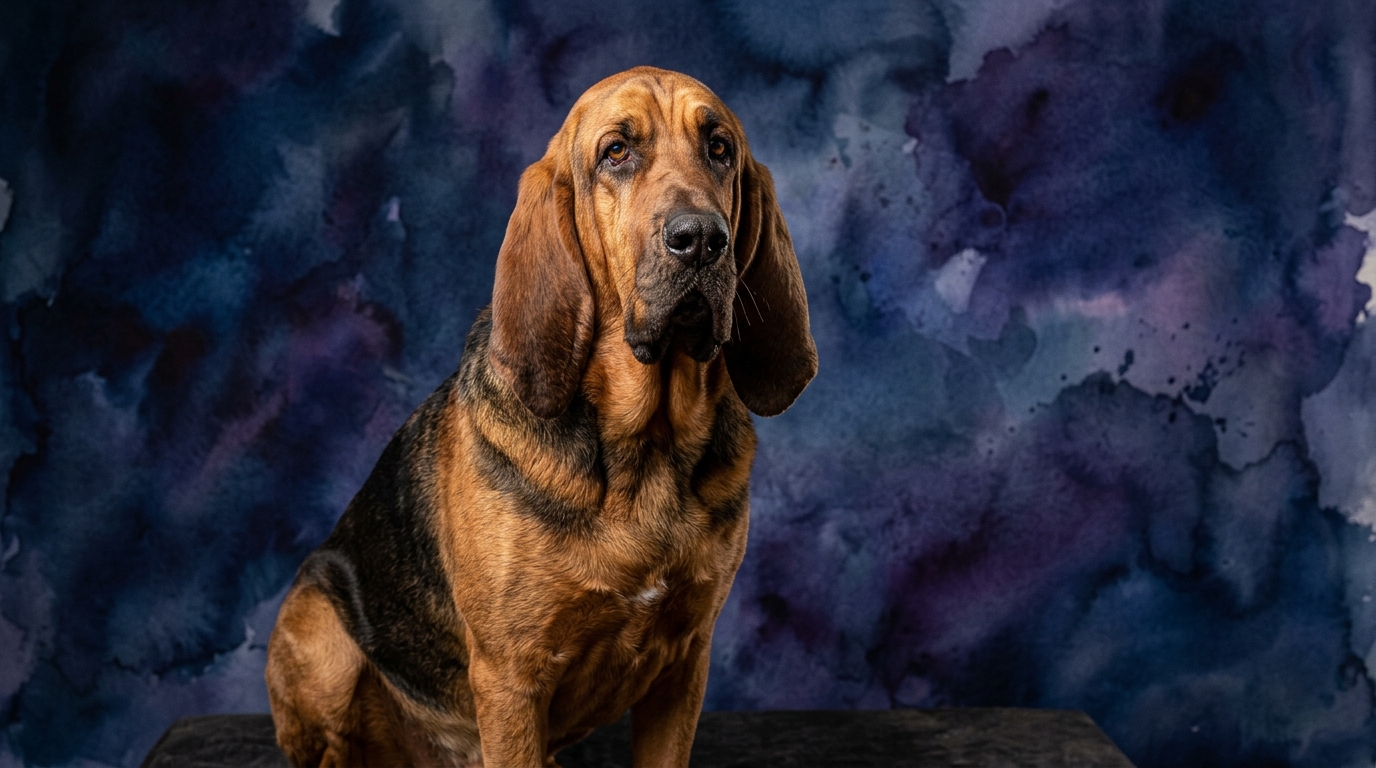
The Bloodhound, ranking #74 on the Coren scale, presents a highly specialized cognitive profile. Its Problem Solving at 5/5 manifests in an unparalleled ability to decipher and follow intricate scent trails, navigating complex environments with singular focus. Training Speed at 1/5 reflects an independent nature; while capable of learning, its attention is often tethered to olfactory inputs rather than human commands. Social Intelligence at 2/5 indicates a dog more concerned with its nose than constant, direct human interaction, though they are affectionate with their families. Instinctive Drive at 5/5 is overwhelmingly centered on scent work, a primal urge defining its existence. Memory at 5/5 is exceptional, allowing it to retain vast amounts of complex scent patterns and spatial information over long periods.
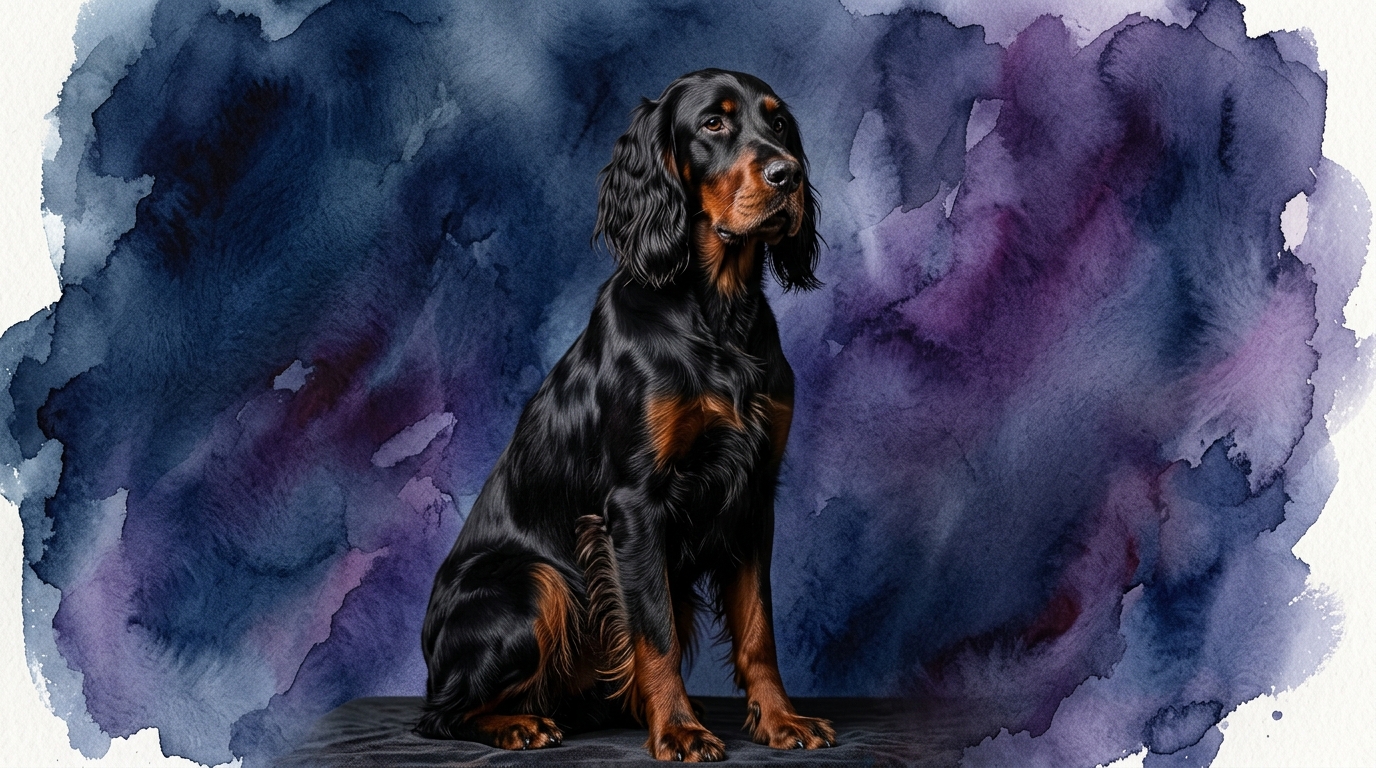
In contrast, the Gordon Setter, ranking #39 on the Coren scale, showcases a more balanced and cooperative intelligence. Its Problem Solving at 4/5 indicates a capable mind that adapts to various challenges, though perhaps without the Bloodhound's singular, specialized brilliance. Training Speed at 4/5 points to a biddable and responsive learner, eager to engage with handlers. Social Intelligence at 3/5 suggests a greater inclination for partnership and communication with humans, making them more attuned to social cues. Instinctive Drive at 3/5 encompasses a well-rounded hunting drive, including pointing and retrieving, but it is more balanced and less consuming than the Bloodhound's scent obsession. Memory at 4/5 is robust, aiding in retaining learned behaviors and environmental information.
Where the Bloodhound Excels Cognitively
The Bloodhound's cognitive superiority lies unequivocally in its specialized problem-solving related to scent. Its 5/5 Problem Solving score isn't about general logic puzzles, but rather an unparalleled capacity to interpret, follow, and differentiate between scent molecules, a complex task requiring immense focus and analytical skill. This is directly supported by its 5/5 Instinctive Drive, which channels all its mental energy into this specific domain, allowing it to navigate miles of varied terrain purely by smell, ignoring nearly all other distractions.
Furthermore, the Bloodhound's perfect 5/5 Memory score is crucial for its primary function. It can hold vast amounts of olfactory information in its mind, recalling specific scent trails, differentiating between fresh and old scents, and remembering the path it has taken. This memory isn't just about retaining commands, but about creating and recalling intricate mental maps based on a world perceived through its nose, making it an unrivaled tracker with an exceptional cognitive grasp of its olfactory environment.
Where the Gordon Setter Excels Cognitively
The Gordon Setter exhibits a clear cognitive advantage in its adaptability and responsiveness to human direction, reflected in its 4/5 Training Speed and 3/5 Social Intelligence. Unlike the Bloodhound's independent, scent-driven focus, the Gordon Setter possesses a greater inclination to engage with and understand human intentions, making it quicker to grasp and execute new commands. This cooperative spirit is a significant cognitive asset for domestic life and various dog sports, fostering a strong partnership with its owner.
Its generalist problem-solving ability (4/5) coupled with its more balanced instinctive drive (3/5) allows the Gordon Setter to excel in a wider array of tasks beyond a single, overwhelming specialization. They can apply their intellect to retrieve, point, navigate agility courses, or learn complex routines, demonstrating a versatile cognitive framework that thrives on partnership and varied mental stimulation, rather than a singular, consuming obsession.
Trainability: Bloodhound vs. Gordon Setter
The Gordon Setter is unequivocally easier to train for the average owner due to its higher Training Speed (4/5) and greater Social Intelligence (3/5). These traits mean a Gordon Setter is more likely to be attentive to its handler, eager to please, and quicker to form associations between commands and actions. Their inherent desire for companionship makes them receptive to positive reinforcement and less prone to independent decision-making during training sessions, leading to more consistent and rapid learning.
In contrast, the Bloodhound's Training Speed (1/5) and lower Social Intelligence (2/5) present a significant challenge. While not unintelligent, their intense 5/5 Instinctive Drive for scent work often overrides any desire to comply with human commands, especially when a compelling scent is present. Their problem-solving is directed inward, towards deciphering trails, rather than outward, towards understanding human expectations. Training a Bloodhound requires immense patience, consistency, and an understanding that their nose will almost always take precedence over traditional obedience.
Suitability for Active vs. Relaxed Owners
The Bloodhound distinctly suits active owners who are prepared to engage with its profound, specialized needs. An owner must embrace and channel its 5/5 Instinctive Drive and 5/5 Problem Solving into extensive scent work, tracking, or long, purposeful walks where its nose can lead. This is not a dog content with casual strolls; its mental and physical well-being depend on regular, immersive olfactory stimulation. Owners must be active in providing this outlet, understanding that "active" for a Bloodhound means mentally stimulating its primary sense through dedicated scent activities.
The Gordon Setter, with its balanced 3/5 Instinctive Drive and 4/5 Problem Solving, is better suited for active owners who enjoy a broader range of activities. They thrive on vigorous exercise like running, hiking, and participation in dog sports such as agility or obedience, which satisfy both their physical needs and their cooperative social intelligence. While they require consistent activity, their needs are more versatile than the Bloodhound's singular focus, making them adaptable to owners who enjoy varied outdoor pursuits but also appreciate a dog that can relax indoors. For truly relaxed owners, neither breed is ideal, as both require significant engagement.
The Verdict
Choose the Bloodhound if you are a dedicated, active owner passionate about engaging with a dog's profound olfactory capabilities, willing to commit to extensive scent work and patient, consistent training that respects its independent, scent-driven nature.
Choose the Gordon Setter if you seek a versatile, biddable companion for a variety of outdoor activities, valuing a dog that is eager to learn, responsive to training, and thrives on cooperative partnership.
🧠 Find Your Pet's IQ Score
Our Pet IQ Lab assessment covers 25+ tests across 5 cognitive dimensions — personalized to your breed.
Take the Full IQ Test →Frequently Asked Questions
Can Bloodhounds be good family pets despite their low social intelligence score?
Absolutely. While their social intelligence score (2/5) indicates an independent nature, Bloodhounds are typically affectionate and gentle with their families. Their focus often remains on scent, but they form strong bonds, especially with those who engage them in their natural tracking activities, showing loyalty and a calm demeanor at home.
Is a Gordon Setter's lower instinctive drive a disadvantage for a working dog?
Not at all; a 3/5 instinctive drive is still substantial and provides a strong foundation for their traditional roles as pointing and retrieving gun dogs. It simply means their drive is more balanced and less singular compared to a Bloodhound's overwhelming scent focus, making them more adaptable to various tasks and easier to manage in non-working environments while still excelling in field work.
How does a Bloodhound's exceptional memory manifest in daily life?
A Bloodhound's 5/5 memory primarily manifests in its ability to recall complex scent patterns and spatial information, crucial for tracking. In daily life, this means they can remember specific routes taken during walks, the location of favored items, or the scent of particular individuals, often demonstrating an uncanny ability to navigate or find things once they've registered the information through their powerful nose.