Side-by-Side IQ Profile: Unpacking Canine Cognition
At The Cosmic Pet Pet IQ Lab, we evaluate canine intelligence across five key dimensions: Problem Solving, Training Speed, Social Intelligence, Instinctive Drive, and Memory. These metrics offer a granular view into how different breeds perceive and interact with their world, moving beyond generic labels to reveal the specific cognitive architecture that defines each dog.
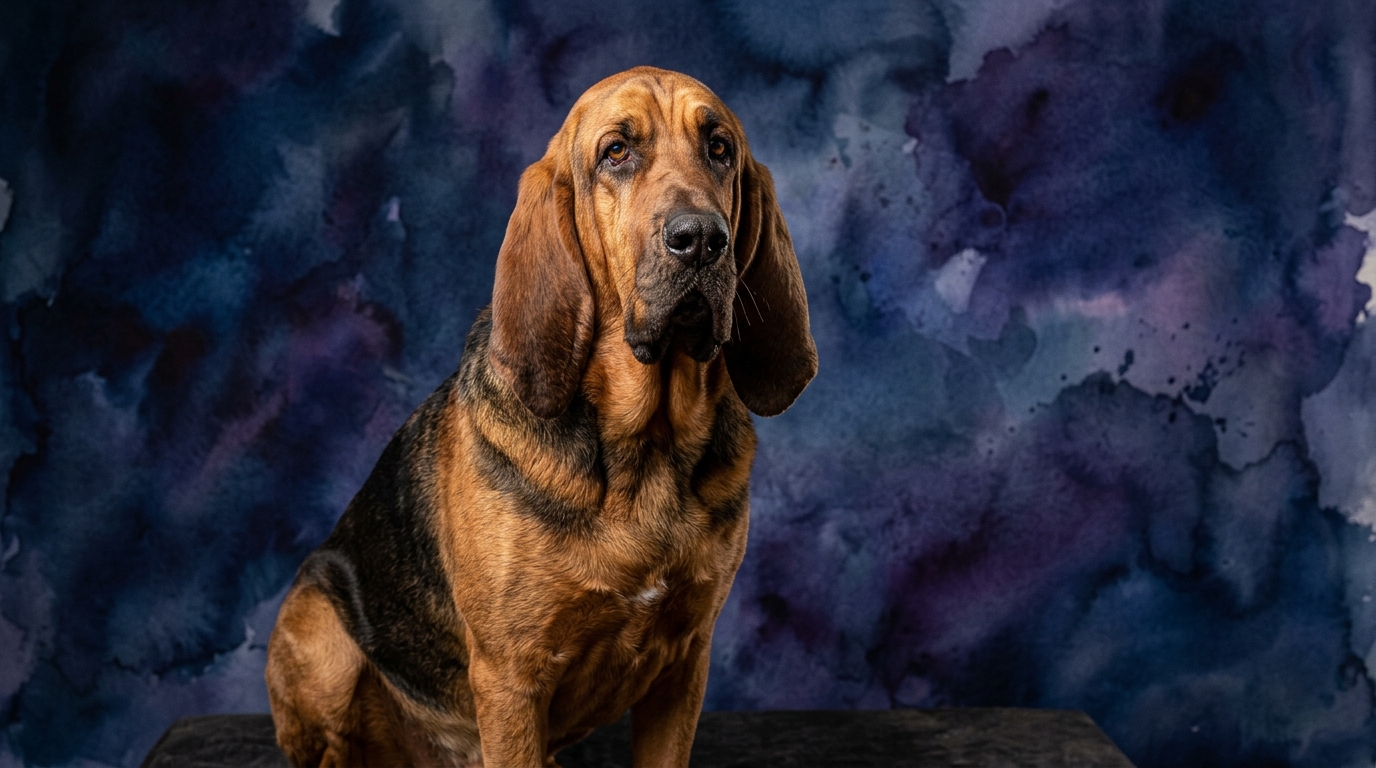
The Bloodhound, with a Coren rank of #74, presents a highly specialized cognitive profile. Their Problem Solving is rated an unparalleled 5/5, not for abstract puzzles, but for an extraordinary ability to decipher complex scent trails, navigating obstacles and time degradation to reach a conclusion. Their minds excel at pattern recognition within olfactory data. Training Speed is a low 1/5; Bloodhounds are notoriously independent thinkers, often prioritizing scent over human commands. Social Intelligence stands at 2/5; while generally amiable, their primary connection is often to the scent world rather than intricate human social cues. Their Instinctive Drive is a powerful 5/5, almost entirely dedicated to relentless scent work. Finally, their Memory is an exceptional 5/5, particularly for scent, allowing them to recall faint trails days old with remarkable accuracy.
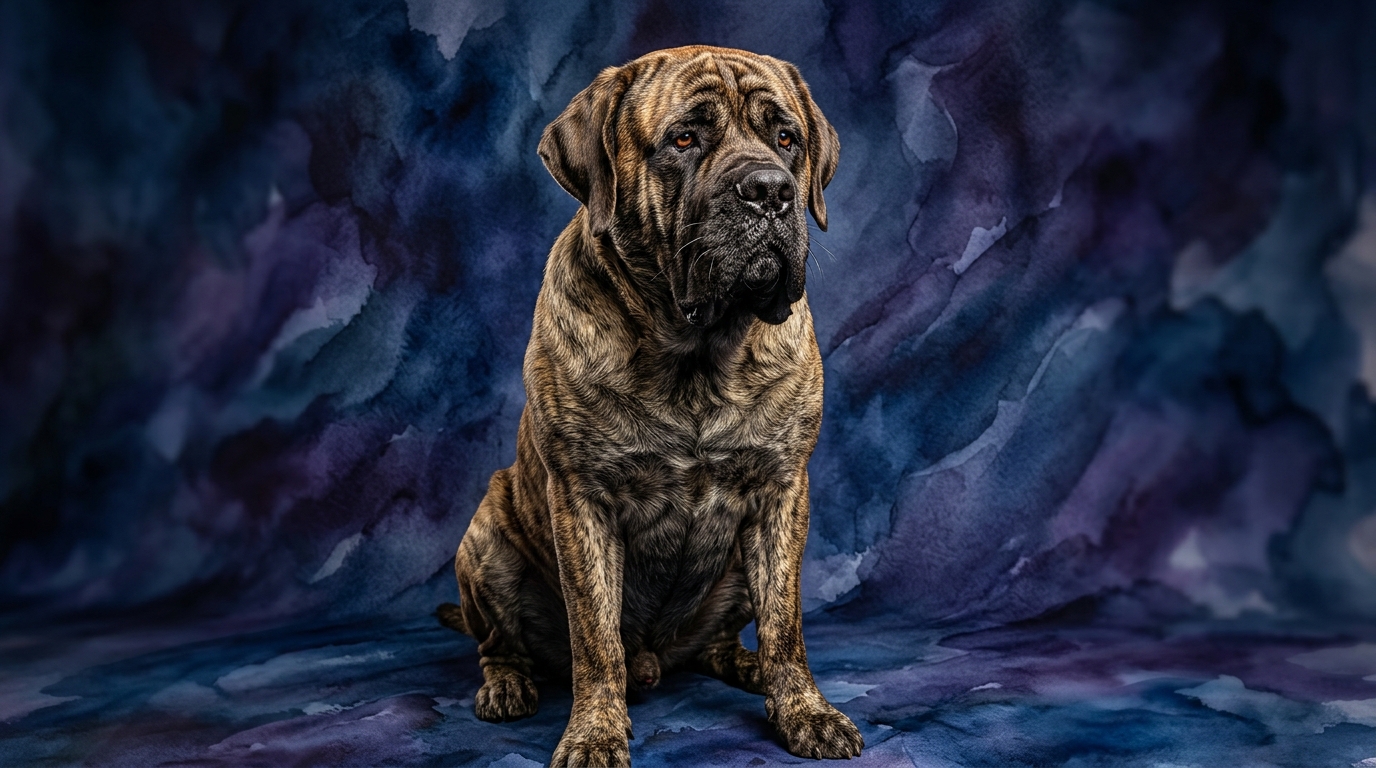
In contrast, the Mastiff, ranking #72 on the Coren scale, exhibits a more balanced and generalized intelligence. Their Problem Solving is a moderate 3/5; they approach challenges with deliberation, capable of figuring out basic environmental issues but not driven by complex intellectual pursuits. Training Speed is a respectable 3/5; they possess a solid aptitude for learning commands and routines with consistent reinforcement. Social Intelligence also scores 3/5; Mastiffs exhibit a balanced understanding of social dynamics, sensitive to their family’s moods. Their Instinctive Drive is a moderate 3/5, centered around protection and companionship rather than an overwhelming, all-consuming urge. Memory, also 3/5, is solid for routines, commands, and familiar people or places, reliably retaining learned behaviors.
Where the Bloodhound's Mind Shines Brightest
The Bloodhound's cognitive architecture is a testament to specialized evolution, where their mind achieves extraordinary feats within its particular domain. Their problem-solving ability, rated at an unparalleled 5/5, isn't about abstract logic puzzles but the intricate deciphering of the world through scent. Imagine a dog capable of reconstructing a narrative purely from microscopic odor particles; this is the Bloodhound's genius. They excel at pattern recognition within a vast, invisible tapestry of smells, discerning individual human scent from background environmental odors, even hours or days later. This relentless focus on olfactory data is underpinned by their perfect 5/5 memory, which allows them to catalog and recall specific scent profiles and trail patterns with astonishing accuracy. A Bloodhound doesn't just follow a scent; it processes, interprets, and remembers the nuances of that trail, making adjustments for wind, terrain, and time. Their 5/5 instinctive drive fuels this entire process, providing an unwavering persistence that allows them to remain focused on a singular task for extended periods, ignoring distractions that would derail other breeds. This combination of intense drive, precise problem-solving through scent, and exceptional olfactory memory makes the Bloodhound a peerless tracker, operating on a cognitive plane few other animals can approach. Their triumphs are in the meticulous, almost scientific, pursuit of an invisible truth.
The Mastiff's Cognitive Strengths: A Balanced Intellect
The Mastiff's cognitive strengths lie in a more generalized, yet profoundly effective, intelligence suited to their role as a steadfast companion and guardian. Their 3/5 rating in social intelligence reflects a balanced capacity to understand and respond to human and canine social cues. Unlike the Bloodhound, whose world is often dominated by scent, the Mastiff is attuned to the emotional landscape of its family, capable of discerning shifts in mood or potential threats to their loved ones. This social awareness is crucial for their protective instincts, allowing them to act judiciously rather than indiscriminately. Their 3/5 problem-solving ability, while not specialized like the Bloodhound's, allows them to navigate everyday situations with calm deliberation. They can learn to open gates, understand household routines, and adapt to new environments without significant distress. This practical intelligence, combined with their 3/5 training speed, means they are receptive to learning boundaries and commands that contribute to a harmonious household. They possess a willingness to please and a desire to cooperate, which makes them amenable to direction. Their moderate 3/5 instinctive drive is channelled towards loyalty and protection, providing a stable foundation for their cognitive processes without overwhelming other aspects of their intellect. A Mastiff's memory, also rated 3/5, is reliable for retaining learned behaviors, recognizing familiar faces, and remembering the rhythm of their daily lives, all contributing to their role as a dependable and integrated family member. Their cognitive wins are rooted in their ability to integrate into human society with a thoughtful, stable presence.
Training Aptitude: Independence vs. Cooperation
When it comes to training, the Bloodhound and Mastiff present starkly contrasting experiences, primarily due to their differing scores in Training Speed and Instinctive Drive. The Bloodhound, with a Training Speed of 1/5, is often described as challenging to train in conventional obedience. This isn't due to a lack of capacity to learn, but rather an overwhelming 5/5 instinctive drive for scent work. When a Bloodhound's nose hits a compelling trail, their entire cognitive focus narrows, making human commands seem irrelevant. They learn at their own pace, and often their "learning" is about perfecting their tracking technique rather than sitting on command. Their independence means they require immense patience, consistent motivation, and a trainer who understands how to leverage their natural drive rather than fighting against it. They are not easily swayed from their olfactory mission, making recall or heel commands particularly difficult in stimulating environments.
In contrast, the Mastiff's 3/5 Training Speed and 3/5 Instinctive Drive make them generally more amenable to traditional training. While they are not hyper-eager to please or lightning-fast learners, they possess a cooperative spirit and a desire to understand what is expected of them. Their moderate drive is channeled towards companionship and protection, meaning they are more likely to pay attention to their human's directives. They respond well to positive reinforcement, clear communication, and a calm, consistent approach. Mastiffs learn routines and commands steadily, retaining them reliably due to their 3/5 memory. Their social intelligence (3/5) also plays a role, as they are more attuned to their owner's expressions and tone, which aids in the communication crucial for effective training. An owner will find a Mastiff generally more willing to engage in structured learning sessions and less prone to being singularly distracted by an environmental stimulus compared to a Bloodhound.
Lifestyle Compatibility: Active Explorers vs. Relaxed Companions
The cognitive profiles of the Bloodhound and Mastiff directly translate into different lifestyle requirements for their owners. The Bloodhound, with its unparalleled 5/5 instinctive drive and 5/5 memory for scent, is undeniably suited for active owners who can channel this intense mental energy. These dogs are not content with a simple walk around the block; their minds crave the challenge of following a trail, deciphering complex scent puzzles, and engaging in prolonged, focused "work." Owners must be prepared for extensive mental stimulation that involves scent games, tracking exercises, or even participation in search and rescue. Their independent nature and low social intelligence (2/5) mean they may not be constantly looking for human interaction during their "work" but require an owner who understands and respects their specialized needs. A Bloodhound thrives when its nose is engaged, and failing to provide this outlet can lead to a frustrated, restless dog. They are for owners who enjoy outdoor adventures, problem-solving alongside their canine partner, and can commit to daily, engaging mental and physical exercise.
Conversely, the Mastiff's more balanced cognitive profile — with moderate scores across all dimensions — makes them an ideal fit for relaxed owners seeking a devoted, calm companion. Their 3/5 instinctive drive is channeled towards loyalty and companionship, meaning they are content with a comfortable routine and less demanding activity. While they still require regular, moderate exercise to maintain physical health, their mental stimulation needs are often met through interaction with their family, gentle training sessions, and observing their environment. Their 3/5 social intelligence ensures they are attuned to household dynamics and happy to simply "be" with their people. They are not prone to the relentless, single-minded pursuits of a Bloodhound. Mastiffs are well-suited to households where a stable, predictable environment is valued, and where the dog's primary role is that of a gentle, watchful presence. They prefer lounging by their owners' side to embarking on long, strenuous expeditions, making them perfect for those who appreciate a serene, affectionate, and low-key canine partner.
The Verdict
Choose a Bloodhound if you are an active, dedicated owner passionate about scent work, prepared to channel their intense tracking drive and independent spirit into engaging, specialized activities.
Opt for a Mastiff if you desire a calm, devoted companion who thrives on a relaxed routine, values family interaction, and offers a watchful, gentle presence in a stable home environment.
🧠 Find Your Pet's IQ Score
Our Pet IQ Lab assessment covers 25+ tests across 5 cognitive dimensions — personalized to your breed.
Take the Full IQ Test →Frequently Asked Questions
Are Bloodhounds difficult to live with due to their independence?
Bloodhounds can be challenging if their innate drive isn't understood and met. Their independence means they follow their nose above all else, requiring secure environments and dedicated scent work to prevent them from "following a lead" out of the yard. With the right outlet, they are amiable and gentle companions.
Do Mastiffs require a lot of space for their size?
While large, Mastiffs are surprisingly adaptable to smaller spaces, provided they get moderate daily exercise. They are not high-energy dogs and are often content to lounge indoors, making them suitable for apartments if their owners commit to regular walks and mental engagement.
Which breed is better with children?
Both breeds can be good with children, but in different ways. Mastiffs, with their higher social intelligence and balanced drive, are often gentle giants who are patient and protective. Bloodhounds are generally good-natured but their intense focus on scent can make them less aware of small children during their "working" moments, requiring supervision.