
Side-by-Side IQ Profile
**Bloodhound (Coren Rank #74)**: This breed is a testament to specialized cognitive function. Their **Problem Solving (5/5)** is almost entirely dedicated to olfactory puzzles, demonstrating an unparalleled ability to interpret and follow complex scent trails over vast distances. Their **Training Speed (1/5)** is low; their intense scent focus often translates to an independent streak, making general obedience challenging as they prioritize their nose over human commands. **Social Intelligence (2/5)** is moderate; while affectionate, they are less attuned to subtle human emotional shifts compared to other breeds, with their world dominated by scent. Their **Instinctive Drive (5/5)** is extraordinary and relentless, pushing them to track with singular focus. Finally, their **Memory (5/5)** is exceptional for scent profiles, allowing them to recall and differentiate countless odors, crucial for their tracking prowess.
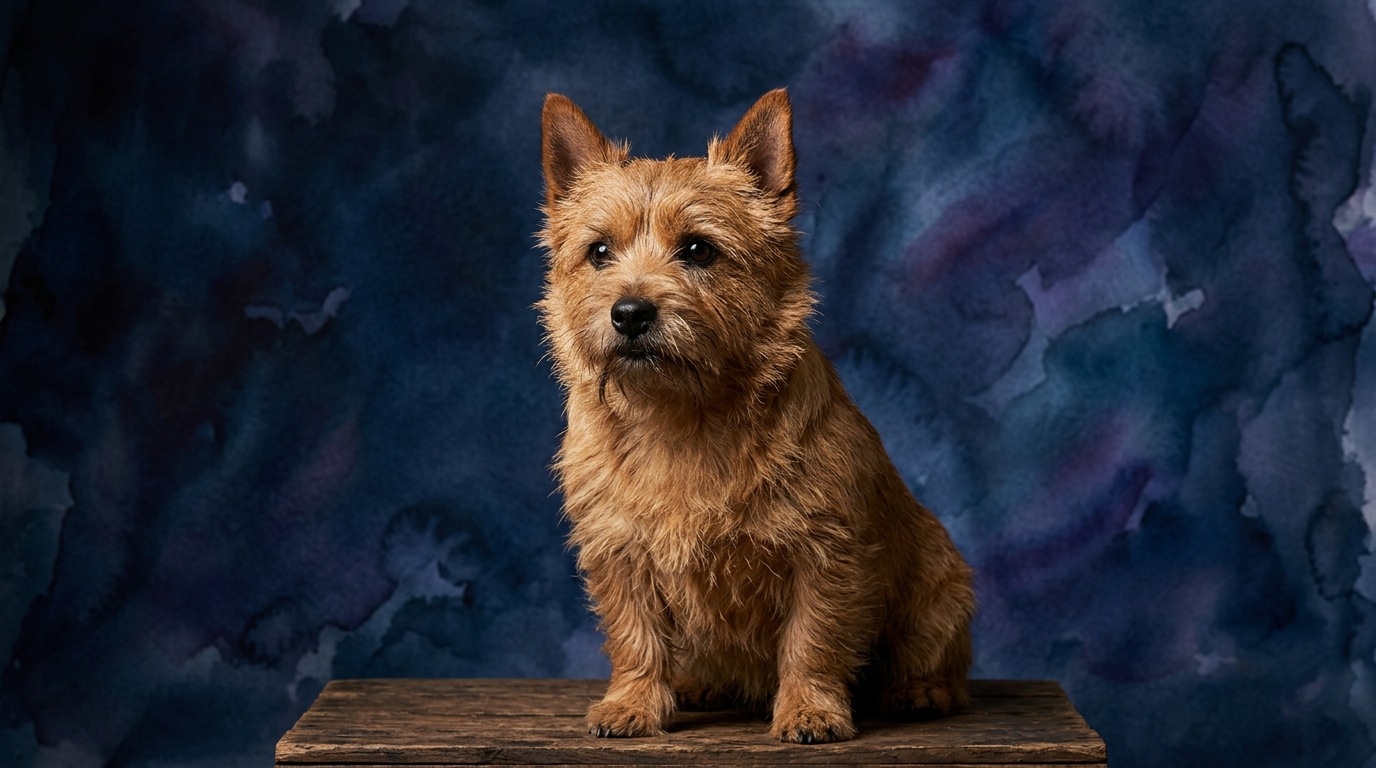
**Norwich Terrier (Not Coren-Ranked)**: The Norwich Terrier presents a more balanced cognitive profile. Their **Problem Solving (3/5)** shows a moderate capacity for figuring out practical challenges, like accessing desired objects or navigating household obstacles, demonstrating adaptable but not specialized intelligence. **Training Speed (3/5)** is average; they are generally receptive to learning commands and tricks, responding well to positive reinforcement without being exceptionally quick or resistant. **Social Intelligence (3/5)** is also moderate, enabling them to form strong bonds with their families and interpret human moods reasonably well, making them companionable. Their **Instinctive Drive (3/5)** reflects a typical terrier prey drive, particularly towards small critters, but it's manageable and less overwhelming than the Bloodhound's singular focus. Their **Memory (3/5)** is average, allowing them to recall learned commands, routines, and familiar people and places, supporting their general adaptability.
Where Bloodhound Wins Cognitively
The Bloodhound's cognitive superiority lies in its specialized sensory processing and unwavering focus. Their olfactory problem-solving is unmatched; they don't just follow a trail, they meticulously reconstruct a narrative of scents, distinguishing age, direction, and even individual nuances from a complex tapestry of smells. This deep analytical ability, combined with a 5/5 memory for scent profiles, allows them to retain and recall an astonishing volume of olfactory data, making them the ultimate biological tracking device. While their world is primarily scent-driven, within that domain, their mental acuity is breathtaking, demonstrating profound persistence and a singular dedication to task completion.
Where Norwich Terrier Wins Cognitively
The Norwich Terrier's cognitive strengths emerge from its balanced and adaptable intelligence, offering a more versatile mental profile than the Bloodhound's intense specialization. With a 3/5 in problem-solving, training speed, social intelligence, instinctive drive, and memory, the Norwich excels in its all-around competence. They can navigate various social situations with moderate understanding, learn a range of commands without extreme difficulty, and adapt to diverse living environments. Their cognitive wins are in their ability to integrate seamlessly into a human household, being responsive companions who can engage in varied activities, from basic obedience to playful interactions, rather than being singularly driven by one overwhelming instinct.
Which is Easier to Train and Why
Comparing training ease reveals a stark contrast driven by their core instinctive drives and training speeds. The Norwich Terrier, with a 3/5 training speed, is generally easier to train for conventional obedience. They are motivated by praise and treats, and their instinctive drive (3/5) is manageable, allowing them to focus on human instruction without being constantly overwhelmed by an external stimulus. Their moderate social intelligence also means they are more inclined to work cooperatively with their trainers. In contrast, the Bloodhound's 1/5 training speed and 5/5 instinctive drive present significant challenges for general obedience. Their powerful scent drive means that once they catch a whiff of an interesting odor, their focus on human commands diminishes drastically. Training a Bloodhound often means working *with* their nose, rather than against it, making them exceptional at tracking but less amenable to 'sit' or 'stay' in a distracting environment. Their independence stems directly from this profound, inherent drive, making consistent, generalized training a test of patience and creativity.
Which Suits Active Owners vs Relaxed Owners
The choice between these two breeds heavily depends on an owner's lifestyle and what they seek in a canine companion. The Bloodhound, with its immense instinctive drive and problem-solving prowess centered on scent, is ideal for active owners who are prepared to engage deeply with their dog's primary cognitive function. This means owners must be committed to providing regular, extensive opportunities for scent work, long walks where the dog can follow its nose, or even participation in tracking sports. A 'relaxed' owner who cannot meet this intense mental and physical demand would find a Bloodhound challenging, as their unfulfilled drives can lead to frustration and undesirable behaviors. Conversely, the Norwich Terrier, with its balanced intelligence and moderate drives, suits a broader range of owners. While they enjoy activity, their needs are more flexible. They thrive with owners who provide regular walks, playtime, and mental stimulation through training and social interaction, but they are equally content to relax indoors. They are an excellent fit for owners seeking a companionable dog that can adapt to a moderately active household without requiring a specialized outlet for an overwhelming instinct.
The Verdict
Choose a Bloodhound if you are a dedicated, active owner passionate about engaging with a dog's singular, powerful scenting abilities and are prepared for a highly specialized companion.
Opt for a Norwich Terrier if you seek a versatile, adaptable, and moderately active companion dog that integrates smoothly into family life and offers a balanced cognitive profile.
🧠 Find Your Pet's IQ Score
Our Pet IQ Lab assessment covers 25+ tests across 5 cognitive dimensions — personalized to your breed.
Take the Full IQ Test →Frequently Asked Questions
Is a Bloodhound difficult to live with due to its high instinctive drive?
A Bloodhound's intense instinctive drive (5/5) means they require significant mental and physical engagement, primarily through scent work. Without proper outlets, their drive can manifest as stubbornness or a tendency to wander, making them challenging for owners unprepared for their specialized needs.
Can Norwich Terriers be trained for advanced tasks, or are they better suited for basic obedience?
With a 3/5 in both problem-solving and training speed, Norwich Terriers are capable of learning beyond basic obedience. While they may not excel in highly specialized roles like the Bloodhound, they can enjoy and succeed in activities like agility, trick training, or even some forms of scent games, given consistent and engaging training.
How does social intelligence impact the companionship experience with these breeds?
The Bloodhound's lower social intelligence (2/5) means they are affectionate but often more focused on their environment's scents than on human social cues, making them less 'people-pleasing'. The Norwich Terrier's moderate social intelligence (3/5) means they are generally more attuned to their human companions, enjoying interaction and fitting well into family dynamics as responsive and engaged companions.