Side-by-Side Cognitive Profiles
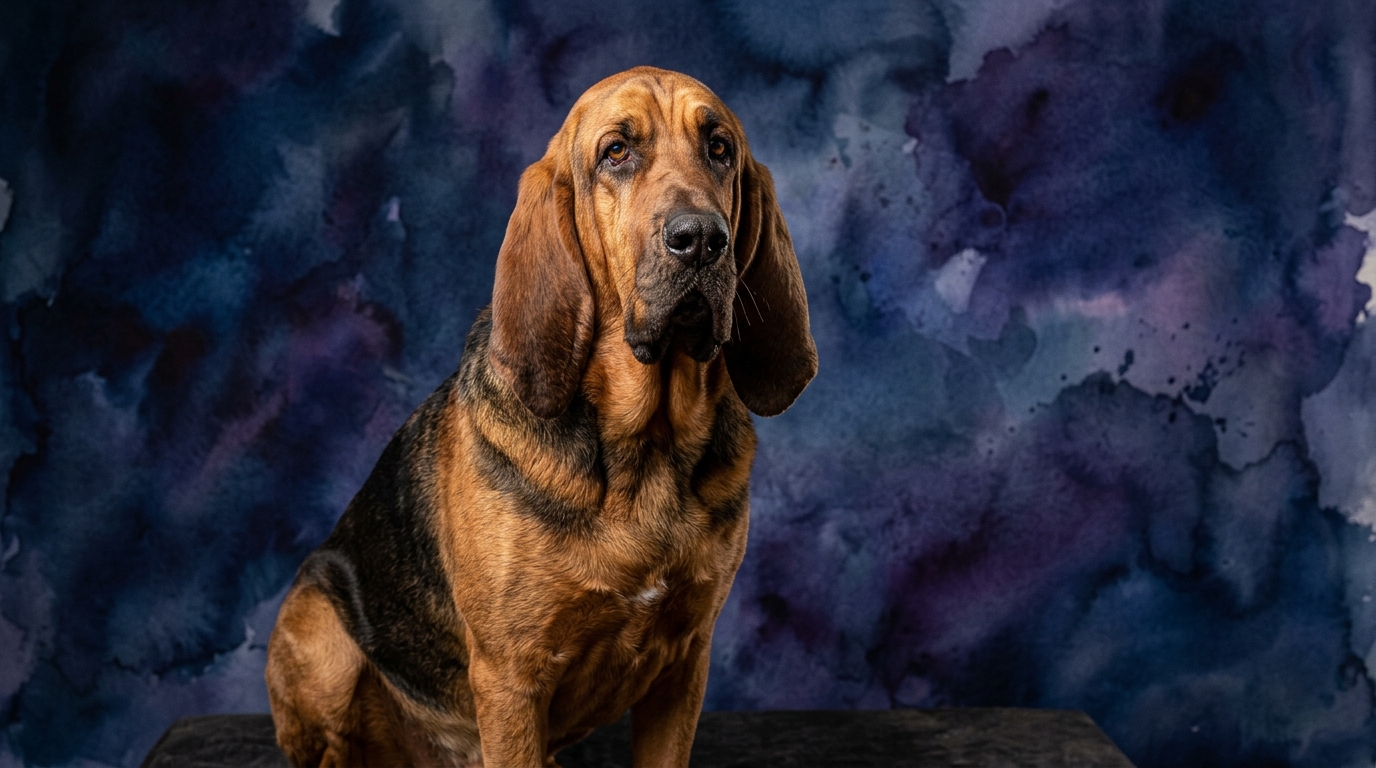
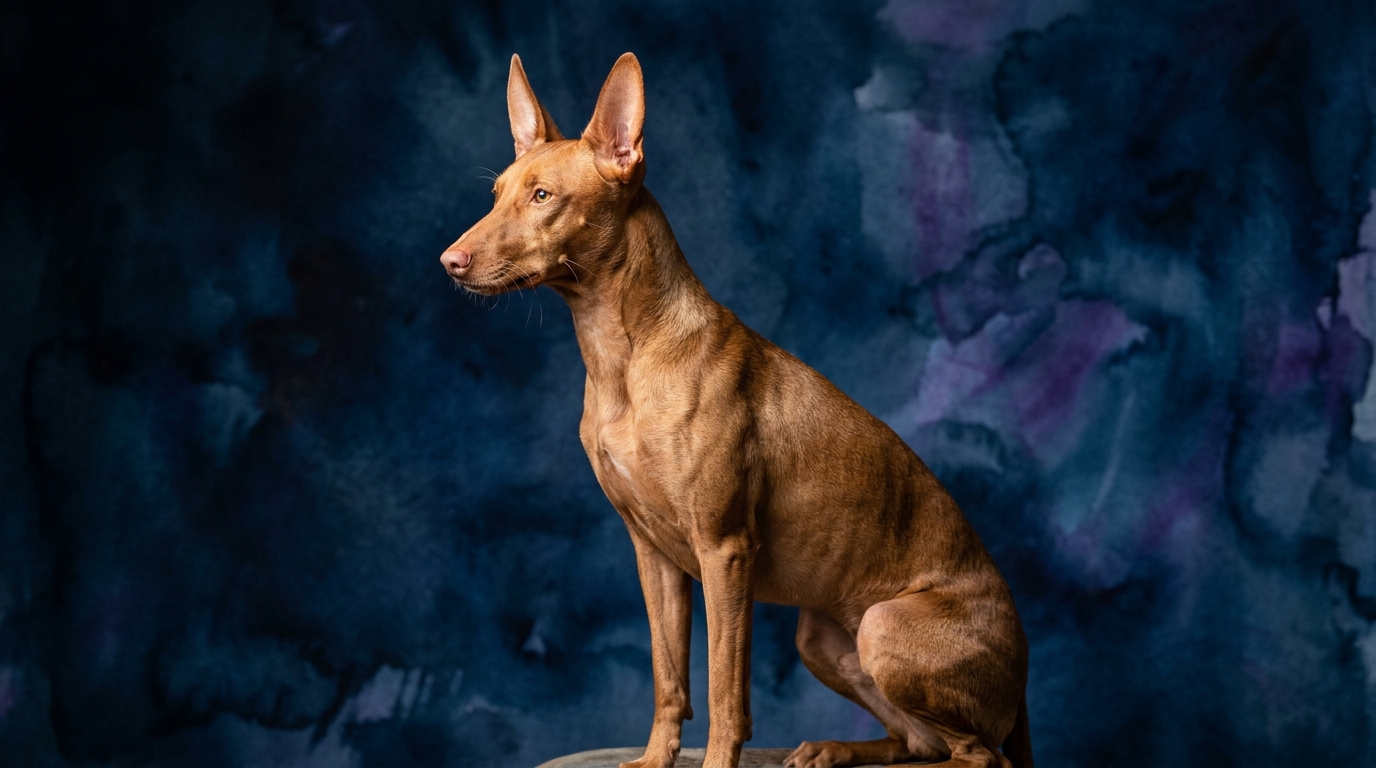
The Cosmic Pet Pet IQ Lab provides a unique framework to compare the intricate mental landscapes of different breeds. Here, we dissect the five core cognitive dimensions for both the Bloodhound and the Pharaoh Hound, revealing their inherent aptitudes.
Bloodhound:
Problem Solving (5/5): This isn't about complex puzzles, but the sophisticated, multi-stage deduction involved in tracking. A Bloodhound processes scent, terrain, and wind to reconstruct a narrative, constantly adapting their search strategy based on new data. It's real-time environmental analysis at its finest.
Training Speed (1/5): Despite their problem-solving prowess, Bloodhounds are notoriously deliberate learners for formal obedience. Their singular focus on scent often overrides human directives, making consistent, repetitive training essential. They grasp commands, but executing them precisely and quickly is often secondary to their primary drive.
Social Intelligence (2/5): Bloodhounds are amiable but not typically highly attuned to subtle human social cues. They are generally tolerant and gentle, yet their world often revolves around scent, making them somewhat oblivious or indifferent to nuanced social dynamics that other breeds might keenly observe.
Instinctive Drive (5/5): This is the Bloodhound's defining characteristic. Their olfactory drive is unparalleled, forming the bedrock of their existence. Every other cognitive function seems to serve this instinct to track, making them relentless and single-minded when a scent trail is present, profoundly shaping their behavior.
Memory (5/5): Their memory is phenomenal, especially concerning scent. A Bloodhound can recall a specific scent profile and its associated path even after considerable time, making them invaluable in tracking lost individuals. This long-term, detailed olfactory memory underpins their working ability.
Pharaoh Hound:
Problem Solving (3/5): Pharaoh Hounds exhibit a moderate capacity for problem-solving, often applying observation and trial-and-error. They can figure out how to open gates or retrieve toys from challenging spots, but their solutions are typically more straightforward and less analytical than a Bloodhound's tracking deductions.
Training Speed (3/5): These sighthounds possess a moderate training speed. They learn commands with reasonable repetition and positive reinforcement, responding well to engaging methods. While not as quick as some highly biddable breeds, they are generally cooperative and eager to please their human companions.
Social Intelligence (3/5): Pharaoh Hounds are quite socially aware, often forming strong bonds with their families and being sensitive to household moods. They can read human body language and vocal tones to a fair degree, adapting their behavior accordingly and communicating well within their social group.
Instinctive Drive (3/5): Their primary instinctive drive is chasing. As sighthounds, they are powerfully compelled by movement, possessing a strong prey drive. While not as all-consuming as the Bloodhound's scent drive, it significantly influences their behavior, necessitating secure enclosures and leash walking.
Memory (3/5): Pharaoh Hounds have a solid memory for routines, commands, and familiar people and places. They remember past interactions and learned behaviors effectively. Their memory serves practical daily living and social interactions well, though it lacks the specialized detail of the Bloodhound's olfactory recall.
Where the Bloodhound Excels Cognitively
The Bloodhound’s unparalleled strength lies in its specialized problem-solving and memory, both intrinsically linked to its olfactory capabilities. Their ability to disentangle and follow a faint, aged scent trail across varied environments, ignoring countless distractions, is a feat of cognitive processing few breeds can match. This isn't just about sniffing; it's about forming hypotheses, testing them, and adapting their search strategy in real-time. Their long-term scent memory allows them to retain and recall specific odor profiles over extended periods, making them the gold standard for tracking and forensics. This deep, analytical focus on a single, complex task profoundly sets them apart.
Where the Pharaoh Hound Excels Cognitively
The Pharaoh Hound excels in areas requiring more generalized adaptability and a balanced blend of cognitive functions. While their individual scores might not reach the Bloodhound's peak in specific domains, their overall cognitive profile is more evenly distributed, making them more versatile in typical companion dog scenarios. Their moderate social intelligence allows them to integrate more seamlessly into human family dynamics, often being more responsive to subtle social cues. Their moderate training speed, combined with a willingness to engage, means they can learn a broader range of tasks and tricks with less specialized effort, making them a more flexible learner for diverse activities beyond a singular drive.
Trainability: Bloodhound vs. Pharaoh Hound
Based on their cognitive profiles, the Pharaoh Hound presents an easier training experience for most owners. The Pharaoh Hound's training speed of 3/5, coupled with a social intelligence of 3/5, indicates a dog generally more receptive to human direction and deriving satisfaction from pleasing its handler. They learn commands at a reasonable pace and are often motivated by praise, treats, and play. In contrast, the Bloodhound's training speed of 1/5 is a significant hurdle. Their all-consuming instinctive drive (5/5) to track means that once a scent is engaged, human commands often become secondary. Training a Bloodhound requires immense patience, consistency, and a deep understanding of scent work principles to channel their drive, rather than fight against it. Their lower social intelligence also means they might be less motivated by nuanced human approval.
Lifestyle Match: Active vs. Relaxed Owners
For active owners seeking a highly specialized partner, the Bloodhound is an exceptional match, particularly if that activity involves scent work, tracking, or long, deliberate explorations. Their instinctive drive (5/5) means they require significant mental and physical engagement tailored to their olfactory needs, making them unsuitable for purely relaxed, sedentary lifestyles. Owners must be prepared for their single-minded pursuit of scent. The Pharaoh Hound, with its moderate instinctive drive (3/5) for chasing and more balanced energy levels, suits active owners who enjoy varied activities like lure coursing, agility, or long, brisk walks and runs. They thrive on physical exercise but are also content to relax indoors after their needs are met, making them adaptable to a broader range of active but not necessarily specialized lifestyles.
The Verdict
Choose a Bloodhound if you are a dedicated, patient owner passionate about harnessing a dog's unparalleled olfactory capabilities for tracking, search and rescue, or highly specialized scent work.
Choose a Pharaoh Hound if you seek an elegant, active companion who is moderately trainable, socially aware, and enjoys a variety of physical activities with a balanced temperament.
🧠 Find Your Pet's IQ Score
Our Pet IQ Lab assessment covers 25+ tests across 5 cognitive dimensions — personalized to your breed.
Take the Full IQ Test →Frequently Asked Questions
Do Bloodhounds ever ignore commands?
Yes, Bloodhounds, with their overwhelming instinctive drive for scent (5/5), can become so engrossed in a trail that they appear to ignore commands. This isn't defiance, but rather their primary cognitive focus overriding other inputs, requiring consistent, high-value reinforcement to regain attention.
Are Pharaoh Hounds good with children?
Pharaoh Hounds, possessing a moderate social intelligence (3/5), are generally good with respectful children, often forming close bonds. Their playful nature and sensitivity to family dynamics make them suitable, though supervision is always advised due to their sighthound instincts.
How much exercise do these breeds need?
Bloodhounds require extensive, purposeful exercise, ideally involving scent work or long, meandering walks where they can engage their powerful nose for hours. Pharaoh Hounds need regular, vigorous exercise like running or lure coursing to satisfy their chasing instinct, but also enjoy periods of relaxation.