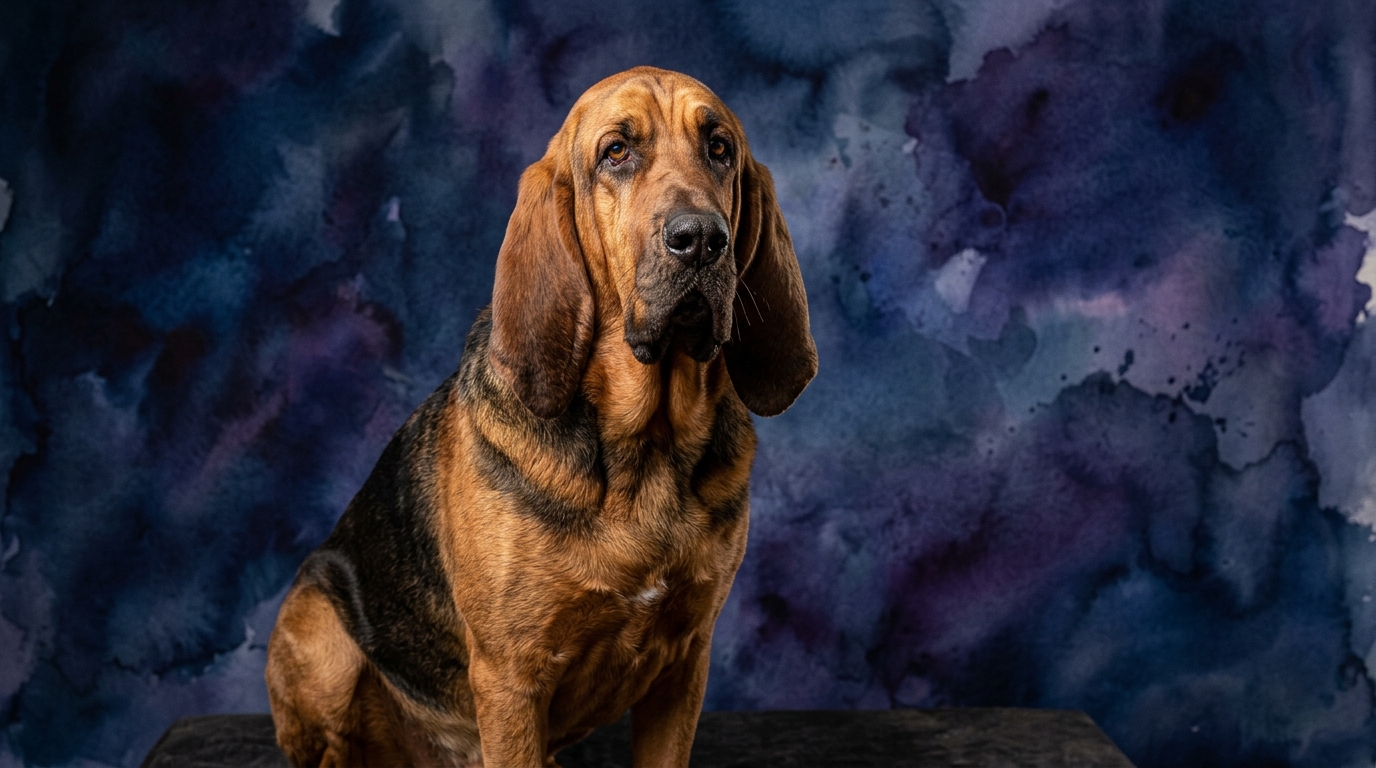
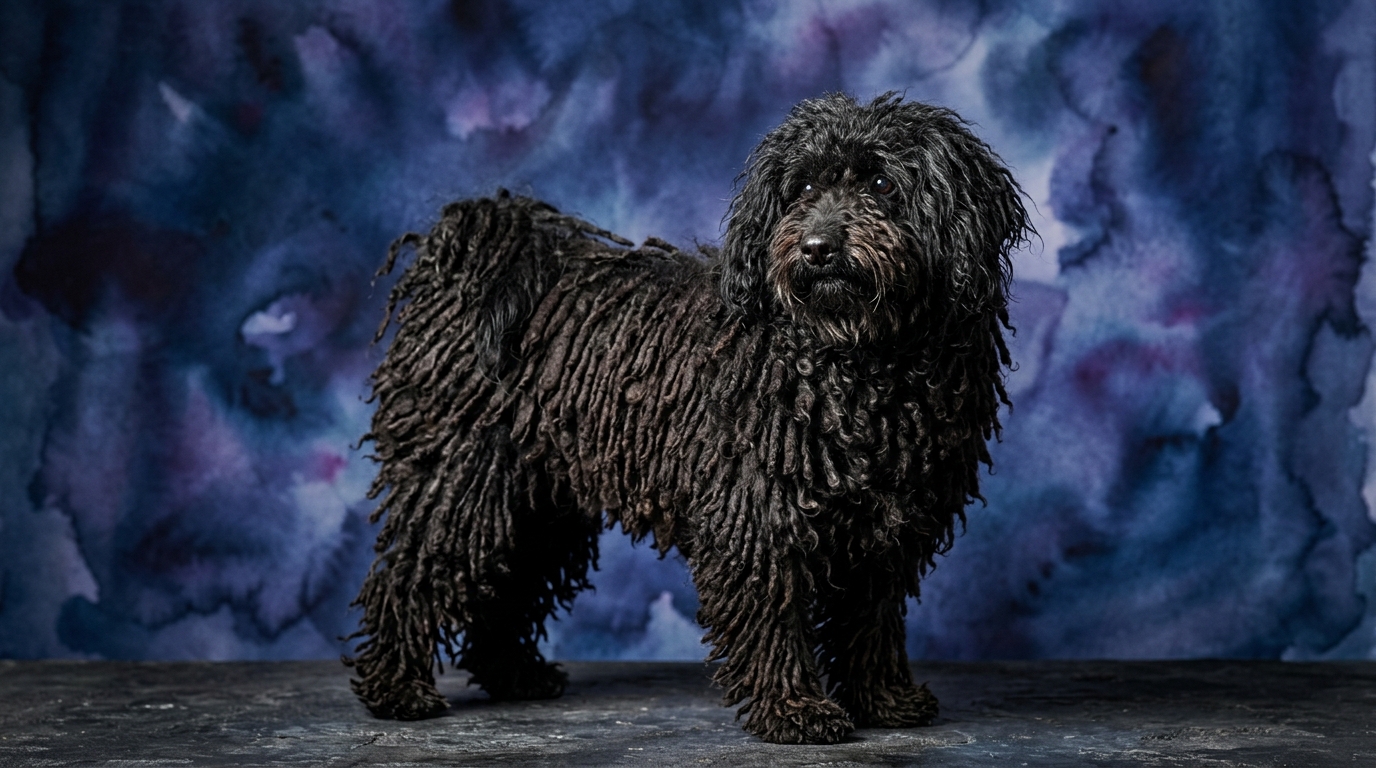
Side-by-Side IQ Profile: Bloodhound vs. Puli
The Cosmic Pet Pet IQ Lab employs a multi-dimensional approach to evaluating canine cognition, moving beyond simplistic notions of 'smartness' to understand how different breeds process information and interact with their world. Our assessment focuses on Problem Solving, Training Speed, Social Intelligence, Instinctive Drive, and Memory.
The Bloodhound, with a Coren ranking of #74, exhibits a highly specialized cognitive profile. Its Problem Solving is rated 5/5, reflecting an unparalleled ability to unravel complex scent trails, deducing paths and identifying targets through intricate olfactory puzzles. Its Training Speed, however, stands at a challenging 1/5, indicating a profound disinterest in tasks unrelated to its primary sensory focus. Social Intelligence is 2/5; while generally docile, their world is primarily olfactory, often making them less attuned to subtle human social cues. Instinctive Drive is an overwhelming 5/5, a relentless compulsion to track scent. Complementing this is a Memory score of 5/5, allowing them to recall and follow scent patterns over vast distances and extended periods, demonstrating extraordinary long-term associative memory tied to their olfactory system.
In contrast, the Puli, ranking significantly higher at Coren #25, presents a more balanced and adaptable cognitive blueprint. Their Problem Solving is rated 4/5, excelling in real-time, dynamic situations like maneuvering livestock, assessing scenarios quickly, and adapting strategies. Training Speed is a commendable 4/5, showcasing a readiness and eagerness to grasp new commands and routines, a trait crucial for their herding lineage. Social Intelligence is 3/5; Pulis are generally attentive to their human companions, capable of reading moods and intentions, though they can be reserved with strangers. Instinctive Drive scores 3/5, representing a strong but manageable herding impulse that can be channeled effectively. Their Memory is 4/5, allowing them to retain training well and recall complex sequences of actions, vital for their working roles.
Where the Bloodhound Excels Cognitively
The Bloodhound's cognitive superiority lies unequivocally in its olfactory domain. Their Problem Solving (5/5) isn't about manipulating objects or following complex obedience sequences, but about methodically deconstructing scent puzzles. They can differentiate individual scent molecules, follow trails hours or days old, and filter out competing odors with astonishing accuracy, a feat of sensory processing unmatched in the canine world. This specialized problem-solving requires immense focus and deduction within their unique sensory landscape.
Their perfect Memory (5/5) is intrinsically linked to this ability. A Bloodhound can retain the intricate details of a specific scent trail, recalling its nuances and direction even after significant time has passed or environmental factors have altered the path. This long-term, highly specific memory allows them to persist on a track where other breeds would fail, making them invaluable in specific search and rescue or law enforcement roles. Their Instinctive Drive (5/5) fuels this cognitive prowess, an unwavering, almost meditative focus on their task that overrides nearly all other stimuli.
Where the Puli Shows Cognitive Strength
The Puli's cognitive strengths are rooted in adaptability and responsiveness, hallmarks of an effective herding dog. Their Problem Solving (4/5) is geared towards dynamic, real-world scenarios, requiring quick decisions and strategic thinking to manage livestock movements. This involves anticipating animal behavior, positioning themselves effectively, and responding to handler cues simultaneously, showcasing a practical, agile mind.
A key Puli advantage is their superior Training Speed (4/5), reflecting a cognitive readiness to learn and execute complex commands swiftly. This capacity for rapid skill acquisition means they can master a wider variety of tasks and adjust to new routines with greater ease than the Bloodhound. Their Social Intelligence (3/5), while not at the highest tier, allows for a more nuanced interaction with their human handlers, enabling them to better interpret and respond to a broader range of social cues and intentions, fostering a cooperative working relationship beyond a singular instinct.
Which is Easier to Train, and Why?
When it comes to general obedience and diversified training, the Puli is demonstrably easier to train than the Bloodhound. The Puli's Training Speed (4/5) signifies a natural eagerness and capacity to quickly understand and comply with commands. Their herding background has ingrained a need for rapid responsiveness to handler signals, making them attentive and cooperative students in various disciplines, from basic manners to advanced agility.
The Bloodhound, with a Training Speed of 1/5, presents a significant challenge for conventional training. Their overwhelming Instinctive Drive (5/5) for scent work means that any distraction, particularly an interesting odor, will invariably override their attention to a human command. They are not unintelligent, but their cognitive focus is so intensely specialized that diverting it for general obedience requires immense patience, creativity, and an understanding of their deep-seated motivation. They often appear 'stubborn' because their internal compass points firmly towards scent, not necessarily towards pleasing their handler in a non-scent context.
Suited for Active vs. Relaxed Owners
The Puli generally suits more active owners who enjoy engaging in structured activities and mental stimulation beyond basic walks. Their Herding background necessitates an outlet for their energy and cognitive engagement; without it, they can become restless or develop undesirable behaviors. Owners who appreciate dog sports like agility, obedience, or even advanced trick training will find the Puli a willing and capable partner, thriving on consistent interaction and challenges that tap into their problem-solving and training speed.
The Bloodhound, while appearing 'relaxed' when not on a scent trail, demands a specific kind of active ownership. They require owners dedicated to providing an outlet for their profound instinctive drive for tracking. This isn't about endless running, but about mentally taxing scent work – whether formal tracking, scent games, or even supervised 'nose work' in a safe environment. An owner who understands and respects this specialized need, rather than trying to force general activity or obedience, will find a content companion. Without this specific mental engagement, a Bloodhound can become frustrated, leading to behaviors like baying or wandering when a captivating scent presents itself.
The Verdict: When to Choose Each Breed
The Verdict
Choose the Bloodhound if you are dedicated to channeling their unparalleled scent-tracking abilities and are prepared for a companion whose cognitive world revolves around odor, valuing their unique specialization above general obedience.
Opt for the Puli if you seek a responsive, adaptable companion eager to learn and participate in varied activities, thriving on cooperative training and benefiting from an owner who provides consistent mental and physical engagement.
🧠 Find Your Pet's IQ Score
Our Pet IQ Lab assessment covers 25+ tests across 5 cognitive dimensions — personalized to your breed.
Take the Full IQ Test →Frequently Asked Questions
Can a Bloodhound be a good family pet despite its low social intelligence score?
Yes, Bloodhounds are typically gentle and affectionate with their families, but their low social intelligence (2/5) means they might not be as attuned to subtle human social cues as other breeds. They generally prioritize scent over intricate social interaction, requiring families to understand and respect their distinct focus.
Do Pulis require a lot of grooming due to their corded coat?
Yes, the Puli's distinctive corded coat requires specific and consistent grooming, whether maintained in cords or brushed out. This is a significant commitment that owners must be prepared for, impacting their overall care routine beyond cognitive considerations.
What is the biggest cognitive difference between a Bloodhound and a Puli?
The most significant cognitive difference lies in their specialization versus generalization. The Bloodhound possesses an extremely specialized, almost obsessive, scent-based intelligence, while the Puli exhibits a more generalized, adaptable intelligence geared towards rapid learning and dynamic problem-solving in various contexts.