
The Cosmic Pet Pet IQ Lab: Side-by-Side Cognitive Profiles
The Cosmic Pet Pet IQ Lab provides a unique lens through which to compare the cognitive architecture of these two hounds. The Bloodhound, ranking #74 on Coren's scale, exhibits a highly specialized intellect. Its problem-solving ability is rated 5/5, indicating exceptional capacity for complex tasks, primarily those involving scent. Training speed, however, is a low 1/5, reflecting a strong independent streak. Social intelligence stands at 2/5, suggesting a focus less on human social cues and more on its environment. Instictive drive is an unparalleled 5/5, fueling its relentless pursuit, and its memory is also a perfect 5/5, critical for recalling intricate scent trails.
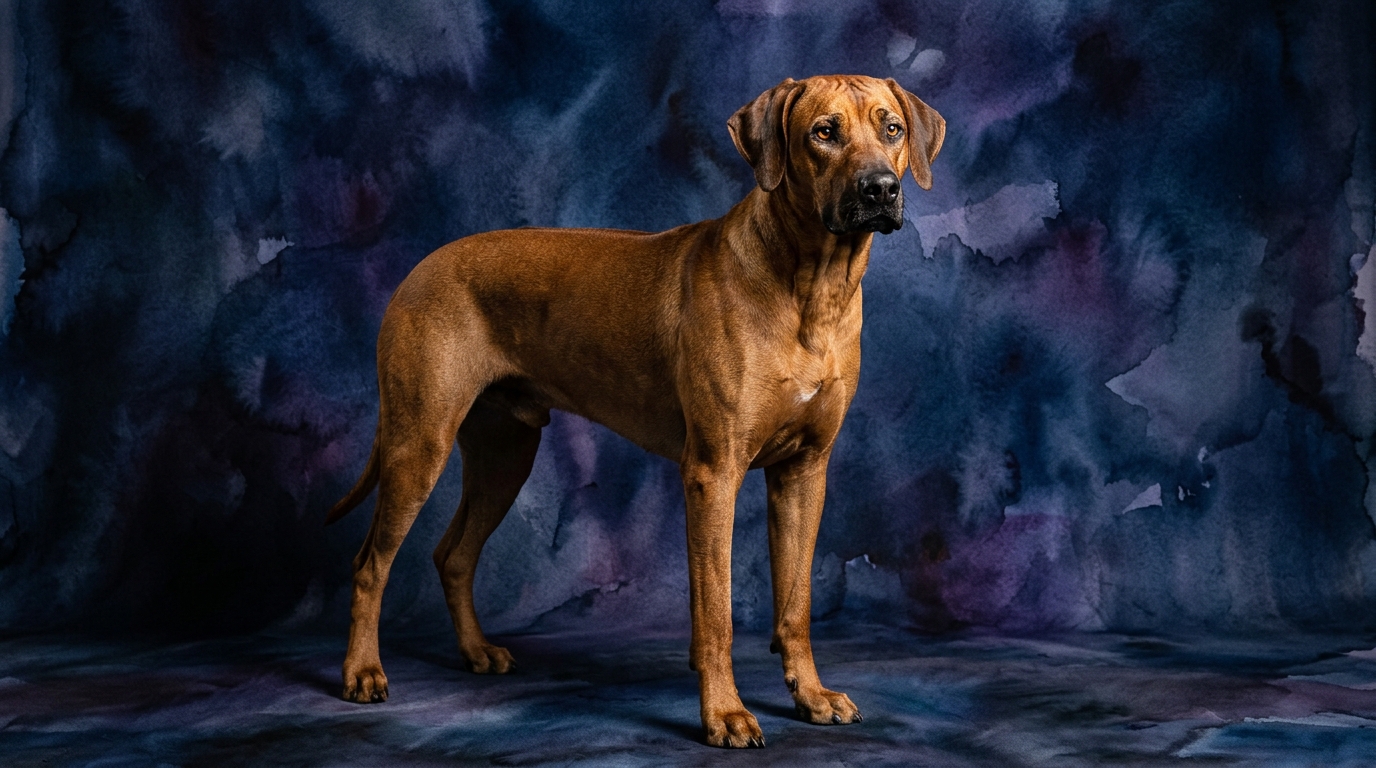
In contrast, the Rhodesian Ridgeback, with a higher Coren rank of #52, presents a more balanced and generalized cognitive profile. Its problem-solving is rated 3/5, indicating a practical, adaptive intelligence. Training speed is also 3/5, suggesting a moderate willingness and capacity to learn. Social intelligence is a balanced 3/5, making them more attuned to family dynamics. Instictive drive is 3/5, present but not all-consuming, and memory is likewise 3/5, capable of retaining learned experiences and commands. These scores paint a picture of two distinct cognitive strategies within the hound family.
Where the Bloodhound's Mind Excels
The Bloodhound's cognitive strengths are undeniably rooted in its olfactory prowess and the intricate mental mapping required for tracking. With a problem-solving score of 5/5, this breed excels at navigating complex scent puzzles, reconstructing paths, and distinguishing individual odors even days later—a feat demanding sophisticated spatial reasoning and analytical skills. Its memory, also rated 5/5, is legendary, allowing it to retain vast libraries of scent information and recall specific trails with astonishing accuracy, demonstrating a specialized form of cognitive recall unmatched by many breeds. This exceptional instinctive drive, also a perfect 5/5, fuels their relentless dedication to a task, allowing them to maintain focus on a scent trail for hours, overriding distractions and discomfort. These scores highlight a mind engineered for a singular, monumental task, where persistence and detailed sensory processing are paramount.
Where the Rhodesian Ridgeback's Mind Shines
The Rhodesian Ridgeback, with a higher Coren rank of #52 compared to the Bloodhound's #74, demonstrates a more generalized and adaptable cognitive profile. Their balanced 3/5 scores across problem-solving, training speed, social intelligence, instinctive drive, and memory indicate a well-rounded intellect suited for diverse roles beyond a singular specialized task. Where they truly shine is in their practical problem-solving, such as assessing immediate environmental threats or understanding household routines, rather than abstract puzzles. Their social intelligence, rated 3/5, allows them to be more attuned to human communication and family dynamics, making them more responsive to social cues and better integrated into a family unit. This adaptability and broader situational awareness represent a distinct cognitive advantage in everyday living scenarios where a singular, obsessive focus might be less beneficial.
Trainability: A Tale of Two Hounds
When it comes to trainability, the Rhodesian Ridgeback clearly holds an advantage. Its training speed is rated 3/5, indicating a moderate willingness and capacity to learn new commands and behaviors with consistent, positive reinforcement. Ridgebacks possess a desire to please their owners and are generally more attuned to human direction, making them responsive students who appreciate clear guidance. In contrast, the Bloodhound scores a mere 1/5 for training speed, reflecting a profound independence and a mind often preoccupied with olfactory input rather than human instruction. Their powerful instinctive drive to follow a scent overrides many attempts at redirection, making them notoriously challenging to train in traditional obedience. While they *can* learn, it requires immense patience, specialized techniques, and an understanding that their primary motivation lies in their nose, not necessarily in pleasing their handler. This isn't a lack of cognitive capacity, but rather a difference in cognitive priorities and inherent motivation, making Bloodhound training a dedicated, long-term endeavor focused on harnessing their natural instincts rather than suppressing them.
Matching Canine Minds to Lifestyles
For the truly active owner who thrives on outdoor adventures and can provide extensive physical and mental exercise, the Rhodesian Ridgeback is an excellent match. Their instinctive drive, rated 3/5, means they enjoy purposeful activities like hiking, running, or dog sports, and their moderate problem-solving and memory scores mean they benefit from varied training and mental challenges. They require engagement but also possess an 'off switch' indoors, settling down once their needs are met. The Bloodhound, while requiring substantial exercise to satisfy its potent instinctive drive (5/5), suits a different kind of active owner—one dedicated to scent work, tracking sports, or long, meandering walks where the dog can follow its nose. Their independent nature and low social intelligence (2/5) mean they are less likely to be a 'velcro dog' constantly seeking interaction, making them a fit for owners who appreciate a dog with a strong, self-directed purpose and understand that their canine partner's attention will often be directed outwards, following a scent. For relaxed owners seeking a low-maintenance companion, neither breed is ideal; both require significant commitment to exercise and mental stimulation, albeit in different forms that align with their distinct cognitive profiles.
The Verdict
Choose the Bloodhound if you are passionate about scent work, tracking sports, and appreciate an independent, focused canine partner, understanding their unique training challenges.
Choose the Rhodesian Ridgeback if you seek a well-rounded, protective family companion who can engage in varied activities and responds well to consistent, positive training methods.
🧠 Find Your Pet's IQ Score
Our Pet IQ Lab assessment covers 25+ tests across 5 cognitive dimensions — personalized to your breed.
Take the Full IQ Test →Frequently Asked Questions
Is a Bloodhound difficult to manage due to its strong scent drive?
Yes, a Bloodhound's overwhelming instinctive drive (5/5) means they will prioritize following a scent above almost anything else. This requires rigorous leash training, secure containment, and an understanding that their nose dictates much of their behavior, making off-leash reliability in open areas extremely challenging.
Do Rhodesian Ridgebacks require a lot of mental stimulation?
Rhodesian Ridgebacks, with their balanced cognitive profile (3/5 across the board) and higher Coren rank, benefit significantly from mental engagement. They thrive on activities that challenge their problem-solving skills and instinctive drives, such as obedience training, puzzle toys, and participating in dog sports, to prevent boredom and maintain good behavior.
How do their social intelligence scores impact their family life?
The Bloodhound's lower social intelligence (2/5) means they might be less attuned to nuanced human emotions and social cues, often appearing aloof or singularly focused on their environment rather than constant interaction. In contrast, the Rhodesian Ridgeback's moderate social intelligence (3/5) allows them to integrate more readily into family dynamics, showing discernment with strangers but forming strong bonds and being more responsive to their family's social environment.