Side-by-Side IQ Profile: Bloodhound vs. Saluki
At The Cosmic Pet Pet IQ Lab, we analyze canine cognition across five critical dimensions to provide a nuanced understanding of each breed's mental strengths. Here’s how the Bloodhound and Saluki stack up:
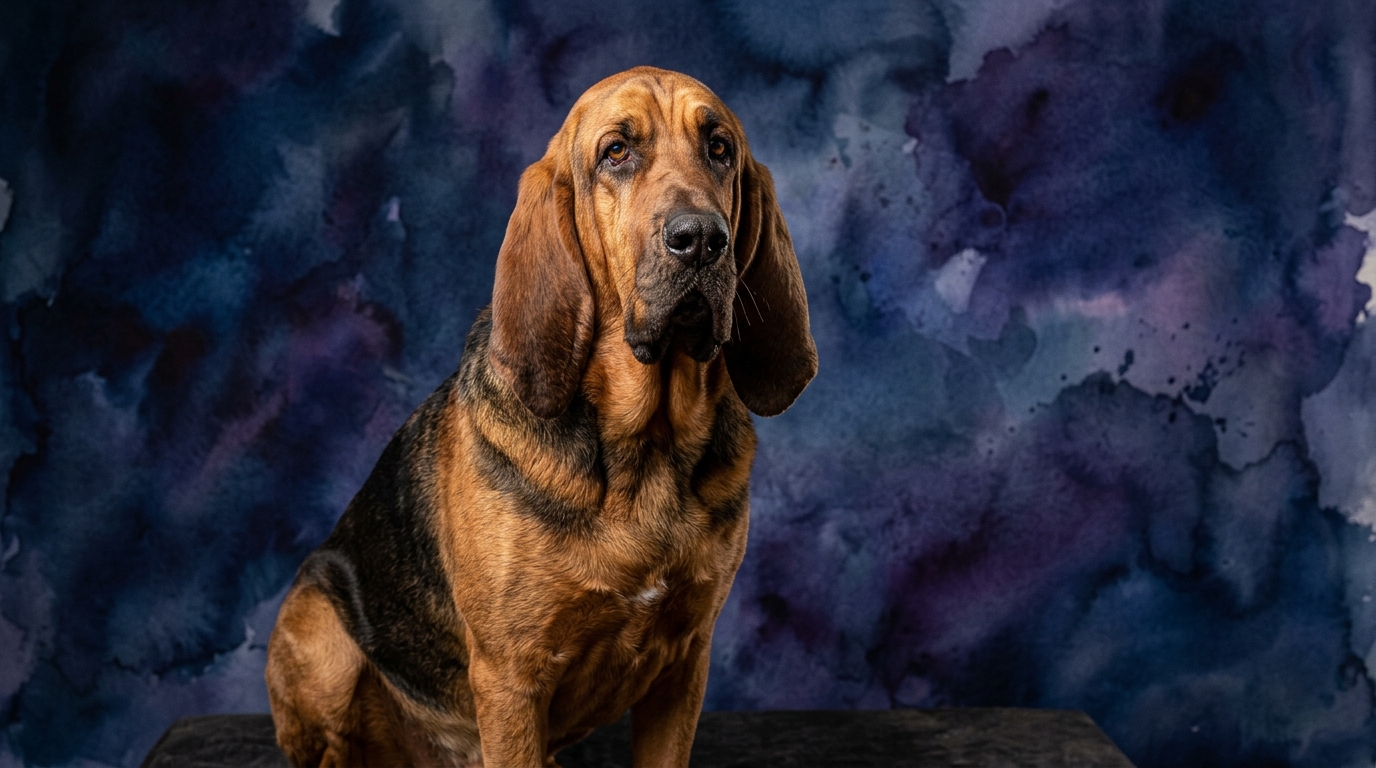
The **Bloodhound**, with a Coren ranking of #74, presents a highly specialized cognitive blueprint. Its Problem Solving is rated an exceptional 5/5, reflecting an unmatched ability to unravel complex scent puzzles and navigate intricate trails. Training Speed, however, registers at a challenging 1/5, indicating a deliberate and often single-minded approach that makes rapid command acquisition difficult. Social Intelligence is 2/5; while capable of forming bonds, their primary focus often remains on olfactory tasks rather than nuanced human social cues. Instinctive Drive is a profound 5/5, representing an overwhelming, singular compulsion for scent work. Finally, Memory scores an impressive 5/5, demonstrating extraordinary recall for scent patterns and trail specifics, allowing them to reconstruct past events through smell.
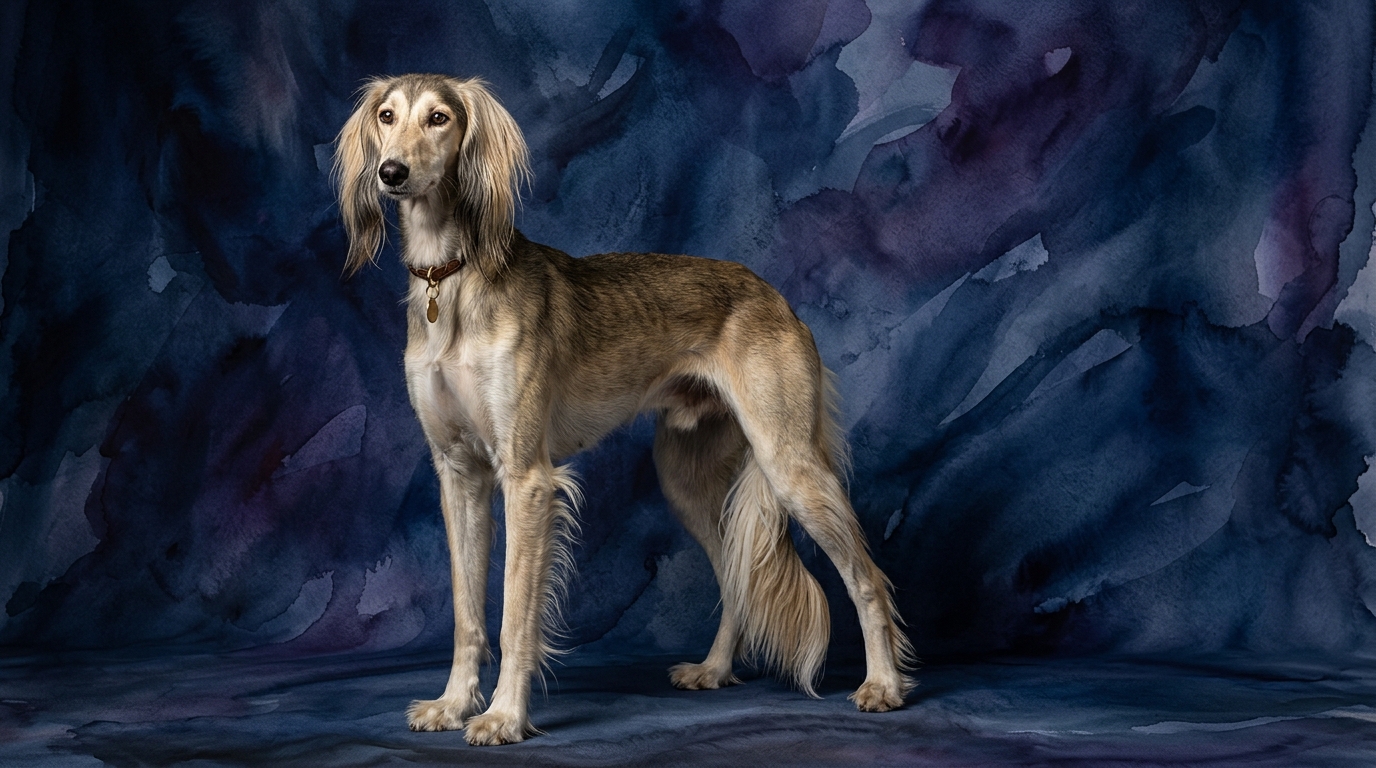
The **Saluki**, which is not Coren-ranked, showcases a different set of cognitive strengths. Its Problem Solving is 3/5, adept at navigating open terrain and strategizing during a chase, but not typically in abstract or scent-based puzzles. Training Speed is 3/5, indicating they are moderate learners who can grasp commands but require consistent motivation and clear communication. Social Intelligence is 3/5; they are polite and reserved, capable of forming strong, if understated, bonds, maintaining a dignified demeanor. Instinctive Drive is 3/5, reflecting a strong prey drive focused on sight and pursuit, but it is less singularly dominant than a Bloodhound's scent drive, allowing for more cognitive flexibility. Memory is 3/5, showing good recall for visual cues, established routes, and routine-based information.
Where the Bloodhound Excels Cognitively
The Bloodhound's cognitive superiority lies unequivocally in its **Problem Solving (5/5)** and **Memory (5/5)**, particularly within the olfactory domain. Their capability to track a cold trail for miles, sifting through countless environmental distractions to isolate a specific scent, is a profound cognitive feat. This isn't merely an instinct; it's an intricate process of data collection, analysis, and recall, where the dog constructs a detailed mental map of scent over time and distance.
Their memory for scent is arguably the most developed in the canine world, allowing them to hold and process vast amounts of olfactory information. This enables them to follow trails that are days old, demonstrating a unique form of temporal and spatial reasoning tied directly to their nose. The Bloodhound's cognitive architecture is fundamentally optimized for this specialized task, making them the ultimate experts in scent-based deduction and persistence.
Where the Saluki Demonstrates Cognitive Advantages
The Saluki exhibits cognitive advantages in its more balanced **Social Intelligence (3/5)** and a comparatively adaptable **Instinctive Drive (3/5)**. While Bloodhounds are singularly driven by their powerful sense of smell, Salukis demonstrate a broader and more flexible cognitive profile. Their sighthound instincts involve rapid decision-making, exceptional spatial awareness, and independent judgment in dynamic, open environments, often executed at high speeds. This requires a different form of problem-solving, focused on visual cues, pursuit trajectories, and avoiding obstacles.
Their social intelligence, though reserved, allows for a more nuanced human-canine partnership outside of a specific task. They are more attuned to their surroundings and the general mood of their human companions, maintaining a broader awareness than a Bloodhound absorbed in a scent trail. This allows Salukis to integrate more seamlessly into diverse social settings without their primary drive overwhelming other cognitive functions, offering a companion whose mental presence is less singularly focused.
Training Dynamics: Bloodhound vs. Saluki
When it comes to trainability, the breeds diverge significantly due to their inherent cognitive structures. The Bloodhound's **Training Speed (1/5)** is a direct consequence of its overwhelming **Instinctive Drive (5/5)** for scent work. Their nose dictates their world, and once engaged on a scent, it takes immense effort to redirect their focus. They learn, but their motivation is internal and task-specific; external commands often become secondary to the compelling narrative of a scent trail. Training a Bloodhound requires boundless patience, consistent positive reinforcement, and a deep understanding that their primary cognitive function is olfactory, making traditional obedience a continuous negotiation.
The Saluki, with a **Training Speed (3/5)**, is generally more responsive to traditional training methods. Their instinctive drive, while strong for sight-hunting, is less all-consuming, allowing for greater openness to human direction. They are capable of learning a wide range of commands and performing them reliably, especially when motivated by positive reinforcement and a clear purpose. However, their independent nature means they might choose not to comply if they perceive a better alternative or lack sufficient motivation, reflecting their inherent self-reliance. Consistency and respect for their independent spirit are key to successful Saluki training.
Matching Canine Cognition to Owner Lifestyle
The distinct cognitive profiles of Bloodhounds and Salukis make them suitable for very different owner lifestyles. A **Bloodhound** is best suited for active owners specifically passionate about scent work, tracking, or search and rescue. Their immense physical and mental needs are inextricably linked to their powerful instinctive drive for olfactory tasks. A relaxed owner who cannot provide consistent, challenging scent-related activities would find themselves with a frustrated and potentially destructive companion, as the Bloodhound's powerful cognitive machinery requires constant engagement and purpose.
A **Saluki** appeals to active owners who enjoy long runs, provide access to secure off-leash areas for sprinting, or engage in lure coursing. They require significant physical exertion to satisfy their sighthound instincts and maintain their mental well-being. However, indoors, Salukis are often calm, quiet, and appreciate a relaxed, peaceful home environment. They are not as demanding for constant interaction or overt affection as some breeds, making them suitable for owners who appreciate an elegant, independent companion whose cognitive needs for stimulation are met through bursts of intense activity, followed by periods of dignified repose.
The Verdict
Choose a Bloodhound when seeking an unparalleled olfactory partner for dedicated scent work, tracking, or search and rescue, valuing a dog whose cognitive world is dominated by the intricate language of scent and possesses an enduring mental stamina for complex trails.
Opt for a Saluki if you appreciate a graceful, independent companion with a balanced cognitive profile, offering both athletic prowess and a quiet presence, and who can provide outlets for their sighthound instincts through intense, visually driven activities.
🧠 Find Your Pet's IQ Score
Our Pet IQ Lab assessment covers 25+ tests across 5 cognitive dimensions — personalized to your breed.
Take the Full IQ Test →Frequently Asked Questions
Do Bloodhounds make good family pets despite their low social intelligence score?
Bloodhounds can be gentle and affectionate family members, especially with children, forming deep bonds within their household. Their 'social intelligence' score primarily reflects their task-oriented focus during work, not a fundamental lack of capacity for bonding or affection within their home environment, where they are often quite devoted.
Is a Saluki's independent nature difficult to manage for the average owner?
A Saluki's independence, a hallmark of their sighthound heritage, requires understanding and consistent, patient training rather than forceful management. They thrive with clear boundaries and positive reinforcement, but will always retain a degree of self-reliance, meaning they might not always be eager to please, preferring to make their own decisions in certain situations.
How does the Coren rank relate to these IQ scores from The Cosmic Pet Pet IQ Lab?
Stanley Coren's ranking primarily assesses 'working and obedience intelligence,' focusing on how quickly a dog learns and performs commands, aligning with our 'Training Speed' dimension. The Bloodhound's Coren rank of #74 reflects its 1/5 Training Speed. The Cosmic Pet IQ Lab's five dimensions offer a broader, more nuanced view of canine cognition, encompassing various forms of problem-solving, social interaction, instinctive drivers, and memory beyond just obedience.