
Side-by-Side Cognitive Profiles
To truly understand the cognitive landscapes of the Bloodhound and the Silky Terrier, we turn to their detailed Pet IQ Lab profiles, which illuminate their distinct approaches to the world. The Bloodhound, a breed renowned for its olfactory prowess, scores a perfect 5/5 in Problem Solving, demonstrating an extraordinary capacity to unravel complex scent trails and navigate intricate environments purely by smell, a cognitive feat of sustained analytical deduction. Its Training Speed, however, stands at a low 1/5, reflecting a powerful independent drive and a primary focus on following scent rather than readily complying with human-initiated commands. In Social Intelligence, the Bloodhound registers a 2/5, indicating a mind primarily wired for its work rather than for nuanced human social cues, though they can form deep bonds. Their Instinctive Drive is an unparalleled 5/5, a relentless, all-consuming urge to track that dictates much of their cognitive effort. Finally, their Memory is also a 5/5, allowing them to recall specific scent patterns and locations with remarkable accuracy over long periods and distances.
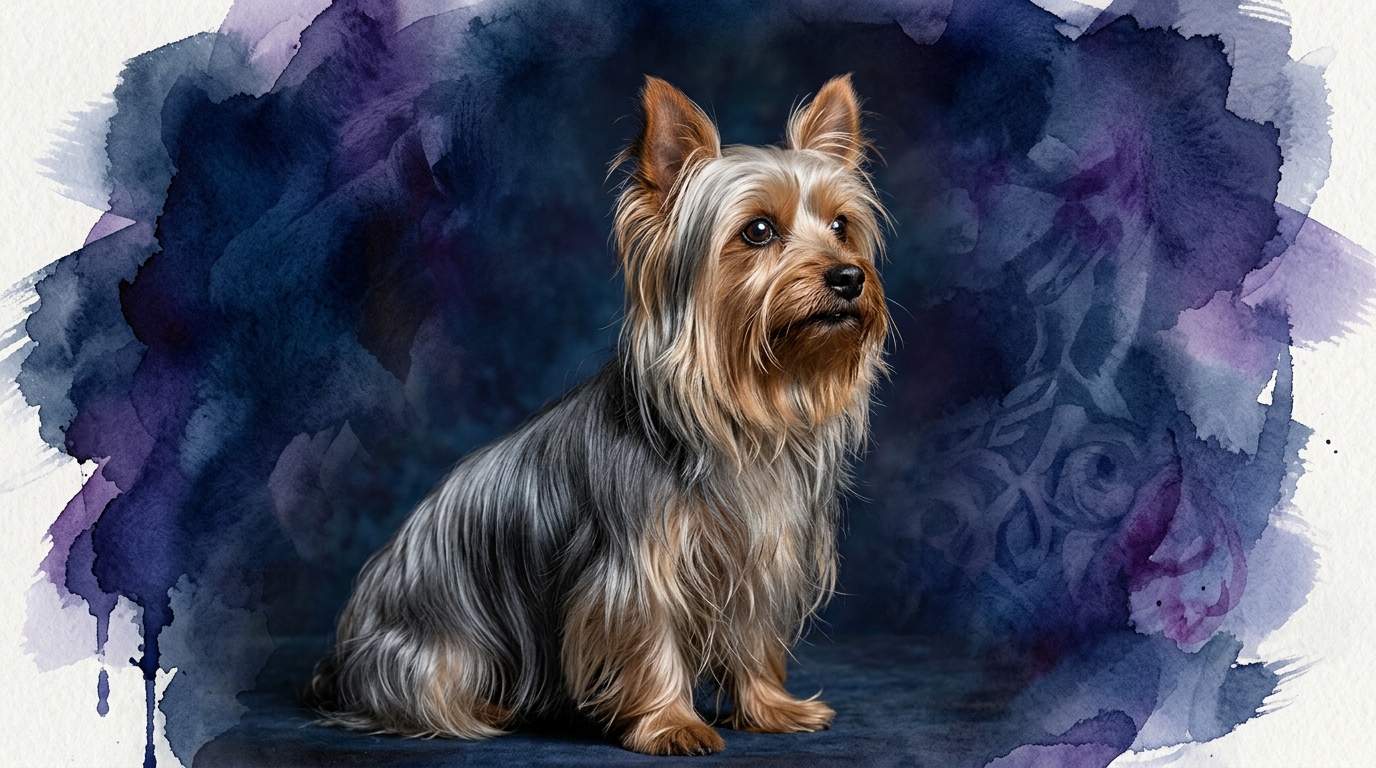
In contrast, the Silky Terrier, a spirited member of the Toy group, presents a more uniformly balanced cognitive profile. Its Problem Solving ability is rated 3/5, signifying a capable mind adept at navigating daily routines and overcoming common household challenges, though not typically engaged in highly complex analytical tasks. The Silky Terrier's Training Speed is a moderate 3/5, suggesting they are generally responsive and learn new commands at a reasonable pace, making them amenable to consistent positive reinforcement. Their Social Intelligence also sits at 3/5, indicating a good capacity for understanding human moods and social dynamics within a family setting, fostering adaptable interactions. An Instinctive Drive of 3/5 reflects a typical terrier's alertness and prey drive, present but generally manageable and not overwhelming their other cognitive functions. Lastly, their Memory is rated 3/5, sufficient for retaining commands, routines, and experiences relevant to their daily lives without the specialized, long-term recall of a scent hound.
Where the Bloodhound's Mind Excels
The Bloodhound's cognitive superiority undeniably lies in its olfactory processing and associated memory, a testament to centuries of selective breeding for tracking. Scoring a perfect 5/5 in both Problem Solving and Memory, their minds are exquisitely wired for dissecting complex scent puzzles, navigating intricate paths with an unwavering focus that few other breeds can match. This isn't merely about detecting a smell; it involves an intricate cognitive process of differentiating, following, and recalling a specific scent trail over vast distances and time, demonstrating a specialized form of canine genius. Their 5/5 Instinctive Drive fuels this relentless pursuit, allowing them to maintain concentration on a singular task for hours, a testament to their profound cognitive endurance and single-minded dedication to a specific, challenging intellectual pursuit.
Where the Silky Terrier's Cognition Shines
While not reaching the Bloodhound's specialized cognitive peaks, the Silky Terrier exhibits a more balanced and generally adaptive cognitive profile, making them broadly competent across various situations. Their 3/5 in Problem Solving, Training Speed, Social Intelligence, Instinctive Drive, and Memory indicates a versatile mind capable of navigating a wider range of typical domestic situations with relative ease and confidence. The Silky Terrier's 3/5 Social Intelligence, for instance, suggests a breed more attuned to subtle human interactions and social dynamics within a household, making them generally more responsive to everyday cues and capable of forming nuanced relationships with family members. Their moderate Training Speed (3/5) reflects a willingness to learn and adapt to routines without the extreme independent streak seen in the Bloodhound, allowing for more straightforward integration into family life and varied learning experiences that demand general responsiveness rather than single-minded focus.
Training: A Tale of Two Temperaments
When evaluating ease of training, the Silky Terrier presents a significantly more approachable experience compared to the Bloodhound, largely due to their differing cognitive priorities. The Silky Terrier's 3/5 Training Speed means they absorb new commands and routines at a moderate pace, typically responding well to consistent, positive reinforcement methods and enjoying the interaction. Their balanced 3/5 Instinctive Drive, while certainly present with typical terrier alertness, is generally manageable, allowing their attention to be redirected from distractions more readily during training sessions. Conversely, the Bloodhound's 1/5 Training Speed is a direct reflection of their profound 5/5 Instinctive Drive for scent work; once a Bloodhound catches a scent, their cognitive processing becomes almost entirely dedicated to that singular task, making it exceptionally challenging to divert their attention or introduce new commands that don't align with their primary drive. This isn't a lack of cognitive capacity, but rather an overwhelming specialization that makes 'obedience' in a conventional sense a protracted and often frustrating endeavor, requiring immense patience and creative training strategies to work with, rather than against, their powerful, single-minded instincts.
Matching Canine Cognition to Owner Lifestyles
The choice between a Bloodhound and a Silky Terrier hinges significantly on an owner's lifestyle and capacity for engagement, particularly concerning their cognitive needs. An owner seeking a Bloodhound must be prepared for an exceptionally active role, particularly in facilitating their breed's supreme cognitive strength: scent work. Their 5/5 Instinctive Drive and 5/5 Problem Solving, when applied to tracking, demand consistent, rigorous mental and physical stimulation that goes beyond casual walks; they thrive on complex scent trails, often requiring dedicated training in tracking or search and rescue activities to truly fulfill their intellectual potential. A relaxed owner, unprepared for this intense dedication to scent-based activity and the associated physical exertion and mental commitment, would find a Bloodhound a mismatch, potentially leading to an unfulfilled and restless companion who struggles to integrate into a low-stimulation environment. In contrast, the Silky Terrier, with its balanced 3/5 scores across the board, is far more adaptable to a range of owner activity levels. While they certainly benefit from regular exercise and mental engagement through play and training, their needs are more readily met with daily walks, interactive toys, and consistent companionship. A relaxed owner who enjoys moderate activity and appreciates a companion capable of integrating smoothly into various social settings without requiring highly specialized cognitive outlets would find the Silky Terrier a much more suitable and rewarding choice.
The Verdict
Choose the Bloodhound if you are a dedicated individual passionate about scent work, tracking, or search and rescue, and can commit to their unique cognitive demands and extensive training needs.
Choose the Silky Terrier if you are seeking an adaptable, moderately trainable companion for family life, appreciative of a balanced cognitive profile and manageable energy levels.
🧠 Find Your Pet's IQ Score
Our Pet IQ Lab assessment covers 25+ tests across 5 cognitive dimensions — personalized to your breed.
Take the Full IQ Test →Frequently Asked Questions
Is a Bloodhound difficult to live with due to its low training speed?
A Bloodhound's 1/5 training speed primarily reflects its intense focus on scent, making conventional obedience challenging. They require owners who understand their specialized cognitive wiring and are prepared to work with, rather than against, their powerful instinctive drive. This often means embracing their tracking abilities as a primary form of engagement.
How does the Silky Terrier's 'not Coren-ranked' status impact its IQ?
The absence of a Coren ranking for the Silky Terrier simply means it wasn't included in that specific study's methodology, not that it lacks cognitive abilities. Our Pet IQ Lab assessment provides a detailed profile, indicating a balanced cognitive capacity suitable for companionship and everyday learning, rather than extreme specialization.
Can a Bloodhound be a good family dog despite its social intelligence score?
A Bloodhound's 2/5 social intelligence suggests they are less attuned to subtle human social cues compared to some breeds, often prioritizing scent. However, with proper socialization from a young age and an owner who understands their focus, they can be affectionate and loyal family members, particularly appreciating a home that supports their tracking instincts.