Side-by-Side Cognitive Profile
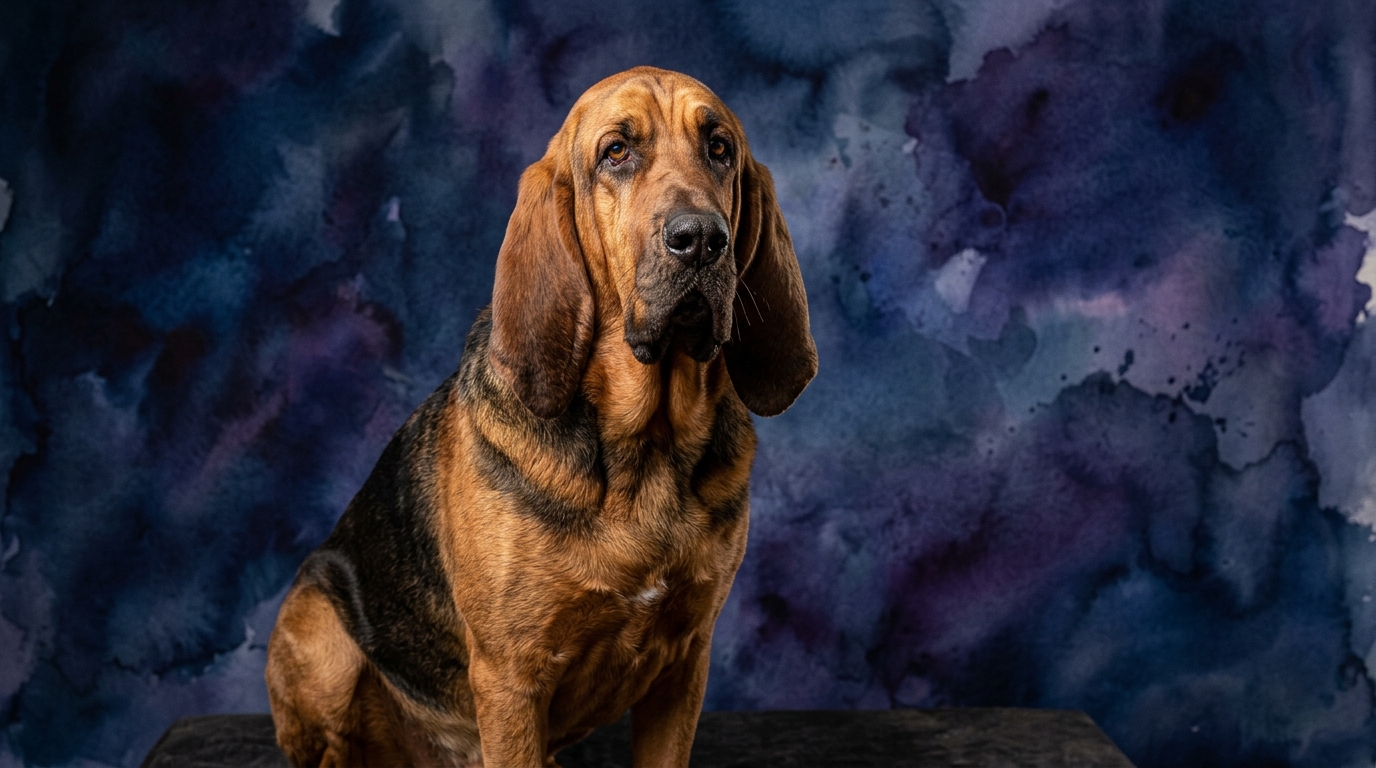
**Bloodhound:** With a Coren rank of #74, the Bloodhound presents a unique cognitive blueprint. Their **Problem Solving (5/5)** excels in intricate, multi-step scent tracking, interpreting complex olfactory data to reconstruct a narrative over varied terrains and distances. This highly specialized cognitive strength demands intense mental effort to filter noise and prioritize information. Their **Training Speed (1/5)** is low, requiring extensive repetition and patience due to their powerful, independent drive to follow scent, which frequently overrides human directives. They are less inclined to quickly comply with tasks unrelated to their primary instinct. **Social Intelligence (2/5)** is moderate; while generally good-natured, their deep immersion in scent work can make them less attuned to subtle human social cues or complex pack dynamics. Their interactions are often straightforward, lacking nuanced give-and-take. An **Instinctive Drive (5/5)** that is extraordinarily high, almost entirely dominated by olfactory pursuit, means this relentless, all-consuming urge to track is the core of their being. Finally, **Memory (5/5)** is exceptional, specifically for scent patterns and trail progress. They can recall scent information and environmental cues encountered hours or days prior, crucial for re-establishing lost trails or recognizing specific target scents.
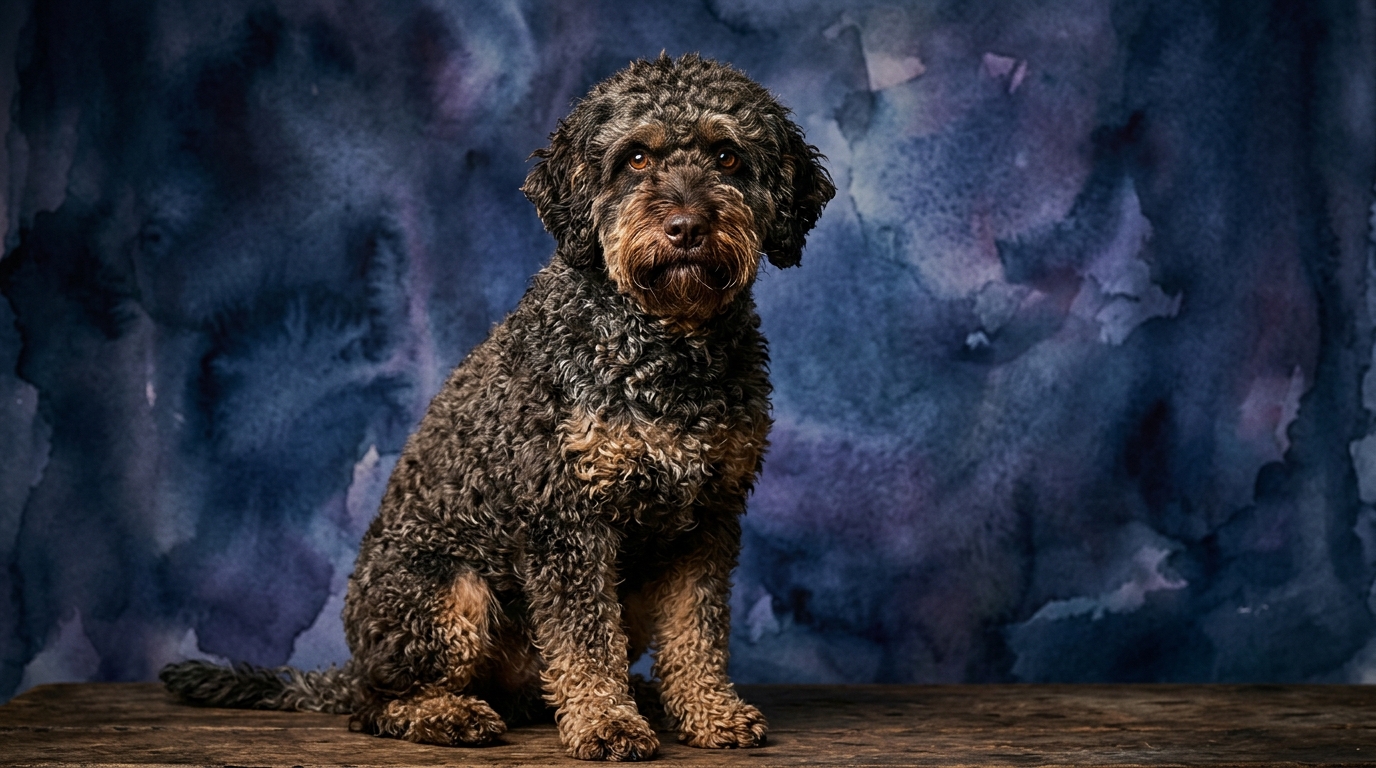
**Spanish Water Dog:** Not Coren-ranked, the Spanish Water Dog offers a more balanced cognitive profile. Their **Problem Solving (3/5)** shows moderate capacity for practical problem-solving in daily challenges like opening gates or retrieving, often using observation and trial-and-error. Their problem-solving is adaptable and pragmatic for diverse working roles. **Training Speed (3/5)** is moderate, meaning they learn new commands and routines with consistent positive reinforcement. They are generally willing to engage, though not always with lightning speed, maintaining a steady and manageable learning curve. With **Social Intelligence (3/5)**, they possess a moderate ability to understand and respond reasonably well to human moods and intentions. They integrate into families and read social cues, though they might be reserved with strangers. Their **Instinctive Drive (3/5)** is moderate and multi-faceted, encompassing herding, retrieving, and guarding tendencies. This balanced set of innate behaviors makes them adaptable to various tasks and environments, unlike a singular overpowering drive. Their **Memory (3/5)** is moderate, capable of reliably retaining learned commands, routines, and experiences, which contributes to their overall trainability and ability to function effectively within structured environments and daily living.
Where the Bloodhound Excels Cognitively
The Bloodhound's cognitive superiority undeniably lies in its unparalleled olfactory processing and application. Their Problem Solving score of 5/5 isn't about solving abstract puzzles, but about navigating a three-dimensional world of invisible scent molecules, meticulously piecing together a chronological narrative of a lost person or animal. This requires immense cognitive effort: filtering environmental noise, discriminating between similar scents, and maintaining an unwavering focus for hours. Coupled with their 5/5 Memory, they can retain a vast library of scent profiles and track segments, allowing them to revisit and re-evaluate information even after a significant delay. This specialized memory is not merely recall; it's a dynamic reconstruction of sensory data, crucial for re-establishing a lost trail. Their Instinctive Drive, also 5/5, fuels this entire process, providing the relentless motivation to push through fatigue and distraction, making them the ultimate specialists in complex scent-based problem-solving. No other breed approaches their mastery of this specific cognitive domain.
Where the Spanish Water Dog Excels Cognitively
The Spanish Water Dog’s cognitive strengths emerge from its balanced and adaptable mental toolkit. While no single dimension reaches the Bloodhound’s extreme specialization, the SWD’s uniform 3/5 across Problem Solving, Training Speed, Social Intelligence, Instinctive Drive, and Memory signifies a versatile, well-rounded intellect. Their moderate Problem Solving allows them to adapt to diverse situations, whether herding livestock, retrieving from water, or navigating household challenges, without being overly fixated on one type of stimulus. This adaptability is critical for a breed historically tasked with multiple roles. Their balanced Social Intelligence, also 3/5, means they can integrate effectively into a human family, reading cues and responding appropriately without being overly dependent or excessively aloof. Unlike the Bloodhound's singular drive, the SWD's moderate Instinctive Drive is flexible, allowing it to be channeled into various tasks and making them amenable to diverse training regimes. This cognitive balance makes them highly functional across a range of domestic and working scenarios.
Which is Easier to Train and Why
When considering ease of training, the Spanish Water Dog clearly holds an advantage over the Bloodhound. The SWD’s Training Speed of 3/5, coupled with its 3/5 Social Intelligence, suggests a dog that is generally receptive to learning and responsive to human direction. They possess a moderate desire to please and a balanced instinctive drive that can be readily channeled into various obedience or task-oriented training. Their cognitive balance means they are less likely to become fixated on a single stimulus, making it easier to gain and hold their attention during lessons.
In stark contrast, the Bloodhound's Training Speed of 1/5 highlights a significant challenge. Their overwhelming 5/5 Instinctive Drive for scent work means that once a scent is detected, external commands often become secondary. Their lower Social Intelligence (2/5) further complicates training, as they are less inclined to prioritize human interaction or directives over their primary sensory pursuit. While Bloodhounds are capable of learning, their independent nature and profound preoccupation with scent necessitate immense patience, consistent motivation, and often specialized training techniques that work *with* their drive rather than against it. A Bloodhound might 'learn' a command, but whether it 'performs' it when a compelling scent presents itself is a different matter, making them far less amenable to conventional obedience training.
Which Suits Active Owners vs. Relaxed Owners
The choice between these two breeds significantly depends on an owner's lifestyle. The Bloodhound, with its extraordinary 5/5 Instinctive Drive and 5/5 Memory for scent, demands an owner who is deeply committed to providing an outlet for these specific cognitive and physical needs. These are not dogs for casual walks; they require extensive, structured scent work, tracking exercises, or participation in search and rescue to truly thrive mentally and physically. Their independent problem-solving nature means they need an owner who appreciates their singular focus and can manage their powerful, often oblivious, pursuit of scent. A relaxed owner who cannot provide hours of dedicated engagement in their specific 'work' will find a Bloodhound challenging, as their unmet drive can manifest as restlessness or destructive behaviors.
Conversely, the Spanish Water Dog's balanced cognitive profile (all 3/5s) makes it suitable for active owners who enjoy a variety of activities but don't necessarily need a single-minded specialist. They are adaptable partners for hiking, swimming, agility, or even herding tasks. Their moderate instinctive drive means they appreciate regular physical and mental exercise, but they are generally content with a more varied routine than the Bloodhound. While they are not for entirely relaxed, sedentary owners, their cognitive flexibility means they can adjust to a range of active lifestyles without demanding the extreme specialization required by the Bloodhound. They are more likely to be satisfied with a blend of structured activity and family interaction.
The Verdict
Select a Bloodhound if you are a dedicated, active individual or family prepared to immerse yourself in the world of scent tracking, understanding that their profound, specialized cognitive abilities require a unique and consistent outlet.
Choose a Spanish Water Dog if you seek a versatile, moderately active companion willing to engage in a variety of activities and capable of integrating smoothly into diverse family dynamics with its balanced cognitive approach.
🧠 Find Your Pet's IQ Score
Our Pet IQ Lab assessment covers 25+ tests across 5 cognitive dimensions — personalized to your breed.
Take the Full IQ Test →Frequently Asked Questions
Are Bloodhounds difficult to live with due to their strong scent drive?
Bloodhounds can be challenging if their powerful 5/5 instinctive drive for scent is not adequately managed. They require extensive, consistent outlets for tracking, otherwise their natural inclinations might lead to wandering, difficulty with recall, or general restlessness in a home environment. Understanding and channeling this specific cognitive strength is key to harmonious living.
How does the Spanish Water Dog's balanced intelligence manifest in daily life?
The Spanish Water Dog's balanced 3/5 scores across all cognitive dimensions translate to a highly adaptable and versatile companion. They can learn various commands, engage in different activities like herding or retrieving, and generally adapt well to household routines and social interactions, making them practical and responsive family members. This cognitive flexibility allows them to excel in diverse roles.
Can a Bloodhound be trained for tasks other than scent work?
While Bloodhounds possess a 5/5 Problem Solving capacity for scent, their 1/5 Training Speed and 2/5 Social Intelligence mean training them for tasks unrelated to tracking can be significantly more demanding. They are capable of learning basic obedience, but their independent nature and singular focus on scent often make them less enthusiastic or reliable for generalized obedience or complex multi-tasking compared to more biddable breeds.