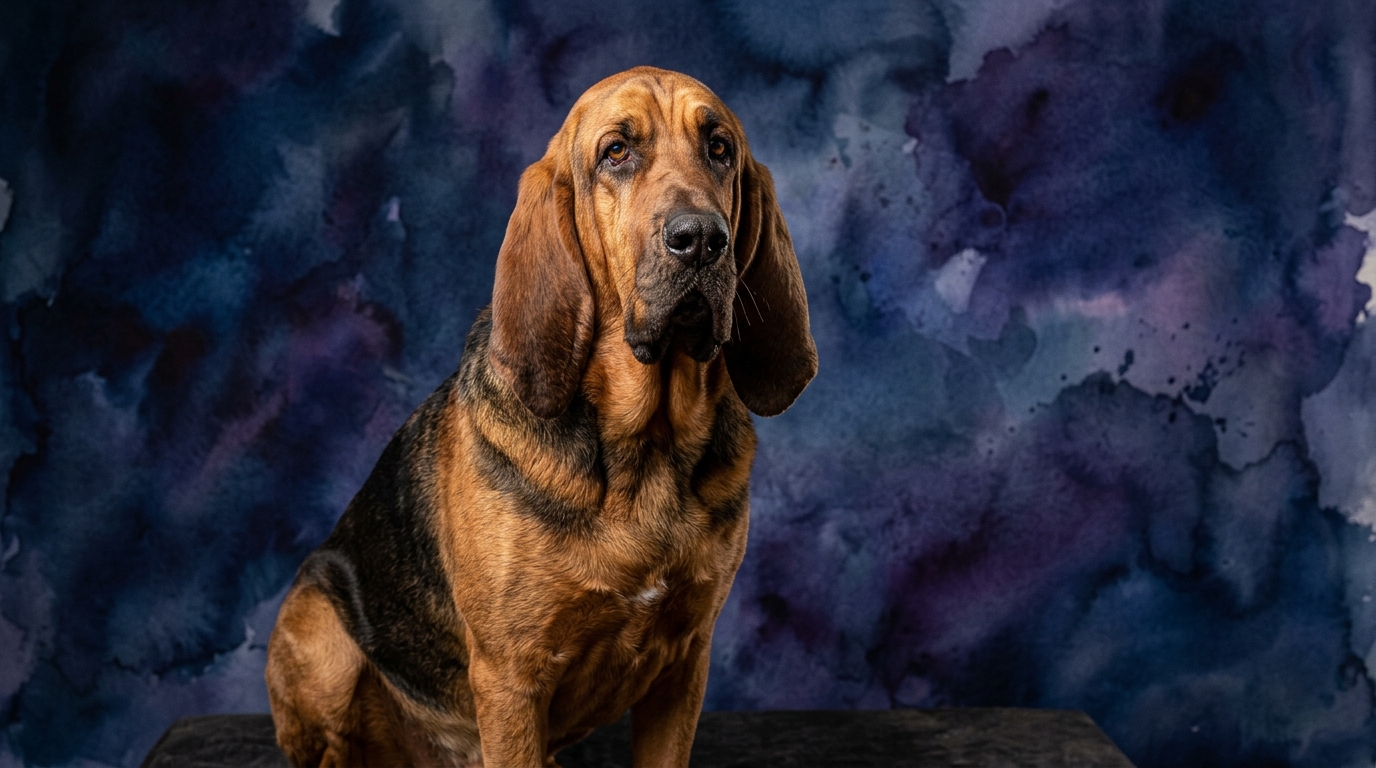
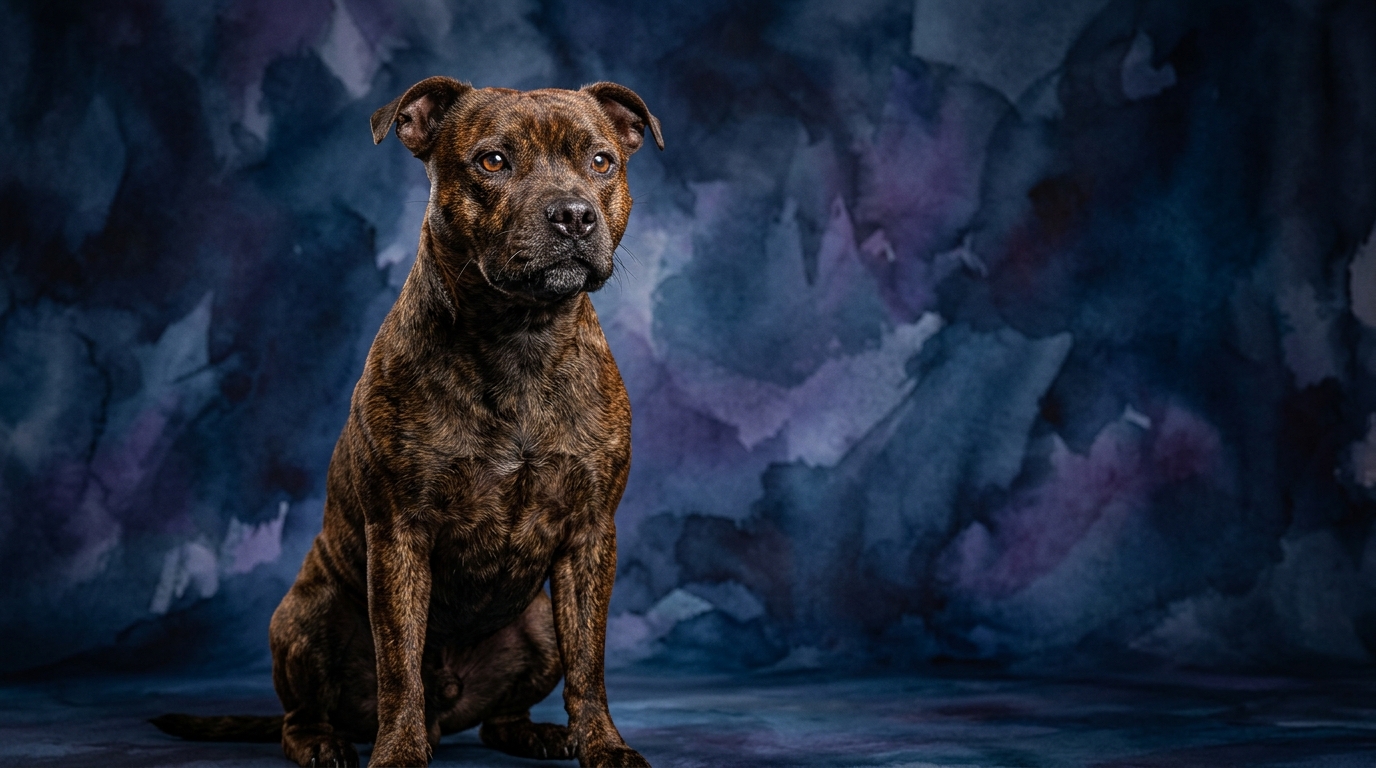
Side-by-Side Cognitive Profiles: Bloodhound vs. Staffordshire Bull Terrier
The Bloodhound's mind is a masterclass in olfactory processing, reflected in its impressive IQ scores. Their Problem Solving (5/5) isn't about abstract puzzles, but an unparalleled capacity to unravel complex scent trails, navigating varied terrains and discerning faint odors amidst overwhelming distractions. Training Speed (1/5) scores low not due to lack of capacity, but because their intense focus on scent often overrides conventional obedience; they learn what their nose dictates. Social Intelligence (2/5) indicates that while gentle, their primary cognitive engagement is with the external world of odors rather than nuanced human social cues. Their Instinctive Drive (5/5) is the very definition of their being – an insatiable, unwavering compulsion to follow a trail. This drive is intrinsically linked to their Memory (5/5), which allows for exceptional recall of intricate scent patterns, enabling them to retrace steps or follow incredibly old or cold trails with astounding accuracy.
The Staffordshire Bull Terrier presents a more broadly balanced cognitive profile, reflecting its role as a versatile companion. Their Problem Solving (3/5) is practical and adaptable, enabling them to figure out everyday challenges like manipulating a toy or navigating household routines, rather than specializing in one domain. Training Speed (3/5) suggests a moderate learning pace; they are capable of acquiring commands with consistent, positive reinforcement, though they may require more repetition than some breeds. Social Intelligence (3/5) highlights their general aptitude for reading human emotions and engaging appropriately within a family setting, making them attuned companions. Their Instinctive Drive (3/5) is present but not singular, manifesting as a desire for play, companionship, or a moderate prey drive, rather than an all-consuming obsession. Memory (3/5) is sufficient for retaining commands, routines, and recognizing familiar individuals, providing a solid foundation for domestic life without the extraordinary detail of scent recall found in a Bloodhound.
Where the Bloodhound Excels Cognitively
The Bloodhound's cognitive strengths are profoundly specialized and unparalleled in specific domains. They demonstrate an unrivaled capacity for olfactory problem-solving, meticulously dissecting and interpreting a complex world of scents to achieve their tracking objective with unwavering focus. Their exceptional long-term memory is specifically geared towards environmental data related to scent, allowing them to recall and follow trails that are days old or incredibly faint, a feat unmatched by virtually any other breed. This singular dedication and persistence in pursuit of a scent trail, driven by their formidable instinctive drive, showcases a cognitive advantage born of centuries of selective breeding for a very specific, demanding task.
Where the Staffordshire Bull Terrier Excels Cognitively
The Staffordshire Bull Terrier's cognitive advantages lie in its adaptability and broader engagement with the human world. Their more balanced cognitive profile (3/5 across several metrics) allows them to excel in a wider array of tasks and learning environments beyond a singular, overriding instinct. They possess a better general training aptitude and responsiveness to human direction, making them more amenable to diverse forms of communication and instruction. This flexibility, coupled with their moderate social intelligence, means they are potentially more attuned to nuanced human social cues, making them highly integrated and understanding family members. Their problem-solving abilities are applied to a broader range of domestic and social contexts, allowing them to navigate daily life with a practical intelligence that complements their companion role.
Trainability: A Tale of Two Temperaments
When considering ease of conventional training, the Staffordshire Bull Terrier generally presents a more straightforward experience than the Bloodhound. The Bloodhound's training speed is notably low (1/5), primarily because their profound instinctive drive (5/5) and exceptional memory (5/5) are overwhelmingly dedicated to scent work. While perfectly capable of learning, their minds are often preoccupied with the rich olfactory tapestry of their environment, making them less inclined to quickly absorb or consistently respond to abstract human commands that don't align with their primary motivation. They may appear "stubborn" or distracted, but this is merely their cognitive specialization asserting itself; recall, for instance, can be incredibly challenging if a compelling scent trail captures their attention.
In contrast, the Staffordshire Bull Terrier's moderate training speed (3/5), combined with their social intelligence (3/5) and desire for human interaction, makes them generally more amenable to traditional obedience training. While they possess their own spirited independence, their willingness to engage with their owner and a less overpowering singular drive means they are typically more responsive to consistent, positive reinforcement methods, and their practical problem-solving helps them understand expectations in a training context.
Lifestyle Match: Active Engagement vs. Balanced Companionship
The choice between these breeds significantly depends on an owner's lifestyle and their definition of "active." Bloodhounds require owners who are extremely active in a very specific, mentally stimulating way. This doesn't necessarily mean running marathons, but rather providing daily, extensive opportunities for scent work and tracking, which can be physically demanding but is primarily a cognitive exercise for them. They need consistent engagement that directly taps into their powerful instinctive drive; a relaxed owner who cannot provide this specialized outlet will likely find a Bloodhound becomes frustrated, destructive, or prone to wandering. Their physical exercise needs are substantial, but their mental engagement through scenting is paramount.
Staffordshire Bull Terriers, on the other hand, suit active owners who enjoy engaging in varied physical activities like brisk walks, fetch, or dog sports, and who can provide consistent training and mental enrichment. While they appreciate and need regular exercise and interaction, their needs are more flexible and broadly applicable compared to the Bloodhound's specialized requirements. A moderately active owner who provides daily physical activity, consistent companionship, and mental games would find a Staffy a suitable companion, as they are often content to relax indoors after their needs are met.
The Verdict
For owners deeply committed to harnessing and developing an unparalleled scenting ability, perhaps in search and rescue, competitive tracking sports, or simply fascinated by their unique olfactory world, and who can dedicate significant time to this specialized, demanding engagement, the Bloodhound is an ideal choice.
For owners seeking a robust, affectionate, and generally adaptable companion who thrives on consistent social interaction, varied physical and mental activities, and integrates well into a family setting with balanced needs, the Staffordshire Bull Terrier offers a rewarding partnership.
🧠 Find Your Pet's IQ Score
Our Pet IQ Lab assessment covers 25+ tests across 5 cognitive dimensions — personalized to your breed.
Take the Full IQ Test →Frequently Asked Questions
Are Bloodhounds difficult to live with due to their strong scent drive?
Yes, their extraordinary instinctive drive for scent (5/5) means they require significant mental engagement through tracking activities. Without appropriate outlets, they can become restless, destructive, or prone to wandering off on a trail, making consistent management and specialized training essential.
Do Staffordshire Bull Terriers do well with other pets?
Staffordshire Bull Terriers have a moderate instinctive drive (3/5) and their social intelligence (3/5) is generally geared towards human interaction. While many can coexist peacefully with other pets, early socialization is crucial, and individual temperaments vary, so careful introductions and supervision are always recommended.
How much exercise does a Bloodhound need compared to a Staffy?
Bloodhounds require extensive, purposeful exercise, ideally involving long tracking sessions that engage their scent drive, often for several hours daily. Staffordshire Bull Terriers need regular, vigorous exercise for about 60-90 minutes daily, which can include brisk walks, playtime, or dog sports, making their routine somewhat more versatile.