
Side-by-Side IQ Profile: Bloodhound vs. Wirehaired Pointing Griffon
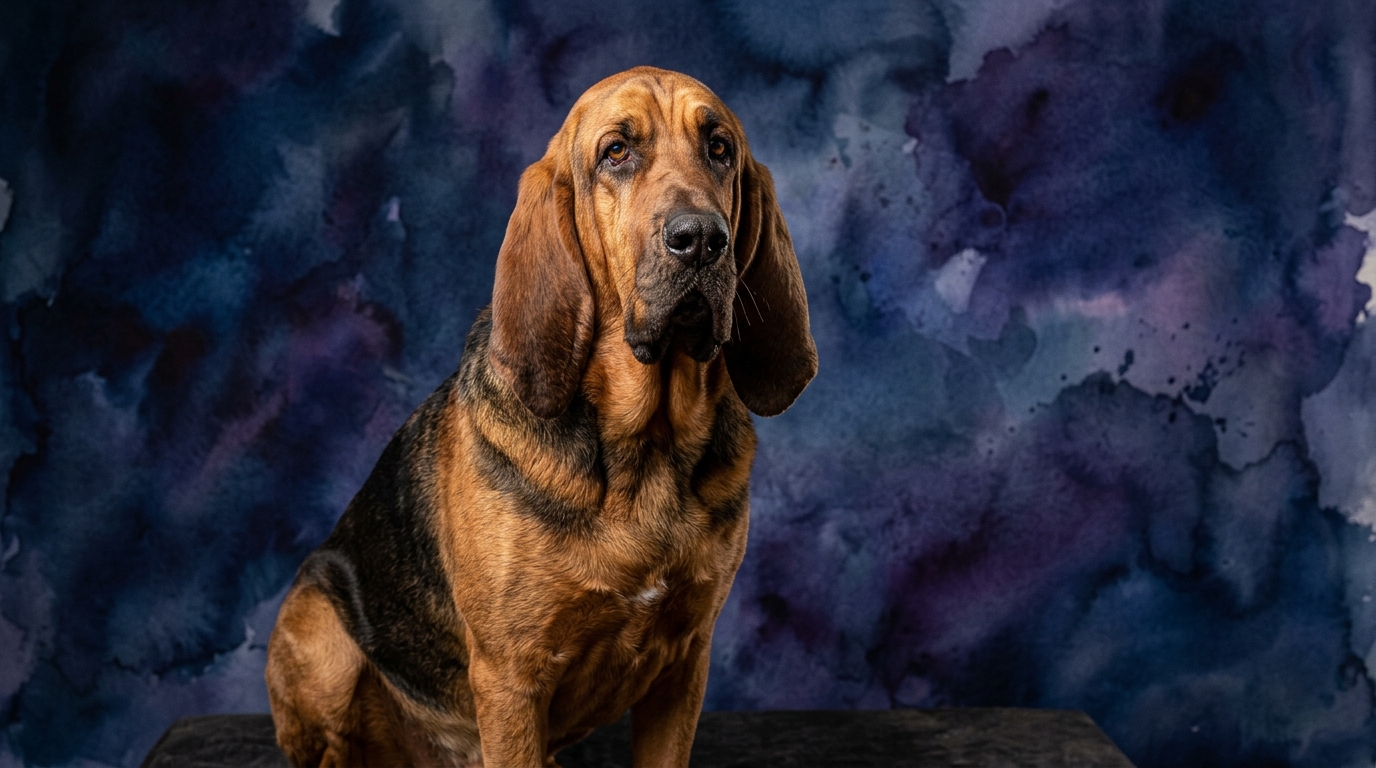
The Bloodhound, ranked #74 by Coren, presents a profile dominated by its singular purpose. Its Problem Solving is rated 5/5, reflecting an extraordinary capacity to unravel complex scent trails, often over vast distances and varied terrain. This is underpinned by a perfect 5/5 in Instinctive Drive, an unwavering compulsion to follow a scent, and a 5/5 in Memory, allowing it to retain and process intricate scent information for extended periods. However, this profound specialization comes with trade-offs: Training Speed is a low 1/5, indicating an independent nature where scent often overrides handler commands, and Social Intelligence is 2/5, meaning their focus is primarily on the trail, not necessarily on human cooperation in the moment.
The Wirehaired Pointing Griffon, while not Coren-ranked, offers a more balanced cognitive spread typical of a versatile sporting dog. Its Problem Solving is a solid 3/5, demonstrating an ability to figure out cooperative hunting tasks and adapt to various situations. Training Speed is 3/5, suggesting a moderate willingness to learn and respond to commands, making them more amenable to instruction than the Bloodhound. Social Intelligence also scores 3/5, indicating a cooperative disposition and an awareness of their human partners. Instinctive Drive is 3/5, present but manageable, focused on pointing and retrieving game rather than relentless independent tracking. Similarly, Memory is 3/5, sufficient for remembering commands, routines, and hunting locations.
Where the Bloodhound Excels Cognitively
The Bloodhound's cognitive superiority lies unequivocally in its olfactory processing and the unwavering dedication to its primary drive. Its 5/5 Problem Solving isn't about solving abstract puzzles, but about navigating a world of scent. This involves intricate pattern recognition in airborne molecules, discriminating between individual human odors amidst countless environmental distractions, and mentally reconstructing a path based solely on residual scent. This specialized problem-solving is intrinsically linked to its 5/5 Instinctive Drive, which provides the relentless motivation to pursue a trail for hours, even days. Furthermore, its 5/5 Memory is crucial for this task, allowing it to "remember" the nuances of a scent, differentiate fresh from old, and recall the specific target odor even after breaks or environmental interference. This combination makes them unparalleled in forensic tracking and search and rescue, tasks requiring deep, sustained cognitive engagement with scent.
Where the Wirehaired Pointing Griffon Excels Cognitively
The Wirehaired Pointing Griffon shines in areas requiring adaptability, cooperative problem-solving, and a more generalized approach to tasks. Its 3/5 Problem Solving, while not as specialized as the Bloodhound's, allows it to excel in varied hunting scenarios, figuring out how to work with a handler to locate, point, and retrieve game. This requires evaluating the environment, understanding handler cues, and adjusting strategies on the fly – a different kind of cognitive flexibility. Its 3/5 Social Intelligence is a significant advantage, enabling it to read human intentions, respond to commands, and actively engage in a partnership, which is vital for complex hunting maneuvers or even just living harmoniously in a family setting. The WPG's cognitive strengths are in its versatility and its capacity for collaborative effort, making it a more well-rounded companion for diverse activities beyond a singular, overriding drive.
Training Aptitude: Which is Easier to Train and Why?
When it comes to training, the Wirehaired Pointing Griffon generally presents a much smoother experience. Its Training Speed of 3/5 indicates a reasonable aptitude for learning and a desire to please its human companion, coupled with a 3/5 Social Intelligence that makes it attentive to handler cues. WPGs respond well to positive reinforcement and consistent methods, readily grasping basic obedience, advanced commands, and even complex sporting tasks. Their biddability means they are more likely to prioritize handler instructions over environmental distractions. In contrast, the Bloodhound's Training Speed is a mere 1/5. This isn't due to a lack of cognitive capacity, but rather an overwhelming 5/5 Instinctive Drive for scent work that can make them appear stubborn or disobedient when a compelling scent is present. Their independent problem-solving often means they prefer to follow their nose rather than a verbal command. Training a Bloodhound requires immense patience, creativity, and a deep understanding of their drive, often necessitating specialized techniques that incorporate scent work to maintain engagement, rather than trying to suppress their natural inclinations.
Matching Breeds to Lifestyles: Active vs. Relaxed Owners
Neither the Bloodhound nor the Wirehaired Pointing Griffon is truly suited for a "relaxed" owner in the sense of minimal daily engagement. Both are working breeds that thrive on activity, but their requirements differ significantly. The Bloodhound, with its 5/5 Instinctive Drive and 5/5 Memory for scent, demands an owner who is not just active, but dedicated to providing outlets for its unparalleled olfactory abilities. This means long, focused scent walks, participation in tracking sports, or even actual search and rescue work. Without consistent mental and physical stimulation directly related to scent, a Bloodhound can become restless, destructive, or vocal. An active owner for a Bloodhound is one who embraces and facilitates its specialized cognitive gifts. The Wirehaired Pointing Griffon, while also active, is more adaptable. Its 3/5 Instinctive Drive means it needs regular exercise like long walks, runs, or hikes, and its 3/5 Social Intelligence means it enjoys interactive play, retrieving games, and dog sports like agility or dock diving. An active owner for a WPG is someone who enjoys a variety of outdoor activities and wants a cooperative partner to share them with, without the singular, intense focus required by a Bloodhound.
The Verdict
Choose the Bloodhound if you are a dedicated individual or organization passionate about unlocking and utilizing an unrivaled scenting ability, prepared for extensive, specialized training and physical exertion focused on tracking. You must embrace their independent, scent-driven nature.
Opt for the Wirehaired Pointing Griffon if you seek a versatile, biddable, and cooperative canine companion for a range of outdoor activities, family life, and moderate training engagement. They offer a balanced partnership for active lifestyles.
🧠 Find Your Pet's IQ Score
Our Pet IQ Lab assessment covers 25+ tests across 5 cognitive dimensions — personalized to your breed.
Take the Full IQ Test →Frequently Asked Questions
Can a Bloodhound be a good family pet despite its low social intelligence score?
Yes, a Bloodhound can be a loyal and gentle family pet, particularly with proper socialization and an owner who understands their focus. Their lower social intelligence score primarily reflects their independence when on a scent trail, not a lack of affection for their family. They are generally good with children and other pets, provided their profound exercise and mental stimulation needs are met.
Is the Wirehaired Pointing Griffon suitable for first-time dog owners?
A Wirehaired Pointing Griffon can be suitable for a first-time dog owner who is committed to consistent training, socialization, and providing ample physical and mental exercise. Their moderate training speed and social intelligence make them more responsive and cooperative than many working breeds, but they still require dedicated effort to thrive.
How do these breeds compare in terms of house manners and general living?
Wirehaired Pointing Griffons generally adapt well to indoor living with sufficient exercise, being cooperative and eager to be part of family activities. Bloodhounds, while calm indoors if exercised, can be more challenging due to their strong scent drive leading to nose-to-the-ground exploration, potential for baying, and a propensity for slobber, requiring a more tolerant and prepared household.