
Side-by-Side IQ Profile: Tailored Cognition
The Cosmic Pet Pet IQ Lab assesses five crucial dimensions of canine intelligence, providing a nuanced view beyond simple 'smartness.' For the Bluetick Coonhound, each dimension registers a 3/5. This indicates a solid capacity for Problem Solving, particularly when it involves navigating complex outdoor environments and tracking elusive scents. Their Training Speed at 3/5 suggests they are capable learners, though their independent hound nature can sometimes present challenges to immediate compliance. Social Intelligence at 3/5 means they understand pack dynamics and human cues, but often prioritize their own mission. Instinctive Drive, also 3/5, underscores their powerful urge to hunt and follow a trail, making it a central aspect of their cognitive processing. Finally, their Memory at 3/5 is well-suited for retaining complex scent patterns and recalling specific hunting routes.
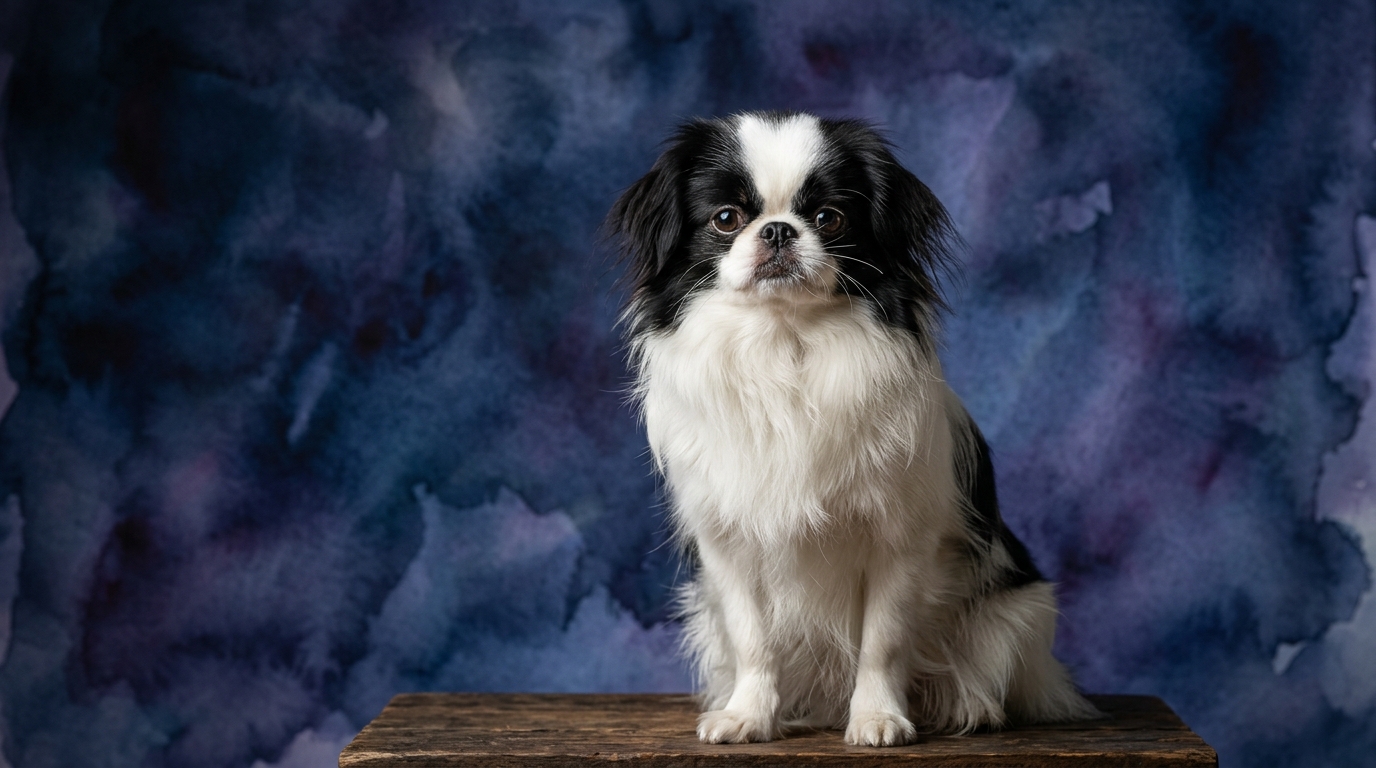
The Japanese Chin also scores 3/5 across all five IQ dimensions, yet these scores manifest quite differently in a breed designed for companionship. Their Problem Solving at 3/5 often involves figuring out how to gain human attention, manipulate toys, or find the most comfortable spot in the house. Training Speed at 3/5 indicates they pick up commands readily, especially when motivated by positive reinforcement and a desire to please their human. Social Intelligence, at 3/5, is a cornerstone of their existence, enabling them to read human moods and adapt to household routines with remarkable sensitivity. Their Instinctive Drive, also 3/5, is largely channeled towards social interaction and play rather than traditional prey pursuit. Memory at 3/5 allows them to recall specific people, routines, and preferred comfort areas with accuracy.
Where the Bluetick Coonhound Excels Cognitively
The Bluetick Coonhound's cognitive strengths are deeply rooted in their heritage as a working hound. Their 3/5 Problem Solving shines brightest in situations demanding sustained focus on a complex sensory input – namely, scent. A Bluetick can meticulously unravel an old trail, differentiating between countless odors and persisting for hours through varied terrain, a task that would overwhelm many other breeds. This isn't just about following; it involves making real-time decisions about direction, intensity, and age of scent, effectively solving a dynamic puzzle in motion. Their 3/5 Instinctive Drive fuels this entire process, transforming a mere scent into an irresistible cognitive command, pushing them to think and act with singular purpose.
Furthermore, their 3/5 Memory is specifically adapted for remembering intricate geographical layouts and the nuanced profiles of specific quarry scents. A Bluetick can recall a particular tree where a raccoon was treed weeks prior or distinguish the scent of a specific animal from others in the same area. This specialized memory, combined with their endurance, allows them to operate effectively and independently in vast outdoor settings, demonstrating a practical application of intelligence that prioritizes self-sufficiency and task completion over immediate human direction.
Where the Japanese Chin Shines Cognitively
In contrast, the Japanese Chin's cognitive prowess is finely tuned for the intricacies of human companionship. Their 3/5 Social Intelligence is a highly refined tool for reading subtle human cues, emotional states, and household routines. A Chin might instinctively understand when their owner needs comfort, when it's time for a walk, or when a quiet presence is preferred, often adapting their behavior without explicit commands. This ability to integrate seamlessly into human social structures demonstrates a sophisticated form of problem-solving centered around social harmony and reciprocal interaction.
Their 3/5 Problem Solving, within a domestic context, often manifests as clever strategies for getting what they want – whether it's coaxing an extra treat, finding a sunbeam, or initiating play. They are adept at learning routines and exploiting small windows of opportunity. This breed's 3/5 Memory excels at recalling preferences: which family member is most likely to share food, the exact location of their favorite toy, or the specific time of day for certain activities. This allows them to navigate their human-centric world with grace and efficiency, showcasing an intelligence geared towards comfort, connection, and subtle influence.
Training Dynamics: Independence vs. Eagerness
When it comes to training, the identical 3/5 Training Speed scores for both breeds belie significant behavioral differences. A Bluetick Coonhound, despite its capacity to learn, often approaches training with an independent spirit. Their powerful 3/5 Instinctive Drive means that if a compelling scent crosses their path, their focus on a human command can diminish rapidly. Training a Bluetick requires immense patience, consistency, and an understanding that their nose often dictates their priority. They learn best when training is integrated into activities that satisfy their natural drives, such as scent work or long-line recall, rather than purely obedience-based repetition.
The Japanese Chin, conversely, often presents as more eager to please, leveraging their 3/5 Social Intelligence to connect with their trainer. While they can learn commands at a respectable pace, their motivation often stems from the desire for interaction and positive attention. They might be sensitive to harsh corrections and respond best to gentle, reward-based methods. Their potential challenge lies in a shorter attention span for repetitive tasks if not made engaging, or using their 3/5 Problem Solving to cleverly avoid unwanted tasks if not properly motivated. Their training success hinges on building a strong, positive relationship and making learning a fun, interactive experience.
Lifestyle Match: Active Pursuit vs. Relaxed Companionship
The cognitive profiles of these two breeds naturally align with vastly different owner lifestyles. The Bluetick Coonhound, with its enduring 3/5 Instinctive Drive and problem-solving geared towards the outdoors, thrives with active owners who can provide ample physical and mental stimulation. They are not content with short walks; they require extensive opportunities to run, explore, and engage their powerful sense of smell. Owners who enjoy long hikes, scent work, or even hunting will find a highly compatible companion in a Bluetick. Their 3/5 Memory for trails and ability to operate independently means they are well-suited for owners who appreciate a dog with a strong sense of purpose and a need for challenging activities.
The Japanese Chin, on the other hand, is perfectly suited for more relaxed owners or those living in smaller spaces. Their 3/5 Social Intelligence and focus on human interaction means they are happiest when they are an integral part of family life, whether lounging on the couch or engaging in gentle play. While they enjoy walks, their exercise needs are modest compared to a hound. Owners who value a close, sensitive companion that can adapt to a quieter domestic routine will find the Chin's cognitive makeup ideal. Their problem-solving and memory are geared towards navigating a home environment and understanding the nuances of human companionship, making them excellent, low-impact housemates.
The Verdict: Choosing Your Canine Companion
The Verdict
Choose the Bluetick Coonhound if you are an active, outdoors-oriented individual or family seeking a persistent, independent partner for scent work, hiking, or hunting, who can appreciate a dog with a strong internal drive and purpose.
Opt for the Japanese Chin if you desire a sensitive, adaptable, and affectionate companion perfectly content with a relaxed indoor lifestyle, thriving on close human interaction and subtle communication.
🧠 Find Your Pet's IQ Score
Our Pet IQ Lab assessment covers 25+ tests across 5 cognitive dimensions — personalized to your breed.
Take the Full IQ Test →Frequently Asked Questions
Do Bluetick Coonhounds make good family pets?
Yes, Bluetick Coonhounds can be excellent family pets, known for their loyalty and good nature with children, provided their significant exercise and mental stimulation needs are consistently met. Their strong drive means they require consistent training and opportunities to engage their senses to prevent boredom.
Are Japanese Chins difficult to house train?
Japanese Chins can sometimes be a bit particular about house training, like many small breeds, requiring consistency and positive reinforcement from an early age. Their sensitive nature means harsh methods are counterproductive; gentle, reward-based training works best to build their confidence and cooperation.
How much exercise does a Bluetick Coonhound need daily?
Bluetick Coonhounds need a substantial amount of daily exercise, typically an hour or more of vigorous activity, which might include long runs, hikes, or dedicated scent work sessions. Their endurance and drive mean they are happiest when given a job to do or ample space to explore.