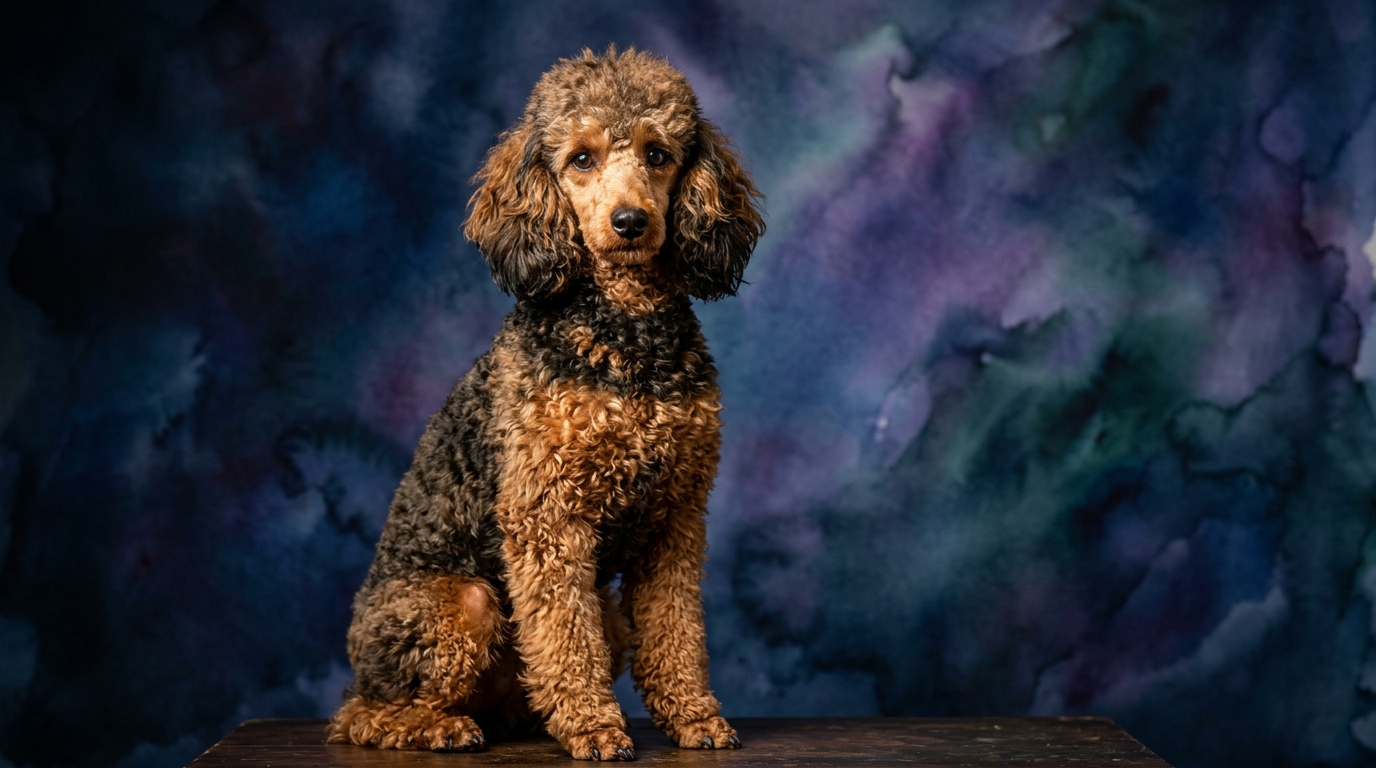
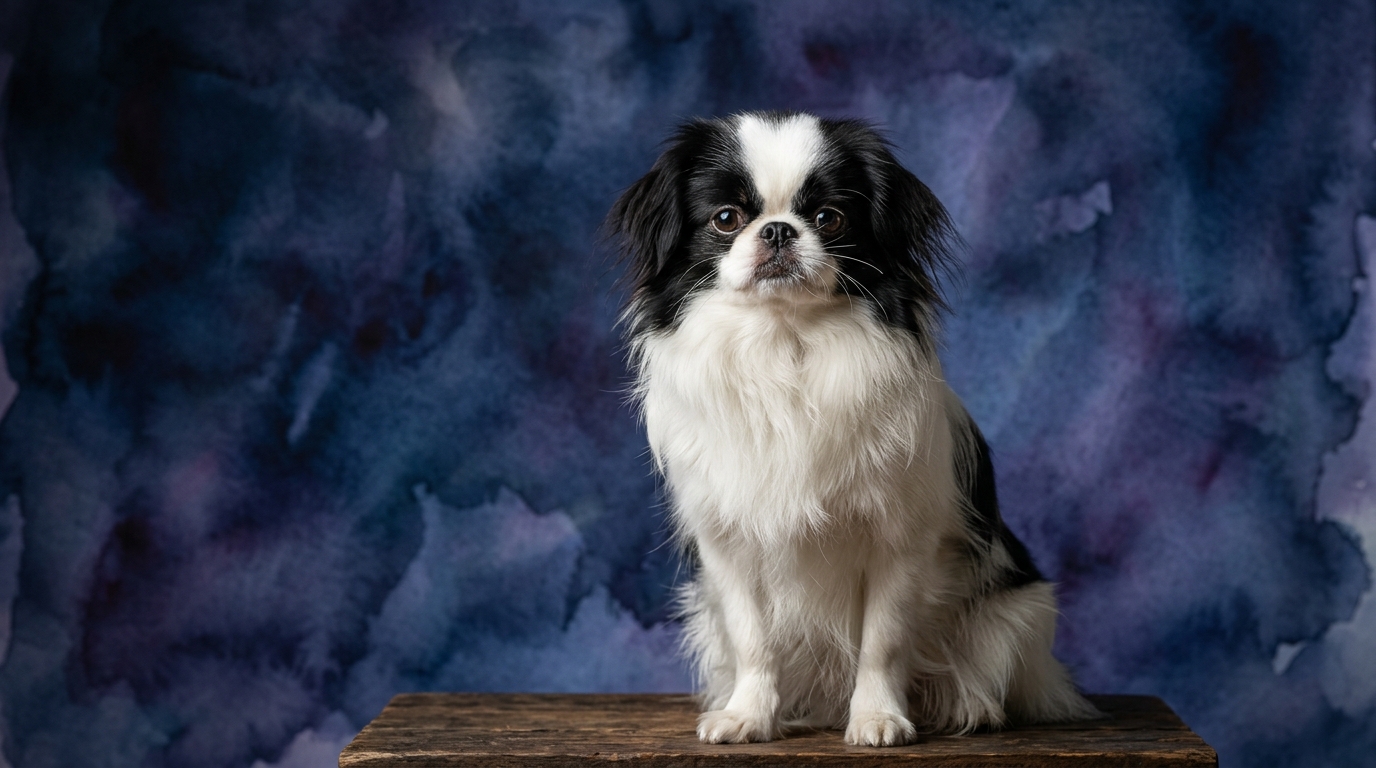
Side-by-Side Cognitive Profile: Standard Poodle vs. Japanese Chin
The Cosmic Pet Pet IQ Lab's assessment provides a granular view of each breed's cognitive strengths. For the Standard Poodle, recognized by Coren as rank #2, its profile is marked by exceptional scores across the board. Problem Solving is rated 5/5, indicating an outstanding capacity for analytical thought and adapting to new situations. Training Speed is also 5/5, reflecting their rapid assimilation of new commands and routines. Their Social Intelligence scores 5/5, showcasing a profound ability to interpret human cues and navigate complex social dynamics. Instinctive Drive, while not their highest, is a notable 4/5, hinting at their heritage as working dogs. Finally, Memory is an impressive 5/5, underpinning their ability to retain a vast repertoire of learned behaviors and experiences.
In contrast, the Japanese Chin, a Toy breed not appearing on Coren's ranking, presents a more moderate cognitive profile, tailored to its role as a companion. Its Problem Solving is rated 3/5, suggesting a practical, rather than highly analytical, approach to challenges. Training Speed is 3/5, indicating they learn steadily with consistent effort. Social Intelligence also stands at 3/5, pointing to a sufficient, though perhaps not overly nuanced, understanding of human interaction. Instinctive Drive is a lower 3/5, aligning with their history as indoor companions rather than working dogs. Their Memory is rated 3/5, sufficient for daily routines and familiar faces, but perhaps not for extensive complex recall. This comparison highlights not a deficit, but a fundamental difference in how these breeds are wired to interact with their environments and human partners.
Where the Standard Poodle Excels Cognitively
The Standard Poodle's cognitive profile paints a picture of a remarkably versatile and mentally agile companion. Their 5/5 rating in Problem Solving means they aren't merely rote learners but active thinkers capable of strategizing. For instance, a Standard Poodle might independently figure out how to open a child-proof gate after observing it a few times, or devise a method to retrieve a toy stuck under furniture using other objects. This capacity for analytical thought extends beyond simple tasks. Their 5/5 in Training Speed highlights their neural efficiency; they establish new associations quickly, linking a verbal cue to an action in remarkably few repetitions. This isn't just about obedience; it's about forming complex behavioral chains, such as those required in advanced dog sports like agility or competitive obedience, where sequences of commands must be executed precisely and fluidly. Furthermore, their 5/5 Social Intelligence allows them to navigate human environments with exceptional grace, often anticipating needs or reacting appropriately to subtle shifts in mood, making them particularly intuitive companions in diverse social settings. Their 5/5 Memory underpins all these abilities, ensuring that complex learned behaviors and social cues are retained over long periods, allowing them to build an extensive repertoire of skills and understandings.
The Poodle's high Coren rank of #2 further cements its position as a breed that processes information and learns new tasks with remarkable proficiency. This isn't just about performing tricks; it's about their inherent capacity to understand and respond to human communication, making them highly adaptable in various roles, from service dogs to performance athletes. Their cognitive strengths allow them to thrive in environments that offer consistent mental engagement and opportunities to apply their problem-solving skills.
Where the Japanese Chin Excels Cognitively
While the Japanese Chin's cognitive scores might appear modest in direct comparison, their unique strengths lie not in broad versatility but in a focused, specialized intelligence suited for their historical role. Their 3/5 in Problem Solving, for example, isn't a deficit but rather an indication that their problem-solving is often centered on social manipulation or comfort-seeking rather than complex environmental navigation. A Chin might not dismantle a puzzle toy with the same speed as a Poodle, but they excel at "solving" the problem of getting attention or a preferred spot on the couch through charming persistence and subtle cues. Their 3/5 Training Speed reflects a need for patience and positive reinforcement, but it also means they are less prone to developing unwanted complex behaviors quickly without careful management. The Chin’s 3/5 Social Intelligence is perfectly adequate for forming deep, devoted bonds with their chosen humans, often exhibiting a quiet understanding of household rhythms and personal preferences, even if they don't overtly "read" every nuanced human emotion.
The Japanese Chin’s 3/5 Instinctive Drive is a significant win for owners seeking a calm, indoor companion; they are less likely to be driven by strong prey drives or an incessant need for "work," preferring instead to be a cherished presence. This lower drive translates to a relaxed disposition that many find highly desirable, making them excellent companions for quiet homes. Their 3/5 Memory serves them well for remembering routines and the comforting presence of their family, contributing to their steadfast loyalty. Their cognitive makeup is perfectly aligned with a life of affectionate companionship, where subtle interactions and a calm demeanor are prioritized over high-octane mental exertion.
Ease of Training: Poodle vs. Chin
When evaluating ease of training, the Standard Poodle unequivocally holds an advantage. Their 5/5 Training Speed means they absorb new commands and concepts with remarkable efficiency. This isn't just about learning "sit" quickly; it extends to complex sequences, nuanced cues, and adapting to new environments. For example, a Poodle typically masters recall in busy park settings much faster, processing distractions while still responding to their handler. Their high Problem Solving (5/5) means they can generalize learned behaviors to new situations and even offer creative solutions when a direct command isn't immediately obvious. A Poodle might infer what's expected in a novel training scenario based on prior experiences, reducing the need for repetitive guidance. This contrasts with the Japanese Chin's 3/5 Training Speed, which necessitates a more patient, consistent, and often reward-heavy approach.
A Chin might take longer to reliably perform a "stay" command, especially with distractions, because their processing speed for new information is more moderate. Their Problem Solving (3/5) is less geared towards deciphering human instructions for complex tasks, meaning they might require more structured, step-by-step guidance rather than inferring expectations. For instance, house-training a Chin may demand a more rigorous schedule and immediate positive reinforcement for success, as they might not generalize "potty outside" as quickly to different doors or weather conditions as a Poodle. The Poodle’s high Social Intelligence (5/5) also makes them highly attuned to their trainer's body language and vocal inflections, allowing for more subtle communication and quicker adjustments during training sessions, which significantly streamlines the training process.
Matching Canine Cognition to Owner Lifestyles
The choice between a Standard Poodle and a Japanese Chin largely depends on an owner's lifestyle and their preferred level of daily engagement. For active owners, the Standard Poodle is an ideal match. Their robust 4/5 Instinctive Drive means they thrive on having a purpose, whether that's engaging in dog sports like agility, dock diving, or obedience, or simply accompanying their owners on long hikes and runs. Their exceptional Problem Solving and Memory (both 5/5) mean they not only enjoy physical activity but also mental challenges, making them perfect partners for owners who want to teach complex tricks, participate in scent work, or even train for therapy dog roles. A Poodle left without sufficient mental and physical outlets can become bored and potentially develop undesirable behaviors, channeling their cognitive energy into less constructive pursuits.
Conversely, the Japanese Chin is perfectly suited for more relaxed owners. Their 3/5 Instinctive Drive indicates a lower inherent need for intense physical exertion or constant mental stimulation. They are typically content with moderate daily walks, indoor play, and ample cuddle time on the sofa. An owner who enjoys quiet evenings, prefers less strenuous outdoor activities, or spends a significant amount of time at home will find the Chin's calm, affectionate demeanor to be a perfect fit. Their preference for companionship over demanding "work" means they are less likely to become agitated or destructive if a day involves more lounging than adventuring. Their moderate cognitive needs align seamlessly with a peaceful, home-centric lifestyle, offering a devoted presence without requiring a rigorous schedule of activities.
The Verdict
Choose a Standard Poodle if you are an active individual or family seeking a highly trainable, versatile companion eager for mental challenges and physical adventures, thriving on a shared purpose. Their exceptional cognitive abilities make them suitable for complex training, dog sports, and intuitive companionship in dynamic environments.
Opt for a Japanese Chin if you prefer a serene, devoted companion who thrives on quiet companionship and moderate activity, offering affectionate presence without demanding constant strenuous engagement. Their gentle nature and lower instinctive drives make them perfect for relaxed households and those seeking a charming, low-key friend.
🧠 Find Your Pet's IQ Score
Our Pet IQ Lab assessment covers 25+ tests across 5 cognitive dimensions — personalized to your breed.
Take the Full IQ Test →Frequently Asked Questions
Do Standard Poodles require a lot of mental stimulation?
Yes, Standard Poodles, with their 5/5 problem-solving and memory, genuinely thrive on mental engagement. Without consistent enrichment through training, puzzle toys, or interactive games, they can become bored and channel their considerable cognitive energy into less desirable behaviors.
Is the Japanese Chin difficult to house-train due to its moderate training speed?
While the Japanese Chin's 3/5 training speed means they may require more patience and consistency than some breeds, they are certainly trainable. Success in house-training relies on a strict schedule, immediate positive reinforcement, and understanding that they learn at a steady rather than rapid pace.
How do their social intelligence ratings impact their interactions with strangers?
A Standard Poodle's 5/5 social intelligence often means they are adept at reading new people and situations, generally being more adaptable and potentially more outgoing or discerning with strangers. The Japanese Chin's 3/5 social intelligence, while adequate for family, might translate to a more reserved or selective approach with unfamiliar individuals, preferring to observe before engaging.