
Side-by-Side IQ Profile: German Shepherd vs. Japanese Chin
The Cosmic Pet Pet IQ Lab employs a five-dimensional cognitive assessment to evaluate canine intelligence, offering a nuanced understanding of each breed's mental aptitudes. Here’s how the German Shepherd and Japanese Chin compare across these critical areas.
The German Shepherd, ranked #3 by Coren, exhibits a consistently high cognitive profile, reflecting its heritage as a versatile working dog. Its Problem Solving is rated 5/5, indicating a remarkable capacity for complex thought, adept at navigating intricate tasks, understanding multi-step commands, and independently figuring out solutions to novel challenges. Training Speed also stands at 5/5, demonstrating an extraordinary aptitude for rapid learning, often grasping new commands and routines within a few repetitions. Social Intelligence is 5/5, revealing acute awareness of human emotions, intentions, and social cues, enabling deep bonds and nuanced communication. Instructive Drive is likewise 5/5, characterized by an exceptionally strong innate motivation to work, protect, and herd, fueling perseverance and vigilance. Finally, Memory is 5/5, showcasing exceptional long-term recall for commands, routines, and experiences, rarely forgetting learned behaviors.
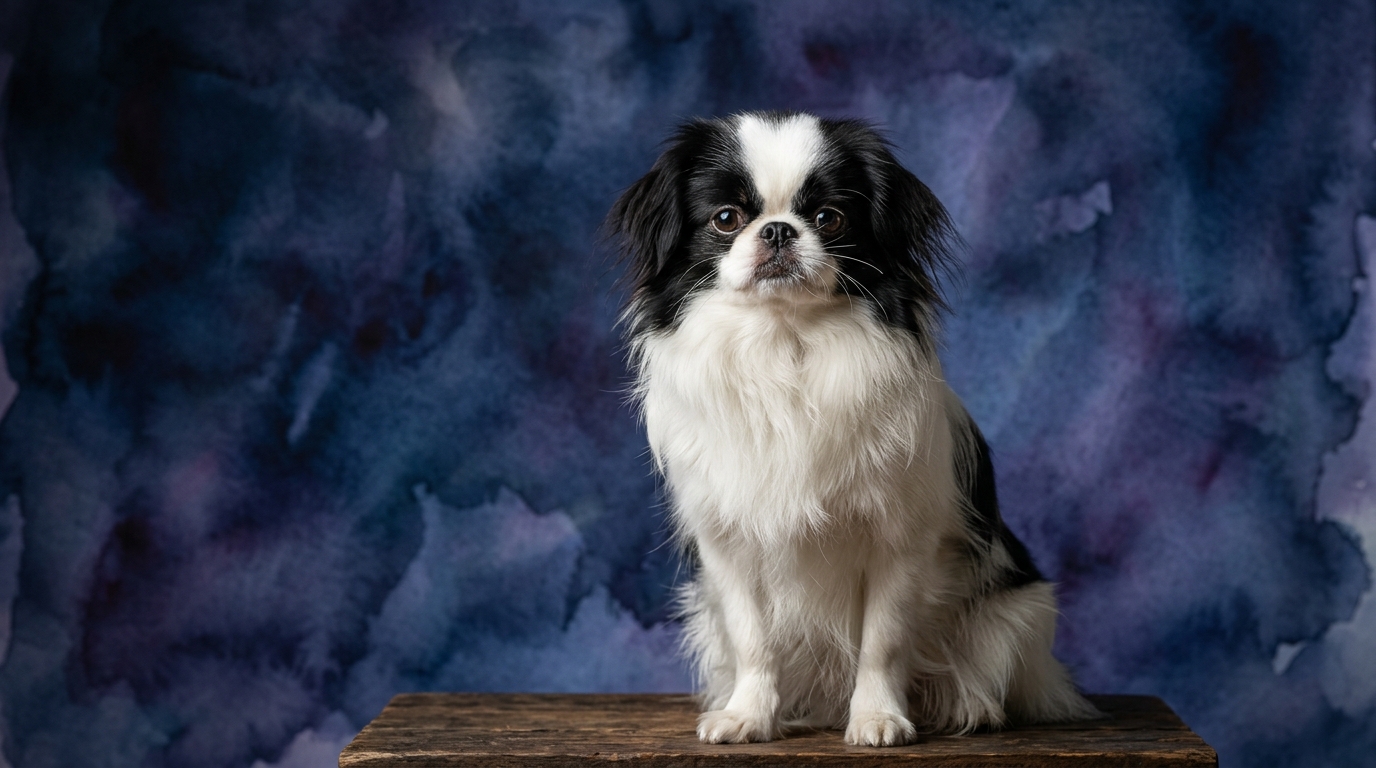
In contrast, the Japanese Chin, not Coren-ranked, presents a cognitive profile perfectly suited for its companion role, though with different numerical scores. Its Problem Solving is rated 3/5, meaning it is capable of solving straightforward puzzles and understanding basic routines, yet it typically doesn't demonstrate the same level of complex analytical thought or independent strategic planning as working breeds. Training Speed is 3/5, indicating a moderate learning pace that requires patience and consistent positive reinforcement. Social Intelligence is 3/5, showing it is highly attuned to its immediate human companions, forming close, affectionate bonds and responding to familiar cues, primarily focused on intimate family dynamics. Instructive Drive is 3/5, possessing a moderate level of innate motivation, primarily expressed as a desire for companionship, comfort, and play within a domestic setting. Memory is also 3/5, exhibiting good recall for daily routines, beloved people, and established household rules, though not for a vast array of complex commands.
Where the German Shepherd Wins Cognitively
The German Shepherd's cognitive strengths are undeniably rooted in its history as a versatile working dog. Their 5/5 problem-solving ability means they can dissect complex scenarios, such as tracking a scent through varied terrain or understanding multi-stage commands to navigate an obstacle course, demonstrating an impressive mental agility. The perfect 5/5 in training speed allows them to absorb and execute new directives with remarkable swiftness, making them adept at learning intricate behaviors for service work or competitive obedience in just a few repetitions. Furthermore, their 5/5 social intelligence translates into an uncanny ability to read human intentions and emotions, fostering a profound partnership essential for roles where precise, non-verbal communication is paramount, like guiding a visually impaired individual or responding to subtle handler cues in protection work. This combination of mental prowess makes them unparalleled in tasks requiring both intellectual depth and rapid execution.
Where the Japanese Chin Wins Cognitively
While the Japanese Chin's cognitive profile differs from the German Shepherd's, it excels in areas perfectly suited to its role as a beloved companion. Their 3/5 social intelligence, though not geared for complex working partnerships, translates into an exquisite sensitivity to their owner's moods within a domestic setting. They often intuitively understand when to offer comfort or solicit play, making them highly perceptive household members without requiring extensive training in this regard. Their moderate instinctive drive (3/5) is a distinct advantage for owners seeking a calm presence; they are less compelled by intense, independent tasks and more content with close human interaction, reducing the need for constant mental stimulation designed to redirect strong working instincts. This cognitive makeup fosters a harmonious, low-stress cohabitation, where their 'wins' are measured in emotional connection and peaceful domestic integration rather than task proficiency.
Which is Easier to Train and Why
Evaluating 'easier' in training requires nuance. The German Shepherd, with its 5/5 training speed and memory, undeniably learns new commands and complex routines at an accelerated rate. Their high instinctive drive and problem-solving skills mean they actively seek to understand and engage with training tasks, often eager to please and quick to generalize learned behaviors to new situations. This makes them highly responsive to consistent, structured training and capable of mastering advanced skills with relative efficiency. However, their intensity and cognitive capacity also demand a skilled, committed trainer who can provide consistent mental and physical challenges to prevent boredom or destructive behaviors.
In contrast, the Japanese Chin, with its 3/5 in training speed and memory, might take more repetitions and patience to grasp new concepts. Their lower instinctive drive means they are less likely to initiate complex tasks or push boundaries, making them 'easier' in the sense that they are generally less demanding in terms of high-intensity training sessions. For a novice owner, the Chin's more relaxed approach might feel less overwhelming, even if the learning process is slower and requires more consistent, gentle reinforcement over time.
Suitability for Active vs. Relaxed Owners
The German Shepherd is an ideal match for active owners who thrive on purposeful engagement and outdoor pursuits. Their powerful instinctive drive and robust problem-solving abilities demand consistent mental and physical challenges, making them suitable companions for activities like hiking, agility sports, obedience trials, or service work. Owners who enjoy dedicating significant time to training, exercise, and intellectual stimulation will find the German Shepherd a deeply rewarding and capable partner.
Conversely, the Japanese Chin is perfectly suited for relaxed owners seeking a devoted, low-key companion. Their moderate instinctive drive and social intelligence geared towards intimate family life mean they are content with shorter walks, indoor play, and ample cuddle time. Owners who prefer a less demanding daily routine, value quiet companionship, and appreciate a dog that integrates seamlessly into a calm household will find the Japanese Chin an excellent fit.
The Verdict
Choose a German Shepherd if you are an active, experienced owner prepared to dedicate substantial time to advanced training, mental stimulation, and physical exercise for a highly capable, purpose-driven partner.
Opt for a Japanese Chin if you seek a gentle, affectionate companion for a relaxed household, valuing quiet companionship and low-demand daily routines over intense training or strenuous activity.
🧠 Find Your Pet's IQ Score
Our Pet IQ Lab assessment covers 25+ tests across 5 cognitive dimensions — personalized to your breed.
Take the Full IQ Test →Frequently Asked Questions
Does a lower IQ score mean a dog isn't trainable?
Absolutely not; a lower IQ score simply indicates a different learning pace and aptitude for complex tasks, not an inability to learn. The Japanese Chin, with its 3/5 scores, can still learn a wide range of commands and manners with consistent, positive reinforcement, perfectly suiting its companion role.
How important is instinctive drive for a pet dog?
Instinctive drive is crucial as it dictates a dog's inherent motivation for certain behaviors, influencing their need for mental and physical outlets. A German Shepherd's high drive requires structured engagement, while a Japanese Chin's moderate drive means less intensive management for a harmonious pet life.
Can a Japanese Chin perform complex tasks like a German Shepherd?
While a Japanese Chin can learn many tricks and basic commands, their cognitive profile, with 3/5 in problem-solving and training speed, means they are not typically suited for the complex, multi-stage working tasks that a German Shepherd excels at, which demands a 5/5 capacity in these areas.