
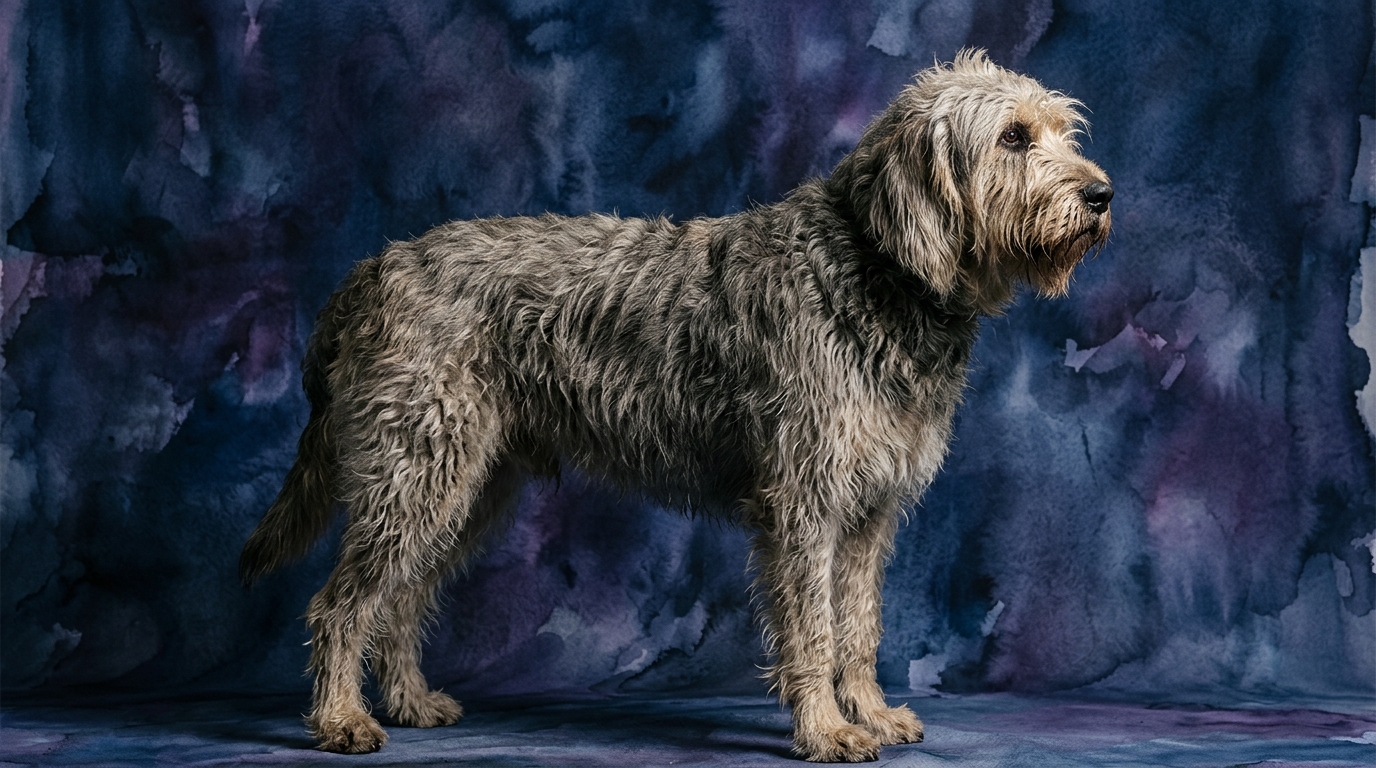
Side-by-Side IQ Profile: Bluetick Coonhound vs. Otterhound
At The Cosmic Pet Pet IQ Lab, both the Bluetick Coonhound and the Otterhound consistently register a 3/5 across all five cognitive dimensions: problem-solving, training speed, social intelligence, instinctive drive, and memory. While these numerical scores are identical, the expression of these cognitive traits is distinct, molded by their unique histories as specialized scent hounds.
The Bluetick Coonhound's problem-solving (3/5) manifests as a competent ability to unravel complex scent trails, navigate varied terrain to corner quarry, and adapt to unexpected shifts in pursuit. Their solutions are often direct and persistent, driven by the singular objective of locating and treeing game, showcasing a focused, methodical approach to environmental challenges. Their training speed (3/5) suggests they grasp new commands at a moderate pace, requiring consistent, positive reinforcement; however, their deep-seated focus on scent can intensely engage their attention, sometimes overriding immediate obedience cues. Social intelligence (3/5) in Blueticks demonstrates a moderate understanding of human social cues and strong family bonds, though their strong prey drive necessitates careful management in multi-pet households. Their instinctive drive (3/5) is a potent, intrinsic motivation for tracking, treeing, and baying, deeply ingrained over generations of coon hunting. Finally, their memory (3/5) is reliable for learned routes, established routines, and the specific scents of quarry or individuals, aiding in complex, multi-stage hunts.
The Otterhound's problem-solving (3/5) is characterized by a tenacious ability to track game through water and dense undergrowth, figuring out how to overcome obstacles like currents, tangled reeds, or uneven riverbeds. Their solutions often involve physical ingenuity, sustained effort, and a keen adaptability to challenging, fluid environments. Their training speed (3/5) is also moderate, but their independent nature and deep-seated hunting instincts mean that training requires patience and creative motivation, as their attention can easily wander to interesting smells or water. Social intelligence (3/5) in Otterhounds shows a moderate capacity for social connection, forming deep attachments with human companions and displaying a generally amiable disposition towards other canines, though their boisterous and playful nature can sometimes be perceived as overwhelming. Their instinctive drive (3/5) is equally powerful, historically centered around seeking and dispatching otter, manifesting as a relentless pursuit through varied terrain. Their memory (3/5) is solid, particularly for tracking patterns, favorite swimming spots, and the location of "interesting" smells or familiar territories, contributing to their effectiveness in repetitive hunting tasks and daily routines.
Where the Bluetick Coonhound Wins Cognitively
While sharing identical scores, the Bluetick Coonhound demonstrates a cognitive edge in tasks requiring sustained, linear focus on a single scent trail over vast distances, particularly when the quarry is treed. Their problem-solving (3/5) is finely tuned for the specific challenge of locating an animal aloft, demanding a particular blend of auditory processing, like interpreting the bay of fellow hounds, and spatial reasoning to pinpoint the exact tree. This specialized application of their general cognitive ability, refined for arboreal quarry, allows for a distinct advantage in tracking and confining game to trees. Their memory (3/5) excels in recalling intricate scent patterns and established routes, enabling them to retrace steps or cut corners with efficiency, a nuanced application of their general cognitive ability in a highly specific context.
Where the Otterhound Wins Cognitively
The Otterhound, conversely, excels in cognitive challenges involving complex, multi-sensory navigation in aquatic environments. Their problem-solving (3/5) is uniquely adapted to deciphering scent trails that dissipate and reform in water, requiring continuous re-evaluation and adaptation to currents and variable terrain, a skill set distinct from a purely land-based chase. This environmental flexibility in applying their cognitive resources provides a distinctive strength. Their instinctive drive (3/5) is perhaps more versatile in its application across both land and water, demanding a greater cognitive flexibility to seamlessly switch between different modes of pursuit and sensory input, allowing them to adapt to the dynamic challenges of their original hunting grounds.
Which is Easier to Train and Why
Neither breed is considered effortlessly trainable due to their strong, independent hound nature, but their specific challenges differ, even with identical 3/5 training speed scores. The Bluetick Coonhound can be more challenging due to its intense focus on scent work; once their nose is engaged, diverting their attention requires significant effort and a highly motivating reward system that can compete with the allure of a trail. Their deep, resonant baying, while characteristic, can also be a difficult behavior to modify without consistent, early intervention and management, as it is a deeply ingrained part of their communication.
The Otterhound, also rated 3/5 for training speed, presents its own considerations; they tend to be more independent and can appear less driven to please than some other breeds, often preferring to follow their nose or explore rather than comply immediately. Their boisterous nature and deep love for water can also lead to boisterous, wet antics that require patient, consistent guidance from a young age to ensure good manners and appropriate social interactions. Ultimately, a Bluetick might be perceived as marginally “easier” if the owner is prepared to harness their relentless drive for scent work into structured activities, whereas an Otterhound requires a trainer who appreciates and can channel their jovial independence and sometimes “clownish” nature with consistent, positive methods.
Which Suits Active Owners vs. Relaxed Owners
Bluetick Coonhounds are undeniably suited for owners who embody an active, adventurous lifestyle, particularly those who enjoy outdoor pursuits like hiking, “scent work” games, or even participation in coonhound trials. Their high stamina and intense instinctive drive (3/5) demand significant physical and mental engagement daily, thriving on structured work that allows them to utilize their powerful nose and vocalizations in a purposeful manner. A relaxed owner would quickly find themselves overwhelmed by a Bluetick’s unmet energy requirements, which could manifest as destructive behaviors, excessive baying, or persistent restlessness within the home environment.
Otterhounds also require active owners, though perhaps with a slightly different emphasis on activity types. Their history as otter hunters means they possess formidable stamina and a deep love for water, making them ideal companions for those who enjoy swimming, long walks, or robust play in varied, often wet, environments. While still very energetic, their play can sometimes be more boisterous and less intensely focused than a Bluetick’s scent pursuit, often involving splashing and enthusiastic exploration. A relaxed owner might struggle with their need for consistent exercise and mental stimulation, but their generally amiable and sometimes comical disposition might make their energy slightly more manageable in a home setting compared to the singular, driven focus of a Bluetick.
The Verdict
Choose a Bluetick Coonhound if you are an active, experienced owner eager to engage deeply in scent-based activities, offering consistent mental and physical challenges to satisfy their intense drive. They thrive with structured 'work' that allows them to use their powerful nose and vocalizations.
Opt for an Otterhound if you seek a boisterous, affectionate companion who loves water and robust outdoor activities, and you are prepared for their independent spirit and consistent grooming needs. They excel in homes that can provide ample space and opportunities for varied exploration and play.
🧠 Find Your Pet's IQ Score
Our Pet IQ Lab assessment covers 25+ tests across 5 cognitive dimensions — personalized to your breed.
Take the Full IQ Test →Frequently Asked Questions
Do Bluetick Coonhounds or Otterhounds bark a lot?
Both breeds are hounds and possess a characteristic 'bay' rather than a bark, which they use to alert during tracking. While Blueticks are particularly known for their resonant, frequent baying when on a scent or bored, Otterhounds also bay, especially when excited or engaged in play. Management of vocalizations through early training is crucial for both breeds.
Are Bluetick Coonhounds or Otterhounds good family dogs?
Both can be good family dogs with proper socialization and training, often displaying affection for their human families. Blueticks bond closely but require significant exercise to prevent restlessness, while Otterhounds are generally boisterous and playful, getting along well with children who understand how to interact with a large, energetic dog. Supervision is always recommended, especially with smaller children.
How much exercise do these breeds need daily?
Both Bluetick Coonhounds and Otterhounds are high-energy working breeds requiring substantial daily exercise. A Bluetick needs at least 1-2 hours of vigorous activity, ideally involving scent work or long runs, while an Otterhound benefits from similar durations of activity, often including swimming or robust outdoor play. Mental stimulation is equally important to prevent boredom and destructive behaviors.