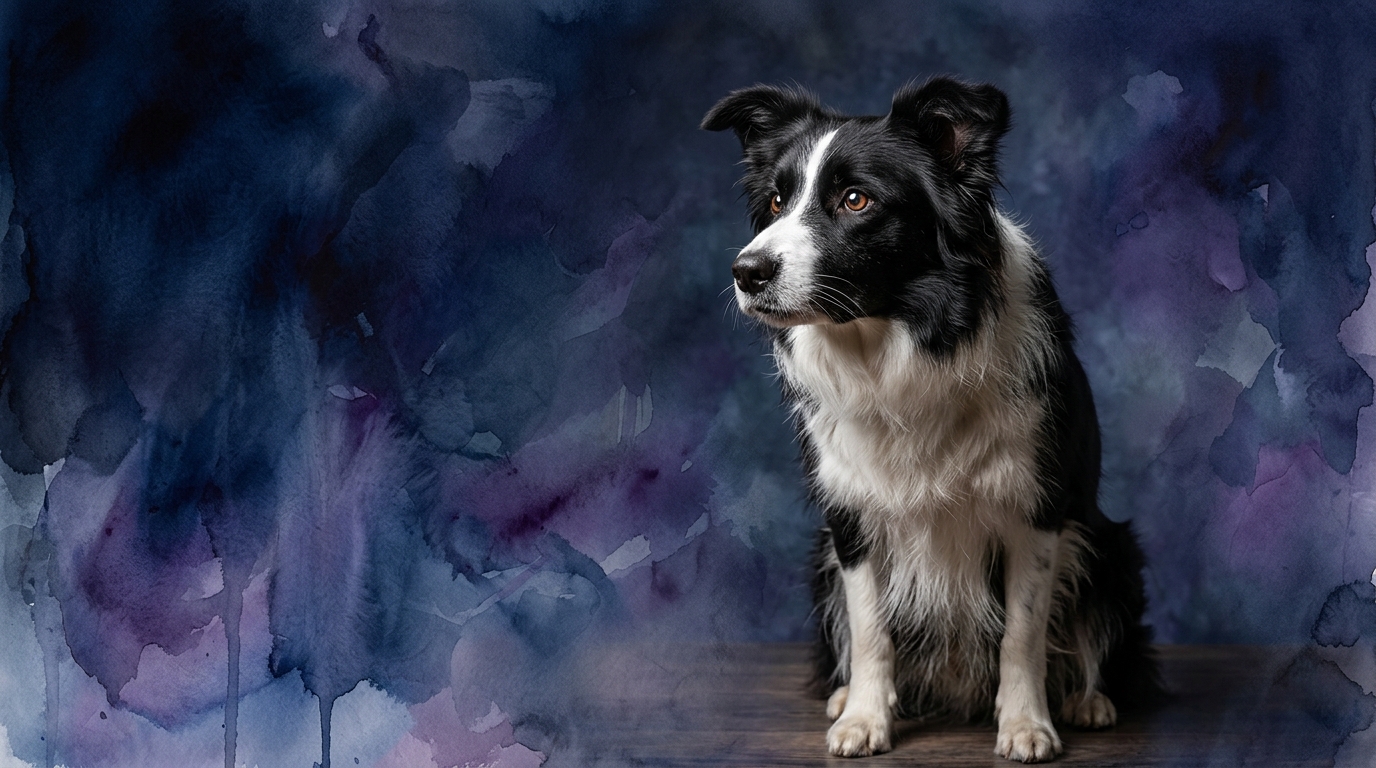
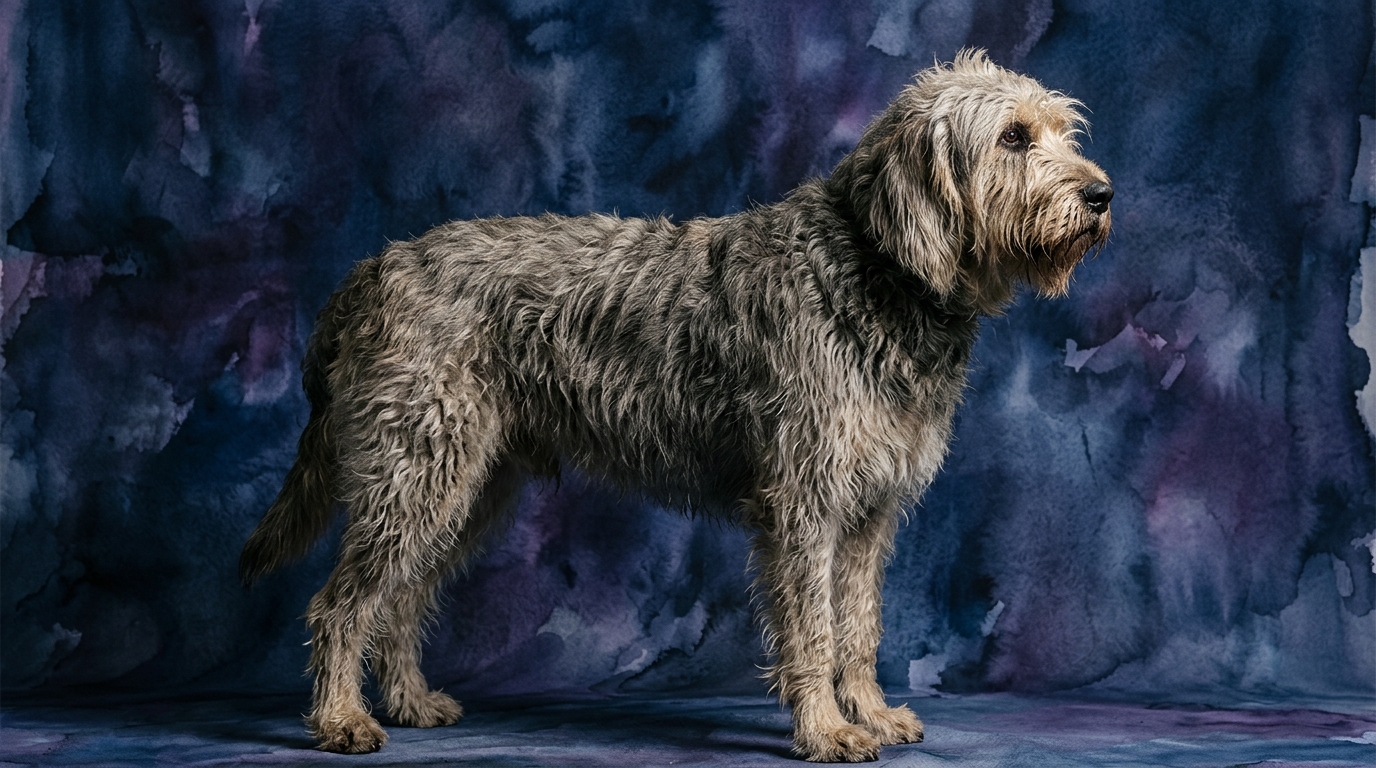
Side-by-Side Cognitive Profile
At The Cosmic Pet Pet IQ Lab, we analyze canine cognition across five key dimensions, revealing the nuanced mental architecture of each breed. The Border Collie, often cited for its exceptional mental faculties, presents a profile geared towards intricate tasks and rapid learning, while the Otterhound exhibits a specialized intelligence rooted in sensory perception and sustained pursuit.
For the **Border Collie**, Problem Solving registers at a perfect 5/5, indicating an outstanding capacity to navigate complex scenarios, strategize, and adapt to novel challenges without extensive human guidance. Training Speed also achieves a 5/5, reflecting their swift acquisition of new commands and behaviors, often requiring minimal repetition for mastery. Social Intelligence stands at 4/5, signifying a strong attunement to human cues and a desire for cooperative interaction. Their Instinctive Drive is 5/5, a powerful intrinsic motivation for herding and controlled action, channeling their energy into purposeful engagement. Finally, Memory is 5/5, demonstrating an exceptional ability to recall sequences, commands, and learned experiences over extended periods.
The **Otterhound**, a breed whose cognitive strengths lie in a different domain, shows a distinct profile. Problem Solving is rated 3/5, suggesting they can tackle challenges but may require more time or simpler contexts compared to their herding counterparts. Training Speed is 3/5, meaning they learn at a moderate pace, often needing consistent, patient reinforcement. Social Intelligence is 3/5, indicating a sociable nature but with a degree of independence, less overtly focused on constant human validation. Instinctive Drive is 3/5, reflecting a powerful, focused drive for scent tracking that can override other impulses. Memory is 3/5, implying a functional recall for relevant experiences, particularly those linked to their primary sensory pursuits, but perhaps not the broad, multi-faceted memory of a Border Collie.
Where the Border Collie Excels Cognitively
The Border Collie's cognitive strengths are profoundly evident in their capacity for abstract thought and multi-step task execution. Their 5/5 Problem Solving isn't just about figuring things out; it's about anticipating outcomes and developing novel solutions to dynamic situations, such as maneuvering livestock through intricate paths. This breed demonstrates an unparalleled ability to generalize learned behaviors, applying solutions from one context to another, showcasing true cognitive flexibility. Their 5/5 Training Speed is a direct result of their rapid pattern recognition and an inherent eagerness to engage in cooperative learning, allowing them to absorb complex command sequences with remarkable efficiency. Paired with a 5/5 Memory, they retain vast repertoires of commands and routines, making them adept at advanced obedience, agility, and specialized working roles where precision and recall are paramount.
Where the Otterhound Excels Cognitively
While the Otterhound's cognitive scores may appear moderate in generalized metrics, their specialized intelligence is precisely tuned for their historical purpose. Their 3/5 Instinctive Drive, though numerically lower than a Border Collie's, represents an extraordinary capacity for sustained, independent focus on a scent trail, demonstrating a unique form of problem-solving centered on olfactory information processing. This breed excels at filtering out irrelevant sensory input to concentrate solely on a specific scent, a cognitive feat requiring immense mental stamina and discrimination. Their 3/5 Social Intelligence translates into a robust independence; they are less reliant on constant human direction when on a scent, making autonomous decisions critical for tracking. Their memory, while rated 3/5, is particularly strong for scent-related pathways and environmental cues, allowing them to retrace complex trails and navigate varied terrain with impressive accuracy, a distinct form of spatial and sensory recall.
Ease of Training: Behavioral Realities
Training a Border Collie is generally a more straightforward and rapid process due to their exceptional cognitive attributes. Their 5/5 Training Speed means they grasp new concepts quickly, often understanding a command after only a few repetitions. They possess an intense desire to work collaboratively with their human partners, driven by their high social intelligence and instinctive drive for purposeful activity. This translates into behaviors like maintaining eye contact, actively seeking instruction, and demonstrating high levels of focus during training sessions, making them highly responsive to positive reinforcement and eager for mental challenges.
Conversely, training an Otterhound typically requires more patience and a nuanced approach. Their 3/5 Training Speed means they learn at a more deliberate pace, and their 3/5 Instinctive Drive for scent work can easily override human-directed commands. An Otterhound's brain is wired to follow a compelling scent, making it challenging to redirect their focus once they are on a trail. While sociable, their 3/5 social intelligence means they are more independent thinkers, less inclined to ceaselessly seek human approval, and more likely to follow their nose than a verbal cue, necessitating persistent, engaging, and often scent-based training methods to capture their attention and motivate cooperation.
Suitability for Active vs. Relaxed Owners
The Border Collie is unequivocally suited for highly active owners who can provide substantial physical and, critically, mental engagement. Their 5/5 problem-solving and training speed demand constant intellectual stimulation, translating into a need for structured activities like advanced obedience, agility, herding, or complex puzzle solving. Without sufficient mental work, their powerful cognitive engines can lead to boredom and the development of self-directed, potentially undesirable, problem-solving behaviors. An owner who thrives on teaching new skills and participating in dog sports will find a Border Collie a profoundly rewarding companion.
The Otterhound, while requiring a good amount of physical exercise, caters to a different type of active owner, one who appreciates long, exploratory walks and outdoor adventures. Their activity needs are more about sustained endurance and sensory exploration rather than high-intensity, structured tasks. A relaxed owner, in this context, might be someone who enjoys leisurely but extensive hikes, allowing their Otterhound to engage its primary instinctive drive for scenting and exploration at its own pace. They are not dogs that will thrive on constant complex commands, but rather on opportunities to use their nose and investigate the world, making them suitable for owners who value independent exploration over structured mental exercises.
The Verdict: When to Choose Each Breed
The Verdict
Choose a Border Collie if you are an owner dedicated to providing consistent, high-level mental stimulation and structured training, eager to engage in complex activities and cooperative work.
Opt for an Otterhound if you value a companion with an independent spirit, enjoy long, exploratory outings where scenting is encouraged, and appreciate a dog whose cognitive strengths lie in robust sensory focus.
🧠 Find Your Pet's IQ Score
Our Pet IQ Lab assessment covers 25+ tests across 5 cognitive dimensions — personalized to your breed.
Take the Full IQ Test →Frequently Asked Questions
Do Otterhounds truly learn slower than Border Collies?
Based on our IQ data, Otterhounds exhibit a moderate training speed (3/5) compared to the Border Collie's rapid acquisition (5/5). This difference is less about inherent capacity and more about their primary drives and focus, with Otterhounds prioritizing scent exploration over human-directed tasks.
Can an Otterhound be trained for advanced obedience or dog sports?
While an Otterhound can certainly learn obedience, their independent nature and strong scent drive mean they may not achieve the same level of precision or enthusiasm for structured sports as a Border Collie. Success requires significant patience, creative motivation, and an understanding of their unique cognitive wiring.
Which breed requires more daily mental stimulation?
The Border Collie generally requires more *structured* mental stimulation, demanding complex problem-solving and learning tasks daily to prevent boredom. The Otterhound benefits from mental engagement through scent work and exploratory activities, which, while stimulating, are less about complex human-directed obedience.