Side-by-Side Cognitive Profiles
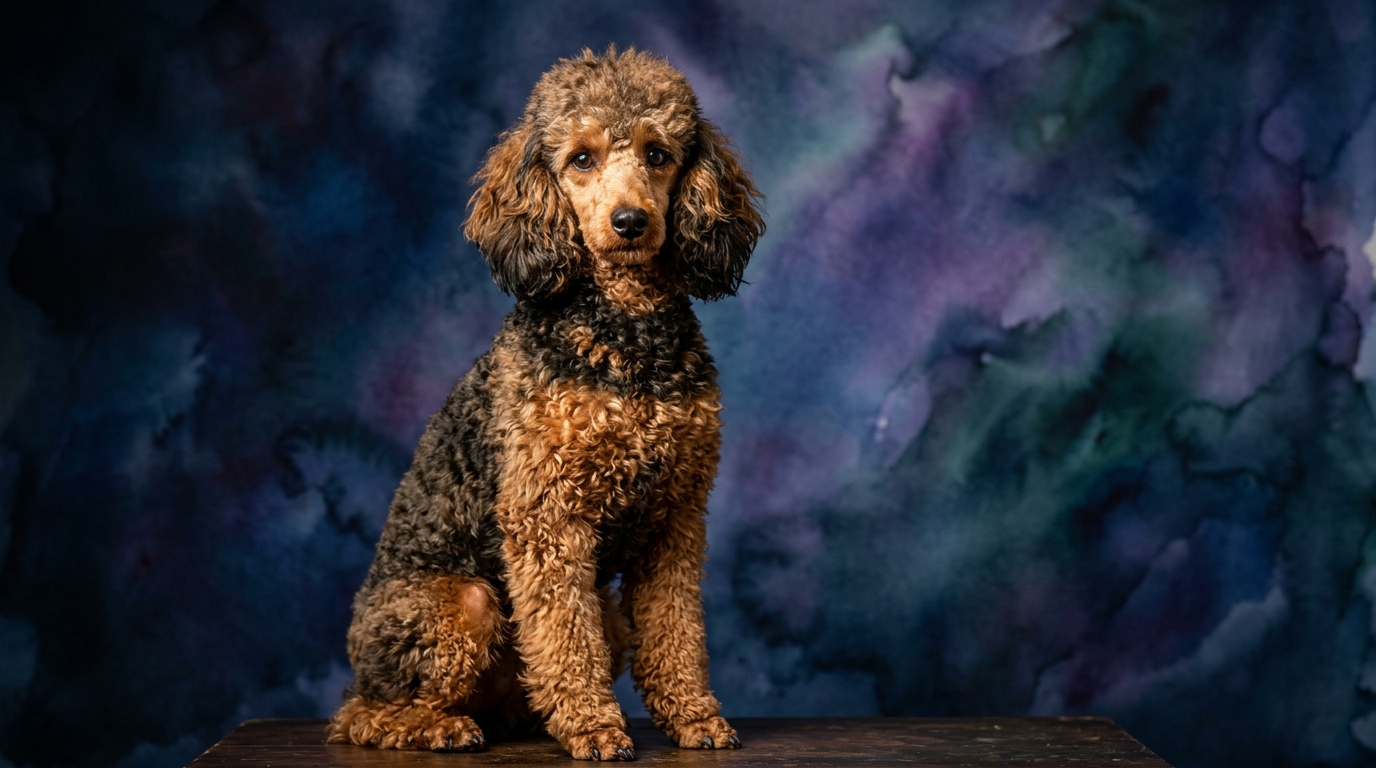
The Poodle (Standard) presents a cognitive profile ranked #2 by Dr. Stanley Coren, indicating a remarkable capacity for understanding and execution. Their Problem Solving is rated 5/5, reflecting an aptitude for complex learning and devising solutions to novel situations. Training Speed, also 5/5, highlights their rapid acquisition of new cues and eagerness to master tasks. Social Intelligence, at 5/5, signifies a profound understanding of human communication, emotional nuances, and adaptability within social structures. While their Instinctive Drive is 4/5, it’s a versatile drive, historically channeled into retrieving and performance, rather than a singular, overriding pursuit. Memory, scoring 5/5, underpins their ability to retain extensive vocabularies of commands, complex routines, and social learnings over extended periods.
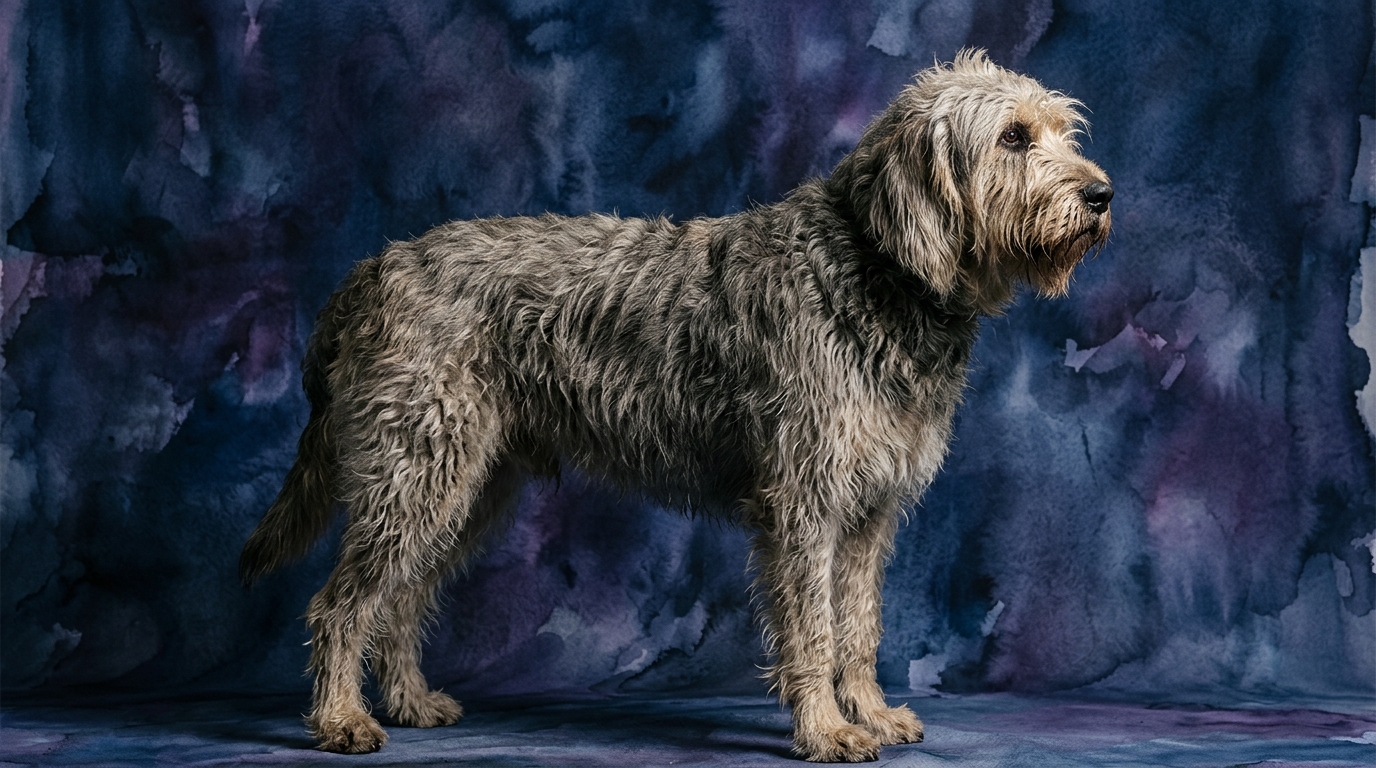
The Otterhound, a breed not traditionally included in Coren's rankings, offers a distinct cognitive makeup shaped by its specialized heritage. Its Problem Solving is rated 3/5, indicating a practical, often scent-driven approach to challenges, rather than abstract reasoning. Training Speed, at 3/5, suggests they learn at a moderate pace, often requiring more repetition and patient engagement. Social Intelligence, also 3/5, points to an independent yet loyal nature; they form strong bonds but may not exhibit the same nuanced responsiveness to human cues as the Poodle. Their Instinctive Drive, 3/5, is powerfully focused on scenting and tracking, a specialized strength that can sometimes overshadow other cognitive tasks. Memory, rated 3/5, is particularly effective for recalling complex scent trails and environmental details pertinent to their tracking work, though perhaps less so for arbitrary human-initiated commands.
Where the Poodle (Standard) Excels Cognitively
The Poodle (Standard)'s cognitive strengths are evident across multiple domains, reflecting their balanced yet profound intellectual capacities. Their 5/5 Problem Solving allows them to quickly grasp cause-and-effect, making them adept at puzzle toys, navigating complex environments, or even figuring out how to open latches. This ability extends to understanding abstract concepts, which is foundational for advanced training disciplines.
The 5/5 Training Speed means Poodles acquire new behaviors with remarkable efficiency, often needing only a few repetitions to solidify a command. This rapid learning curve makes them exceptional candidates for obedience, agility, rally, and other performance sports where precision and quick responses are paramount. Their 5/5 Social Intelligence is another standout, enabling them to read human body language, tone of voice, and even subtle emotional shifts, fostering a highly cooperative and communicative partnership. They often anticipate their owner's wishes and adapt their behavior accordingly. Coupled with a 5/5 Memory, they retain vast repertoires of commands and social protocols, allowing for consistent performance and predictable interactions over their lifetime, even after long breaks from training.
Where the Otterhound Excels Cognitively
While the Otterhound's overall scores appear lower in general cognitive metrics, their true intellectual prowess lies in their specialized, purpose-bred capabilities. Their 3/5 Instinctive Drive is not a weakness but a testament to an unwavering focus on their primary function: scent work. This drive manifests as an unparalleled ability to pick up and follow cold scent trails over vast distances, through diverse terrains, and even across water, a task requiring immense cognitive processing of olfactory data.
Their 3/5 Problem Solving, while not abstract, is acutely applied to the challenge of tracking. An Otterhound must analyze scent patterns, differentiate individual scents, and make strategic decisions about the most efficient path to follow, often ignoring distractions that would deter other breeds. Their Memory (3/5) is particularly robust for recalling intricate scent maps and routes, allowing them to re-establish a lost trail or remember successful hunting grounds. The Otterhound's 3/5 Social Intelligence, while less outwardly demonstrative than a Poodle's, is expressed through deep loyalty and a steadfast, if sometimes independent, bond with their family, valuing companionship on their own terms rather than constant human direction. Their cognitive strength is in their endurance and single-minded dedication to a task demanding extraordinary sensory interpretation and physical stamina.
Training Dynamics: Poodle (Standard) vs. Otterhound
Training a Poodle (Standard) is generally a more straightforward and rewarding endeavor for most owners, largely due to their 5/5 Training Speed and 5/5 Social Intelligence. They respond with enthusiasm to positive reinforcement, quickly connecting actions with desired outcomes. Their desire to cooperate and their capacity for understanding complex instructions mean they often pick up new tricks and commands within a few repetitions. Poodles are eager to engage in structured learning and thrive on mental stimulation, making them highly adaptable to various training methodologies and disciplines, from basic obedience to advanced competitive sports.
The Otterhound presents a different training experience, influenced by its 3/5 Training Speed, 3/5 Social Intelligence, and particularly its powerful 3/5 Instinctive Drive. Their world is dominated by scent, and once their nose is engaged, diverting their focus can be a significant challenge. Training requires immense patience, consistency, and a deep understanding of their breed-specific motivations. Owners often find success by incorporating scent games and making training sessions feel like a hunt or an engaging problem-solving activity. While they are loyal, their independent nature means they may require more convincing than a Poodle to perform a task if it doesn't align with their immediate olfactory interests. Their memory for arbitrary commands might be less robust than their memory for scent trails, necessitating ongoing reinforcement.
Lifestyle Suitability: Active vs. Relaxed Owners
The Poodle (Standard)'s adaptable cognitive profile and moderate to high energy levels make them suitable for a wide range of owner lifestyles. Their keen desire for mental engagement means they thrive with owners who provide regular training, puzzle toys, and opportunities for learning new skills. While they appreciate physical exercise, their contentment often stems more from intellectual challenge and close companionship. They can integrate well into both active households participating in dog sports and more relaxed environments, provided their need for cognitive stimulation and social interaction is consistently met.
The Otterhound, conversely, is best suited for active owners who understand and embrace their powerful instinctive drives. Their need for physical activity is substantial, often requiring long walks, hikes, or opportunities to engage their nose in a safe, expansive environment. A relaxed owner who cannot provide consistent outlets for their tracking instincts and stamina may find an Otterhound challenging, as unchanneled energy and olfactory drive can lead to independent, potentially destructive, behaviors. Owners who enjoy outdoor adventures and are willing to incorporate scent-based activities into their routine will find the Otterhound a tenacious and dedicated companion.
The Verdict
Choose the Poodle (Standard) if you seek a highly cooperative, adaptable companion eager to master complex tasks and deeply attuned to human social cues, thriving on diverse mental challenges and close interaction.
Opt for the Otterhound if you appreciate an independent, scent-driven companion, are prepared for extensive outdoor activities, and are patient with a breed whose primary cognitive strengths lie in tenacious tracking and endurance, rather than human-directed obedience.
🧠 Find Your Pet's IQ Score
Our Pet IQ Lab assessment covers 25+ tests across 5 cognitive dimensions — personalized to your breed.
Take the Full IQ Test →Frequently Asked Questions
Does an Otterhound's lower Coren rank mean it cannot learn complex tasks?
An Otterhound's cognitive strengths are specialized; while they may not excel at abstract, human-centric tasks as quickly as a Poodle, they are masters of olfactory problem-solving and can learn complex tracking sequences. Training success depends on leveraging their natural drives.
Are Poodles (Standard) prone to boredom if not adequately stimulated?
Yes, Poodles (Standard) possess a high capacity for problem-solving and memory, meaning they require consistent mental engagement to prevent boredom. Without sufficient intellectual challenge, they might devise their own, less desirable, forms of entertainment.
How does an Otterhound's strong instinctive drive impact its overall cognitive profile?
The Otterhound's powerful scent drive prioritizes olfactory information, often overriding other stimuli. This means their problem-solving and memory are highly efficient for tracking, but their attention to human-initiated commands might be less consistent when their nose is engaged, requiring training methods that integrate this natural inclination.