
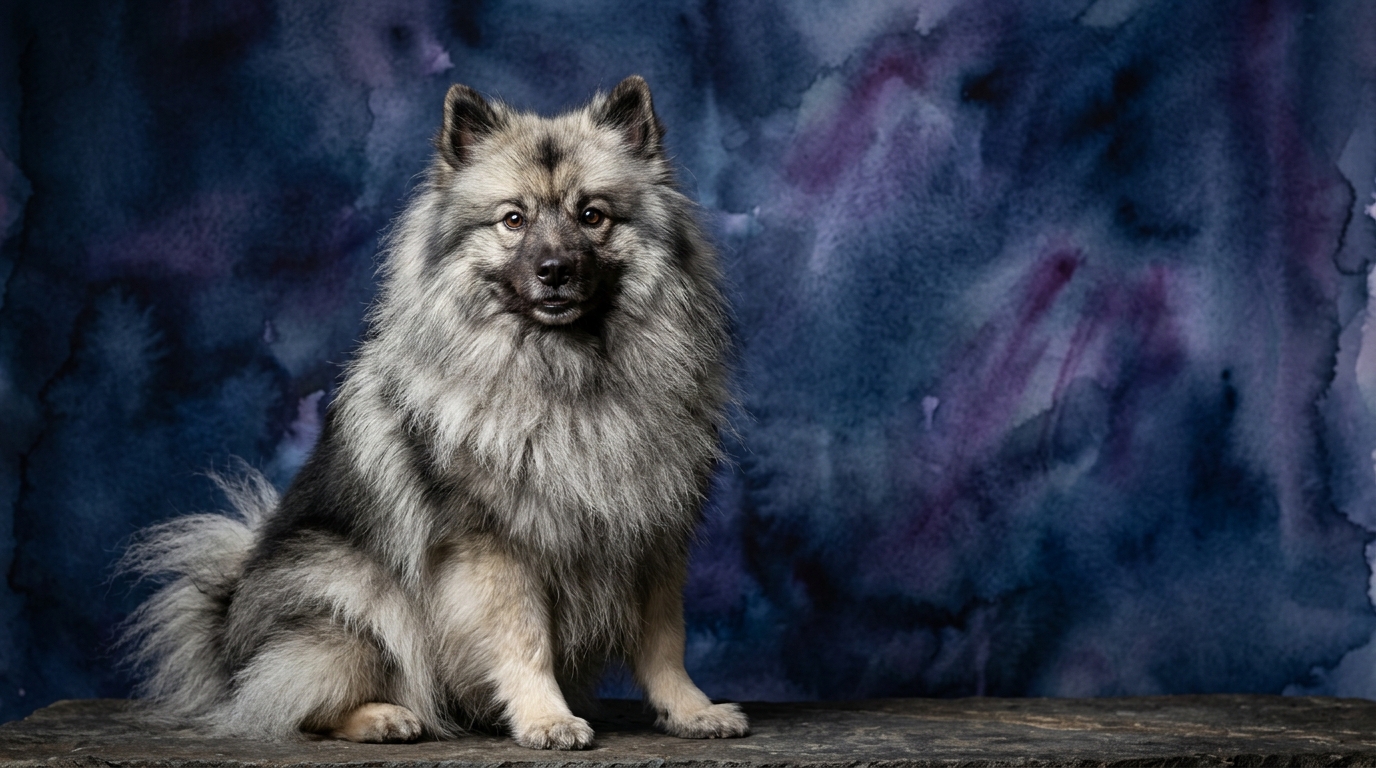
Side-by-Side Cognitive Profiles: Boerboel vs. Keeshond
The Cosmic Pet Pet IQ Lab employs a five-dimensional framework to assess canine cognition, offering a granular view beyond simple labels. For the Boerboel, a working breed originating from South Africa, its profile reflects its guardian heritage: Problem Solving at 3/5, Training Speed at 3/5, Social Intelligence at 3/5, Instinctive Drive at 3/5, and Memory also at 3/5. This suggests a dog that is capable and consistent, but perhaps not one to invent novel solutions on the fly or pick up complex commands with lightning speed. Its intelligence is geared towards steadfastness and reliable execution of its protective duties.
In stark contrast, the Keeshond, a non-sporting breed with a history as a companion and barge dog, presents a more academically inclined cognitive blueprint. It scores 4/5 in Problem Solving, indicating a greater capacity for analytical thought and creative solutions, and an impressive 4/5 in Training Speed, pointing to a rapid absorption of new information. Social Intelligence and Instinctive Drive are on par with the Boerboel at 3/5, suggesting a balanced approach to interaction and inherent motivators. However, the Keeshond truly distinguishes itself with an exceptional 5/5 in Memory, implying a remarkable ability to recall past experiences, learned behaviors, and routines with great accuracy and duration. This robust memory score positions the Keeshond as a dog that remembers lessons, both positive and challenging, and can build upon a rich mental archive of interactions and commands.
Where the Boerboel Excels Cognitively
While the Boerboel's individual scores might not reach the peaks seen in some breeds, its cognitive strengths lie in the synergistic application of its attributes within its intended role. Its 3/5 in Problem Solving, for instance, isn't about figuring out intricate puzzle toys but rather about assessing environmental threats and responding with appropriate, often physical, deterrents. This problem-solving is practical and situation-specific, rooted in its profound guarding instincts. A Boerboel might not devise an elaborate escape plan, but it will consistently identify and neutralize perceived dangers within its territory, relying on its commanding presence and strength.
Its 3/5 in Instinctive Drive is precisely calibrated for its protective duties, manifesting as an unwavering commitment to its family and property. This drive, combined with its moderate social intelligence, allows it to discern between familiar and unfamiliar, friend and foe, with a serious and focused demeanor. The Boerboel's memory, though 3/5, is sufficient for retaining critical boundaries, routines, and the identities of those it deems part of its inner circle. This consistency ensures reliability in its role, where predictability and steadfastness are paramount. Its intelligence is less about mental agility and more about resolute, purposeful action, making it an effective, formidable guardian.
Where the Keeshond Excels Cognitively
The Keeshond's cognitive profile paints a picture of a mentally agile and highly retentive companion. Its 4/5 in Problem Solving indicates a breed that genuinely enjoys mental challenges and can often figure things out independently. This might manifest as opening cabinets, navigating complex environments, or even understanding intricate sequences of commands. They are more likely to experiment with solutions to novel situations rather than simply relying on learned responses, demonstrating a curious and adaptable mind.
The Keeshond's 4/5 in Training Speed is a significant advantage, meaning new commands and tricks are absorbed rapidly, often requiring fewer repetitions than many other breeds. This quick uptake makes them particularly rewarding for owners who enjoy engaging in various dog sports or advanced obedience. However, its most striking cognitive attribute is its 5/5 Memory. This superior recall means a Keeshond will remember training cues, routines, household rules, and even specific past interactions or locations with remarkable clarity, sometimes for years. This robust memory contributes to their consistent behavior once a lesson is learned and allows them to build a deep understanding of their environment and human companions.
Which is Easier to Train, and Why?
Based on their IQ profiles, the Keeshond is generally easier to train than the Boerboel. The Keeshond's 4/5 Training Speed means it grasps new concepts quickly, often showing an eagerness to participate in training sessions. This rapid learning curve, coupled with its exceptional 5/5 Memory, ensures that once a command is learned, it is likely retained for the long term with minimal need for refreshers. Keeshonds often exhibit a desire to please their owners, which further enhances their trainability; they are generally responsive to positive reinforcement and thrive on mental engagement. Their problem-solving ability (4/5) also means they can generalize learned behaviors to new contexts and adapt to variations in commands.
The Boerboel, with a 3/5 in both Training Speed and Memory, requires a different approach. While capable of learning, they typically need more repetition and consistent reinforcement to solidify new behaviors. Their natural independence and strong guarding instincts mean that training often involves more than just teaching commands; it requires establishing clear leadership and trust. A Boerboel's problem-solving (3/5) is less about mental puzzles and more about practical, real-world scenarios, so abstract obedience might take more effort. Owners must be patient, consistent, and firm, understanding that the Boerboel's intelligence is geared towards its protective role, which sometimes means evaluating commands through its own lens of perceived safety and responsibility. Its training is more about shaping a reliable partner for specific tasks rather than a quick-witted performer of tricks.
Which Suits Active Owners vs. Relaxed Owners
Understanding the cognitive and behavioral traits of both breeds is crucial for matching them with the right owner lifestyle. The Boerboel, while not requiring constant high-impact physical exercise, demands an owner who is "active" in terms of consistent mental engagement, firm leadership, and dedicated training. Its strong guarding instincts and powerful physique necessitate an owner who can provide clear structure, socialize extensively from a young age, and commit to ongoing obedience training to channel its inherent drives productively. This breed thrives with owners who are experienced with large, formidable dogs and understand the commitment required to manage a dog with a protective temperament. They need ample space, a secure yard, and owners who are prepared to be vigilant and consistent in their management. A "relaxed" owner who prefers a hands-off approach to training or lacks confidence in handling a powerful dog would find the Boerboel challenging. They are suited for owners who are active in their approach to canine stewardship, providing purpose and boundaries.
The Keeshond, on the other hand, is a more adaptable companion that can suit both moderately active and relatively relaxed owners, provided their mental needs are met. While they enjoy walks and playtime, they don't typically require the intense physical exertion of a sporting breed. Their problem-solving (4/5) and high memory (5/5) mean they thrive on mental stimulation – puzzle toys, learning new tricks, or participating in dog sports like agility or obedience. A relaxed owner who enjoys engaging their dog in indoor games, consistent training sessions, and interactive play will find the Keeshond a rewarding companion. Their social intelligence (3/5) means they enjoy being part of the family's activities and are generally happy to lounge nearby, but they do require regular interaction to prevent boredom, which could lead to mischievous behaviors. They are better suited for owners who are active in providing mental enrichment and companionship, rather than purely physical exertion.
The Verdict
Opt for a Boerboel if you are an experienced dog owner seeking a steadfast, protective guardian with a serious demeanor, capable of consistent, purposeful action. This breed is ideal for individuals or families who can commit to rigorous, consistent training, early socialization, and who possess the confidence and leadership to manage a powerful dog with strong natural instincts, providing a secure environment and a clear role.
Select a Keeshond if you desire an engaging, mentally agile companion that is quick to learn and possesses a remarkable memory, thriving on interaction and moderate activity. This breed suits owners who enjoy consistent mental enrichment, are keen on positive reinforcement training, and seek a loyal, adaptable family member that will remember every lesson and interaction with clarity.
🧠 Find Your Pet's IQ Score
Our Pet IQ Lab assessment covers 25+ tests across 5 cognitive dimensions — personalized to your breed.
Take the Full IQ Test →Frequently Asked Questions
Does a Boerboel's lower IQ score mean it's not trainable?
Not at all. A Boerboel's 3/5 scores indicate it learns at a moderate pace and retains information steadily, but requires more consistent repetition and a firm, confident handler. Their intelligence is practical and focused on their protective role, meaning training should be clear, fair, and purposeful.
How does a Keeshond's superior memory impact daily life?
A Keeshond's 5/5 memory means they recall commands, routines, and past experiences with exceptional detail, making them consistent once trained and adept at anticipating daily events. This also means they vividly remember both positive and negative experiences, so early positive socialization and training are crucial for shaping their behavior.
Are Keeshonds prone to behavioral issues due to their problem-solving ability?
While their 4/5 problem-solving makes them clever, it means they need mental stimulation to prevent boredom, which can lead to inventive mischief if unmet. Providing puzzle toys, training challenges, and interactive play channels their cognitive energy constructively, ensuring their cleverness is a positive trait, not a source of trouble.