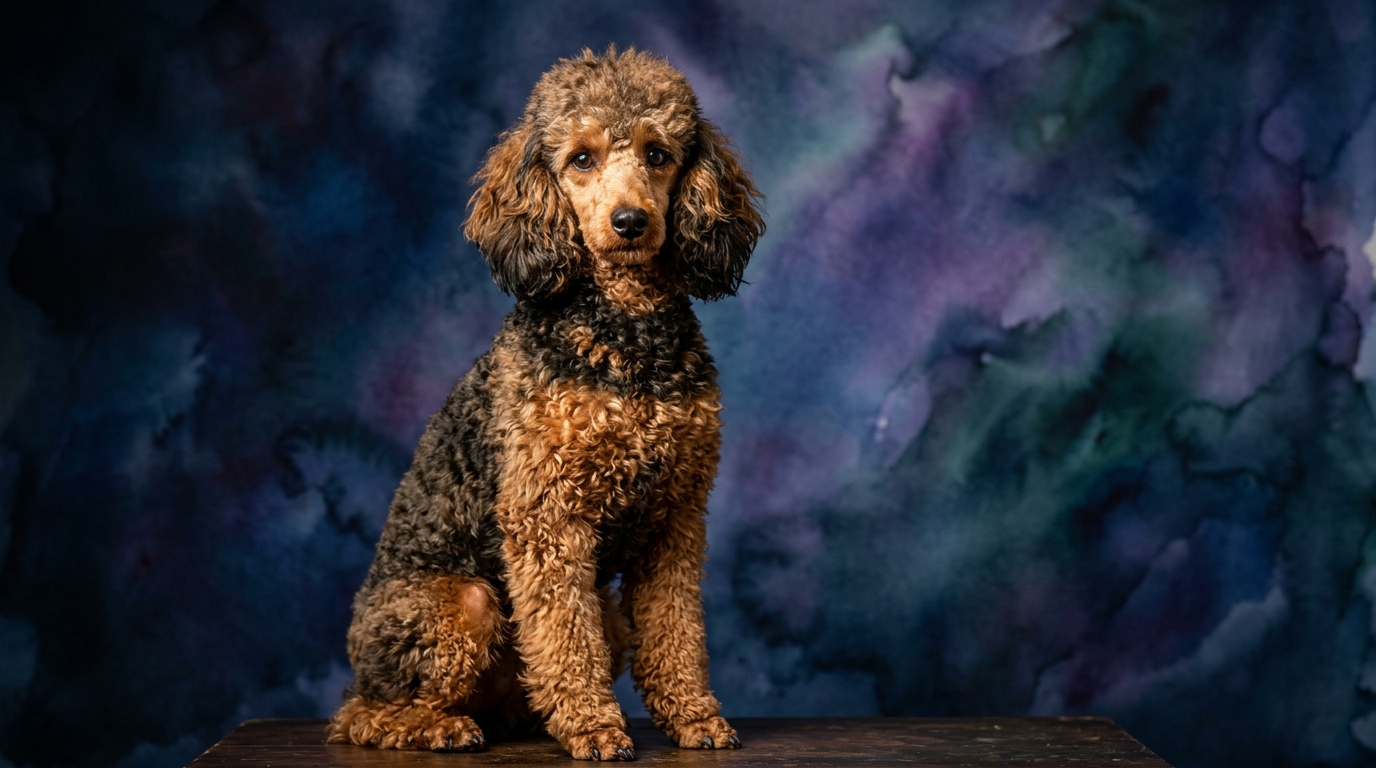
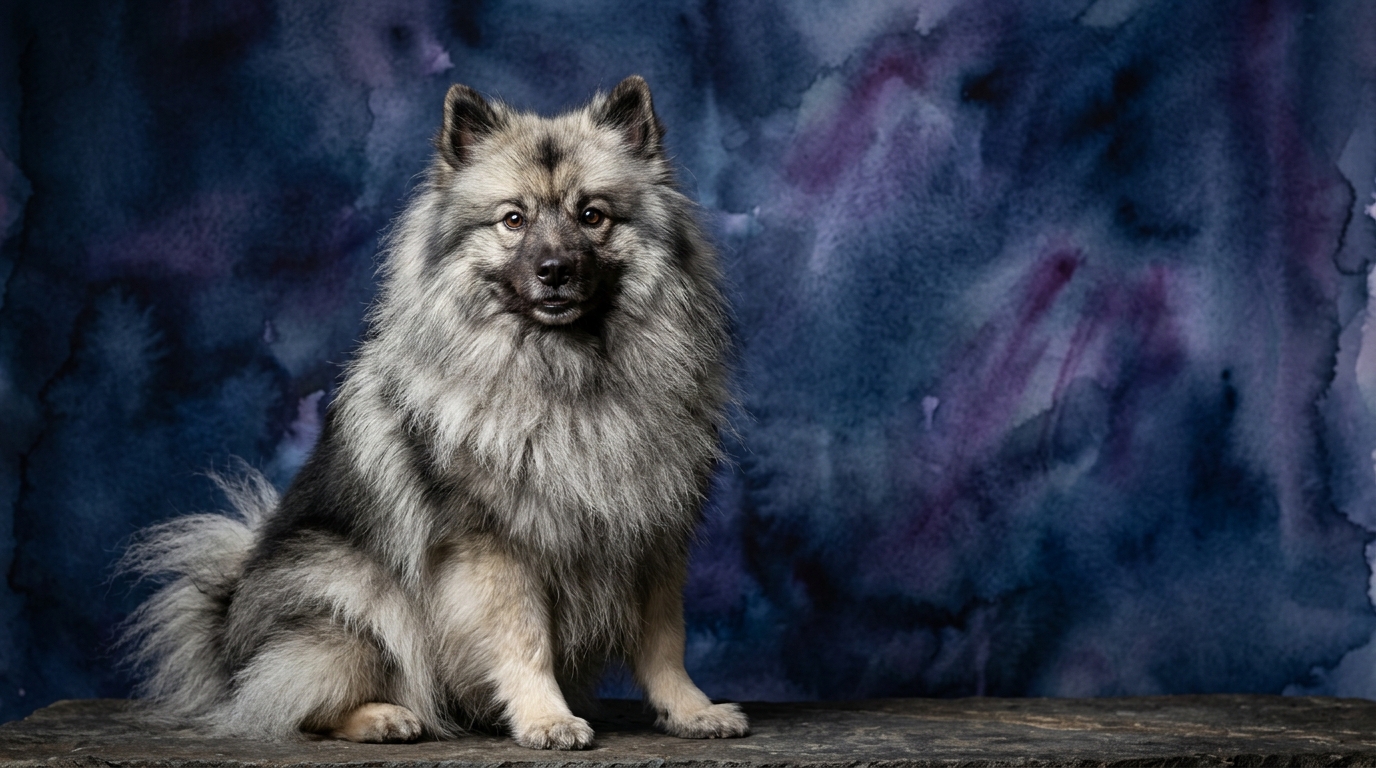
Side-by-Side IQ Profile: Poodle (Standard) vs. Keeshond
**Poodle (Standard)**: A breed consistently noted for its cognitive prowess, the Standard Poodle scores exceptionally across most dimensions. Their **Problem Solving (5/5)** indicates a profound capacity to analyze novel situations, experiment with different approaches, and successfully navigate complex environmental challenges. A Standard Poodle often figures out how to open latched gates, retrieve out-of-reach items, or untangle intricate puzzle toys with persistence. Their **Training Speed (5/5)** signifies an exceptional ability to grasp new commands and routines with few repetitions, making them stellar candidates for advanced obedience and dog sports. **Social Intelligence (5/5)** reflects a deep understanding of human cues, emotions, and social structures; they are highly attuned to their owners' moods and seek to integrate fully into social activities. With an **Instinctive Drive (4/5)**, Standard Poodles possess a notable inherent drive to perform tasks, often exhibiting a keen retrieving instinct or a strong desire to work alongside their human companions. A perfect score in **Memory (5/5)** means they retain learned information and experiences over long periods with remarkable accuracy.
**Keeshond**: The Keeshond presents a balanced and capable cognitive profile, particularly excelling in memory. Their **Problem Solving (4/5)** demonstrates a strong aptitude for figuring out moderate challenges and adapting to new situations effectively. They might take more time or trials than a Poodle for complex puzzles, but they are certainly not deterred and will work through them. Their **Training Speed (4/5)** indicates they learn new commands and behaviors at a commendable pace, responding well to consistent training methods and positive reinforcement, quickly picking up basic obedience. **Social Intelligence (3/5)** suggests Keeshonds are observant and generally amiable, but they tend to be somewhat more independent in their social interactions, often content to be near their family rather than always in the thick of the action, and might require clearer social cues. An **Instinctive Drive (3/5)** means they have a moderate level of inherent inclination for behaviors like watchdog duties, but generally exhibit a lower prey drive or less intense urge to constantly 'work' compared to breeds with higher scores. Matching the Poodle, Keeshonds achieve a perfect **Memory (5/5)**, exhibiting excellent recall of learned commands, routines, and past experiences over significant periods.
Where the Poodle (Standard) Wins Cognitively
The Standard Poodle's cognitive profile showcases a distinct edge in several key areas. Their 5/5 in Problem Solving means they not only grasp solutions but often innovate, finding novel ways to achieve goals, whether it’s manipulating a complex feeder toy or orchestrating an escape from a backyard gate. This contrasts with the Keeshond’s 4/5, which is capable but typically follows more conventional approaches. Similarly, the Poodle’s 5/5 Training Speed allows for an almost instantaneous uptake of new cues, enabling them to progress through multi-step commands and intricate routines with remarkable fluidity, often requiring fewer repetitions than the Keeshond’s still commendable 4/5. Perhaps most notably, the Poodle's 5/5 Social Intelligence translates into a profound empathy and attunement to human emotion and intention, making them exceptionally responsive to subtle social cues and deeply integrated into family dynamics, a trait that shines brighter than the Keeshond’s 3/5, which tends towards more independent observation.
Where the Keeshond Wins Cognitively
While the Keeshond's scores are generally a step below the Poodle's peak, their specific blend of traits can be considered a cognitive advantage for certain lifestyles. The Keeshond's 3/5 in Social Intelligence means they are affectionate but not excessively demanding of constant human attention. This can be a 'win' for owners who appreciate a devoted companion content to be near without needing to be the absolute center of every interaction, offering a less intense social dynamic than the Poodle's highly interactive 5/5. Their 3/5 Instinctive Drive translates to a generally lower prey drive and a lesser inherent need for intense, structured 'work,' which means they are less likely to be perpetually seeking out tasks or chasing small animals with the same vigor as a breed with a 4/5 drive. This temperament, coupled with their shared 5/5 Memory, means Keeshonds are capable learners who retain information well, but they apply their intellect in a more relaxed, self-sufficient manner, excelling as watchful, independent companions who remember their lessons without constantly pushing for new challenges.
Training Ease: Poodle (Standard) vs. Keeshond
Based on their respective IQ profiles, the Standard Poodle presents as the easier breed to train, and this is underpinned by several behavioral differences. Their 5/5 Training Speed means they absorb new commands with extraordinary rapidity, often in few repetitions, translating to faster progress in obedience and trick training. This is further amplified by their 5/5 Problem Solving, allowing them to quickly understand the *why* behind a command, not just the *how*. A Poodle’s 5/5 Social Intelligence means they are keenly motivated by human interaction and praise, eager to please and highly responsive to their trainer's subtle cues and emotional state. In contrast, the Keeshond, with its 4/5 Training Speed and Problem Solving, will certainly learn, but might require more consistent repetition and a more structured approach. Their 3/5 Social Intelligence means they might not possess the same intense desire for constant human validation during training, potentially exhibiting a more independent streak that requires a trainer to be particularly engaging and patient to maintain focus. While both breeds have excellent memory, the Poodle's overall cognitive eagerness makes the training process generally smoother and quicker.
Suitability for Active vs. Relaxed Owners
The cognitive profiles of these two breeds offer clear guidance for owners with differing lifestyles. The Standard Poodle, with its 5/5 Problem Solving, 5/5 Training Speed, 5/5 Social Intelligence, and 4/5 Instinctive Drive, is ideally suited for active owners who thrive on engagement and mental stimulation. These dogs require consistent mental challenges, whether through advanced training, dog sports like agility or obedience, or complex puzzle games. Their high social intelligence means they genuinely enjoy being an integral, interactive part of family activities. For owners who enjoy dedicating significant time to training, enrichment, and shared activities, the Poodle flourishes. The Keeshond, conversely, with its 4/5 Problem Solving, 4/5 Training Speed, 3/5 Social Intelligence, and 3/5 Instinctive Drive, aligns well with more relaxed owners. While still needing regular exercise and mental engagement, their lower drive and social intensity mean they are often content with moderate activity and less constant, high-stakes interaction. They appreciate companionship but are less demanding of the spotlight, making them excellent choices for individuals or families who desire a watchful, devoted companion without the intense cognitive demands of a Poodle.
The Verdict
Choose a Standard Poodle if you seek an exceptionally quick learner for advanced training, dog sports, or a deeply interactive companion who thrives on complex mental engagement and social connection.
Opt for a Keeshond if you prefer a devoted, watchful companion with strong memory, capable of learning but with a more independent social nature and a moderate drive, fitting a somewhat more relaxed family lifestyle.
🧠 Find Your Pet's IQ Score
Our Pet IQ Lab assessment covers 25+ tests across 5 cognitive dimensions — personalized to your breed.
Take the Full IQ Test →Frequently Asked Questions
Do Standard Poodles get bored easily?
Yes, with their 5/5 Problem Solving and Training Speed, Standard Poodles require consistent mental stimulation; without it, they can become bored and potentially develop undesirable behaviors out of frustration. Providing puzzles, training sessions, and interactive play is essential for their well-being.
Are Keeshonds good for first-time dog owners?
Keeshonds can be good for first-time owners who are committed to consistent training and socialization. While their training speed and problem-solving are 4/5, their slightly more independent nature (3/5 social intelligence) means clear communication and patience are beneficial.
How do their memory scores impact daily life?
Both breeds share a 5/5 memory score, meaning they will remember commands, routines, and past experiences with exceptional clarity. This ensures that once a behavior or lesson is learned, it is retained over long periods, making both breeds reliable in their learned responses.