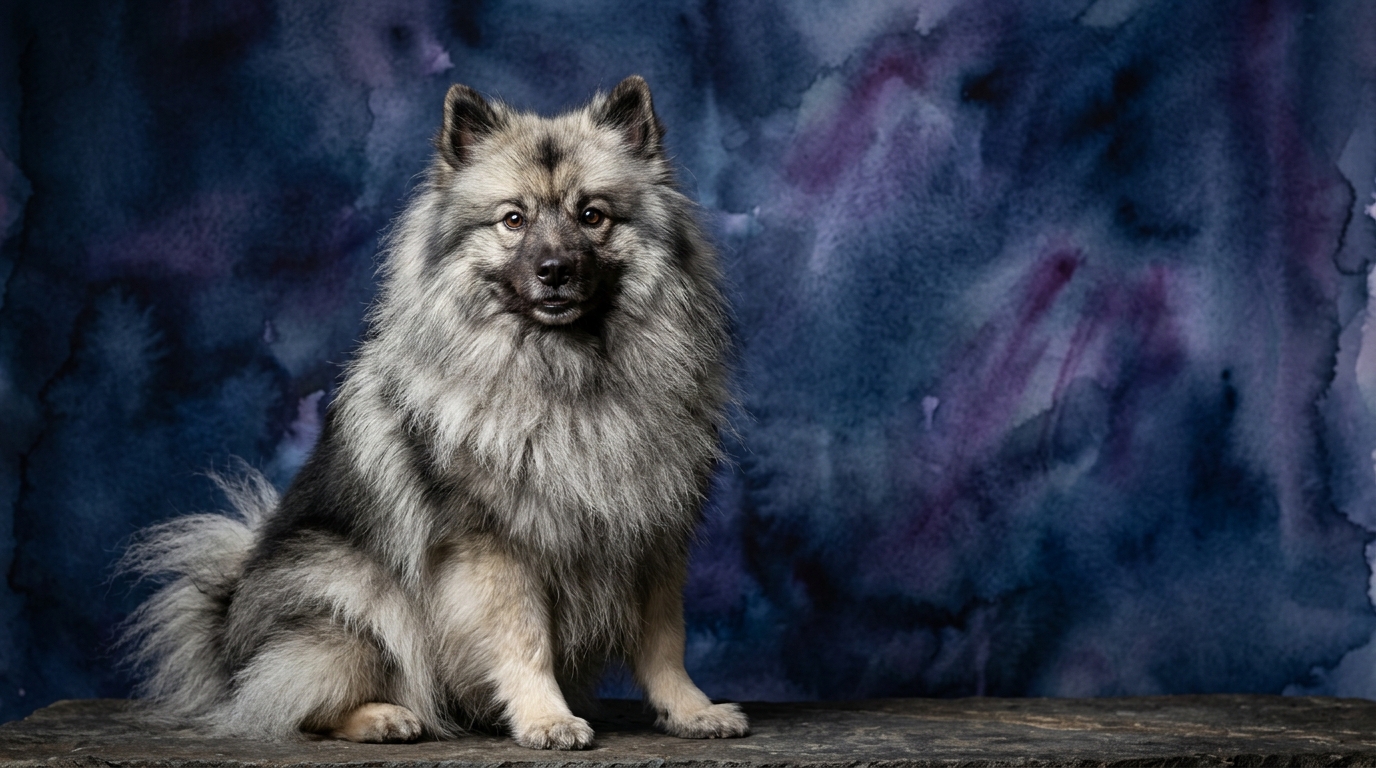
Keeshond at a glance
| IQ Rank / Score | #16 |
|---|---|
| Trainability | ★★★★☆ (4/5) |
| Social Intelligence | ★★★★☆ (4/5) |
| Lifespan | 11-14 years |
| Shedding | Low to moderate |
| Exercise Needs | Moderate (30-45 min/day) |
| Origin | Netherlands |
The Keeshond's Cognitive Blueprint: Vigilant Social Intelligence
The Keeshond's primary cognitive strength lies in what we term 'Vigilant Social Intelligence.' This sophisticated blend of observation and social acuity allows them to be incredibly aware of their surroundings while simultaneously being deeply attuned to human emotions and family dynamics. Their intelligence isn't about brute problem-solving or endless stamina, but rather a keen, nuanced understanding of their environment and the people within it, making them naturally intuitive watchdogs and empathetic companions.
This unique intelligence manifests in their anticipatory behaviors, such as knowing household routines down to the minute, and their remarkable sensitivity to their owner's mood, often offering comfort without prompting. Their vigilant nature means they process subtle changes in their environment, distinguishing between a familiar sound and an unusual one, and reacting appropriately, which is crucial for their historical role as guardians without being overly aggressive.
A History of Observational Acuity
Originating in the Netherlands as 'Dutch Barge Dogs,' Keeshonds were integral to life on the country's many canals, serving as loyal companions and ever-alert watchdogs on barges. This demanding environment honed their observational acuity; they needed to be constantly aware of strangers approaching, changes in mooring, and goods on board. Their survival and effectiveness depended on their ability to quickly assess new situations, remember routes, and recognize familiar faces amidst ever-changing ports.
Unlike working breeds tasked with herding or hunting, the Keeshond's role was more one of intelligent presence and independent vigilance. They weren't typically given extensive formal training for their duties on the barges, showcasing an innate cognitive capacity for assessing situations, identifying potential threats, and reacting appropriately, all while maintaining a steadfast devotion to their human family.
Decoding the Keeshond's IQ Profile
Our assessment places the Keeshond highly across several key cognitive dimensions. Their Problem Solving ability (4/5) is evident in their resourcefulness, whether it's navigating complex household layouts, figuring out how to access a favorite toy, or understanding cause-and-effect scenarios. Their Training Speed (4/5) is equally impressive, directly supported by Stanley Coren's ranking of #16, indicating they quickly grasp new commands and concepts with positive reinforcement.
The Keeshond truly shines in Social Intelligence (5/5), demonstrating profound empathy, an uncanny ability to read human emotions, and an eagerness to be an integrated, understanding part of family life. Their Instinctive Drive (3/5) is primarily channeled into their watchdog tendencies, resulting in vocal alerts to visitors or unusual occurrences, rather than a strong prey drive. Lastly, their Memory (4/5) is excellent, allowing them to retain learned commands, routines, and recognize people and places consistently over time, contributing to their reliability as companions.
The Stanley Coren Perspective: A Top-Tier Learner
Stanley Coren's widely respected intelligence ranking places the Keeshond at an impressive #16 out of 138 breeds for 'Working and Obedience Intelligence.' This high ranking signifies that Keeshonds are considered excellent working dogs, capable of understanding new commands with very few repetitions (typically 5-15) and obeying the first command 85% of the time or better. This level of intelligence is a testament to their innate desire to please and their sharp cognitive processing.
For Keeshond owners, this translates into a highly trainable dog that thrives on engagement and learning. Their intellectual capacity allows them to excel not only in basic obedience but also in advanced trick training, dog sports like agility, and even therapeutic roles where consistent, reliable responses are crucial. Their eagerness to learn makes them rewarding partners for those willing to invest in consistent, positive training methods.
Testing the Keeshond Mind: Our Top Picks
To truly gauge the breadth of the Keeshond's cognitive abilities, we've selected three tests that align perfectly with their 'Vigilant Social Intelligence' profile. The Trick Acquisition Test assesses their excellent training speed and adaptability, while the Puzzle Box Test delves into their problem-solving and manipulation skills. Finally, the Pointing Test measures their strong social understanding and ability to interpret human communicative gestures.
These tests collectively offer a comprehensive view of the Keeshond's intellectual strengths, from their quick learning capabilities and clever approach to challenges to their profound connection with human communication. Administering these tests at home can be an enriching experience, revealing the depth of your Keeshond's intellect and strengthening your bond.
Debunking the Keeshond Intelligence Myth: Stubbornness Reimagined
A common misconception about Keeshond intelligence is the myth that they are 'too stubborn or single-minded to be truly versatile learners.' This belief often arises from their independent streak, their strong watchdog vocalizations, or an owner's occasional frustration when a Keeshond seems to 'have their own ideas' during training.
The truth is far from stubbornness; rather, it's a testament to their intelligence and discerning nature. Keeshonds are highly capable learners, but they thrive on positive reinforcement, engagement, and clear, consistent leadership. What might appear as stubbornness is often a Keeshond asking 'what's in it for me?' or indicating a lack of understanding or motivation, rather than an inability to learn. When properly motivated and understood, their versatility in learning new tasks is remarkable.
Surprising Insights into Keeshond Cognition: A Political Pup
One of the most fascinating and surprising historical facts about the Keeshond is their pivotal role in 18th-century Dutch politics. The breed became the cherished symbol of the Dutch Patriot party, named after the prominent Patriot leader Cornelius de Gyselaer's beloved dog, 'Kees.' This elevation from a simple barge dog to a political mascot underscores the deep bond and profound respect their human companions held for them.
This historical detail not only highlights their popularity and affectionate nature but also subtly speaks to their perceived intelligence and character. For a dog to become such a potent symbol suggests an undeniable presence and charisma that resonated with people, implying a level of social intelligence and responsiveness that made them more than just animals, but integral members of society capable of inspiring loyalty and affection.
Keeshond vs. Samoyed: A Cognitive Comparison
When comparing the Keeshond to another Northern Spitz breed like the Samoyed, their cognitive profiles reveal distinct specializations. While both share a fluffy allure and Spitz characteristics, their historical working roles shaped their intelligence differently. The Samoyed, originating from Siberia, was primarily a sled dog and reindeer herder, excelling in endurance, cooperative pack work, and the physical demands of harsh environments.
In contrast, the Keeshond's intelligence evolved to prioritize vigilant observation, acute social understanding, and adaptable companionship within the confines of a barge or home. While Samoyeds might outshine in sustained physical tasks and pack-oriented problem-solving, the Keeshond's 'Vigilant Social Intelligence' makes them exceptionally perceptive to human nuances and domestic routines, flourishing as the ultimate empathetic companion and guardian of the homestead.
Fostering Your Keeshond's Brilliant Mind
To truly nurture a Keeshond's intellect, owners should focus on consistent mental stimulation. Incorporate interactive puzzle toys, engage in advanced trick training, and explore dog sports like agility or obedience. Scent work, such as hide-and-seek with treats, can also tap into their natural curiosity and problem-solving skills, keeping their sharp minds engaged and preventing boredom-related behaviors.
Crucially, Keeshonds thrive on being an integral part of family life. Provide ample social interaction, positive reinforcement during training, and clear, consistent communication. Early socialization and continuous training throughout their lives will channel their high intelligence constructively, building a strong bond and ensuring they remain well-adjusted, confident, and brilliant companions.
FAQs About Keeshond Intelligence
3 At-Home Tests to Measure Your Keeshond's IQ
These tests are adapted from peer-reviewed ethology research. No equipment is needed beyond items you have at home. Run each test 5–10 times for reliable results.
The Myth: "Keeshonds are too stubborn or single-minded to be truly versatile learners."
✅ Keeshonds are highly capable and versatile learners, but they thrive on positive reinforcement, engagement, and clear, consistent leadership; their 'stubbornness' is usually a sign of intelligence and a desire for fair, motivating instruction.
Keeshond vs. Similar Breeds
🧠 What's Your Dog's IQ Score?
Our full Pet IQ Lab assessment includes 12+ tests across 5 cognitive dimensions, calibrated for Keeshonds specifically.
Take the Full IQ Test →Frequently Asked Questions
How smart is a Keeshond?
Our Pet IQ Lab framework scores cognition across five dimensions (max 25). The Keeshond totals 19/25 — very high for a domestic dog. The full article breaks down each dimension with at-home tests.
Are Keeshonds easy to train?
Keeshonds are generally easy to train when you use consistent, reward-based sessions. They score 4/5 on Training Speed in our breed profile.
Are Keeshonds good with children and other pets?
Yes — their Social Intelligence rates 4/5 in our Pet IQ Lab framework. With early socialization and supervised play, most Keeshonds integrate well into families with respectful children and other pets.
Do Keeshonds need a lot of mental stimulation?
Absolutely. With Problem Solving 4/5 and Instinctive Drive 3/5, Keeshonds need daily mental work — puzzle feeders, scent games, training sessions, or nose-work — to avoid boredom.
How much exercise does a Keeshond need?
Keeshonds do well with 20-40 minutes of daily walks and play plus a few short training moments.
How good is a Keeshond's memory?
Keeshonds score 4/5 on memory. They remember routines, hiding spots, and learned cues for months, sometimes years.
What is the typical lifespan of a Keeshond?
Expect a lifespan of 11-14 years for a healthy Keeshond.
The Keeshond is far more than a beautiful face; it's a testament to highly adaptable, socially intelligent companionship and vigilant protection. By understanding and nurturing their unique cognitive strengths, owners can unlock the full potential of this exceptional breed.