
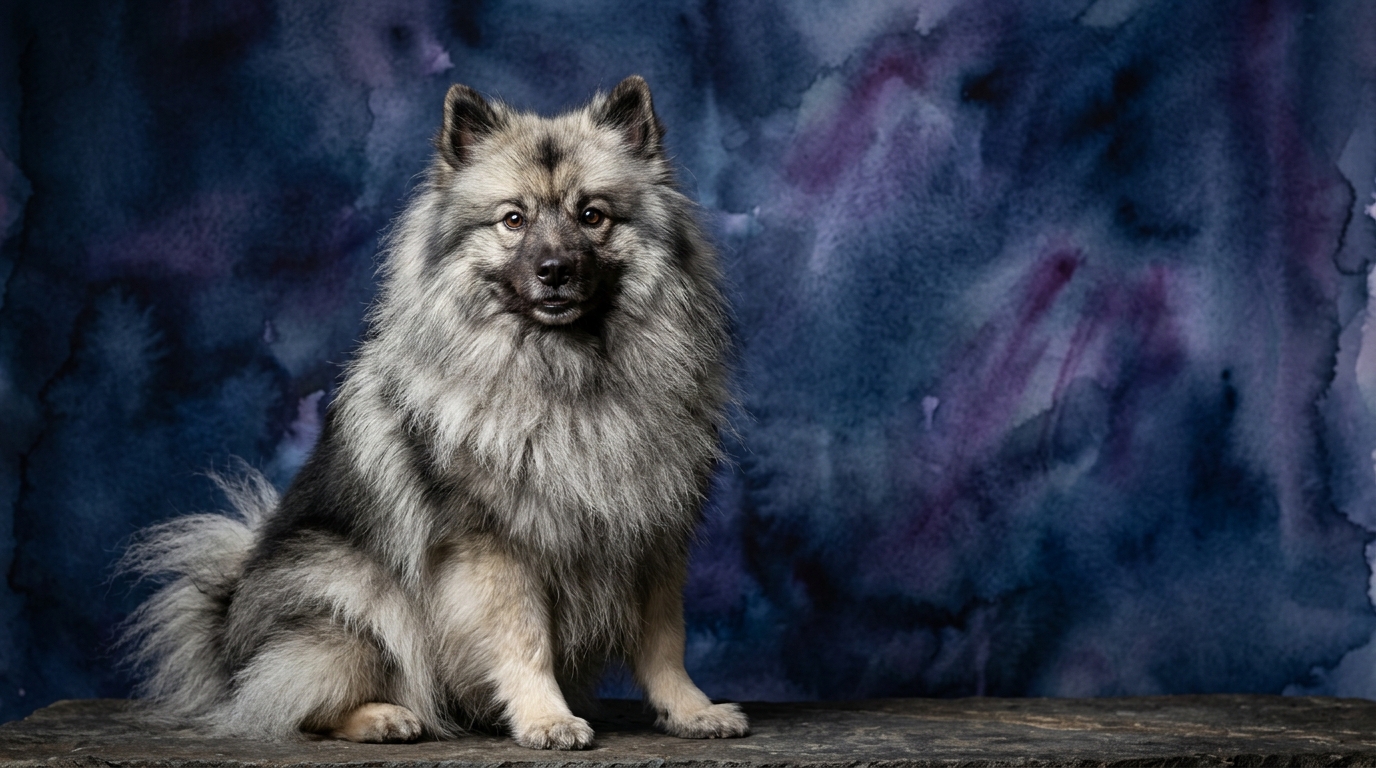
Side-by-Side Cognitive Profile: German Shepherd vs. Keeshond
To truly appreciate the mental makeup of the German Shepherd and the Keeshond, we examine them across five critical cognitive dimensions. The German Shepherd, a Herding group member, secures a Coren rank of #3, indicating its exceptional working intelligence and obedience. Its IQ scores are uniformly high: Problem Solving 5/5, Training Speed 5/5, Social Intelligence 5/5, Instinctive Drive 5/5, and Memory 5/5. This profile paints a picture of a dog built for complex tasks and deep engagement.
The Keeshond, from the Non-Sporting group, holds a respectable Coren rank of #16, placing it among breeds with good working intelligence. Its IQ profile shows a slightly different balance: Problem Solving 4/5, Training Speed 4/5, Social Intelligence 3/5, Instinctive Drive 3/5, and Memory 5/5. While still demonstrating strong cognitive capabilities, particularly in memory, the Keeshond's scores suggest a character that is perhaps less intensely driven and more independent in its social interactions compared to its Herding counterpart.
Let's break down these dimensions. Problem Solving assesses a dog's ability to figure out novel situations or overcome obstacles to achieve a goal. Training Speed measures how quickly a dog grasps new commands and behaviors. Social Intelligence reflects their capacity to understand and respond to human cues and emotions. Instinctive Drive speaks to their inherent motivation for tasks, often related to their breed's original purpose. Finally, Memory evaluates their ability to recall learned information and experiences. Understanding these scores provides a clearer lens through which to view each breed's unique intellectual blueprint.
Where the German Shepherd Excels Cognitively
The German Shepherd's cognitive profile showcases a remarkable capacity for complex, multi-faceted tasks. Its 5/5 score in Problem Solving means it can analyze novel situations with impressive ingenuity, often finding solutions to puzzles or navigating intricate environments without direct instruction. For instance, a German Shepherd might independently figure out how to open a gate or retrieve a hidden object by manipulating its surroundings, rather than simply relying on trial and error.
Their perfect 5/5 in Training Speed is a testament to their rapid assimilation of new commands and routines. This breed doesn't just learn; it *absorbs* information, making it a prime candidate for advanced obedience, protection work, or specialized assistance roles where quick, reliable responses are paramount. A single demonstration or a few repetitions are often enough for them to grasp a concept, allowing for a vast vocabulary of commands.
The German Shepherd's 5/5 Social Intelligence highlights its profound ability to read and interpret human body language, tone, and intent. This allows for deeply intuitive partnerships, where the dog anticipates needs and reacts appropriately to subtle cues. They form strong, communicative bonds, making them highly responsive companions in various working and family settings. Coupled with a 5/5 Instinctive Drive, they possess an inherent motivation to engage, work, and fulfill a purpose, often channeling this energy into focused tasks like herding, guarding, or scent detection, rather than simply idling. This intrinsic drive means they are often self-starters when presented with a challenge, eager to apply their mental and physical faculties.
Where the Keeshond Shines Cognitively
While the Keeshond's scores are generally lower than the German Shepherd's in several categories, its cognitive profile is far from lacking and presents distinct advantages. The Keeshond's 4/5 in Problem Solving indicates a very capable mind, one that can still navigate and resolve many challenges effectively. They might approach a puzzle with a more methodical, exploratory style, eventually arriving at the solution. This means they are perfectly capable of learning complex sequences and understanding cause-and-effect, making them engaging companions for interactive games and brain teasers.
Crucially, the Keeshond shares a perfect 5/5 in Memory with the German Shepherd. This exceptional memory means that once a Keeshond learns something, it tends to stick. Whether it's a specific route on a walk, the location of a favorite toy, or a set of commands, their recall can be incredibly reliable over time. This robust memory underpins their ability to function well in a consistent home environment and retain training, even if the initial training speed is slightly slower than a German Shepherd's.
The Keeshond's 3/5 in Social Intelligence and Instinctive Drive, while lower, can be interpreted as a cognitive strength in certain contexts. Their more moderate drive means they are less prone to the intense, demanding energy that requires constant redirection or a 'job' to prevent boredom-induced behaviors. Their social intelligence, while not as acutely attuned to every human nuance as a GSD, still allows for affectionate bonding and understanding of family dynamics, often expressed through a charming independence and a watchful, yet not overbearing, presence. This balance can make them particularly suited for family life where a highly driven working dog might be overwhelming.
Training Dynamics: German Shepherd vs. Keeshond
When it comes to training, the German Shepherd's 5/5 Training Speed and 5/5 Instinctive Drive make it an exceptionally responsive student. They possess an innate desire to engage with their handler and a strong work ethic, often eager to please and quick to pick up new commands. Their high social intelligence further aids this, as they are adept at reading their handler's intentions and adjusting their behavior accordingly. This means a German Shepherd often thrives on consistent, structured training, rapidly progressing through obedience levels and excelling in specialized tasks. They are motivated by purpose and partnership, making them highly trainable for a wide array of disciplines, from competitive obedience to assistance work.
The Keeshond, with its 4/5 Training Speed and 3/5 Instinctive Drive, offers a different training experience. While they are still capable learners due to their solid problem-solving skills and excellent memory, they may require more patience and varied approaches. Their moderate instinctive drive means they might not always possess the same intense desire to 'work' or please as a German Shepherd. They can exhibit a charming independence, sometimes needing more convincing or creative motivation to engage in repetitive drills. Training a Keeshond often benefits from positive reinforcement, making sessions fun and rewarding, focusing on their strong memory to solidify learned behaviors. They can certainly achieve high levels of obedience, but the path might involve more creative engagement and understanding of their independent spirit than with a German Shepherd.
Lifestyle Suitability: Active vs. Relaxed Owners
The German Shepherd's cognitive profile, characterized by its high instinctive drive, problem-solving, and social intelligence, makes it an ideal companion for active, engaged owners who can provide consistent mental and physical stimulation. This breed thrives when given a 'job' – whether it's advanced obedience training, agility, protection sports, or even just complex daily routines that challenge their intellect. Owners who enjoy long hikes, puzzle toys, and consistent training sessions will find a deeply rewarding partnership with a German Shepherd. Their need for purpose means a relaxed, sedentary lifestyle can lead to boredom and potential behavioral issues.
The Keeshond, with its moderate instinctive drive and good problem-solving ability, offers a more adaptable companionship for a wider range of owners. While they certainly benefit from regular exercise and mental engagement to prevent boredom, their needs are generally less intense than a German Shepherd's. They enjoy interactive play, walks, and learning new tricks, but are often content with a comfortable home life punctuated by activity rather than constant high-intensity work. Owners who appreciate a companion that is alert and engaged but doesn't demand a rigorous daily schedule will find the Keeshond a charming fit. Their excellent memory ensures they retain their manners and training even if daily routines are not always highly structured.
The Verdict
Choose a German Shepherd if you are an active, dedicated owner seeking a highly trainable, purpose-driven partner for complex tasks and consistent engagement.
Opt for a Keeshond if you desire an intelligent, adaptable companion with a good memory, suitable for a balanced lifestyle that includes mental stimulation without intense daily demands.
🧠 Find Your Pet's IQ Score
Our Pet IQ Lab assessment covers 25+ tests across 5 cognitive dimensions — personalized to your breed.
Take the Full IQ Test →Frequently Asked Questions
Do German Shepherds and Keeshonds share any cognitive strengths?
Yes, both breeds score an impressive 5/5 in Memory, indicating they are excellent at recalling learned information and experiences. This means both can retain training and routines very effectively once established.
Which breed is better for a first-time dog owner?
A Keeshond might be a more manageable choice for a first-time owner due to its more moderate instinctive drive and less demanding exercise requirements compared to a German Shepherd. German Shepherds require experienced handling and a significant commitment to training and activity.
How does 'Instinctive Drive' impact daily life for these breeds?
A German Shepherd's 5/5 Instinctive Drive means it has a strong inherent motivation for tasks, often needing a 'job' or consistent mental engagement to prevent boredom. A Keeshond's 3/5 drive suggests it is still engaged but less intensely driven, often content with a more balanced routine without requiring constant, high-stakes activities.