
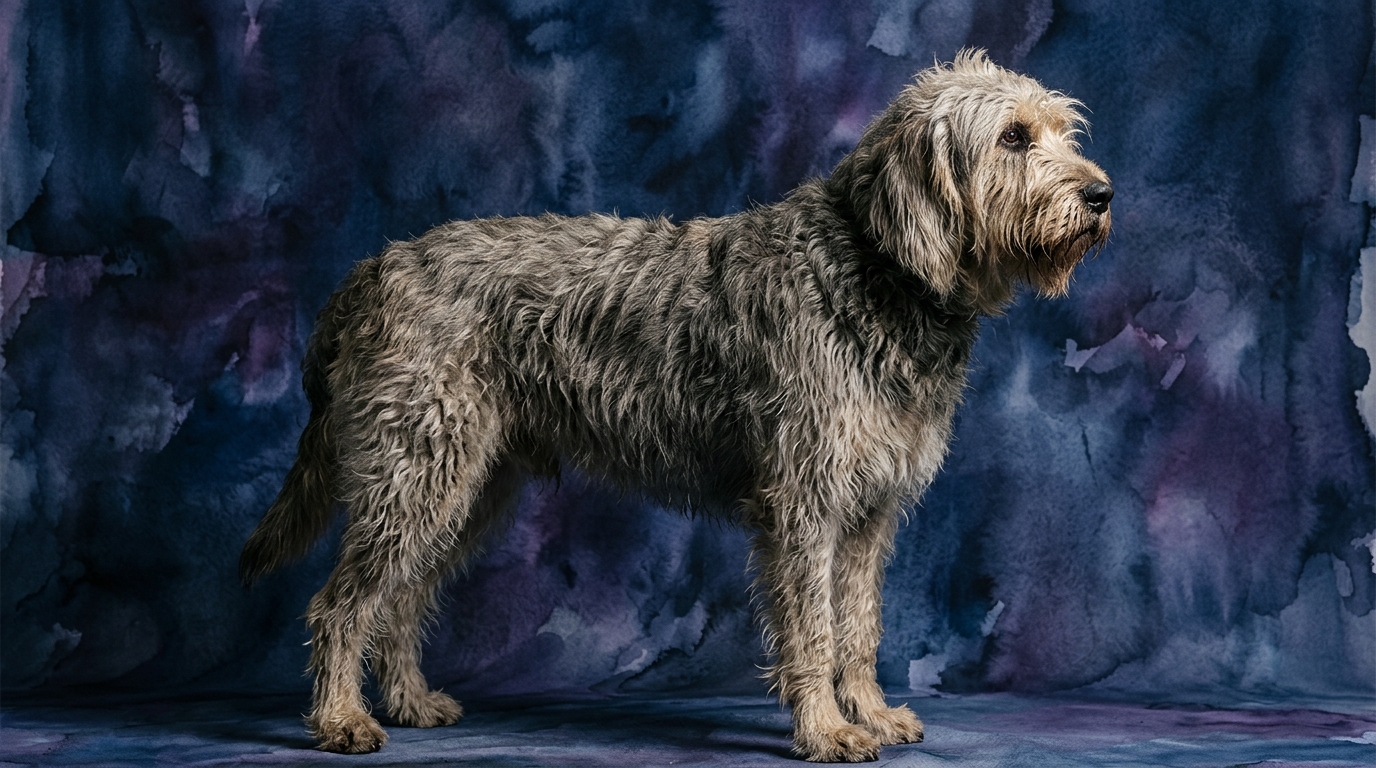
A Side-by-Side Look at Boerboel and Otterhound Cognitive Profiles
A 3/5 score across all dimensions signifies a capable and adaptable intellect, not a deficit, suggesting a dog that can learn, adapt, and interact effectively, though perhaps not with the extreme specialization or speed seen in breeds scoring 5/5 in specific areas. It indicates a solid foundation for training and companionship, provided their specific breed traits are understood and channeled appropriately.
In Problem Solving, both breeds score 3/5, yet their application differs. The Boerboel's problem-solving manifests in practical, situation-specific ways, such as assessing a perceived threat, strategizing how to manage livestock, or determining the safest path around their property, often geared towards protection and maintaining order. The Otterhound, conversely, applies its 3/5 problem-solving to intricate sensory puzzles, meticulously navigating complex scent trails through varied terrain, focusing on olfactory information to achieve its goal.
For Training Speed, both also rate 3/5. Boerboels learn commands and routines at a steady pace, especially when training is purposeful and contributes to their role as a protector or family member, responding well to consistent, confident leadership. Otterhounds, while capable of learning, demonstrate their 3/5 training speed best when motivated by scent games or positive reinforcement related to their natural drives, but their potent olfactory focus can easily override learned commands in distracting environments.
Social Intelligence, at 3/5 for both, reveals distinct expressions. The Boerboel is adept at discerning social cues within their family unit, understanding hierarchies, and identifying intentions in strangers, forming deep bonds and reading subtle changes in human demeanor to assess comfort or potential threats. The Otterhound, conversely, is typically affable and good-natured, understanding pack dynamics and cooperative interaction, reading moods well and seeking companionship, though their social interactions are generally less about threat discernment and more about convivial engagement.
Their Instinctive Drive, again 3/5, is profoundly different. The Boerboel's drive is powerfully channeled into guarding and territorial protection, manifesting as innate vigilance, a strong desire to patrol and secure their space, and a readiness to act if their family or property is perceived to be in danger. The Otterhound's drive is dominated by its remarkable sense of smell and the urge to follow a trail, fueling their wanderlust, persistent baying on a scent, and determination in tracking, making them highly motivated by olfactory stimulation.
Finally, Memory also stands at 3/5 for both. Boerboels retain training commands, remember routines, and recall past interactions or perceived threats with accuracy, contributing to their consistency in behavior and ability to build enduring relationships and boundaries. Otterhounds possess a particularly strong memory for scent profiles, successful tracking routes, and the location of interesting smells, vividly recalling sensory experiences related to their primary drive, making them excellent at remembering where the best sniffs are found.
Where the Boerboel's Cognition Shines
Despite identical scores, the Boerboel's cognitive strengths distinctly align with their historical role as a farm guardian. Their 3/5 problem-solving often involves a sophisticated contextual awareness; they excel at evaluating nuanced social situations, discerning between a friendly visitor and a potential intruder based on subtle cues in body language, sound, and presence. This isn't just a rote response but an active assessment of risk, a thoughtful, rather than impulsive, approach to perceived threats.
Their social intelligence, also 3/5, is particularly refined in understanding the family hierarchy and dynamics, allowing them to integrate seamlessly as a protective member. They remember past interactions and apply that memory to future judgments, exhibiting a practical, applied intelligence focused on the safety and well-being of their human pack, making them perceptive companions within their trusted circle.
Where the Otterhound's Cognition Excels
The Otterhound, with its equally rated 3/5 cognitive profile, demonstrates a unique brilliance rooted in its hound heritage. Their problem-solving and memory excel in the realm of sensory processing, specifically olfaction. They can meticulously follow incredibly faint and complex scent trails over varied terrain and for extended periods, a task requiring immense mental stamina, discrimination, and sequential processing of information.
Their instinctive drive, also 3/5, fuels an unparalleled dedication to a task once a scent is engaged. This isn't just brute force; it's a cognitive commitment to a sensory puzzle, where their memory recalls past successful strategies and their problem-solving adapts to environmental changes on the trail. Their social intelligence, while generally amiable, also shows in their historical ability to work cooperatively in a pack, communicating through vocalizations and body language during a hunt.
Training Dynamics: Boerboel vs. Otterhound
Both breeds rate 3/5 in training speed, yet their training experiences diverge significantly due to their primary motivations and distractions. The Boerboel, as a working breed, often learns quickly when training is perceived as purposeful and contributes to their role as a protector or family member. They respond well to consistent, confident leadership and structure, understanding commands as part of their expected behavior. However, their independence means they may question commands if they don't align with their perceived duty or logic, requiring a trainer who can demonstrate the 'why.' Distractions for a Boerboel typically involve perceived threats or disruptions to their territory.
The Otterhound, despite the same 3/5 training speed, presents a different set of challenges. Their overwhelming instinctive drive for scent work means that even the most enticing treat or toy can be instantly forgotten if a compelling scent wafts by. They can learn commands, especially those associated with tracking or scent games, but general obedience in a distracting environment requires immense patience and creativity. Trainers must understand that an Otterhound's 'disobedience' is often not defiance, but rather an uncontrollable pull from their olfactory world, making training a continuous exercise in managing environmental stimuli.
Lifestyle Suitability: Active Owners vs. Relaxed Owners
For owners seeking a companion that aligns with an active but structured lifestyle, the Boerboel might be a more fitting choice. While they require significant physical exercise to maintain their powerful physique and mental stimulation to prevent boredom, their activity is often purposeful. They enjoy walks, jogs, and training sessions that engage their cognitive abilities for protection, obedience, or sport. They are not typically 'off-leash adventurers' in the same way a hound might be, preferring to stay close to their person and maintain vigilance, making them suitable for owners who enjoy consistent, controlled outdoor activity and mental engagement.
The Otterhound, conversely, is better suited for owners who embrace a truly active, often spontaneous, outdoor lifestyle, particularly those who appreciate long, meandering walks where the dog can follow its nose. Their need for physical exertion is immense, and their mental stimulation comes from engaging their powerful scenting abilities through tracking, nose work, or extensive exploration. A relaxed owner might struggle with the Otterhound's deep-seated need to roam and sniff; they are not content with short leashed walks around the block. While calm and affectionate indoors after sufficient exercise, their cognitive world is constantly processing scents, which translates to a high demand for outdoor sensory engagement.
The Verdict
Choose a Boerboel if you seek a vigilant, discerning companion who offers purposeful protection and thrives on structured training within a stable family environment, appreciating their thoughtful assessment of situations.
Opt for an Otterhound if your lifestyle embraces extensive outdoor exploration and you value a companion whose cognitive world is driven by an insatiable, joyful pursuit of scent, requiring dedicated engagement with their unique drives.
🧠 Find Your Pet's IQ Score
Our Pet IQ Lab assessment covers 25+ tests across 5 cognitive dimensions — personalized to your breed.
Take the Full IQ Test →Frequently Asked Questions
Does the Boerboel's guardian nature make it less adaptable than an Otterhound?
While the Boerboel's guardian instincts are strong, their 3/5 social intelligence and problem-solving allow for adaptability when properly socialized and trained. They learn to discern safe situations and new people, but always with an underlying vigilance, which is different from an Otterhound's generally more gregarious, less discerning social approach.
How does an Otterhound's strong scent drive impact its ability to be a family pet?
An Otterhound's powerful scent drive means they require significant outlets for this instinct, such as long walks or nose work games, to be content family pets. If these needs are met, their 3/5 social intelligence allows them to be affectionate and amiable companions, though their nose will often dictate their attention more than human commands in stimulating environments.
Given their identical IQ scores, what's the biggest practical difference in ownership?
The biggest practical difference, despite identical IQ scores, lies in the direction of their instinctive drives and how they apply their problem-solving and memory. The Boerboel applies its intellect to protection and family dynamics, while the Otterhound applies its to the relentless pursuit and interpretation of scent, fundamentally shaping their daily needs and owner engagement.