
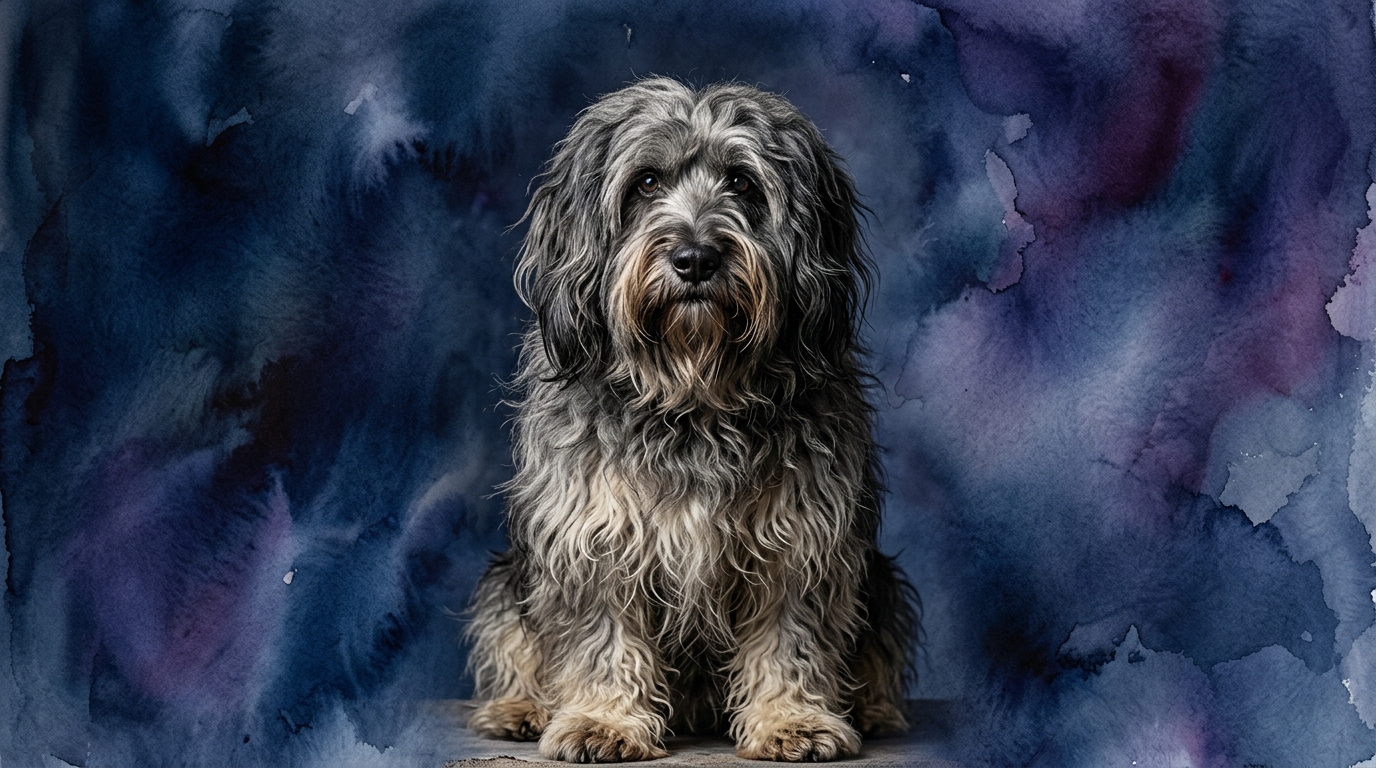
Side-by-Side IQ Profile: Unpacking Identical Scores, Different Minds
Despite both breeds registering a 3/5 across the board in our Pet IQ Lab assessment, these scores represent different cognitive strengths tailored to their ancestral purposes. It's not merely about 'how much' intelligence, but 'how' it is applied within their unique frameworks.
**Problem Solving (3/5):** For the Boerboel, this score reflects a practical, scenario-based problem-solving geared towards protection. Their cognitive efforts prioritize assessing potential threats, discerning intruder intent, or navigating immediate environmental challenges to safeguard their territory and family. Solutions are typically direct and rooted in their guardian instincts, emphasizing swift, decisive action rather than intricate, multi-step puzzles. The Polish Lowland Sheepdog's 3/5 in problem-solving manifests as an independent, adaptive intelligence, honed by centuries of managing livestock. They excel at figuring out how to move a stubborn sheep, locate a lost lamb, or navigate complex terrain while keeping their flock together. Their solutions often involve nuanced spatial reasoning, observation of animal behavior, and strategic positioning, requiring less direct human instruction in the field.
**Training Speed (3/5):** While capable of learning commands efficiently, the Boerboel's training speed is influenced by their strong will and independent thought. They grasp concepts and associate actions with cues at a moderate pace, particularly when the training aligns with their protective instincts or provides a clear purpose. Consistency, clear expectations, and a confident leader are paramount for them to fully engage and consolidate learning. The PLS learns at a comparable pace, but their training journey is shaped by their heritage as autonomous herders. They can quickly pick up new commands and routines, especially those that involve movement, strategy, or a 'job.' However, their independent streak means they may question the necessity of a command or choose to act on their own initiative if they perceive a better solution, requiring patient and engaging methods.
**Social Intelligence (3/5):** The Boerboel's social intelligence is keenly focused on discernment and loyalty. These dogs are adept at reading human body language, understanding family dynamics, and, critically, distinguishing between welcomed guests and potential threats. They are highly attuned to their owner's emotional state and intentions, making them sensitive and responsive companions within their trusted circle, while remaining appropriately wary of outsiders. The PLS demonstrates social intelligence through their acute observation of both human and animal behavior. They are skilled at interpreting subtle cues to manage a flock, adapting their approach based on the temperament of individuals. Within a family, they often act as watchful observers, understanding social hierarchies and routines, and subtly attempting to 'herd' family members into preferred arrangements.
**Instinctive Drive (3/5):** A robust 3/5 in instinctive drive for the Boerboel translates into a powerful, inherent guardian and protective impulse. This drive is not merely aggression but a deep-seated vigilance and a readiness to defend their territory, property, and loved ones. It dictates much of their behavior, manifesting as a strong sense of responsibility and a watchful demeanor, requiring appropriate channeling. The PLS possesses a strong, inherent herding drive, also rated 3/5. This instinct compels them to gather, control, and manage movement, whether of livestock, children, or even toys. It's a drive for order and organization, often expressed through circling, nudging, and maintaining boundaries, distinct from a predatory chase, and deeply ingrained in their psychological makeup.
**Memory (3/5):** The Boerboel's memory at 3/5 is robust for practical application. They remember specific places, people, and routines with clarity, which aids in their protective duties. They retain training commands and boundaries effectively, and their memory for past interactions, particularly negative ones involving perceived threats, can be long-lasting, influencing future responses. The PLS exhibits a strong memory for tasks, sequences, and environmental details. They can recall complex patterns of movement for herding, remember specific individuals and their roles, and retain spatial information crucial for navigating pastures or familiar routes. This memory capacity contributes to their independent problem-solving and adaptability in various situations.
Where the Boerboel Excels Cognitively
The Boerboel's cognitive strengths lie in their specialized discernment and decisive protective action. Their problem-solving, while scoring 3/5, is acutely tuned to real-world security scenarios, allowing them to quickly assess threats and determine the most effective course of action to neutralize perceived dangers. This isn't about solving abstract puzzles, but about practical, immediate judgment calls in high-stakes situations.
Their social intelligence is particularly strong in identifying friend versus foe and understanding the nuances of human intent, crucial for a guardian breed. This manifests as an innate ability to 'read' strangers, quickly processing subtle cues to determine if someone is benign or potentially harmful. This specific application of their cognitive capacity makes them exceptionally vigilant and reliable protectors within their designated domain.
Where the Polish Lowland Sheepdog Excels Cognitively
The Polish Lowland Sheepdog's cognitive advantages are rooted in their capacity for independent, strategic decision-making and adaptability. Their 3/5 problem-solving score reflects an ability to navigate complex, dynamic environments, such as a sprawling pasture with moving livestock, and devise solutions without constant human directives. They are masters of spatial reasoning and predictive behavior in a fluid context.
Their memory is particularly strong for complex patterns and sequences, vital for remembering intricate herding routes or the specific behaviors of individual animals within a flock. This cognitive trait allows them to perform sophisticated tasks autonomously, making them exceptional at jobs requiring initiative and flexible thinking rather than strict adherence to commands.
Training Dynamics: Which Breed Is 'Easier'?
Defining 'easier to train' depends heavily on an owner's approach and expectations, as both breeds present unique challenges related to their 3/5 training speed and strong drives. The Boerboel, with its powerful physique and inherent protective instincts, demands a confident, consistent, and early training regimen. They learn quickly when motivated by a clear purpose and a strong bond with their leader, but their independent will means they will test boundaries. Training isn't necessarily 'easy,' but highly responsive to firm, fair, and consistent leadership that establishes the owner as the undisputed authority.
The Polish Lowland Sheepdog's training, while also achieving a 3/5, requires a different strategy. Their independent herding background means they are accustomed to making their own decisions and can sometimes appear 'stubborn' or 'selectively deaf' if they don't perceive the value or logic in a command. They thrive on engaging, positive reinforcement-based training that stimulates their mind and provides an outlet for their herding drive, often excelling in activities like agility or rally obedience. Neither breed is for the faint of heart, but the Boerboel responds to structure and authority, while the PLS benefits more from creative engagement and motivation.
Matching Lifestyles: Active vs. Relaxed Owners
Neither the Boerboel nor the Polish Lowland Sheepdog is suited for truly relaxed or sedentary owners. Both breeds, despite their identical IQ scores, possess significant energy levels and require substantial mental and physical engagement to thrive. A Boerboel needs a confident owner who can provide structured exercise, consistent training, and a clear understanding of their role within the family. While not requiring endless running, they need purposeful activity, secure boundaries, and an owner capable of managing their imposing physical presence and protective nature.
The Polish Lowland Sheepdog is definitively a breed for active owners. Their herding drive translates into a need for significant physical exercise, but more importantly, mental stimulation that allows them to use their strategic problem-solving skills. They excel in dog sports, long hikes, and activities that give them a 'job.' A relaxed owner would quickly find themselves overwhelmed by the PLS's intelligence, energy, and tendency to 'herd' everything from children to furniture if not properly channeled.
The Verdict
Choose the Boerboel if you seek a formidable, loyal guardian for your family and property, and are prepared to provide confident, consistent leadership and early, thorough socialization for a powerful companion.
Opt for the Polish Lowland Sheepdog if you are an active individual or family seeking an independent, resourceful, and highly engaging companion who thrives on mental challenges, dog sports, and purposeful activity.
🧠 Find Your Pet's IQ Score
Our Pet IQ Lab assessment covers 25+ tests across 5 cognitive dimensions — personalized to your breed.
Take the Full IQ Test →Frequently Asked Questions
Are Boerboels good family dogs?
Yes, with proper socialization and training, Boerboels are incredibly devoted to their families, often forming strong bonds with children. However, their immense size and inherent protective nature necessitate careful management, especially around unfamiliar guests or in public settings.
Do Polish Lowland Sheepdogs shed much?
Yes, Polish Lowland Sheepdogs have a thick double coat that requires regular and consistent grooming to prevent matting and manage shedding. Expect to brush them several times a week, with more intensive sessions needed during seasonal coat changes.
Which breed is better for apartment living?
Neither breed is ideally suited for small apartment living due to their size, energy levels, and inherent needs for space and activity. If an apartment is the only option, the PLS might adapt marginally better with extensive daily exercise, but a Boerboel's guardian instincts make a secure yard almost essential for their well-being.