
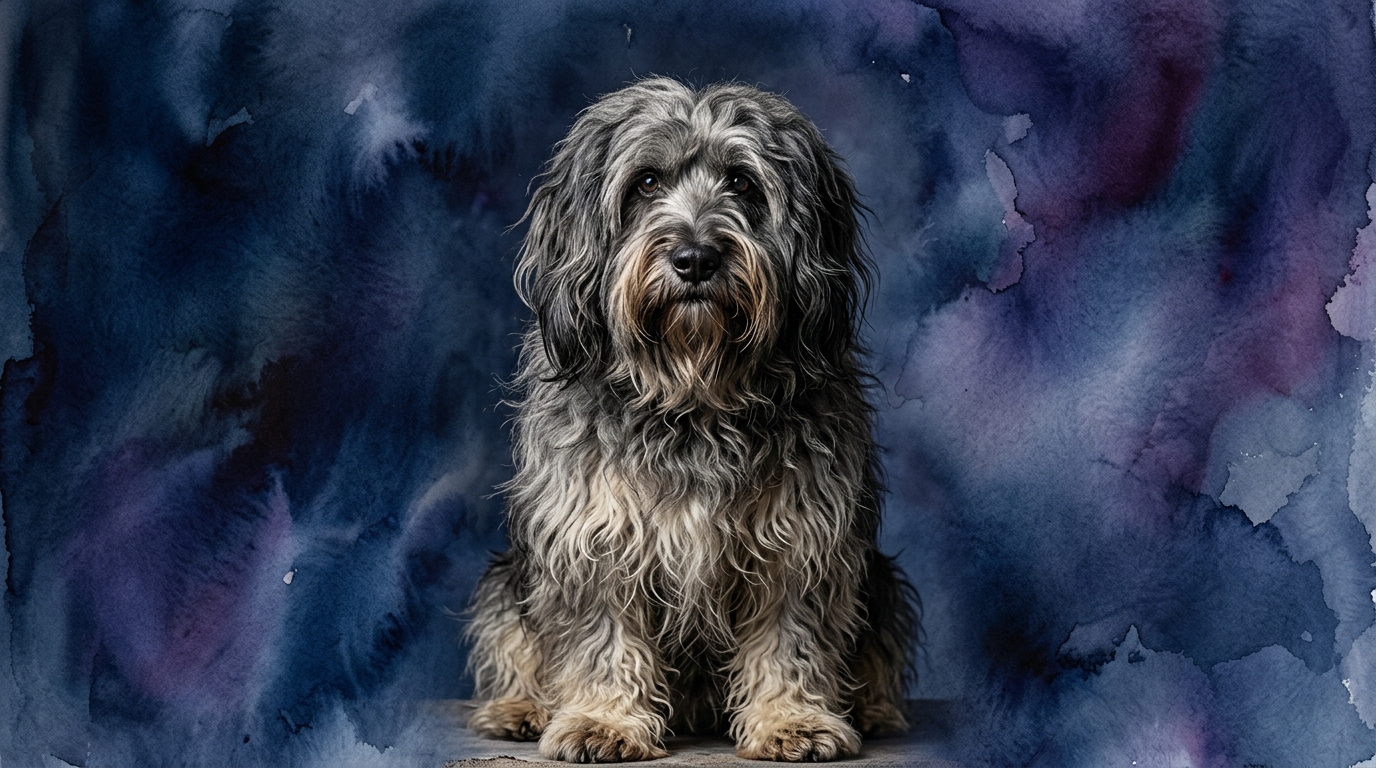
Side-by-Side IQ Profile: German Shepherd vs. Polish Lowland Sheepdog
To understand the nuanced cognitive differences, let's examine each breed across five key intelligence dimensions from The Cosmic Pet Pet IQ Lab. These dimensions provide a framework for appreciating their unique mental makeups and how they interact with the world.
The **German Shepherd** consistently demonstrates a superior aptitude across the board. Their **Problem Solving** is rated 5/5, indicating an exceptional ability to analyze complex situations and devise effective strategies independently. **Training Speed** also stands at 5/5, signifying rapid comprehension and retention of new commands and routines with minimal repetition. Their **Social Intelligence** is a perfect 5/5, reflecting a deep understanding of human cues, emotions, and intentions, fostering strong communication. An **Instinctive Drive** of 5/5 highlights their intense desire to work, protect, and engage in purposeful tasks with unwavering focus. Finally, their **Memory** is rated 5/5, enabling them to retain vast amounts of information, from intricate command sequences to detailed environmental layouts, over extended periods.
In contrast, the **Polish Lowland Sheepdog** presents a more moderate, yet distinct, cognitive profile. Their **Problem Solving** is rated 3/5, indicating competence in tackling straightforward challenges but a tendency to rely on learned patterns rather than innovative solutions for novel, complex scenarios. **Training Speed** is 3/5, meaning they require consistent, patient repetition to solidify new commands, building understanding gradually. Their **Social Intelligence** is also 3/5; while capable of forming strong bonds, they may prioritize their own inclinations and observations over constant human direction. An **Instinctive Drive** of 3/5 suggests their herding instincts are present but often manifest as a more independent, self-reliant management style rather than intense, directed control. Lastly, their **Memory** is 3/5, proving reliable for routine and familiar experiences, though they may require refreshers for less frequently used information or intricate details.
Where the German Shepherd Excels Cognitively
The German Shepherd's cognitive strengths are particularly pronounced in their capacity for **abstract problem-solving**. For instance, given a multi-stage task like navigating an unfamiliar agility course or performing a multi-part search and rescue operation, the German Shepherd will often quickly analyze the sequence, identify necessary sub-steps, and execute them efficiently, even if the scenario is new. This isn't merely about following commands; it's about independently structuring a solution based on understanding the overarching goal. Their **training speed** is a direct reflection of their rapid associative learning and ability to generalize concepts. A German Shepherd learning 'retrieve' for the first time will likely grasp the concept of bringing back various objects much quicker than many other breeds, requiring fewer repetitions to understand the underlying principle rather than just a specific action.
Furthermore, their superior **social intelligence** allows them to anticipate human intentions and adapt their behavior proactively. A German Shepherd might notice a handler's subtle shift in posture or a glance towards a potential threat and respond with an alert, demonstrating an advanced understanding of non-verbal communication that goes beyond simple cue recognition. This keen observational ability, combined with their exceptional **memory**, means they can recall specific training protocols, environmental layouts, and even complex scent profiles over extended periods without significant decay, contributing to their reliability in roles requiring consistent performance and detailed recall and making them highly adept at tasks requiring precision and long-term retention.
Where the Polish Lowland Sheepdog Demonstrates Unique Strengths
While the Polish Lowland Sheepdog's cognitive profile differs from the German Shepherd's high-octane performance, it possesses distinct mental attributes that served its historical purpose effectively. Their **instinctive drive**, rated at 3/5, often manifests as a more independent and self-reliant working style. Instead of constant handler direction, a Polish Lowland Sheepdog might autonomously patrol a perimeter or gather scattered sheep, relying on its own judgment and observational skills. This self-sufficiency, while sometimes perceived as stubbornness in training, is a cognitive advantage in situations requiring less direct supervision and more individual initiative, allowing them to make decisions in the field.
Their **problem-solving** at 3/5, though not as swift as the German Shepherd's, is characterized by persistence. They might take longer to solve a novel puzzle, but they will often return to it with determination, trying different approaches until a solution is found, rather than giving up quickly. This mental tenacity, combined with a moderate **memory** for routines, makes them reliable in repetitive, familiar tasks within their established territory. Their **social intelligence** (3/5) fosters a strong, albeit sometimes reserved, bond with their family, where they develop a nuanced understanding of their immediate human companions, even if they aren't as outwardly expressive or universally people-oriented as the German Shepherd. This discerning nature allows them to be watchful guardians, keenly aware of their family's presence and needs within their personal domain, often observing from a slight distance.
Training Dynamics: Which Breed is Easier to Train?
When evaluating ease of training, the German Shepherd stands out significantly due to its cognitive makeup. Their 5/5 **training speed** reflects a profound eagerness to engage and a remarkable ability to process and retain new information quickly. They often show a strong desire to please their handler, coupling this with their advanced **social intelligence** to readily interpret commands and adjust their behavior. A German Shepherd typically learns complex multi-step tasks, such as scent detection or agility sequences, with fewer repetitions and a more enthusiastic, focused approach. Their inherent 5/5 **instinctive drive** also makes them highly receptive to task-oriented training, often viewing learning new skills as a fulfilling job, which translates into an eager work ethic and quick mastery of new skills.
In contrast, the Polish Lowland Sheepdog, with its 3/5 **training speed**, requires a more patient and consistent approach. Their moderate **problem-solving** means they may take longer to generalize concepts or connect a specific action to a verbal cue, necessitating clearer, more repetitive instruction. While capable of learning, their independent nature, an aspect of their 3/5 **instinctive drive**, can lead them to question the necessity of a command or prioritize their own observations over immediate compliance. This isn't a lack of capacity, but rather a different cognitive style; they often need to understand the 'why' behind a command or perceive a clear benefit before fully committing. This behavioral difference means that while German Shepherds often thrive on structured, fast-paced training with varied challenges, Polish Lowland Sheepdogs benefit from positive reinforcement, clear boundaries, and a patient, understanding trainer who can work with their thoughtful, sometimes stubborn, temperament, focusing on building trust and making training a collaborative effort.
Matching Breeds to Lifestyles: Active vs. Relaxed Owners
The German Shepherd, with its 5/5 **instinctive drive** and equally high scores in problem-solving and training speed, is an ideal match for active owners who can provide consistent mental and physical stimulation. They thrive when given a 'job' to do, whether it's advanced obedience, sports like agility or Schutzhund, or even complex puzzle toys that challenge their intellect. An owner who enjoys daily vigorous exercise, structured training sessions, and engaging their dog in various activities will find the German Shepherd to be an incredibly rewarding and responsive companion. Their cognitive aptitude means they can quickly become bored, restless, or even destructive if their mental energies are not adequately channeled, making them less suitable for relaxed owners seeking a low-maintenance pet that requires minimal engagement.
Conversely, the Polish Lowland Sheepdog, with its 3/5 scores across the board, presents a more moderate demand on an owner's time and energy. While they certainly require regular exercise and mental engagement to prevent boredom, their **instinctive drive** is less intense and their need for constant high-level stimulation is lower. They are generally content with daily walks, play sessions, and moderate training, rather than requiring rigorous, high-impact activities every day. For a relaxed owner who appreciates a dog with a thoughtful, somewhat independent nature and is prepared for consistent, patient training, the Polish Lowland Sheepdog can be a wonderful fit, providing companionship without the ceaseless demand for intensive mental and physical work that a German Shepherd typically requires, fitting well into a home that offers routine and comfort.
The Verdict
Choose a German Shepherd if you are an experienced, active owner seeking a highly trainable, driven partner for advanced training, canine sports, or demanding working roles, valuing their exceptional cognitive capabilities and unwavering focus.
Opt for a Polish Lowland Sheepdog if you appreciate a thoughtful, independent companion, are prepared for patient, consistent training, and can offer moderate exercise and mental engagement within a family setting, valuing their discerning nature.
🧠 Find Your Pet's IQ Score
Our Pet IQ Lab assessment covers 25+ tests across 5 cognitive dimensions — personalized to your breed.
Take the Full IQ Test →Frequently Asked Questions
Are German Shepherds naturally more protective than Polish Lowland Sheepdogs?
The German Shepherd's 5/5 instinctive drive often includes a strong protective instinct, making them naturally inclined to guard their family and territory with intensity and assertiveness. The Polish Lowland Sheepdog, with a 3/5 instinctive drive, also possesses protective qualities but typically expresses them with more discernment and less overt force, acting as a watchful guardian rather than an assertive protector, often observing before reacting.
Do Polish Lowland Sheepdogs learn tricks easily?
While Polish Lowland Sheepdogs can certainly learn tricks, their 3/5 training speed means they require more repetition and patience than breeds like the German Shepherd. Their independent nature also means they might not always be as eager to perform purely for entertainment, often preferring tasks with a perceived purpose or tangible reward over abstract commands.
How do their social intelligence scores impact family life?
The German Shepherd's 5/5 social intelligence enables deep, intuitive bonds, allowing them to anticipate family needs and integrate seamlessly into household dynamics, often seeking close interaction and showing open affection. The Polish Lowland Sheepdog's 3/5 social intelligence means they form strong bonds but may exhibit more independence, being affectionate on their own terms and sometimes reserved with strangers, valuing their personal space within the family unit while remaining attentive.