
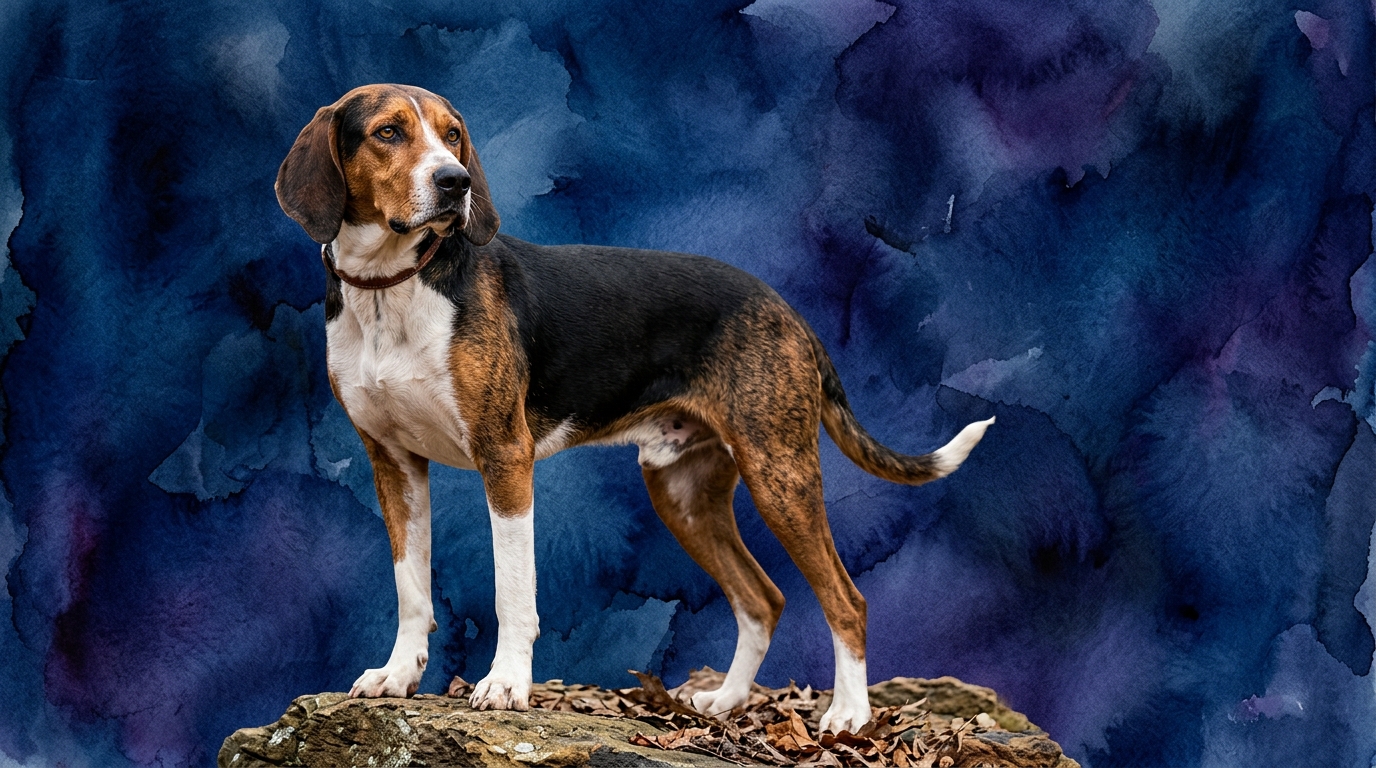
Side-by-Side IQ Profile: Boerboel vs. Treeing Walker Coonhound
For the Boerboel, a score of 3/5 in problem-solving reflects its practical intelligence in assessing and managing its environment, particularly regarding perceived threats or territorial intrusions. This breed often exhibits resourcefulness in understanding how to deter an unwelcome presence, whether it's figuring out how to position itself strategically or using its imposing presence effectively. Their cognitive efforts are frequently directed towards maintaining order and security within their domain.
A 3/5 in training speed indicates that Boerboels learn new commands and routines at a moderate pace, neither exceptionally quick nor particularly slow. Their learning is often contingent on a clear, consistent handler who establishes firm leadership. While capable of grasping complex tasks, they may show independence if they don't immediately perceive the utility or logic behind a command, requiring patience and persistent reinforcement.
The Boerboel's social intelligence, also at 3/5, is finely tuned to understanding hierarchical structures within its human family unit and discerning friend from potential foe. They possess an astute ability to read human intentions, especially those related to the safety and well-being of their loved ones. This manifests as a protective awareness, where they can gauge moods and react appropriately to perceived shifts in the social dynamic.
Scoring 3/5 in instinctive drive highlights the Boerboel's inherent and powerful guarding instincts. Their territoriality and protective drive are central to their being, compelling them to watch over their family and property with unwavering vigilance. This drive is less about pursuing prey and more about strategic deterrence and defense, rooted deeply in their historical purpose.
A 3/5 in memory signifies that Boerboels possess a reliable capacity to recall routines, established boundaries, and past interactions. They tend to remember individuals, both welcome and unwelcome, and the nature of those encounters over extended periods. This memory contributes significantly to their consistent guarding behavior and their ability to learn from previous experiences.
The Treeing Walker Coonhound's 3/5 in problem-solving shines brightest in its natural element: the pursuit of a scent. This breed excels at navigating intricate, often invisible, puzzles presented by a scent trail, figuring out how to bypass obstacles, cross diverse terrains, and decipher faint or broken scent patterns. Their cognitive function here is a relentless, focused effort to unravel the mystery of where the game has gone.
Also at 3/5 for training speed, Treeing Walker Coonhounds learn commands at a moderate pace, much like the Boerboel, yet their learning environment is profoundly different. While they can grasp instructions, their powerful instinctive drive means they are easily diverted by compelling scents. Effective training requires immense patience, creative high-value rewards, and a consistent effort to keep their focus amidst distractions.
A 3/5 in social intelligence for the Treeing Walker Coonhound typically involves understanding pack dynamics, especially when working with other hounds or a human handler during a hunt. They can read subtle cues from their companions and handlers, adapting their behavior to the progression of the chase. Off-hunt, they are generally affable and responsive to familiar human interactions, though less focused on intricate social hierarchies than a guardian breed.
The Treeing Walker Coonhound's 3/5 in instinctive drive is dominated by an intense, singular focus on scent and prey. This manifests as an irrepressible urge to track, chase, and vocalize ('tree') when game is located. This drive is so profound it often overrides other learned behaviors, making them incredibly persistent and dedicated to their primary purpose.
With a 3/5 in memory, Treeing Walker Coonhounds demonstrate a strong recall for scent patterns, successful hunting locations, and the 'rules' and sequences of the chase. They can remember specific scents for extended periods, contributing to their efficiency and success in tracking. Their memory is practical, serving their primary function of finding and treeing game.
Where the Boerboel Wins Cognitively
The Boerboel's cognitive strengths distinctly align with its historical role as a formidable protector. Its problem-solving, while scoring 3/5, is uniquely geared towards strategic defense and threat assessment. This involves a subtle but profound ability to distinguish between benign visitors and actual threats, often making complex judgments based on body language, sound, and context. A Boerboel's social intelligence, also 3/5, allows it to deeply understand and integrate into its family's social structure, discerning its place and responsibility. This translates into a nuanced awareness of who belongs and who doesn't, exhibiting a highly specific form of cognitive discernment that ensures the safety of its human pack. Furthermore, its memory (3/5) is excellent for recalling past interactions with individuals, allowing it to build a mental database of friend versus perceived foe, contributing to its consistent and reliable protective behavior. This integrated suite of cognitive abilities makes the Boerboel an unparalleled specialist in guardian roles, where discerning judgment and steadfast vigilance are paramount.
Where the Treeing Walker Coonhound Wins Cognitively
Conversely, the Treeing Walker Coonhound's cognitive prowess is overwhelmingly specialized for the hunt. Its problem-solving, also 3/5, is a masterclass in olfactory deduction and environmental navigation. This breed can process a staggering amount of scent information, deciphering complex trails, identifying the freshest scent, and mentally mapping the path of its quarry across varied and challenging landscapes. This isn't just following; it's an intricate, multi-sensory puzzle-solving process. Their instinctive drive (3/5) is a relentless engine of focus, allowing them to pursue a scent for hours with unflagging determination, often ignoring all other stimuli. This singular focus, combined with a memory (3/5) for successful hunting patterns and specific scent signatures, makes them exceptionally efficient and persistent trackers. Their cognitive architecture is a finely tuned instrument for the chase, excelling in a realm where other breeds would quickly become lost or distracted.
Which is Easier to Train and Why
Comparing the trainability of a Boerboel and a Treeing Walker Coonhound, both scoring 3/5 in training speed, reveals that 'easier' is highly subjective and context-dependent. The Boerboel, with its protective nature and physical strength, requires a confident, consistent, and experienced handler. While it learns at a moderate pace, its independent streak means it often needs to understand the *reason* for a command or perceive its handler as a strong, fair leader to comply readily. It's less prone to external environmental distractions like scents compared to a hound, but its own strong will and discernment can pose a challenge. If a Boerboel doesn't see the logic or necessity in a command, it may simply choose not to execute it, reflecting its social intelligence and problem-solving applied to its own autonomy.
The Treeing Walker Coonhound, despite its identical 3/5 training speed, presents a different set of training hurdles. Its overwhelming instinctive drive (3/5) towards scent and pursuit makes consistent obedience, especially recall in an open environment, exceptionally difficult. Once a Coonhound catches a compelling scent, its cognitive focus narrows intensely on that trail, overriding almost all learned commands. Training requires immense patience, extremely high-value rewards, and a deep understanding of its innate drives. While it can learn commands, applying them reliably when its powerful instincts are engaged is a constant battle. Therefore, while both breeds demand dedication, the Treeing Walker Coonhound's inherent, almost irresistible pull of its nose makes it generally more challenging to train for off-leash reliability and consistent attention in varied environments compared to the Boerboel, whose challenges stem more from its independent decision-making and guardian mindset.
Active Owners vs. Relaxed Owners: Which Breed Suits Which?
Neither the Boerboel nor the Treeing Walker Coonhound is well-suited for relaxed owners; both breeds demand significant engagement, albeit in different forms. The Boerboel, while not requiring the same boundless, continuous motion as a hound, still needs substantial daily exercise to maintain its physical and mental well-being. More importantly, it requires an owner who is an active, confident leader, capable of providing consistent structure, firm boundaries, and ongoing mental stimulation related to its protective instincts. Owners must be prepared to manage a powerful, discerning dog that takes its role seriously. A relaxed owner might inadvertently allow the Boerboel to assume leadership, leading to potential behavioral issues.
The Treeing Walker Coonhound, on the other hand, is unequivocally a breed for highly active owners. Its intense instinctive drive (3/5) and boundless energy demand extensive physical activity, ideally involving long runs, hiking, or dedicated scent work. These dogs thrive when given a 'job' that engages their extraordinary nose and stamina. A relaxed owner would quickly find themselves overwhelmed by a bored, restless Coonhound prone to destructive behaviors, excessive vocalization, and escape attempts driven by its powerful desire to explore scents. Their need for continuous engagement and physical outlets is non-negotiable, making them an ideal companion for outdoor enthusiasts, hunters, or anyone committed to providing an outlet for their remarkable energy.
The Verdict
Choose the Boerboel if you seek a formidable, protective family guardian who appreciates a dog's strategic assessment of its environment and are prepared for dedicated leadership and training in a secure setting.
Choose the Treeing Walker Coonhound if you are a highly active individual or family who embraces the outdoors, are prepared for extensive exercise, and appreciate a dog's unparalleled dedication to scent work and cheerful, albeit vocal, companionship.
🧠 Find Your Pet's IQ Score
Our Pet IQ Lab assessment covers 25+ tests across 5 cognitive dimensions — personalized to your breed.
Take the Full IQ Test →Frequently Asked Questions
Do identical IQ scores mean these breeds learn in the same way?
No, identical scores often mask profound differences in *how* these cognitive dimensions manifest. A Boerboel's problem-solving might involve threat assessment and territorial strategy, while a Coonhound's involves tracking a complex, invisible scent trail across varied terrain.
Can a Boerboel be trained for scent work, or a Treeing Walker Coonhound for guarding?
While dogs are adaptable, each breed's inherent instinctive drives and physical attributes make them better suited for their traditional roles. A Boerboel might track, but lacks the Coonhound's dedicated olfactory prowess and endurance, and a Coonhound lacks the Boerboel's natural protective gravitas and discerning judgment for guarding.
How important is early socialization for these breeds given their cognitive profiles?
Early socialization is extremely important for both breeds. For the Boerboel, it refines its social intelligence to properly discern threats and ensures appropriate protective responses. For the Treeing Walker Coonhound, it helps manage its intense instincts and ensures it's well-adjusted and responsive in various environments beyond the hunt, mitigating potential distraction issues.