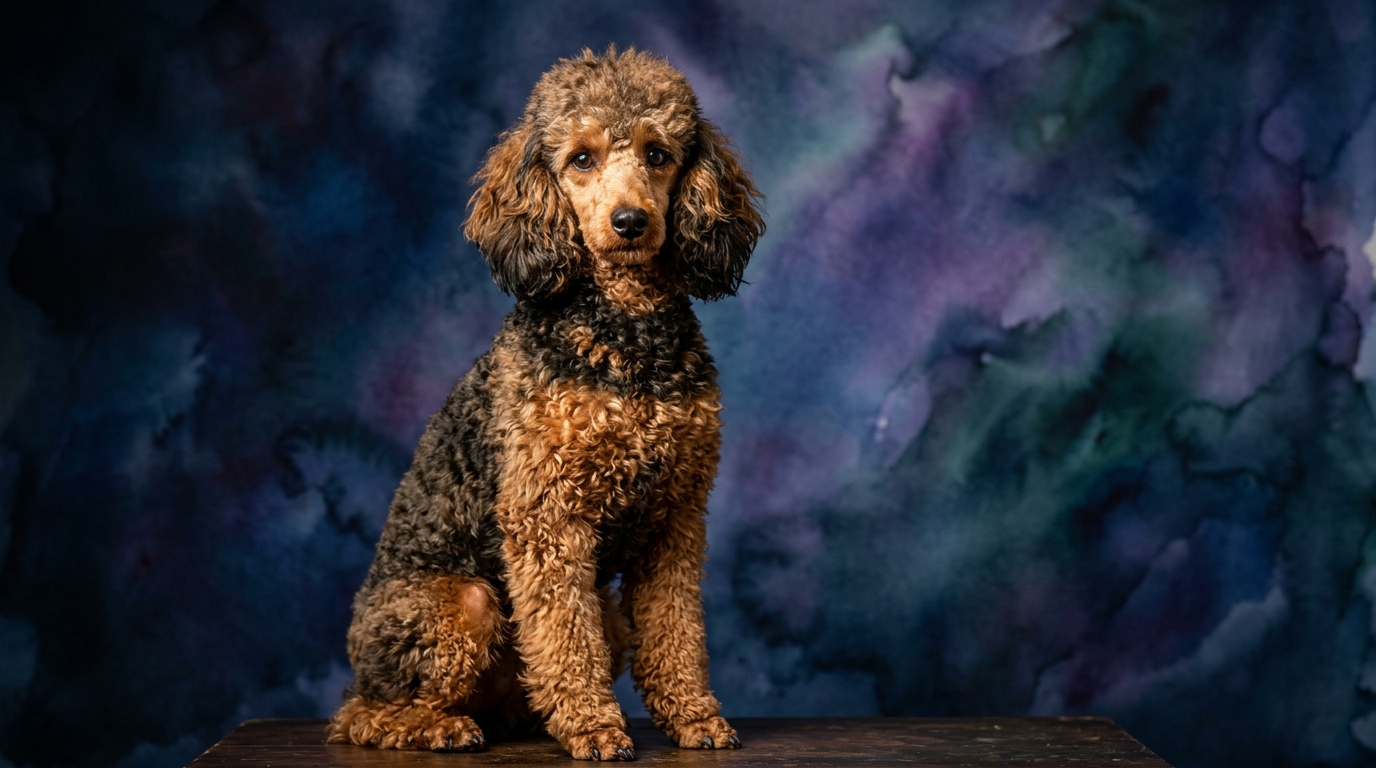
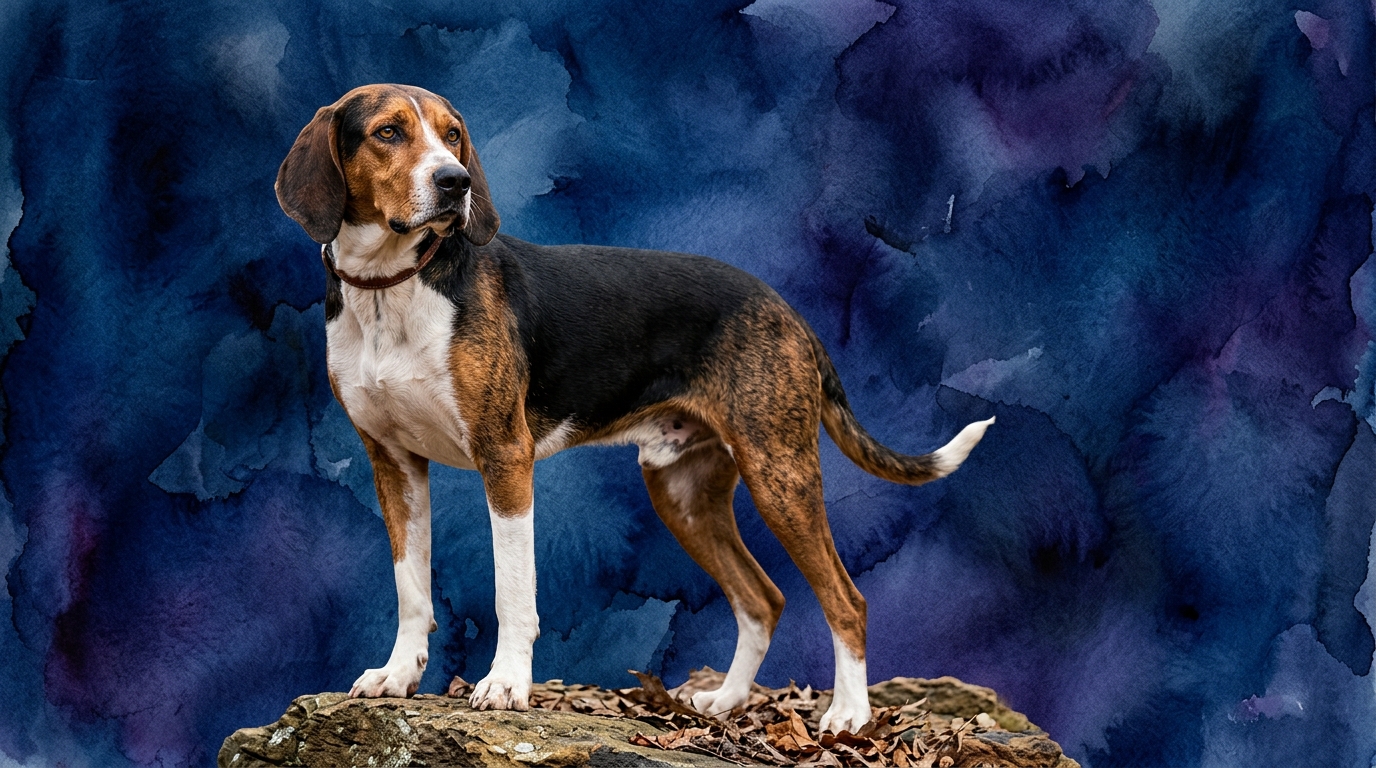
Side-by-Side IQ Profile: A Tale of Two Cognitive Styles
The Cosmic Pet Pet IQ Lab employs five key dimensions to evaluate canine intelligence, offering a nuanced understanding of each breed's cognitive strengths. For the Standard Poodle, these dimensions paint a picture of comprehensive cognitive prowess, while for the Treeing Walker Coonhound, they highlight a specialized, instinct-driven intelligence.
The Standard Poodle demonstrates exceptional Problem Solving (5/5), approaching novel challenges with a strategic mindset, often evaluating situations before acting. Their high score suggests an aptitude for understanding complex sequences and adapting learned behaviors to new contexts, rather than relying solely on trial and error. Their Training Speed (5/5) is remarkable; Poodles absorb new commands and routines with impressive rapidity. Their quick grasp of concepts and eagerness to engage in structured learning make them highly responsive to consistent training methods, often requiring fewer repetitions than many other breeds. In Social Intelligence (5/5), Standard Poodles exhibit a nuanced understanding of human cues and emotional states. They readily interpret body language and vocal tones, adjusting their behavior accordingly, which fosters strong, communicative bonds with their human companions. Their Instinctive Drive (4/5) reflects a robust retrieving and water-dog heritage, manifesting as a purposeful drive to engage with tasks and a persistent focus, albeit tempered by their biddability. Finally, their Memory (5/5) is exceptional, contributing significantly to their rapid training speed and ability to recall complex sequences of behaviors over extended periods, making them reliable partners.
In contrast, the Treeing Walker Coonhound’s scores reflect a different cognitive emphasis. Their Problem Solving (3/5) tends to be practical and direct, rooted in their hunting heritage. While capable of learning, their problem-solving is often focused on immediate environmental factors and less on abstract or multi-step cognitive puzzles. Training Speed (3/5) is moderate, requiring more repetition and consistent reinforcement to solidify new commands. Their independent nature and strong olfactory focus can sometimes lead to distractions, necessitating patient and engaging techniques. Social Intelligence (3/5) shows them as affectionate with family but not always exhibiting the same depth of human-cue interpretation. Their interactions are often straightforward, valuing companionship and clear communication. The core of their Instinctive Drive (3/5) is undeniably scent-related—an ingrained instinct to track and tree game. While potent, it is narrowly focused; outside of scent work, their general instinctive drive for varied activities might appear less intense. Their Memory (3/5) is functional, sufficient for familiar routines, but recall of complex sequences or infrequently practiced commands might require more consistent reinforcement, especially if a compelling scent distraction is present.
Where the Standard Poodle Shines Cognitively
The Standard Poodle's cognitive strengths are evident across nearly every dimension, particularly in areas requiring abstract thought and adaptability. Their 5/5 Problem Solving means they don't just react to situations; they actively process and devise solutions. For instance, if a toy rolls under furniture, a Poodle is more likely to strategically nudge it out or use a tool (like a paw or nose) than to simply bark in frustration. This capacity for logical deduction extends to understanding complex multi-step tasks, making them adept at advanced obedience, agility, or even service work where sequence learning is paramount. This breed's ability to generalize learned behaviors from one context to another is a hallmark of their cognitive flexibility.
Their exceptional Training Speed (5/5) isn't just about quick learning; it reflects a deep engagement with the training process itself. They seem to enjoy the challenge of learning new things, often anticipating cues and offering behaviors. This translates into a dog that can master a new trick in a handful of sessions, retain it, and generalize it to different environments, making them highly versatile in various training disciplines. Their high Social Intelligence (5/5) further enhances this, allowing them to pick up on their handler's subtle intentions and moods, fostering a remarkably intuitive partnership and making them exceptionally responsive to even subtle corrections or encouragements.
Where the Treeing Walker Coonhound Excels Cognitively
While the Treeing Walker Coonhound's scores might appear modest in comparison, their cognitive strengths are profoundly specialized and perfectly tuned to their historical purpose. Their 3/5 in Instinctive Drive, specifically, belies an extraordinary, almost unparalleled, focus when it comes to scent work. This isn't a general drive for any task, but an intense, unwavering commitment to following a trail, deciphering complex scent puzzles in varied terrains, and communicating their findings. This specific cognitive prowess allows them to process vast amounts of olfactory information, distinguish individual scents, and maintain focus on a single trail for hours, an ability that few breeds can match.
Their Problem Solving (3/5), while not abstract, is highly effective within the context of their work. Navigating dense underbrush, locating a 'treed' animal, or finding a lost scent are all complex problems solved through their specialized sensory processing and persistent drive. This pragmatic intelligence ensures their survival and success in demanding outdoor environments, where their ability to focus on a primary sensory input (scent) despite other distractions is paramount. Their memory, while rated 3/5 generally, is undoubtedly exceptional for critical scent-related information, allowing them to 'remember' a specific scent signature or a previously explored territory, which is vital for effective tracking over long distances and varied conditions.
Which is Easier to Train and Why
Based on their respective scores, the Standard Poodle (Training Speed 5/5) is unequivocally easier to train for a broad range of obedience and advanced tasks compared to the Treeing Walker Coonhound (Training Speed 3/5). The Poodle’s inherent eagerness to please, coupled with their rapid comprehension and strong memory, allows them to pick up new commands with minimal repetition. They thrive on mental stimulation and collaborative work, making them highly responsive to positive reinforcement methods and eager participants in training sessions. Their high social intelligence also means they are attuned to their handler's feedback, adapting quickly and making the training process a cooperative effort.
The Treeing Walker Coonhound, in contrast, presents a different training dynamic. Their independent nature, bred to work autonomously on a scent trail, means they are not inherently driven by the same desire for human direction. While capable of learning, their training requires immense patience, consistency, and a deep understanding of their motivations. A compelling scent can override any previously learned command, making recall particularly challenging in distracting environments. Training a Coonhound effectively often involves channeling their powerful scent drive into productive activities like tracking or nose work, rather than attempting to suppress it. Their 3/5 memory means that skills need more consistent practice to remain sharp, especially when competing with their primary instincts.
Which Suits Active Owners vs. Relaxed Owners
The Standard Poodle can adapt to various active lifestyles, making them suitable for owners who enjoy a range of activities from brisk walks and runs to dog sports like agility, obedience, and even dock diving. Their high energy, combined with a strong desire for mental engagement, means they thrive when given a consistent outlet for both physical exercise and cognitive challenges. They are generally adaptable to different living situations as long as their needs for activity and companionship are met. While they can enjoy periods of relaxation and indoor family time, a Poodle will become restless and potentially develop undesirable behaviors without sufficient mental and physical stimulation tailored to their cognitive capacity.
The Treeing Walker Coonhound, while possessing a different kind of activity requirement, is definitely for active owners, particularly those who appreciate and can accommodate their specialized needs. Their high stamina and relentless drive for scent work mean they require significant outdoor activity, often off-leash in secure areas where they can follow their nose. A relaxed owner who cannot provide consistent opportunities for exploration and scent-driven exercise will likely find a Coonhound challenging, as their pent-up energy and natural instincts can lead to baying, destructive chewing, or attempts to escape. They need purpose, and that purpose is often found through their nose, necessitating owners who are prepared for long, engaging outdoor excursions.
The Verdict
Choose the Standard Poodle if you seek a highly adaptable, biddable companion eager for diverse training challenges and a deep, communicative partnership. They excel in structured learning and thrive on mental engagement.
Opt for the Treeing Walker Coonhound if you are an active individual passionate about providing extensive outdoor exploration and can channel their intense scent drive into fulfilling activities. They are dedicated, independent partners for specific pursuits.
🧠 Find Your Pet's IQ Score
Our Pet IQ Lab assessment covers 25+ tests across 5 cognitive dimensions — personalized to your breed.
Take the Full IQ Test →Frequently Asked Questions
Do Standard Poodles get bored easily?
Yes, with their high cognitive scores across the board, Standard Poodles require consistent mental stimulation. Without sufficient engagement through training, puzzles, or varied activities, they can become bored, potentially leading to undesirable behaviors or restlessness.
Can a Treeing Walker Coonhound live in an apartment?
A Treeing Walker Coonhound can potentially live in an apartment if their owners are extremely committed to providing extensive daily exercise and mental stimulation, primarily through long walks, runs, or dedicated scent work outings. However, their characteristic baying vocalizations and strong need for outdoor exploration make a home with a secure yard generally more suitable for their well-being.
How do the grooming needs of these two breeds compare?
The Standard Poodle requires significant grooming, including regular brushing and professional clipping every 4-6 weeks to prevent matting and maintain coat health. The Treeing Walker Coonhound has a short, easy-care coat that needs only occasional brushing to remove loose hair and maintain cleanliness, making their grooming demands considerably lower.