Side-by-Side IQ Profile: Herding Dynamo vs. Gentle Giant
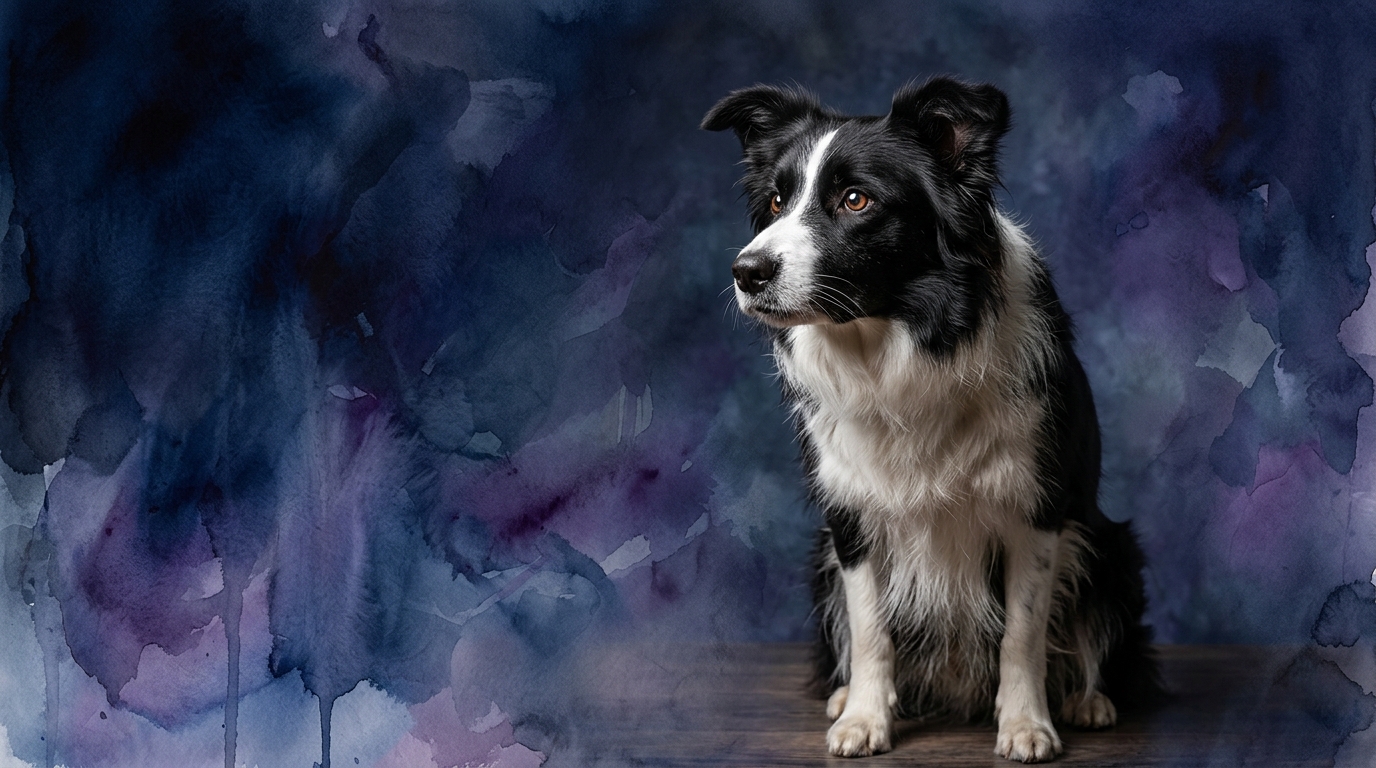
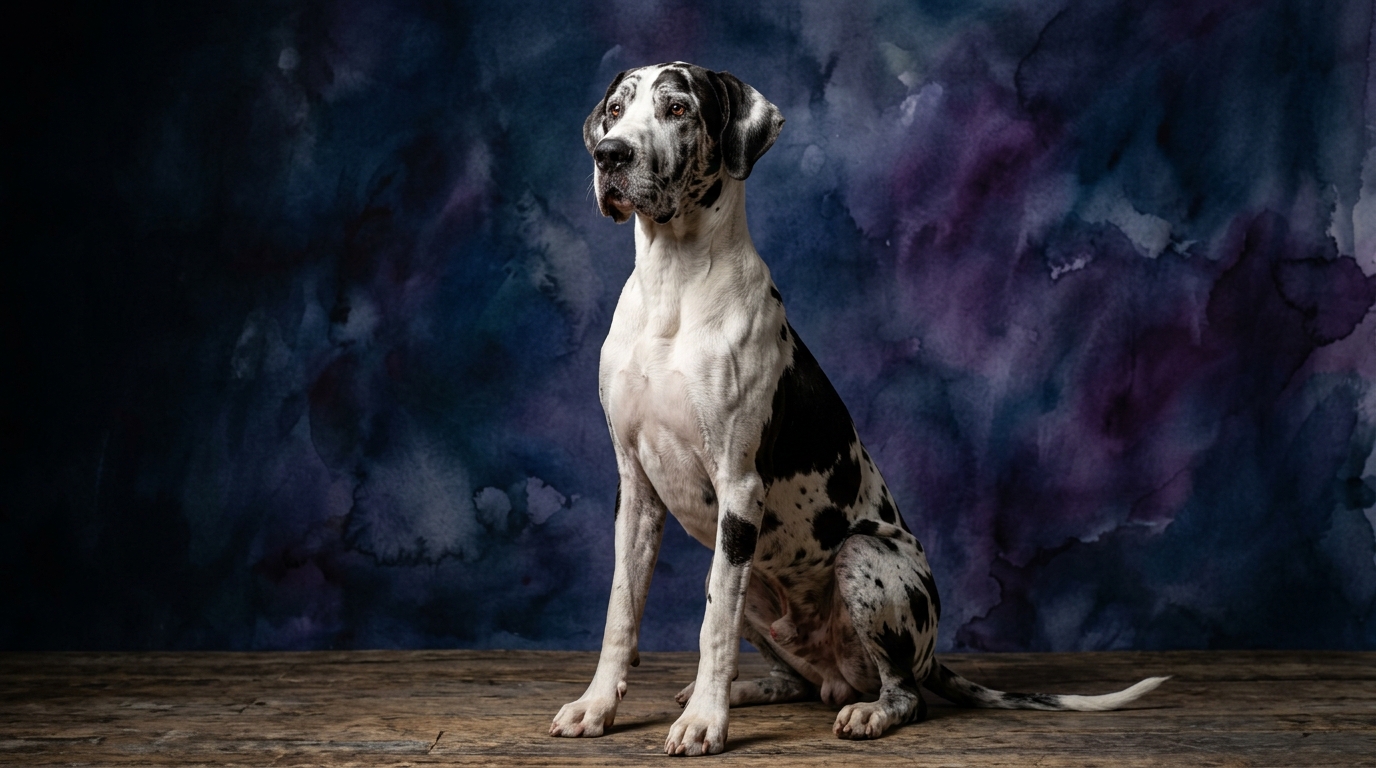
At The Cosmic Pet Pet IQ Lab, we analyze canine intelligence across five key dimensions. The Border Collie, ranked Coren #1, presents a profile honed for intricate tasks and rapid response, while the Great Dane, Coren #48, showcases a more measured, companionship-focused cognitive style.
For the Border Collie, Problem Solving scores 5/5, reflecting their exceptional capacity to strategize, anticipate outcomes, and adapt to complex, dynamic situations, often seen in their ability to manipulate livestock with precision. Their Training Speed also rates 5/5, demonstrating an uncanny ability to grasp new commands and concepts with minimal repetition, often eager to learn and execute intricate sequences. Social Intelligence stands at 4/5, indicating a strong capability to read human intentions and cues, forming deep working partnerships rooted in understanding. Their Instinctive Drive is a powerful 5/5, fueled by an intense herding impulse that translates into focused engagement and a persistent desire to control movement. Memory is a perfect 5/5, allowing them to retain vast repertoires of commands, routines, and experiences over extensive periods, crucial for multi-stage tasks.
The Great Dane, in contrast, presents a different cognitive landscape. Their Problem Solving is rated 3/5, suggesting a more deliberate approach to novel situations, often relying on learned responses or trial-and-error rather than immediate, creative solutions. Training Speed is also 3/5; while capable of learning, they typically require more consistent repetition and patience, with a learning curve that is steady rather than instantaneous. Social Intelligence, like the Border Collie, is 4/5, but manifests differently, focusing on profound emotional attunement with their family and a desire for harmonious companionship. Instinctive Drive is 3/5, with their historical role as guardians and hunters evolving into a more placid, protective presence, less driven by constant task execution. Memory stands at 3/5, indicating a solid capacity for recalling established commands and routines, though perhaps needing occasional refreshers for less frequently practiced skills.
Where the Border Collie Leads Cognitively
The Border Collie's cognitive strengths are deeply rooted in their heritage as working dogs, where speed and precision are paramount. Their cognitive processing speed is a significant differentiator; they analyze situations and make decisions with remarkable rapidity, essential for managing unpredictable livestock movements. This isn't just about physical quickness, but mental agility – processing multiple data points simultaneously and formulating a response in fractions of a second. They excel in abstract concept understanding, capable of grasping nuanced commands that don't directly correspond to a physical action, like 'find the sheep on the hill' or 'gather the strays,' which requires spatial reasoning and predictive thought. Furthermore, their capacity for initiative and independent problem-solving sets them apart. Once trained, a Border Collie often takes proactive steps within a task, anticipating the next move without constant human instruction, demonstrating a true partnership in decision-making. Their working memory capacity is also exceptional, enabling them to hold multiple pieces of information – a series of commands, the location of different sheep, the handler's next signal – simultaneously to execute complex, multi-stage tasks flawlessly.
Where the Great Dane Shines Cognitively
While not lauded for the same type of rapid-fire problem-solving, the Great Dane possesses a distinct set of cognitive strengths that contribute to their cherished role as companions. Their emotional attunement is a hallmark; Great Danes display a profound understanding of human mood and emotional states, often offering comfort or adjusting their behavior in response to a family member's feelings. This isn't just basic empathy but a nuanced reading of subtle cues, making them exceptional emotional support animals. They also exhibit remarkable environmental awareness within their familiar territory, keenly attuned to household routines and family dynamics. They often anticipate needs or changes within their home, for example, knowing when it's walk time or when a family member is due to arrive, indicating strong associative learning and observational skills. A key cognitive strength is their impulse control, especially considering their immense size and power. Despite their physical prowess, they often exhibit remarkable restraint and gentleness, particularly with children or smaller pets, suggesting a cognitive override of instinctual reactions. This deliberate self-regulation is a testament to their cognitive processing. Moreover, their patience and endurance in calm tasks is a unique form of cognitive strength. While not driven by high-octane mental challenges, they can remain composed and patient for extended periods in low-stimulation environments, a different kind of mental resilience compared to the Border Collie's constant need for engagement.
Training: Effort vs. Engagement
When considering ease of training, the Border Collie generally presents a more straightforward path for owners seeking a highly responsive partner, while the Great Dane requires a different approach. The Border Collie’s high training speed, intense focus, and robust desire to work make them exceptionally receptive to instruction. They form rapid associations between commands and actions, often needing only a handful of repetitions to solidify a new behavior. Their instinctive drive for task completion means they are inherently motivated to engage with training as a 'job,' thriving on the challenge and the opportunity to interact purposefully with their handler. This breed actively seeks to learn, sustains attention for extended periods, and quickly self-corrects errors, making the training process highly efficient and rewarding for both dog and owner.
Conversely, training a Great Dane, while entirely achievable, demands more patience and a different motivational strategy. Their lower training speed means that new commands often require more repetitions and consistent, positive reinforcement to become ingrained. Great Danes can be more easily distracted by their environment or comfort, and their primary drive is often companionship and comfort rather than complex task execution. This can manifest as 'selective hearing' if they are not fully engaged, or a tendency to prioritize a cozy nap over immediate obedience. While capable of learning a wide array of commands, owners must be prepared for a steadier, more deliberate progression, often needing to make training sessions highly rewarding with treats or enthusiastic praise to maintain their gentle giant's interest and cooperation. Their calm demeanor means they respond best to a relaxed, consistent approach, rather than high-energy, demanding sessions.
Matching Canine Intellect to Lifestyle: Active vs. Relaxed Owners
The divergent cognitive profiles of the Border Collie and Great Dane naturally align with very different owner lifestyles. An owner who thrives on being active, engaged, and mentally stimulating their dog will find a profound connection with a Border Collie. These dogs flourish when provided with constant mental and physical challenges, whether through structured activities like agility, obedience trials, herding, or complex puzzle toys. They require an owner who is not just a companion but a dedicated trainer and partner, ready to provide a 'job' for their keen mind daily. Without sufficient mental and physical outlets, a Border Collie's powerful cognitive engine can lead to undesirable behaviors such as obsessive herding of family members, incessant barking, or destructive tendencies, born from boredom and an unfulfilled drive to work. They need an outlet for their strategic thinking and problem-solving abilities.
In contrast, the Great Dane is an ideal match for owners who prefer a more relaxed pace and cherish a calm, affectionate presence in their home. While they benefit from regular, moderate exercise, such as daily walks, their cognitive needs are more centered around companionship, routine, and a tranquil environment. They appreciate ample cuddle time and being a central, gentle fixture in family life. Owners of Great Danes need to be prepared for the sheer physical presence of a large dog but can anticipate a relatively low-key companion in terms of mental demands. Consistent basic obedience training is crucial due to their size, ensuring they are well-mannered and manageable, but the intensity of mental engagement required is significantly different from that of a Border Collie. They are content with being a loyal, comforting presence, rather than a constant participant in high-octane mental exercises.
The Verdict
For owners who relish a dynamic, highly engaged canine partner eager for complex mental challenges and sustained physical activity, offering a true working partnership, the Border Collie is the ideal choice.
For individuals or families seeking a gentle, affectionate giant whose cognitive strengths lie in companionship, emotional sensitivity, and a calm, comforting presence within the home, the Great Dane is the perfect fit.
🧠 Find Your Pet's IQ Score
Our Pet IQ Lab assessment covers 25+ tests across 5 cognitive dimensions — personalized to your breed.
Take the Full IQ Test →Frequently Asked Questions
Can a Great Dane learn complex tricks like a Border Collie?
Yes, Great Danes are capable of learning a wide range of commands and tricks. However, they typically require more repetitions and patience during training compared to a Border Collie, and may not excel at the same level of intricate, multi-step sequences or rapid-fire learning. Their motivation often stems from pleasing their owner rather than an inherent drive for complex task mastery.
Do Border Collies get bored easily?
Absolutely. Border Collies possess a profound need for mental stimulation and purposeful activity. Without sufficient challenges, their keen minds can quickly turn to self-invented 'jobs' like obsessive herding of family members, incessant barking, or destructive behaviors, making consistent engagement crucial for their well-being.
Is social intelligence the same for both breeds?
While both breeds score 4/5 in social intelligence, their manifestations differ. The Border Collie's social intelligence is often geared towards understanding human cues for task execution and partnership, while the Great Dane's is more focused on emotional attunement, family bonding, and providing comfort. Both are sensitive to human interaction but apply that sensitivity differently.