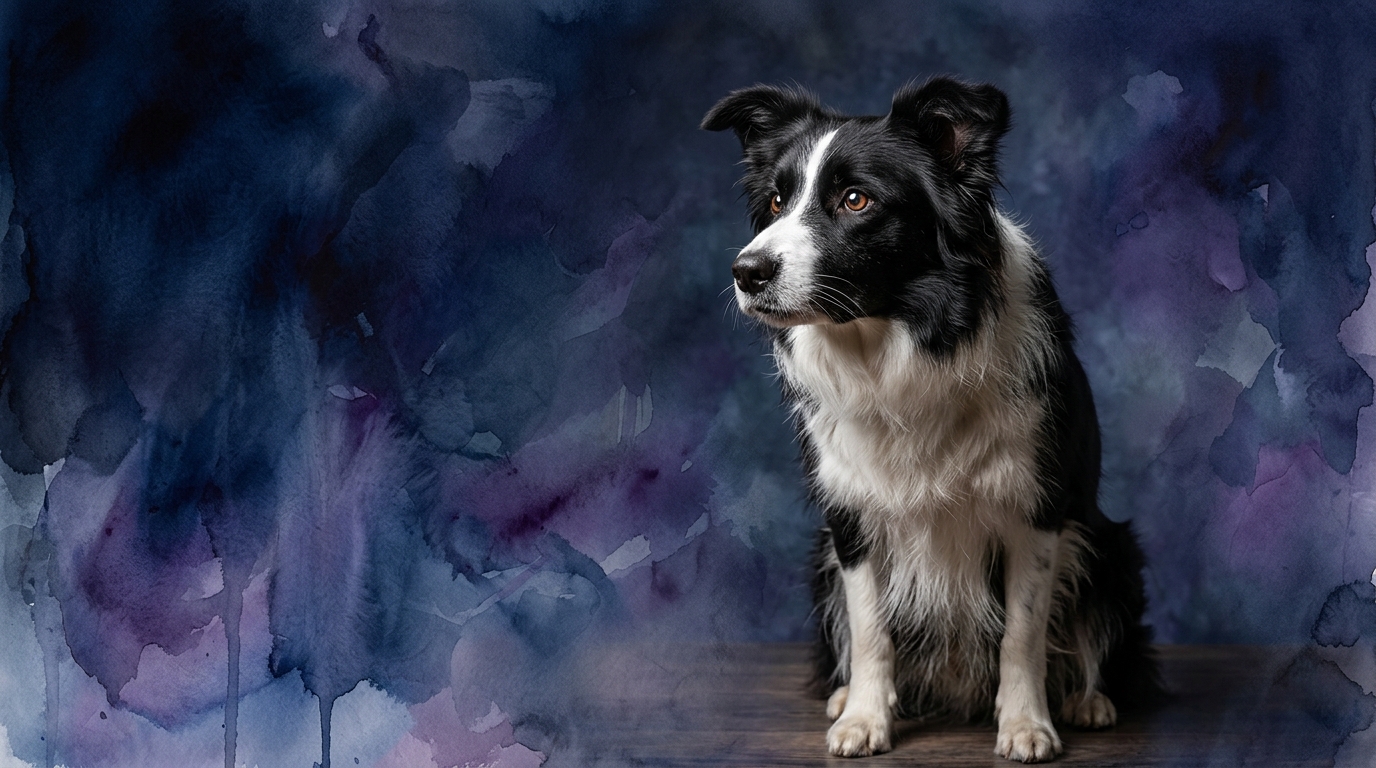
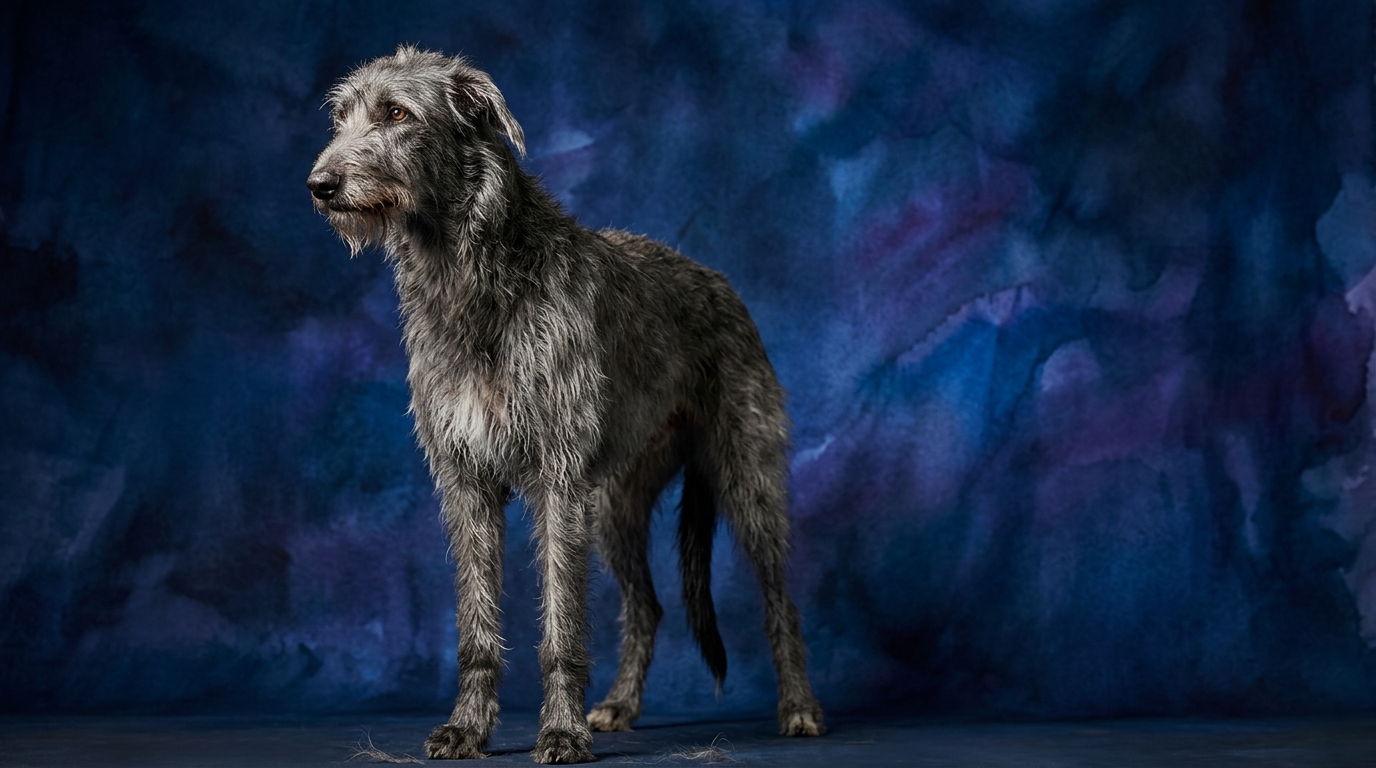
Side-by-Side IQ Profile: Border Collie vs. Scottish Deerhound
The Cosmic Pet Pet IQ Lab employs a five-dimensional framework to assess canine intelligence, offering a nuanced view beyond simple obedience. Here’s how the Border Collie and Scottish Deerhound measure up.
For the Border Collie:
Problem Solving (5/5): These dogs exhibit exceptional cognitive flexibility, quickly analyzing novel situations and devising multi-step solutions. They can strategize to herd livestock, manipulate latches, or anticipate a handler's next move, often appearing to think several steps ahead. Their mental agility allows them to excel in complex tasks requiring abstract reasoning and adaptive strategies.
Training Speed (5/5): Border Collies are renowned for their rapid acquisition of new commands and routines. They grasp concepts almost immediately, often requiring only a few repetitions to solidify a behavior. This speed is fueled by an intense desire to engage and cooperate, making them incredibly receptive to instruction and eager to learn intricate sequences.
Social Intelligence (4/5): Border Collies are deeply attuned to human cues, demonstrating a strong capacity for understanding subtle body language, vocal inflections, and emotional states. While highly responsive to their primary handler, their intense focus on tasks can sometimes override broader social nuances with strangers or other animals, though they are generally cooperative within their established social sphere.
Instinctive Drive (5/5): Their herding instinct is a powerful, intrinsic motivation that shapes their cognitive processes. This drive isn't just about chasing; it involves complex decision-making, spatial awareness, and the ability to control and direct movement, often without direct command. It translates into an intense work ethic and a profound need for purpose-driven activity.
Memory (5/5): Border Collies possess an extraordinary memory, capable of retaining a vast repertoire of commands, complex sequences, and learned experiences over long periods. They can recall specific instructions, remember the location of objects, and adapt past solutions to new problems, indicating a robust and highly functional cognitive recall system.
For the Scottish Deerhound:
Problem Solving (3/5): Scottish Deerhounds approach problems with a more straightforward, less overtly analytical mindset. While capable of learning and adapting, they typically rely on learned behaviors and direct instruction rather than spontaneously inventing complex solutions to novel challenges. Their problem-solving often aligns with their innate hunting strategies, focusing on visual tracking and pursuit rather than intricate manipulation.
Training Speed (3/5): Deerhounds learn at a moderate pace, requiring consistent repetition and patience. They are not as quick to grasp new concepts as some breeds and can be prone to independent thought, which means training sessions need to be engaging and positive to maintain their focus. Their learning style is often described as thoughtful rather than instantaneous.
Social Intelligence (3/5): Deerhounds are gentle and affectionate with their trusted human companions, forming strong, quiet bonds. Their social intelligence is characterized by a calm presence and a less demanding interaction style. While they understand basic social cues, they may not exhibit the same nuanced responsiveness or intense desire to please as breeds bred for close collaboration, preferring a more independent social engagement.
Instinctive Drive (3/5): The Deerhound's instinctive drive is primarily rooted in their sighthound heritage: a powerful urge to chase and course prey by sight. This drive is strong and specific, manifesting in sudden bursts of speed and focus on moving targets. Unlike the complex, controlled drive of a herder, their instinct is more linear and less geared towards intricate collaborative tasks, often overriding other commands when triggered.
Memory (3/5): Deerhounds possess a functional memory for routines and learned behaviors, allowing them to navigate their environment and retain basic commands. However, their recall may not be as extensive or as rapidly accessed for complex sequences as breeds with higher scores. They remember experiences and people, but their cognitive architecture isn't optimized for storing vast libraries of operational data.
Where the Border Collie Wins Cognitively
The Border Collie's cognitive prowess is undeniably geared towards operational excellence and intricate mental engagement. Their superior Problem Solving (5/5) means they don't just follow commands; they actively interpret situations and strategize, often anticipating next steps in a dynamic environment, whether herding sheep or navigating an agility course. This proactive problem-solving, coupled with their unmatched Training Speed (5/5), allows them to master complex multi-step tasks and learn vast vocabularies of commands with startling efficiency. Their remarkable Memory (5/5) ensures these intricate skills and sequences are not only acquired quickly but also retained reliably over time, making them capable of performing sophisticated routines with precision. Furthermore, their intense Instinctive Drive (5/5) is not merely a raw urge but a highly refined cognitive process involving spatial reasoning, predictive behavior, and nuanced control, which they apply with focused determination to any 'job' they are given.
Where the Scottish Deerhound Wins Cognitively
While their cognitive strengths manifest differently, Scottish Deerhounds possess distinct advantages rooted in their ancient purpose. Their particular cognitive architecture lends itself to independence and a selective application of focus. The Deerhound's Instinctive Drive (3/5), though scoring lower than a Border Collie's, is exquisitely tuned for specific tasks: the pursuit of moving objects by sight. This drive, when engaged, allows for incredible focus and determination in a chase, a cognitive specialization that bypasses the need for constant human direction in that specific context. Their Problem Solving (3/5) and Training Speed (3/5) scores, while indicating a different learning approach, also suggest a dog less prone to developing obsessive behaviors or requiring constant, intense mental work to prevent boredom, which can be a significant cognitive advantage for certain households. This allows for a more relaxed and self-contained cognitive state. Their Social Intelligence (3/5) fosters a calm, affectionate, yet independent companionship, where they are less likely to be overwhelmed by social complexity and more content with quiet presence rather than constant interactional cues, offering a different, less demanding form of social connection.
Which Is Easier to Train and Why
Evaluating ease of training pivots directly on a breed's cognitive predisposition and motivation. The Border Collie, with its 5/5 Training Speed and 5/5 Instinctive Drive, is generally far 'easier' to train in the traditional sense of obedience and complex task learning. Their inherent eagerness to engage with a handler, combined with a profound desire to work and a rapid grasp of concepts, means they actively seek instruction and find immense satisfaction in performing tasks accurately. They absorb new commands with minimal repetition and are highly motivated by the opportunity for mental engagement and collaborative work. This translates into a dog that often learns basic obedience in days rather than weeks and can advance to highly specialized tasks quickly.
In contrast, the Scottish Deerhound, with its 3/5 Training Speed and 3/5 Instinctive Drive, presents a different training experience. While certainly trainable, they are not driven by the same intense desire for collaborative work or rapid learning. Their independent sighthound nature means they often need more patience, consistency, and positive reinforcement to solidify behaviors. A Deerhound might understand a command but choose not to execute it if there's a more interesting visual stimulus or if they don't perceive the immediate value. Training them effectively requires understanding their inherent independence and capitalizing on their food or praise motivation in short, engaging sessions, rather than expecting the continuous, eager compliance seen in a Border Collie's training dynamic.
Which Suits Active Owners vs. Relaxed Owners
The cognitive profiles of these two breeds paint a clear picture of their suitability for different owner lifestyles. The Border Collie, a dynamo of mental and physical energy, is undeniably suited for active owners. Their 5/5 Problem Solving and Instinctive Drive mean they thrive when given a 'job' — whether it's competitive dog sports like agility, obedience, flyball, or actual herding. An active owner for a Border Collie isn't just someone who takes them for long walks; it's someone who can provide consistent, challenging mental stimulation daily, engaging their profound need for purpose and intellectual engagement. Without this outlet, a Border Collie's highly active mind can become destructive or develop neurotic behaviors due to unmet cognitive demands.
Conversely, the Scottish Deerhound is a far better match for more relaxed owners. While they certainly enjoy and require regular bursts of exercise – especially the opportunity to gallop in a safe, enclosed space to satisfy their sighthound instincts – their cognitive needs are less demanding. Their 3/5 Problem Solving and Instinctive Drive mean they are content with periods of calm and quiet companionship, not requiring constant mental puzzles or intricate tasks to remain balanced. A relaxed owner for a Deerhound appreciates their tranquil presence indoors, understanding that their intense bursts of activity are balanced by a profound capacity for lounging. They are not dogs that will invent complex ways to entertain themselves if left to their own devices, nor do they typically seek out constant interaction, making them excellent companions for those who value peace and quiet after a good run.
The Verdict
Opt for a Border Collie if you are an experienced, active owner dedicated to providing daily, rigorous mental and physical challenges, and you thrive on a deeply collaborative working relationship with your canine companion.
Select a Scottish Deerhound if you appreciate a calm, independent, and affectionate companion who enjoys bursts of energetic outdoor play but is equally content with quiet, relaxed companionship indoors.
🧠 Find Your Pet's IQ Score
Our Pet IQ Lab assessment covers 25+ tests across 5 cognitive dimensions — personalized to your breed.
Take the Full IQ Test →Frequently Asked Questions
Do Scottish Deerhounds require mental stimulation, given their IQ scores?
Yes, all dogs benefit from mental enrichment, but a Deerhound's needs differ. They benefit from puzzle toys, scent games, and consistent, positive training sessions, but typically don't require the same intensity or complexity of cognitive work as a Border Collie to remain content.
Can a Border Collie adapt to a less active, more relaxed home environment?
It is challenging for a Border Collie to thrive in a relaxed home without significant management. Their intense cognitive and physical needs often lead to frustration, destructive behaviors, or anxiety if not adequately met, making them generally unsuitable for sedentary lifestyles.
How does a Deerhound's 'instinctive drive' manifest in daily life compared to a Border Collie's?
A Deerhound's instinctive drive primarily manifests as a powerful urge to chase anything that moves quickly, like squirrels or distant objects, requiring secure outdoor spaces. In contrast, a Border Collie's drive is a complex herding instinct, manifesting as a need to control, organize, and work collaboratively, often applied to anything from toys to family members.