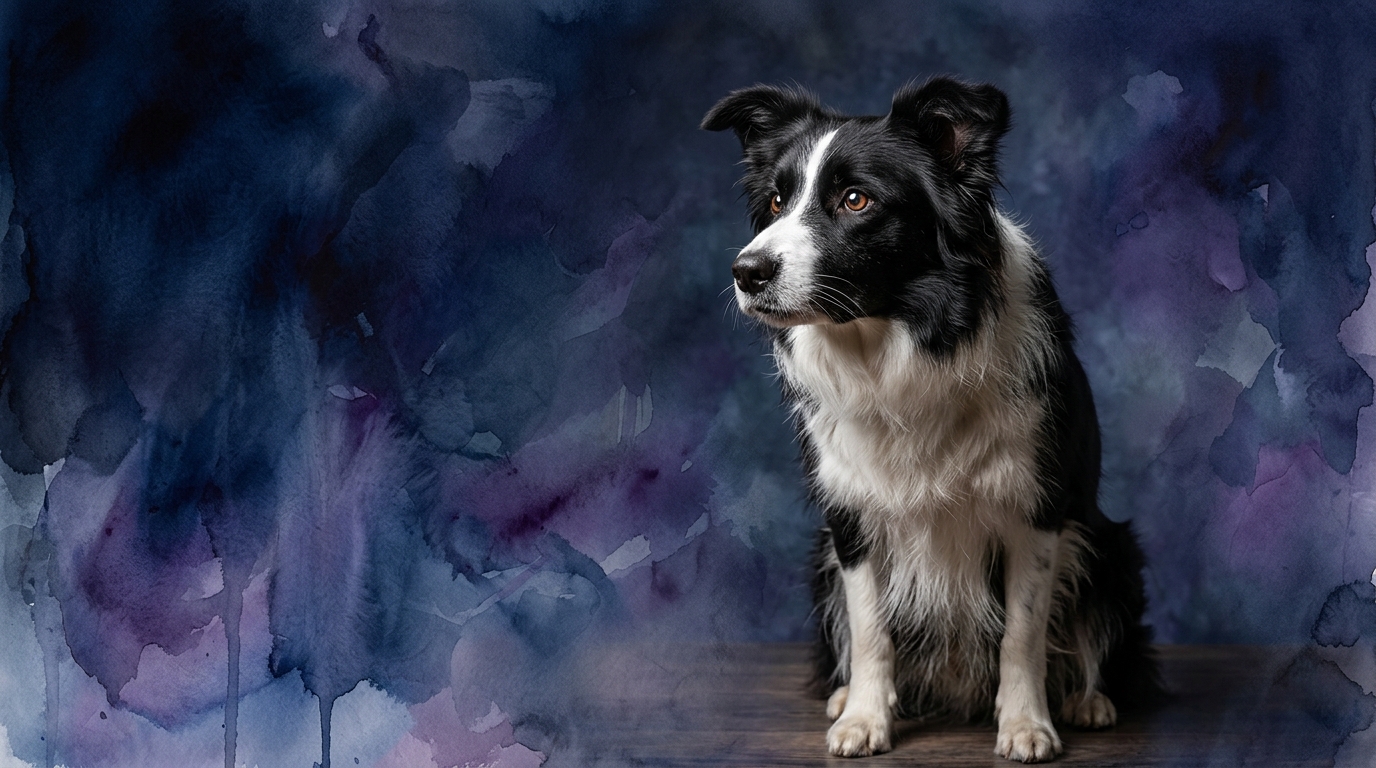
Side-by-Side IQ Profile: Border Collie
The Border Collie, a breed celebrated for its prowess, consistently scores at the pinnacle of canine cognitive assessments, reflected in its Coren rank of #1. Its IQ profile showcases a Problem Solving aptitude rated 5/5, indicating an exceptional capacity to analyze complex situations and devise effective strategies, particularly in dynamic environments like herding. Training Speed is also a perfect 5/5, demonstrating an uncanny ability to grasp new commands and sequences with minimal repetition. Social Intelligence stands at 4/5, signifying a keen awareness of human cues and a strong desire to collaborate. An Instinctive Drive of 5/5 highlights their profound work ethic and persistent focus on tasks, while Memory, also 5/5, allows them to retain extensive repertoires of commands and complex routines, often over long periods.
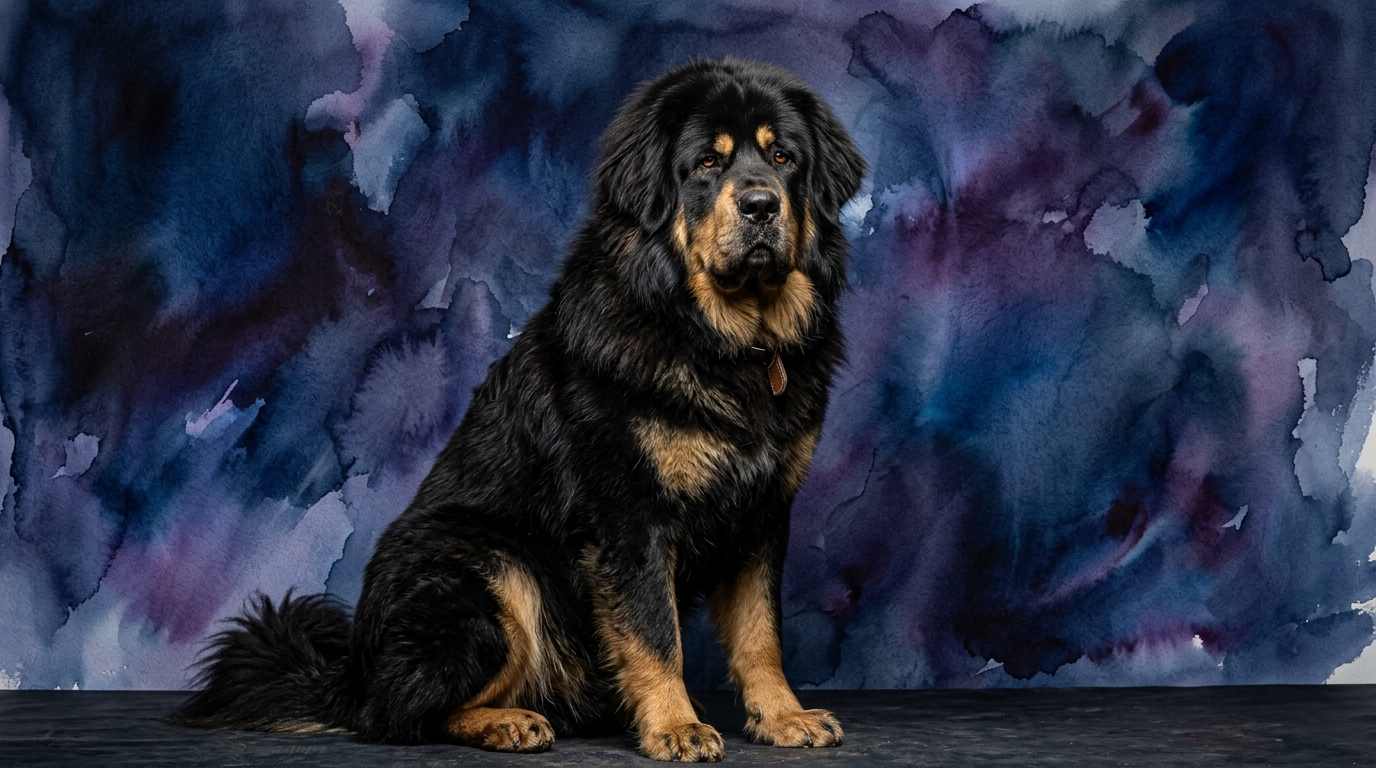
Side-by-Side IQ Profile: Tibetan Mastiff
In stark contrast, the Tibetan Mastiff, a powerful guardian breed, presents a distinct cognitive blueprint, unburdened by Coren rankings but defined by its ancient role. Its Problem Solving abilities are rated 3/5, focusing primarily on assessing threats and managing territorial boundaries rather than abstract challenges. Training Speed registers at 3/5, reflecting a more deliberate learning pace and an independent streak that prioritizes self-reliance over eager compliance. Social Intelligence is 3/5, denoting a deep bond with its immediate family while often displaying aloofness towards strangers or complex social nuances outside its defined circle. The breed's Instinctive Drive, 3/5, is powerfully channeled into protection and vigilance, a fundamental aspect of its being, but not typically expressed as a drive for interactive 'work.' Finally, Memory at 3/5 allows it to retain important information regarding its territory, family, and established routines, though perhaps not the vast command vocabulary of a herding specialist.
Where the Border Collie Wins Cognitively
The Border Collie's cognitive strengths shine brightest in areas demanding rapid processing, adaptability, and an intrinsic motivation for task execution. Their Problem Solving at 5/5 isn't just about figuring out puzzles; it's about dynamically adjusting tactics when faced with unpredictable livestock or changing environmental conditions, often anticipating the handler's next move. This breed excels in learning complex, multi-step sequences and applying them flexibly, a testament to their exceptional Memory (5/5). They can recall dozens, even hundreds, of distinct commands and associate them with specific actions or objects. Their 5/5 Training Speed is a direct result of their intense focus and an almost insatiable desire for mental engagement, allowing them to master new skills with startling efficiency. The Border Collie's Instinctive Drive (5/5) is profoundly tied to purposeful action, providing the internal engine for sustained cognitive effort in activities like agility, obedience, or advanced trick training, where they not only perform tasks but often invent novel approaches to challenges.
Where the Tibetan Mastiff Wins Cognitively
Conversely, the Tibetan Mastiff's cognitive prowess is rooted in independent judgment and a profound understanding of its domain, strengths often overlooked in traditional 'obedience' metrics. Their Problem Solving, while rated 3/5, is acutely tuned to territorial defense; they excel at assessing potential threats, discerning intentions, and making autonomous decisions regarding the safety of their 'flock' without constant human direction. This isn't about solving abstract puzzles but about practical, real-world security scenarios. Their Social Intelligence (3/5), though lower for broad social adaptability, is exceptionally refined within their core family unit, demonstrating unwavering loyalty and a deep, discerning understanding of their immediate human companions. The Tibetan Mastiff’s Instinctive Drive (3/5) is uniquely powerful in its singular focus on guarding, demanding a cognitive process of constant vigilance, observation, and spatial awareness. Their Memory (3/5) is robust for remembering who belongs and who doesn't, the boundaries of their territory, and established routines, critical for their role as a steadfast, self-sufficient protector.
Ease of Training: Border Collie vs. Tibetan Mastiff
When considering ease of training, the Border Collie undoubtedly presents a more straightforward path for most owners, largely due to its intrinsic motivation for collaboration and intellectual engagement. Their 5/5 Training Speed is propelled by an eagerness to please, a strong work ethic, and a remarkable capacity for focus, making them highly responsive to positive reinforcement and clear direction. They thrive on the mental stimulation of learning new commands and delight in performing complex tasks, often anticipating what their handler desires. This breed's behavioral inclination is to work *with* their human, viewing training as a fulfilling partnership. The Tibetan Mastiff, with its 3/5 Training Speed, requires a different approach. Their independent spirit and ancient role as a solitary guardian mean they are less inclined to perform tasks simply to please. Training a Tibetan Mastiff demands immense patience, consistency, and a deep understanding of their guardian mindset. They learn best when they perceive a practical purpose behind a command, or if it aligns with their protective instincts. Their strong will means they might 'consider' a command before executing it, rather than offering immediate compliance, making the training journey a lesson in mutual respect rather than rapid mastery.
Matching Breeds to Owner Lifestyles
The choice between these breeds profoundly impacts an owner's lifestyle. The Border Collie is an ideal match for active owners who relish constant mental and physical engagement. Their boundless energy and 5/5 Instinctive Drive for purposeful activity mean they thrive in environments offering daily challenges, such as advanced obedience, agility, flyball, or herding trials. An owner who enjoys teaching complex tricks, going on long, stimulating hikes, or participating in canine sports will find an unparalleled partner in a Border Collie, as this breed demands an outlet for its extraordinary cognitive and physical capabilities. Without sufficient mental and physical stimulation, a Border Collie can develop undesirable behaviors born from boredom. Conversely, the Tibetan Mastiff is better suited for owners who appreciate a more relaxed, yet deeply watchful, companion. While they require regular exercise to maintain health, their 'work' often involves patrolling their territory and observing their surroundings rather than demanding interactive games or complex tasks. An owner prepared for a large, independent dog whose cognitive strengths lie in territorial vigilance and discerning judgment, rather than constant interaction, will find a devoted, albeit less overtly 'busy,' companion. They are not a breed for owners seeking a dog to perform tricks on command or participate in high-energy sports, but rather one that provides a calm, protective presence.
The Verdict
Opt for a Border Collie if you seek an intensely interactive, highly trainable companion for advanced dog sports, complex obedience, or a working role, someone who thrives on constant mental engagement and partnership.
Select a Tibetan Mastiff if you desire a steadfast, independent guardian for your home and family, appreciating a dog whose deep loyalty and cognitive strengths are focused on protective vigilance rather than eager compliance or constant task performance.
🧠 Find Your Pet's IQ Score
Our Pet IQ Lab assessment covers 25+ tests across 5 cognitive dimensions — personalized to your breed.
Take the Full IQ Test →Frequently Asked Questions
Are Tibetan Mastiffs trainable?
Yes, Tibetan Mastiffs are trainable, but their independent nature and guardian instincts mean they require a different approach than highly biddable breeds. Training demands consistency, patience, and establishing mutual respect, focusing on practical commands relevant to their role and life rather than rote obedience for its own sake.
Can a Border Collie be a good family pet?
A Border Collie can be an excellent family pet, provided the family is prepared to meet its substantial needs for mental and physical stimulation. They thrive with active owners who involve them in daily activities, training, and 'jobs,' ensuring their profound cognitive abilities are positively channeled rather than leading to boredom-induced behaviors.
Which breed requires more exercise?
The Border Collie demands significantly more exercise, both physical and mental, than the Tibetan Mastiff. Border Collies need hours of structured activity, training, and mental challenges daily to be content, whereas Tibetan Mastiffs are generally content with moderate exercise and patrolling their territory, their 'work' often being more observational.