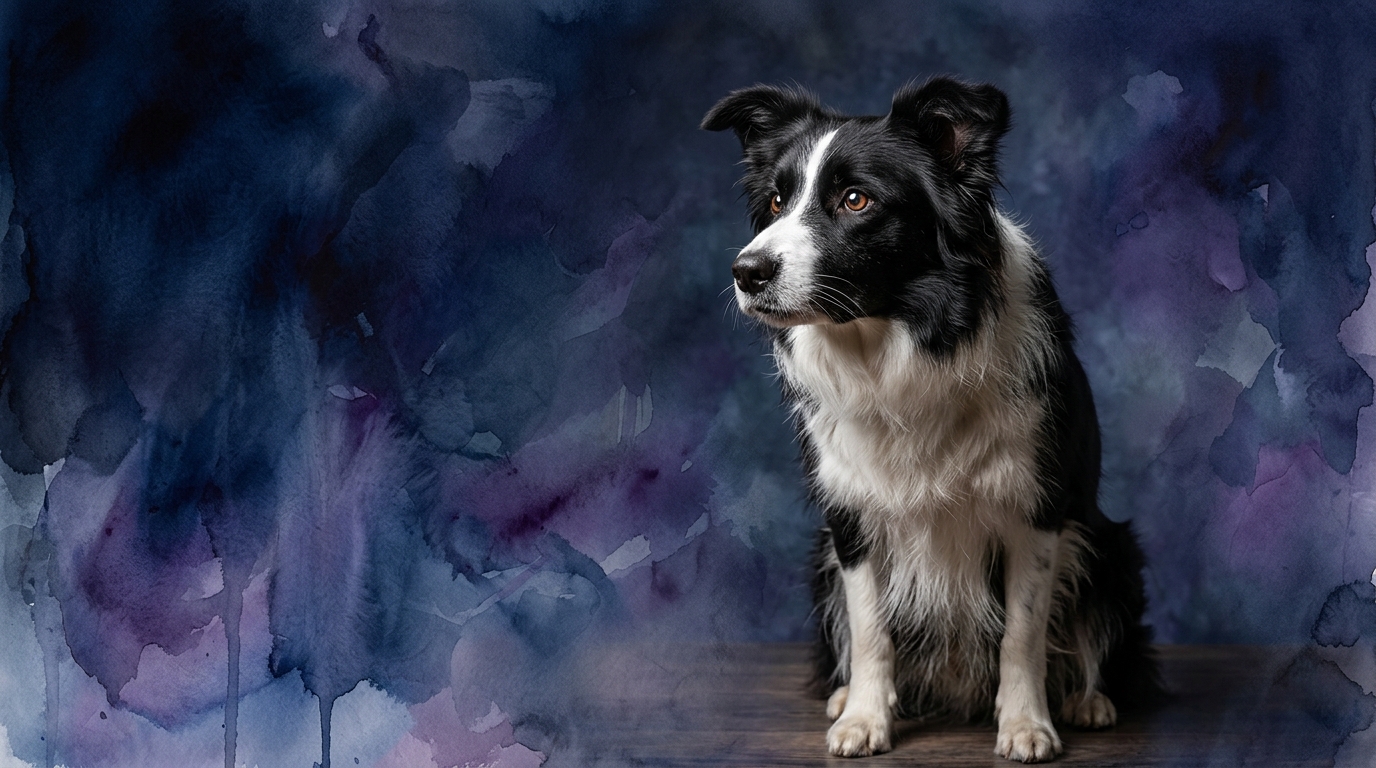
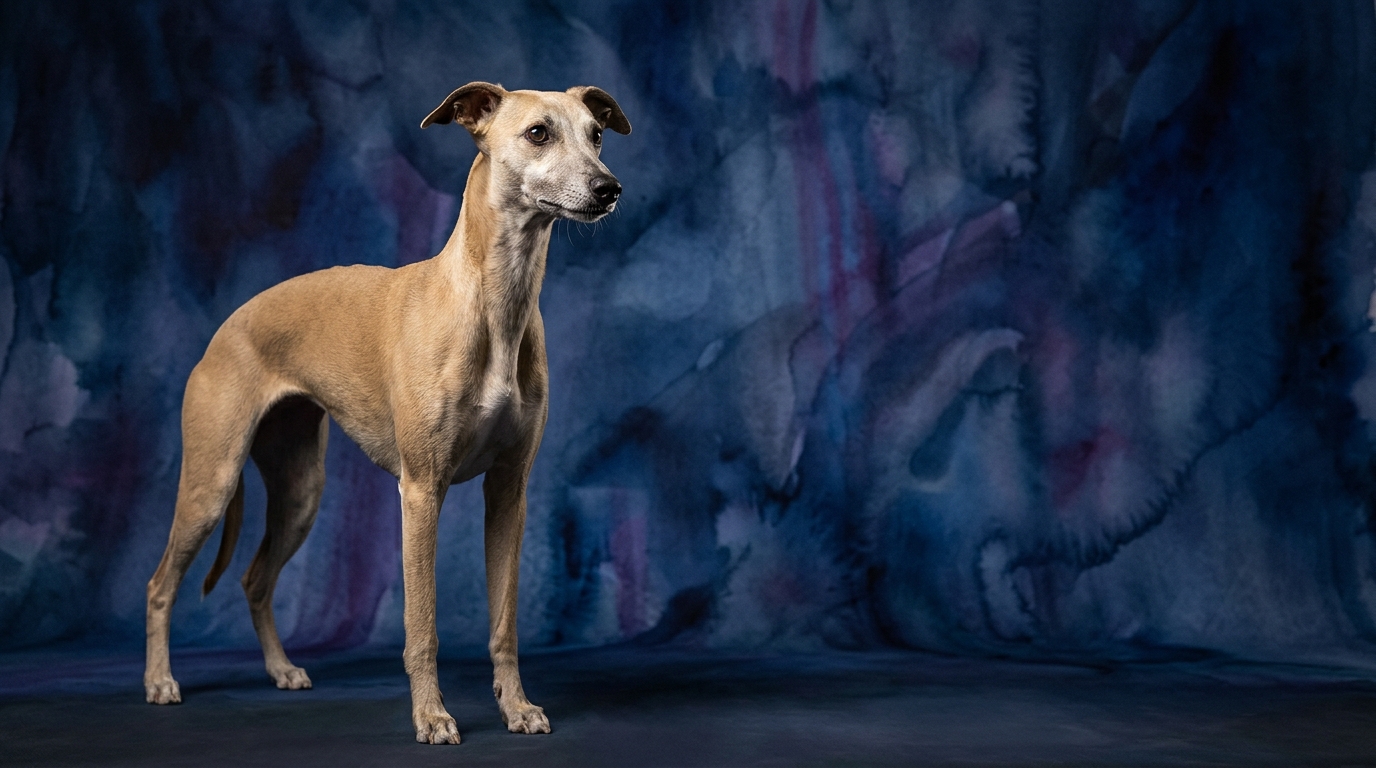
Side-by-Side IQ Profile: Border Collie vs. Whippet
**Border Collie (Coren Rank #1, Herding Group)**: This breed excels in a variety of cognitive domains, reflecting centuries of selective breeding for complex working roles. Their **Problem Solving (5/5)** capacity means they readily engage with intricate challenges, demonstrating strategic thinking and an ability to understand cause-and-effect relationships. Their **Training Speed (5/5)** is unparalleled; they acquire new commands with minimal repetition, forming rapid associations between cues and actions. **Social Intelligence (4/5)** manifests as a keen ability to interpret human intentions and cues, fostering a strong working partnership, though their focus is often task-oriented rather than universally people-pleasing. An intense **Instinctive Drive (5/5)**, specifically their herding instinct, compels them to control movement and maintain focus on a task. Finally, their **Memory (5/5)** allows them to retain a vast vocabulary of commands, complex routines, and intricate sequences of actions over extended periods.
**Whippet (Coren Rank #51, Hound Group)**: The Whippet's cognitive profile showcases a different set of strengths, tailored to their role as a sighthound and companion. Their **Problem Solving (3/5)** skills are competent for straightforward tasks, but they typically show less inclination for multi-step puzzles or abstract reasoning, often preferring simpler solutions or relying on established routines. **Training Speed (2/5)** is moderate; they learn, but generally require more repetition and higher motivation to consistently acquire and perform new commands. Their **Social Intelligence (4/5)** is on par with the Border Collie, demonstrating a deep attunement to their human family's moods and a gentle, sensitive nature, though they may express it through quiet companionship rather than active engagement. The Whippet possesses a powerful **Instinctive Drive (5/5)**, a concentrated visual prey drive that compels them to chase anything small and fast-moving at incredible speeds. Their **Memory (3/5)** is sufficient for core commands and routines, but they may not retain vast numbers of intricate instructions or complex sequences with the same precision as a Border Collie.
Where the Border Collie Wins Cognitively
The Border Collie's cognitive strengths are evident in their exceptional capacity for complex, adaptive learning. They consistently outperform the Whippet in tasks requiring abstract thought, such as understanding novel rulesets or figuring out how to manipulate objects to achieve a goal, like unlatching a gate or solving a multi-stage puzzle. Their ability to generalize learned concepts to new situations is particularly robust, meaning a command learned in one context is easily applied in another. This breed’s memory for detailed instructions and long sequences of actions, crucial for advanced dog sports or herding, allows them to execute intricate patterns with remarkable precision and recall after minimal practice.
Furthermore, their proactive problem-solving approach means they often anticipate challenges and attempt to resolve them independently, rather than waiting for human direction. This cognitive initiative, combined with their sustained focus, makes them adept at navigating dynamic environments and adapting their strategy on the fly, a hallmark of their Herding Group heritage.
Where the Whippet Wins Cognitively
While not excelling in the same working intelligence metrics, the Whippet's cognitive profile demonstrates specialized strengths invaluable for their role. Their supreme visual processing, a facet of their instinctive drive, allows for rapid identification of distant, fast-moving objects, an acute spatial awareness for pursuit, and quick assessment of optimal chase trajectories. This cognitive specialization is a direct evolutionary adaptation for sighthunting, prioritizing speed and visual acuity over complex manipulation or strategic planning.
From a social cognitive standpoint, while both breeds score similarly, the Whippet's expression of social intelligence often translates into a calm, gentle, and undemanding companionship. They are deeply attuned to their family's emotional states, offering comfort without requiring constant interaction or mental challenges. Their cognitive ability to transition seamlessly from intense physical exertion to profound relaxation is also a distinct advantage, demonstrating an efficient self-regulation of energy and focus that many breeds lack. This allows them to thrive in environments where bursts of activity are followed by long periods of quiet contentment.
Ease of Training: Behavioral Differences
When considering ease of training, the Border Collie generally presents a more straightforward experience for command acquisition due to their inherent drive to work and their rapid learning curve. Their high Training Speed (5/5) means they grasp new commands quickly, often after just a few repetitions, and their strong desire for a 'job' translates into a profound willingness to comply and engage. This breed internalizes rules and routines with minimal effort, and their memory for complex sequences allows for advanced obedience and trick training.
The Whippet, with a Training Speed of 2/5, requires a different approach. While capable of learning, they typically need more repetitions and consistent, high-value motivation to solidify commands. Their independent Sighthound nature means they are bred to make autonomous decisions during a chase, rather than constantly checking in with a handler. This can translate into a selective hearing when a compelling visual stimulus is present, making recall or focus challenging in distracting environments. Training a Whippet often involves patience, positive reinforcement, and understanding that their compliance is less about an innate drive to please and more about perceiving the immediate benefit or reward.
Owner Suitability: Active vs. Relaxed Lifestyles
The Border Collie is an ideal match for highly active owners who are prepared to provide extensive mental and physical engagement daily. Their profound instinctive drive and problem-solving abilities demand consistent structured activities such as advanced obedience, agility, flyball, herding trials, or complex puzzle solving. Owners must be ready to channel this breed's cognitive energy into productive outlets, as an understimulated Border Collie can invent their own, often undesirable, 'jobs.' They thrive on partnership and a consistent intellectual challenge, making them best suited for individuals who enjoy dedicating significant time to training and interactive play.
Conversely, the Whippet is well-suited for owners seeking a more relaxed companion who still enjoys bursts of intense activity. While they require opportunities for safe, off-leash running to satisfy their instinctive chase drive, they are equally content to spend the majority of their time as a calm, affectionate indoor presence. Their cognitive needs are met with less structured 'work' and more through gentle companionship and comfortable routines. Owners who appreciate a quiet, sensitive dog that can transition from a lightning-fast sprint to a serene nap on the sofa will find a Whippet to be a wonderfully compatible companion.
The Verdict: When to Choose Each Breed
The Verdict
Choose a Border Collie if you are an owner dedicated to advanced training, relish a dynamic working partnership, and can provide consistent, complex mental and physical challenges for a cognitively exceptional companion.
Choose a Whippet if you seek a gentle, affectionate companion who thrives on brief, intense bursts of exercise followed by long periods of quiet relaxation, and you appreciate an independent yet sensitive spirit.
🧠 Find Your Pet's IQ Score
Our Pet IQ Lab assessment covers 25+ tests across 5 cognitive dimensions — personalized to your breed.
Take the Full IQ Test →Frequently Asked Questions
Does a Whippet's lower Coren rank mean it isn't a good pet?
Coren's ranking primarily assesses 'working and obedience intelligence,' reflecting trainability and command acquisition. A Whippet's rank of #51 indicates it learns at a different pace and with different motivations, not that it lacks the capacity for strong bonds or makes a less fulfilling companion. Their specialized Sighthound cognition focuses on independent pursuit rather than complex human-directed tasks.
How can I mentally stimulate a Border Collie?
Border Collies thrive on mental work. Engage them with complex puzzle toys, teach advanced tricks and multi-step commands, participate in dog sports like agility or obedience, or even consider herding activities if available. Consistent, varied mental tasks prevent boredom and channel their problem-solving drive productively.
What kind of 'instinctive drive' does a Whippet have?
A Whippet's instinctive drive is primarily rooted in their Sighthound heritage: an intense visual prey drive. They are compelled to chase anything small and fast-moving, often with incredible speed and focus. This drive is distinct from a Border Collie's herding instinct, focusing on pursuit and capture rather than control or gathering.