
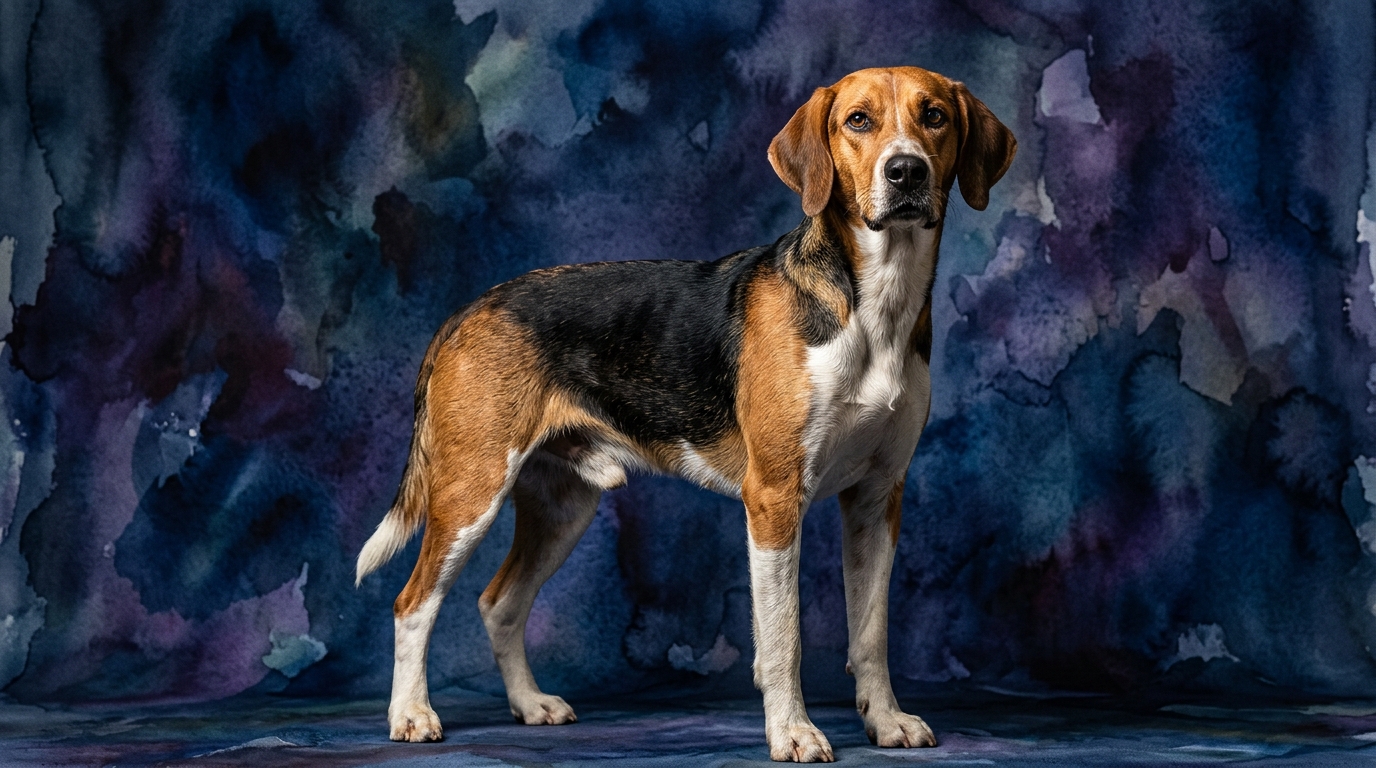
Side-by-Side IQ Profile
The Cosmic Pet Pet IQ Lab employs a multi-dimensional approach to assess canine cognition, moving beyond simple 'smart' labels to understand how breeds think and learn. For the Border Terrier (Coren rank #30) and the English Foxhound (not Coren-ranked), we evaluate five key cognitive dimensions, each revealing insights into their mental makeup.
**Border Terrier (Coren rank #30):** This compact terrier, originally bred to hunt fox and vermin, exhibits a cognitive profile tailored for independent, decisive action. **Problem Solving (4/5):** This reflects their historical need to independently strategize in confined spaces, often out of sight, to locate and dispatch quarry. Their minds are wired to assess situations, adapt tactics, and find solutions with minimal human direction, making them adept at navigating complex environments and figuring out puzzles. **Training Speed (4/5):** Border Terriers generally grasp new commands and routines quickly. Their eagerness to engage with their human companions, combined with a sharp capacity for associative learning, means they can achieve proficiency in basic obedience and even advanced tasks with consistent, positive reinforcement. **Social Intelligence (3/5):** While capable of forming deep bonds with their families, the Border Terrier’s social intelligence leans towards discerning human intentions and interacting effectively in a small family unit. They can be discerning with strangers and other dogs, exhibiting a balanced awareness rather than an overwhelming desire for universal engagement. **Instinctive Drive (3/5):** Their drive is primarily focused on their terrier heritage: a strong urge to hunt, dig, and chase. This instinct, while present, is typically manageable within a domestic setting and can be channeled into appropriate activities, indicating a moderate but focused natural inclination. **Memory (4/5):** Border Terriers possess a robust memory, crucial for remembering locations of dens, scent trails, and learned commands. This strong recall allows them to retain training over long periods and navigate familiar territories with precision, making them reliable companions once routines are established.
**English Foxhound (Not Coren-ranked):** Bred for stamina and a relentless pursuit of scent in large packs, the English Foxhound's cognitive abilities are profoundly specialized. **Problem Solving (3/5):** The English Foxhound's problem-solving skills are acutely specialized for their hunting role: tracking a scent over vast distances, navigating varied terrain, and collaborating within a pack. Their cognitive focus is less on human-devised abstract puzzles and more on the intricate, real-world challenge of following a trail relentlessly. **Training Speed (3/5):** English Foxhounds are capable learners, but their training speed is often influenced by their profound dedication to scent. While they can learn commands, their primary drive is to follow their nose, which can sometimes override immediate responsiveness to human instruction, requiring patient and consistent methods. **Social Intelligence (3/5):** Bred to work in large packs, the English Foxhound exhibits a social intelligence geared towards cooperative group dynamics and a clear hierarchy. They are typically amiable with other dogs and people, thriving in environments where they understand their place within a social structure, whether canine or human. **Instinctive Drive (3/5):** This score for the English Foxhound reflects an overwhelming, specialized drive for scenting and pursuit. Their entire being is oriented towards the hunt, exhibiting incredible stamina and single-mindedness once a trail is engaged. This drive is powerful and requires significant outlets. **Memory (3/5):** The memory of an English Foxhound is primarily dedicated to retaining scent information and navigating familiar hunting grounds. They remember trails, the locations of their pack, and learned routines within their working context, though perhaps not with the same breadth for varied human commands as some other breeds.
Where Border Terrier Wins Cognitively
The Border Terrier demonstrates clear cognitive advantages in areas demanding independent thought and rapid adaptation to novel situations. Their Problem Solving score of 4/5, compared to the Foxhound's 3/5, highlights their superior ability to analyze and overcome obstacles without constant human intervention. This stems from their historical role requiring them to work alone underground, making quick decisions in dynamic, often dangerous, environments.
Furthermore, their Training Speed (4/5 vs. 3/5) indicates a quicker uptake of new commands and concepts, suggesting a more direct and efficient learning pathway when working alongside a human. This efficiency extends to their Memory (4/5 vs. 3/5), allowing them to retain a broader range of learned behaviors and environmental information, which is invaluable for a companion dog navigating diverse daily routines and expectations. Their capacity for versatile learning and retention makes them adaptable to various household dynamics and training challenges.
Unique Cognitive Strengths of the English Foxhound
While the English Foxhound's general IQ scores might not outrank the Border Terrier in broad categories, their cognitive profile reveals profound specialization rooted in centuries of selective breeding. Their Instinctive Drive, rated 3/5, signifies an unparalleled dedication to scent work and endurance, a cognitive strength that allows them to focus intensely on a trail for hours, overriding most distractions. This isn't just a physical trait; it's a mental fortitude and single-mindedness in pursuit of a sensory goal.
Their Social Intelligence (3/5) is particularly honed for pack dynamics, enabling seamless cooperation and communication within a large group of dogs, a complex social structure few breeds navigate as instinctively. Their Problem Solving (3/5) and Memory (3/5), while lower in general application, are perfectly calibrated for the intricate 'puzzle' of scent discrimination and trail retention, showcasing a specialized form of intelligence critical to their historical purpose. These dogs excel when their minds are engaged in the pursuit of scent, demonstrating an impressive ability to process and recall olfactory information.
Which is Easier to Train and Why
When considering ease of training, the Border Terrier generally presents a more straightforward path for the average owner. Their Training Speed of 4/5 reflects a keen eagerness to learn and a responsiveness to human direction, allowing them to grasp new commands and routines with relative alacrity. While their terrier independence (Instinctive Drive 3/5) means they aren't always blindly obedient, they are motivated by engagement and positive reinforcement, making them willing participants in training sessions and generally quicker to form reliable habits.
The English Foxhound, with a Training Speed of 3/5, can be a more challenging student. Their profound instinctive drive for scenting often means their nose dictates their priorities, making them prone to distraction during training, especially outdoors. While they are capable of learning, their attention is frequently pulled towards environmental scents, requiring immense patience, consistency, and a deep understanding of hound motivation to keep them focused on human-led tasks. Their pack mentality means they respond well to clear, consistent leadership, but their independent scenting drive often requires more creative and persistent training approaches to achieve reliable recall and obedience in distracting environments, making the Border Terrier the comparatively easier breed to train for general obedience.
Which Suits Active Owners vs. Relaxed Owners
For owners seeking an active companion, both breeds demand significant engagement, but their ideal activities diverge based on their core cognitive drives. The Border Terrier, with its balanced Problem Solving (4/5) and Instinctive Drive (3/5), thrives with active owners who enjoy varied pursuits. They benefit from activities that challenge their minds, such as agility, earthdog trials, extensive hikes with opportunities for exploration, and puzzle toys. They can adapt to a range of physical outlets, making them suitable for owners who enjoy a mix of structured exercise and mental games. A truly relaxed owner, however, might find the Border Terrier's needs for mental stimulation and regular activity overwhelming, as boredom can lead to undesirable behaviors.
The English Foxhound, conversely, is unequivocally suited for highly active owners who can provide substantial outlets for their specialized Instinctive Drive (3/5). Their endurance and relentless focus on scent demand hours of daily exercise, ideally involving long runs, sustained walks, or scent work that allows them to utilize their primary cognitive strength. They are not dogs for casual strolls or a sedentary lifestyle. Their strong prey drive and need to follow a scent means they require secure environments or structured activities like canicross or even field trials where they can run for miles. A relaxed owner would find the English Foxhound's persistent need for physical and sensory engagement overwhelming, leading to potential frustration for both dog and human.
The Verdict
Choose the Border Terrier if you seek a cognitively nimble companion who learns quickly, excels at independent problem-solving, and thrives on varied mental and physical engagement. They fit well with active families who appreciate a dog with a robust memory and a spirited, albeit manageable, terrier drive.
Opt for the English Foxhound if you are a highly active owner dedicated to providing extensive outlets for a dog with unparalleled endurance and a specialized, powerful scenting drive. They are ideal for those who understand and can channel their hound's single-minded focus on a trail, often thriving in environments with other dogs for pack-like companionship.
🧠 Find Your Pet's IQ Score
Our Pet IQ Lab assessment covers 25+ tests across 5 cognitive dimensions — personalized to your breed.
Take the Full IQ Test →Frequently Asked Questions
Are Border Terriers good apartment dogs?
Border Terriers can adapt to apartment living if their significant needs for daily exercise and mental stimulation are consistently met. Their compact size is suitable, but their energy and curiosity require dedicated owners to prevent boredom and destructive behaviors.
Do English Foxhounds get along with other dogs?
Yes, English Foxhounds are typically very amiable with other dogs, as they were bred to live and work in large packs. They often thrive in multi-dog households and enjoy canine companionship, though proper introductions are always essential.
How much exercise does an English Foxhound need daily?
English Foxhounds require substantial daily exercise, often several hours of vigorous activity, including opportunities for long runs or sustained walks where they can engage their powerful scenting instincts. Their endurance is immense, and they are not content with short, leisurely strolls.