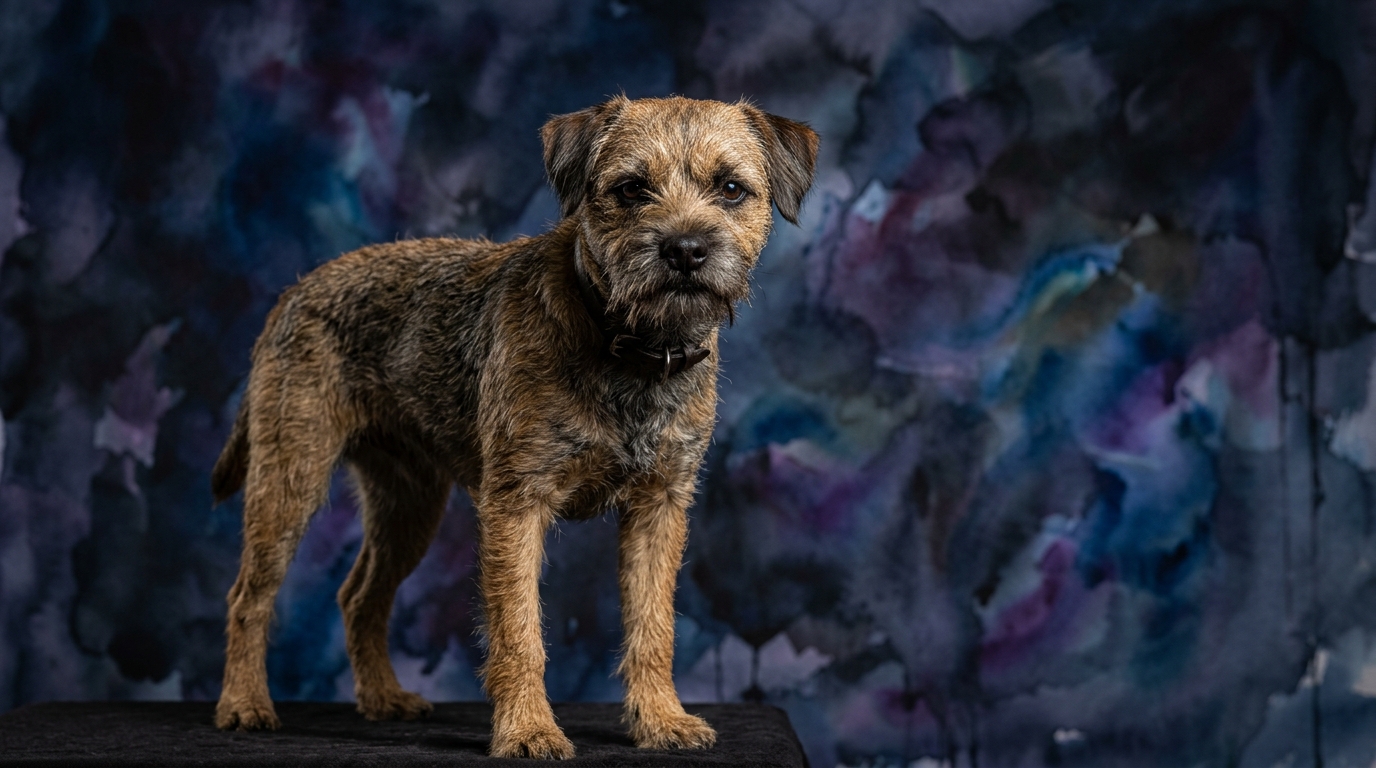
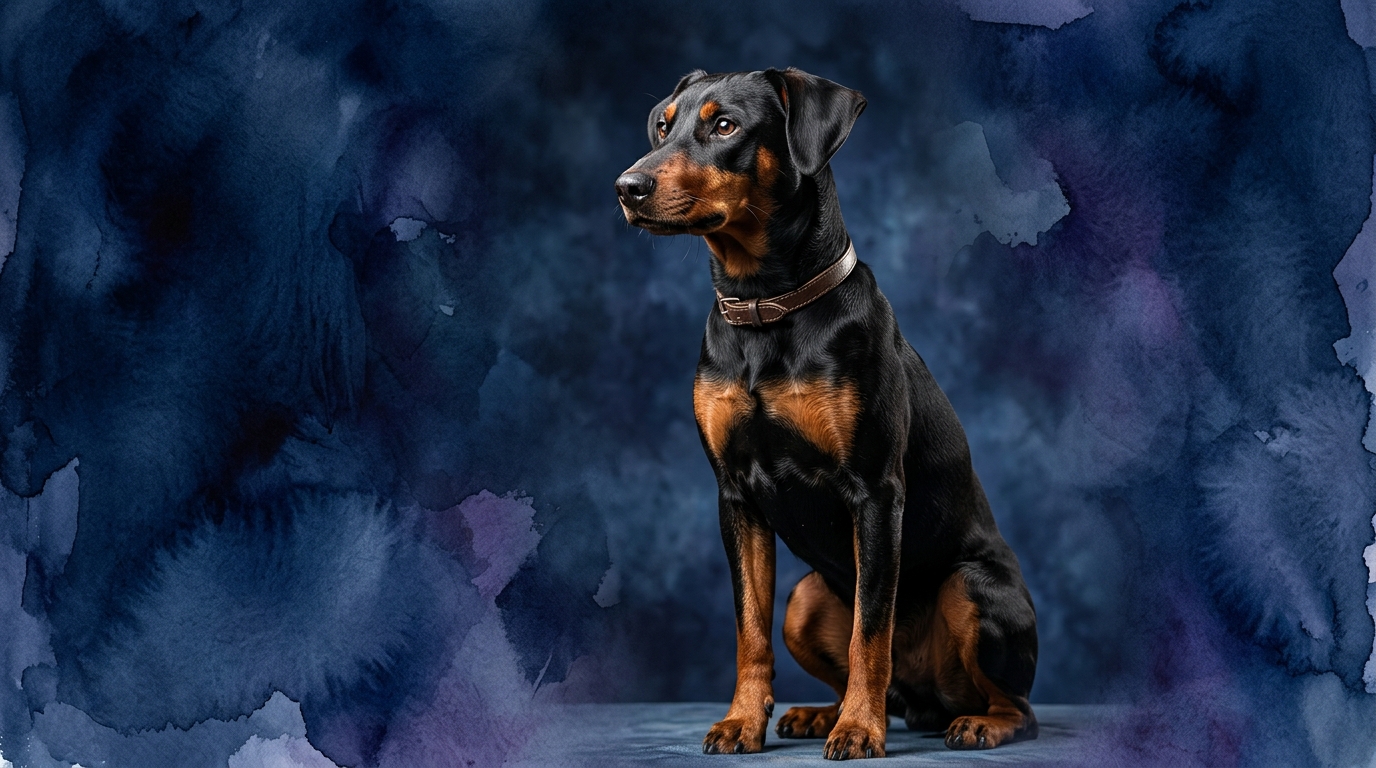
Side-by-Side IQ Profile: Border Terrier vs. German Pinscher
The Border Terrier, a plucky member of the Terrier group, demonstrates a robust cognitive profile, earning it a Coren rank of #30, signifying a notable capacity for learning and understanding. Its Problem Solving ability stands at a strong 4/5, indicating a dog capable of navigating complex situations and figuring out solutions independently. Training Speed also scores 4/5, suggesting a quick grasp of new commands and routines, making it generally responsive to instruction. Social Intelligence is rated 3/5, meaning it possesses a solid understanding of pack dynamics and human cues, but perhaps with a streak of terrier independence. Its Instinctive Drive, at 3/5, reflects its heritage as a working terrier, with a moderate but persistent drive for tasks like scent work or chasing. Memory is a commendable 4/5, allowing it to retain learned behaviors and past experiences effectively.
In contrast, the German Pinscher, classified within the Working group, presents a consistent and balanced cognitive makeup, though without a specific Coren rank. Its Problem Solving capacity is rated 3/5, indicating a competent ability to tackle challenges, though perhaps with less spontaneous innovation than the Border Terrier. Training Speed also scores 3/5, suggesting it learns at a steady pace, requiring consistent methods but proving capable. Social Intelligence registers at 3/5, reflecting a good understanding of social cues and a desire to interact, typical of a companion and working breed. Instinctive Drive is likewise 3/5, manifesting as a purposeful energy often directed towards tasks or guarding, consistent with its working background. Memory, at 3/5, shows a reliable capacity to recall information and training over time, providing a stable foundation for learned behaviors.
Where the Border Terrier Wins Cognitively
The Border Terrier distinctly excels in areas demanding independent thought and rapid assimilation of information. Its superior Problem Solving score of 4/5 means it is more likely to devise creative solutions to obstacles, whether it's figuring out how to open a gate or navigating a complex puzzle toy. This breed's quick wit and tenacity allow it to persist until a solution is found, making it less reliant on direct human intervention for every challenge. Coupled with a Training Speed of 4/5, the Border Terrier demonstrates a quicker uptake of new commands and routines, often requiring fewer repetitions to solidify a behavior. This cognitive agility allows for more advanced training and a wider repertoire of learned tasks earlier in their development. Furthermore, its 4/5 Memory score ensures that these learned skills and problem-solving strategies are retained effectively over time, building a robust foundation of knowledge.
Where the German Pinscher Wins Cognitively
While the German Pinscher's individual scores are consistently 3/5, its cognitive 'win' lies in its balanced and predictable intellectual profile across all dimensions. This uniformity across Problem Solving, Training Speed, Social Intelligence, Instinctive Drive, and Memory suggests a dog that is reliably competent without extremes. For owners who value consistency and a steady temperament, the German Pinscher's cognitive balance can be a significant advantage. Its 3/5 Instinctive Drive, rooted in its working heritage, often translates into a purposeful energy that, when appropriately channeled, is directed towards owner-assigned tasks rather than highly independent pursuits. This can mean a German Pinscher is less prone to the spontaneous, often disruptive, problem-solving that a higher-scoring terrier might display if not adequately stimulated, offering a more predictable and manageable cognitive partner for many households.
Training Ease: Border Terrier vs. German Pinscher
When considering ease of training, the Border Terrier generally presents a swifter learning curve due to its 4/5 Training Speed and 4/5 Problem Solving. This breed tends to pick up new commands and concepts quickly, often understanding the desired behavior with fewer repetitions. However, its strong problem-solving ability can sometimes manifest as independent thinking, meaning it might choose to apply its intelligence in ways that aren't always aligned with owner's wishes, requiring consistent and engaging methods to maintain focus. For instance, a Border Terrier might quickly learn 'sit' but then independently decide if 'sit' is relevant in a high-distraction environment.
The German Pinscher, with its 3/5 in both Training Speed and Problem Solving, offers a steady and reliable training experience. While it may not learn new commands as rapidly as a Border Terrier, its learning is often more consistent and less prone to independent interpretation. Its more moderate problem-solving capacity means it's less likely to 'outsmart' its owner or invent its own rules, preferring to follow established patterns. This breed thrives on clear, consistent instruction and positive reinforcement, often resulting in a highly obedient and well-mannered companion that reliably executes learned behaviors without the same degree of independent decision-making seen in the Border Terrier.
Suiting Active vs. Relaxed Owners
The Border Terrier, with its higher Problem Solving and Instinctive Drive (4/5 and 3/5 respectively), is generally a better fit for active owners who relish engaging in mentally stimulating activities and outdoor adventures. Their cognitive quickness and drive mean they thrive when given tasks that challenge their minds, such as agility, earthdog trials, or complex obedience. Owners who enjoy teaching new tricks, participating in dog sports, or simply engaging their dog in regular, varied mental puzzles will find the Border Terrier a rewarding partner. Their independent streak and capacity for problem-solving require an owner who is prepared to channel this energy constructively, preventing boredom-induced behaviors.
The German Pinscher, while still an active breed from the Working group with a 3/5 Instinctive Drive, offers a more balanced cognitive energy that can suit owners seeking a capable companion without the same intensity of independent cognitive demands. They appreciate consistent daily exercise and mental engagement, but their more moderate problem-solving and training speed mean they might be less prone to inventing their own activities if left unstimulated. This makes them suitable for active owners who enjoy structured activities like brisk walks, jogging, or basic obedience, but perhaps without the need for constant, complex cognitive challenges. They are dependable partners who appreciate routine and a clear leadership, fitting well into households that provide consistent engagement without necessarily needing to outwit their dog daily.
The Verdict: When to Choose Each Breed
The Verdict
Choose the Border Terrier if you are an experienced, active owner who enjoys a quick-witted canine partner capable of independent thought and thrives on consistent mental challenges and problem-solving activities. You appreciate a dog that learns rapidly and can engage in advanced training or dog sports.
Opt for the German Pinscher if you seek a consistently capable and balanced companion from the working group, one that thrives on clear, consistent training and a structured routine without excessive independent problem-solving. This breed is ideal for active owners who value predictability and a reliable partner for daily activities and moderate mental engagement.
🧠 Find Your Pet's IQ Score
Our Pet IQ Lab assessment covers 25+ tests across 5 cognitive dimensions — personalized to your breed.
Take the Full IQ Test →Frequently Asked Questions
Which breed is more prone to independent thinking?
The Border Terrier, with its 4/5 Problem Solving score, is generally more prone to independent thinking and devising its own solutions. This can be a strength in activities requiring ingenuity but also means they might make their own decisions if not adequately guided.
Do both breeds require significant mental stimulation?
Yes, both breeds require significant mental stimulation to prevent boredom and destructive behaviors, but the nature of that stimulation might differ. The Border Terrier often needs more complex and varied problem-solving tasks, while the German Pinscher thrives on consistent, purposeful activities and training.
Is the German Pinscher a good choice for first-time dog owners?
The German Pinscher's balanced cognitive profile and consistent temperament can make it suitable for committed first-time owners who are prepared for consistent training and socialization. Its predictability in learning and moderate independent thinking might be less overwhelming than a more intensely problem-solving breed.