
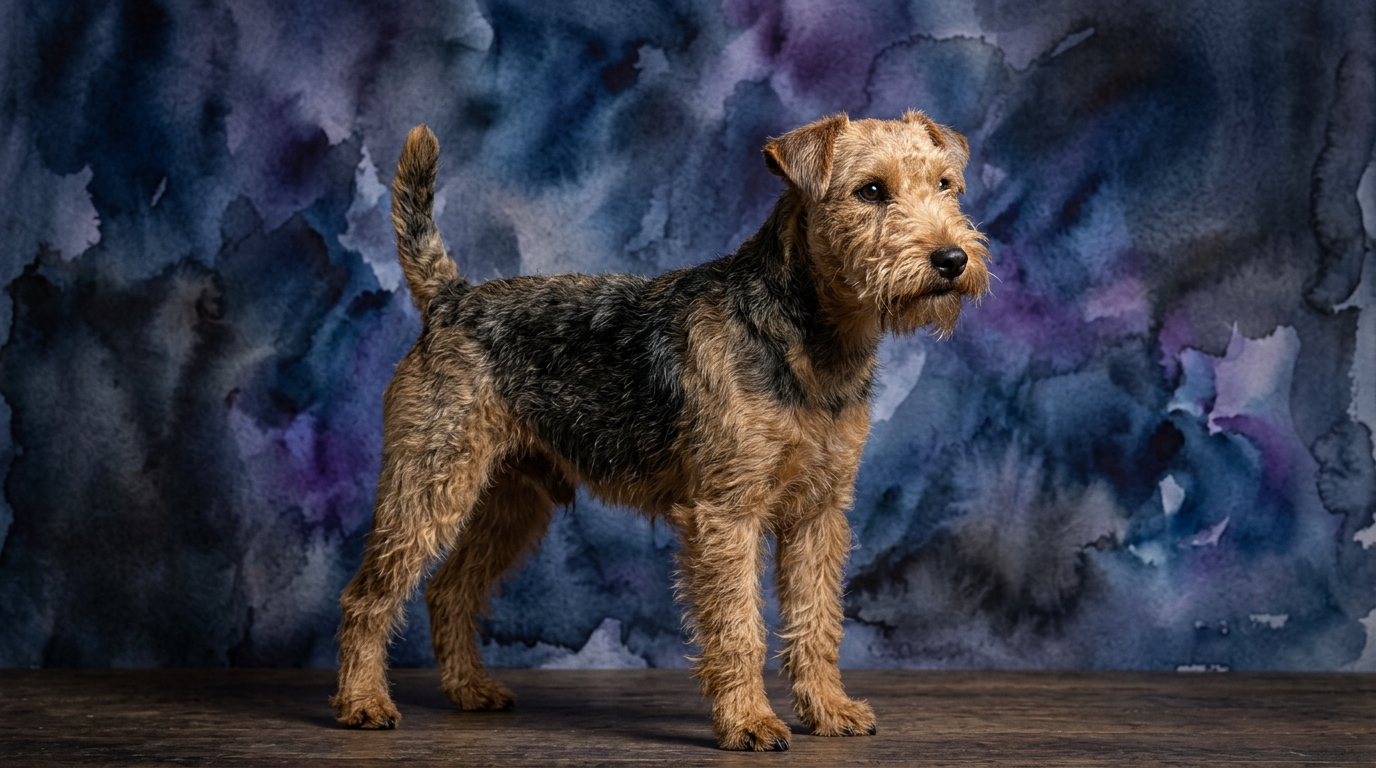
Side-by-Side Cognitive Profiles
At The Cosmic Pet Pet IQ Lab, we delve into five key cognitive dimensions to understand how different breeds process information and interact with their world. For the Border Terrier, ranked #30 by Coren, and the Lakeland Terrier, we observe fascinating similarities and telling distinctions.
The **Border Terrier** exhibits a robust cognitive blueprint: **Problem Solving (4/5)** means they excel in figuring things out independently, a trait honed by their history of bolting foxes from complex underground earths. They display a remarkable aptitude for navigating novel environments, understanding cause-and-effect relationships, and devising creative solutions to perceived obstacles, such as manipulating latches or finding alternative routes to a desired location. This cognitive flexibility allows them to adapt quickly to new challenges and learn through observation. Their **Training Speed (4/5)** is commendable; they pick up new commands and routines with efficiency, often requiring fewer repetitions than many other breeds. This eagerness to engage, combined with their sharp minds, translates into a relatively swift learning curve, making them responsive to positive reinforcement. **Social Intelligence (3/5)** indicates they understand and respond to human social cues to a moderate degree, forming deep, loyal bonds with their families. While affectionate, they retain a characteristic terrier independence, meaning their compliance isn't always absolute if their instincts are strongly engaged. Their **Instinctive Drive (3/5)** to hunt, chase, and explore is present but generally manageable within a domestic setting with proper guidance, manifesting as curiosity that can be channeled productively. Finally, their **Memory (4/5)** is strong; they demonstrate reliable long-term retention for learned behaviors, commands, and past experiences, even after periods of inactivity, making them consistent in their training outcomes.
The **Lakeland Terrier**, while not Coren-ranked, presents a slightly different cognitive profile. Their **Problem Solving (3/5)** approaches challenges with a more direct and often persistent methodology. While capable of overcoming obstacles, their solutions might lean more towards tenacious effort or reliance on established patterns rather than nuanced strategic thinking, potentially requiring more guidance in entirely novel situations. In **Training Speed (3/5)**, Lakelands learn at a steady, consistent pace, requiring clear, patient, and regular reinforcement to solidify new commands and behaviors. Their independent terrier spirit means they may not always be instantly eager to please, and trainers need to make learning sessions engaging and rewarding to maintain their focus. **Social Intelligence (3/5)** is similar to Borders; they exhibit a moderate understanding of social dynamics, forming strong, affectionate bonds with their immediate family. They are known for their loyalty within their chosen circle but can be more reserved or watchful around strangers, embodying a classic terrier self-possession. Their **Instinctive Drive (3/5)** to hunt, explore, and assert themselves is potent and deeply rooted in their history as pest controllers, requiring early socialization and consistent training to manage effectively. Their **Memory (3/5)** is functional and reliable for commands and routines, particularly when thoroughly reinforced. While they retain information, they may benefit from more frequent refreshers or stronger initial conditioning compared to breeds with higher memory scores to ensure long-term retention and responsiveness.
Where the Border Terrier Exhibits a Cognitive Edge
The Border Terrier's cognitive edge primarily lies in its superior Problem Solving and Memory capabilities, both scoring 4/5 compared to the Lakeland's 3/5. This means Border Terriers often demonstrate a more intuitive understanding of complex tasks, quickly figuring out how to open gates, retrieve hidden items, or navigate agility courses with minimal human intervention. Their robust memory allows them to retain intricate sequences of commands and adapt learned behaviors to new contexts more readily, making them less prone to forgetting established rules or training after a break. This combination makes them highly adaptable and quick to master new skills.
Where the Lakeland Terrier's Approach Shines
While the provided metrics don't indicate a direct 'win' for the Lakeland Terrier in any specific cognitive dimension over the Border, their equally strong Social Intelligence and Instinctive Drive (both 3/5) suggest a different kind of cognitive strength. Their steadfastness, coupled with a strong sense of self, means they are less likely to be swayed from a task once committed, even if it requires persistent, rather than strategic, effort. This unwavering focus, a hallmark of their terrier grit, can be an asset in situations demanding sheer determination over nuanced problem-solving. Owners often appreciate their resolute nature and singular purpose once they've set their minds on something.
Trainability: Border Terrier vs. Lakeland Terrier
The Border Terrier generally presents as the more straightforward student, primarily due to its higher Training Speed (4/5) and robust Memory (4/5). They tend to absorb new commands with fewer repetitions and retain them for longer periods, leading to a faster progression through training stages. Their readiness to engage and quicker grasp of concepts mean they are often more amenable to diverse training methods and can handle more complex sequences earlier on. A Border Terrier might learn a multi-step retrieve game in half the time a Lakeland might, simply because of their quicker processing and retention.
In contrast, the Lakeland Terrier, with its 3/5 scores in both Training Speed and Memory, requires a more patient and consistent approach. While certainly trainable, their learning curve can be steeper, demanding clearer, more frequent reinforcement to ensure new behaviors stick. For instance, teaching a Lakeland to 'stay' might require more consistent, shorter sessions over a longer period, solidifying the command through repetition and positive motivation. Their independent spirit, a common terrier trait, means trainers must work to make learning engaging and rewarding, rather than relying solely on compliance, as they are less inclined to perform without perceived benefit.
Matching Canine Cognition to Owner Lifestyles
For active owners seeking a canine companion that thrives on mental engagement and physical activity, both breeds are excellent choices, though with subtle differences in their cognitive leanings. The Border Terrier, with its higher Problem Solving (4/5) and Training Speed (4/5), will particularly appeal to owners who enjoy teaching intricate tricks, participating in dog sports like agility, rally obedience, or engaging in complex puzzle-solving games. They flourish when their sharp minds are consistently challenged, demanding a varied routine that prevents boredom and harnesses their natural curiosity. These dogs are ideal for dynamic households that offer diverse experiences, consistent, positive training, and opportunities for independent thought within safe boundaries. Their instinctive drive (3/5) is well-balanced, allowing for redirection into constructive activities like scent work or exploring new hiking trails, making them versatile partners for adventurous individuals.
The Lakeland Terrier also suits active owners, especially those who appreciate a dog with strong, focused determination and a spirited approach to life. While their problem-solving might be less strategically nuanced (3/5), their tenacity means they excel in endurance-based activities or tasks requiring sustained effort and a 'can-do' attitude. Owners who prefer consistent routines, long, vigorous walks, challenging hikes, or engaging in activities that allow for persistent exploration and digging will find the Lakeland a spirited and unwavering partner. Their 3/5 instinctive drive means they will eagerly engage in outdoor pursuits, but their independent streak requires a committed owner to channel that energy effectively.
For more relaxed owners, neither breed is truly a 'lap dog' in the traditional sense, as both possess a strong terrier drive that necessitates regular physical and mental exertion. However, an owner who is prepared for consistent, but perhaps less intensely structured, daily engagement might find a well-exercised Lakeland Terrier to be a delightful and loyal companion, provided their independent streak is understood and managed with patience and humor. The Border Terrier, while intelligent and adaptable, also requires significant mental and physical outlets; 'relaxed' should still imply dedicated daily engagement, just perhaps less intense than for a highly driven working dog, focusing more on quality interaction and enrichment rather than constant high-level training.
The Verdict
Choose the Border Terrier if you prioritize a highly adaptable and quick-learning companion capable of complex problem-solving and diverse training challenges, thriving on varied mental stimulation.
Opt for the Lakeland Terrier if you appreciate a steadfast, determined companion with a strong independent streak, flourishing with consistent routines and persistent, engaging activities.
🧠 Find Your Pet's IQ Score
Our Pet IQ Lab assessment covers 25+ tests across 5 cognitive dimensions — personalized to your breed.
Take the Full IQ Test →Frequently Asked Questions
Are Border Terriers better for first-time dog owners than Lakeland Terriers?
Border Terriers, with their higher training speed and memory, can be slightly more forgiving for first-time owners who are committed to consistent training. Their quicker grasp of commands may make the initial learning phase smoother, though both breeds require dedicated socialization and clear boundaries from the start.
Do Border Terriers or Lakeland Terriers need more mental stimulation?
Both breeds require significant mental stimulation due to their terrier heritage, but the Border Terrier's higher problem-solving ability suggests a greater need for varied and complex cognitive challenges. Lakeland Terriers also benefit immensely from mental engagement, often through tasks that allow for their inherent persistence and exploration.
How do their social intelligence scores impact family life?
Both breeds score 3/5 in social intelligence, indicating they form strong bonds with their families while maintaining a degree of independence. They are generally affectionate with their inner circle but may not be overly demonstrative or immediately welcoming to strangers, requiring proper socialization to ensure polite interactions within a diverse household.