
Side-by-Side Cognitive Profiles
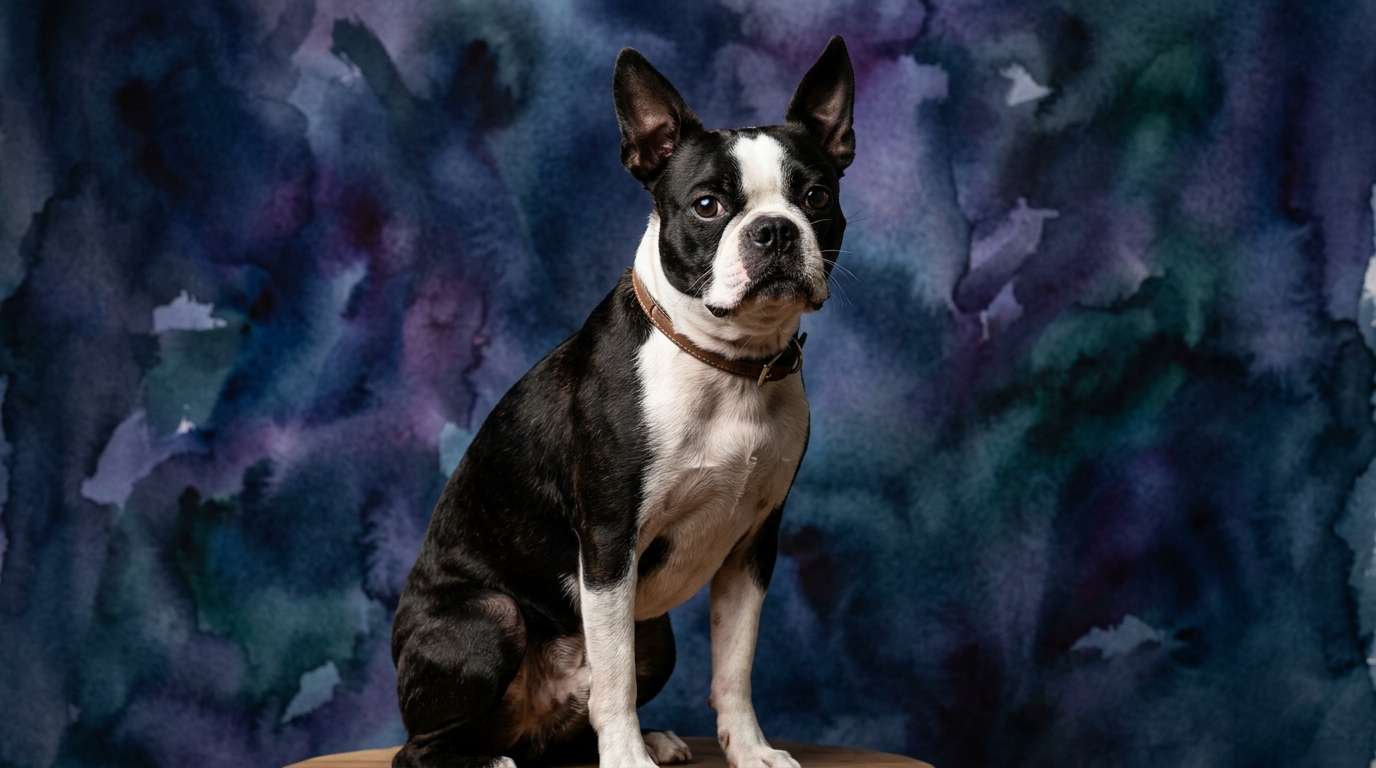
The Cosmic Pet's IQ Lab provides a framework for understanding the distinct cognitive dimensions of each breed. For the Boston Terrier, a non-sporting companion ranked #54 by Coren, their intellect is characterized by a Problem Solving score of 3/5, indicating a moderate ability to navigate challenges or devise strategies for desired outcomes. Their Training Speed is also 3/5, suggesting a steady learning curve with consistent methods. Where they truly shine is in Social Intelligence at 4/5, demonstrating a profound capacity to read human cues and integrate into family dynamics. Their Instinctive Drive is lower at 2/5, meaning less inclination towards traditional hunting or working tasks, while their Memory stands at 3/5, allowing for retention of routines and learned behaviors.
In contrast, the Australian Terrier, a true terrier breed without a specific Coren ranking, presents a slightly different cognitive makeup. They match the Boston Terrier in Problem Solving at 3/5, capable of resourceful thinking, especially when motivated by exploration. Their Training Speed is also 3/5, indicating they can learn at a comparable pace, though their terrier tenacity might require more engaging approaches. Their Social Intelligence is 3/5, reflecting strong family bonds but perhaps less overt attunement to subtle human emotions than the Boston. A key differentiator is their Instinctive Drive, rated higher at 3/5, showcasing a more pronounced inclination for digging, chasing, and investigating. Their Memory, like the Boston, is 3/5, aiding in their recall of past experiences and learned skills.
Where the Boston Terrier Excels Cognitively
The Boston Terrier's primary cognitive advantage lies in its superior Social Intelligence (4/5 compared to the Australian Terrier's 3/5). This dimension reflects their exceptional ability to understand and respond to human emotions, body language, and social structures within a household. Boston Terriers often seem to anticipate their owner's moods and desires, making them remarkably intuitive companions who seamlessly integrate into family life. This heightened social acumen contributes to their reputation as 'the American Gentleman,' allowing for a deep, empathetic connection that few breeds can match.
Furthermore, the Boston Terrier's lower Instinctive Drive (2/5 versus 3/5) can be a significant cognitive win in a domestic setting. While a strong drive is valuable for working breeds, for a companion animal, a reduced inclination to chase, dig, or roam simplifies daily life. This means less energy dedicated to managing strong primal urges and more capacity for focused interaction and calm companionship. Their cognitive energy is largely directed towards social engagement and understanding their human world, rather than perpetually scanning for prey or digging opportunities.
Where the Australian Terrier Demonstrates Cognitive Strengths
The Australian Terrier's higher Instinctive Drive (3/5 compared to the Boston Terrier's 2/5) represents a robust cognitive strength for owners seeking a more engaged and active partner. This drive fuels their natural curiosity and provides a strong foundation for a variety of stimulating activities, from scent work to earth dog trials. Their cognitive processes are geared towards exploration and problem-solving within their environment, making them particularly adept at tasks that require persistence and independent thought. This drive translates into a spirited enthusiasm for outdoor adventures and a keen interest in their surroundings.
While both breeds share a Problem Solving score of 3/5, the Australian Terrier's application of this skill often manifests in a more resourceful and independent manner, intrinsically linked to their terrier heritage. They are adept at figuring out how to overcome obstacles, access interesting smells, or outmaneuver small critters. This practical problem-solving capability, coupled with their instinctive drive, means they are often more self-directed in their pursuits, showcasing a cleverness that is both engaging and occasionally challenging for their human counterparts. Their cognitive strengths are rooted in their ability to interact with and master their physical environment.
Trainability: Boston vs. Aussie
When considering ease of training, the Boston Terrier generally holds a slight edge due to their higher social intelligence and lower instinctive drives. Their strong desire to please their human companions, coupled with their attunement to social cues, often makes them more receptive to positive reinforcement training. They tend to focus well during sessions because they are less distracted by environmental stimuli like potential prey, allowing for a steadier acquisition of commands and behaviors. Their moderate training speed of 3/5 means consistency is key, but their willingness to engage makes the process enjoyable and often quite rewarding for owners.
The Australian Terrier, while also possessing a 3/5 training speed, can present a different set of challenges rooted in their independent terrier spirit and stronger instinctive drives. Their problem-solving skills might be applied to finding ways around commands if not properly motivated, and their keen interest in their surroundings can lead to distractions during training. Owners may need to employ more creative, engaging, and varied training techniques to maintain their focus and overcome their occasional stubbornness. Early socialization and consistent, firm yet positive guidance are crucial to harness their intelligence and direct their inherent drive productively.
Ideal Lifestyles: Active vs. Relaxed Owners
For owners with an active lifestyle, the Australian Terrier emerges as an excellent fit. Their moderate to strong instinctive drive and resourceful problem-solving capabilities make them eager participants in outdoor adventures, vigorous play sessions, and structured activities like agility or scent work. They thrive on having opportunities to explore, investigate, and engage their natural terrier instincts, making them ideal companions for hiking, long walks, or any activity that provides mental and physical stimulation. They appreciate an owner who can channel their spirited energy into productive and enjoyable pursuits, preventing boredom and potential mischief.
Conversely, the Boston Terrier is often better suited for more relaxed owners or those seeking a deeply integrated companion for a less intensely active lifestyle. Their higher social intelligence and lower instinctive drive mean they are content with moderate exercise, preferring to spend significant time interacting with their family members. They excel at being a devoted presence within the home, enjoying cuddles, short walks, and participating in general household activities. Their cognitive makeup aligns with a desire for companionship and comfort, making them superb choices for individuals or families who prioritize emotional connection and a calm, affectionate presence.
The Verdict
Choose the Boston Terrier if you prioritize a deeply connected, socially intuitive companion who thrives on human interaction and a calm home environment with moderate exercise.
Opt for the Australian Terrier if you seek an independent, spirited, and resourceful canine partner eager for adventure and engaging activities that tap into their natural terrier drive.
🧠 Find Your Pet's IQ Score
Our Pet IQ Lab assessment covers 25+ tests across 5 cognitive dimensions — personalized to your breed.
Take the Full IQ Test →Frequently Asked Questions
Are Boston Terriers good with children?
Their high social intelligence and affectionate nature often make them excellent family dogs, adapting well to children's energy and social dynamics, though supervision is always advised to ensure respectful interactions.
Do Australian Terriers bark a lot?
Australian Terriers can be quite vocal, often using barks to alert their owners to new sights or sounds, a trait stemming from their watchful, alert terrier nature. Consistent training can help manage this.
Which breed is better for apartment living?
Both breeds can adapt to apartment living with sufficient exercise; however, the Boston Terrier's lower instinctive drive and generally calmer indoor demeanor might make them a slightly more natural fit for smaller spaces, provided they receive daily walks and mental stimulation.