
A Side-by-Side Look at Cognitive Profiles
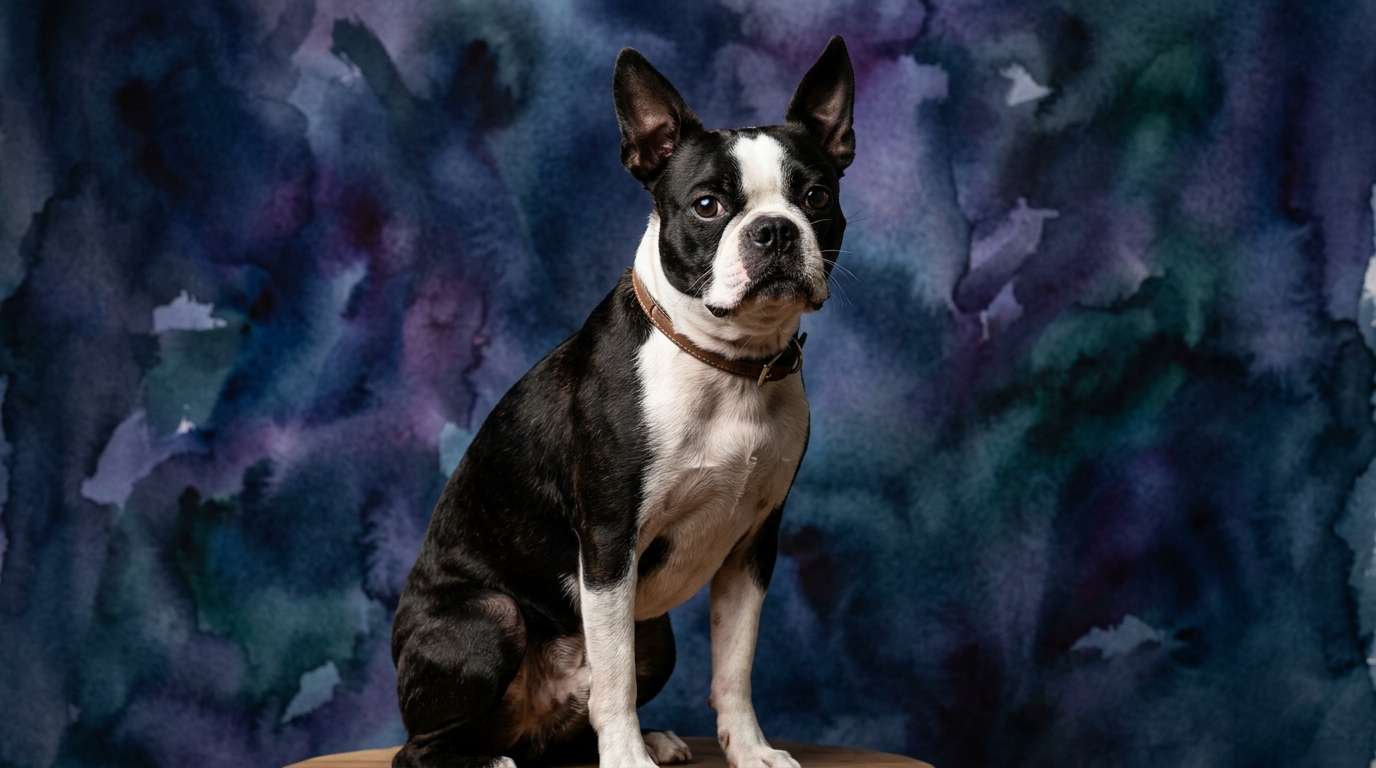
The Boston Terrier, a non-sporting breed with a Coren rank of #54, presents a balanced yet distinctly socially-oriented cognitive profile. Their Problem Solving is rated at 3/5, indicating an average capacity to navigate novel challenges and figure out solutions to moderate puzzles. Training Speed also sits at 3/5, suggesting they learn new commands and routines at a steady, consistent pace, responding well to clear instruction.
Where the Boston Terrier truly shines is in Social Intelligence, scoring an impressive 4/5. This suggests a heightened ability to read human cues, understand social dynamics, and adapt their behavior to fit human expectations, making them remarkably attuned companions. Their Instinctive Drive is lower at 2/5, meaning they possess less inherent inclination for independent tasks like hunting or guarding, preferring instead to engage directly with their human family. Memory is rated 3/5, allowing for a good retention of learned behaviors and experiences.
In contrast, the Basset Hound, a hound group member with a Coren rank of #71, displays a cognitive makeup deeply influenced by its ancestral purpose. Like the Boston, their Problem Solving is 3/5, enabling them to tackle moderately complex situations, often with a methodical, persistent approach. Their Training Speed also matches at 3/5, indicating they can learn at an average rate, though their motivation and focus might differ significantly from the Boston Terrier.
The Basset Hound's Social Intelligence is rated 3/5, signifying a good capacity for social interaction and understanding, albeit perhaps with less nuanced responsiveness to human emotional states compared to the Boston Terrier. A key differentiator is their Instinctive Drive, which stands at 3/5. This higher drive is intrinsically linked to their powerful scenting abilities, compelling them to pursue intriguing odors with unwavering focus and endurance, often independently. Their Memory is also 3/5, suggesting a solid ability to recall past events and learned actions, particularly those associated with their strong olfactory experiences.
Where the Boston Terrier Cognitively Excels
The Boston Terrier's primary cognitive advantage lies in its superior Social Intelligence (4/5). This heightened capacity allows them to excel in understanding and responding to human communication, whether it's a verbal command, a change in tone, or subtle body language. They are often described as “people-pleasers” not just due to temperament, but because their cognitive wiring makes them particularly receptive to human interaction and approval. This translates to an inherent desire to collaborate and integrate seamlessly into family life, often anticipating their owner's wishes.
Another area of cognitive strength for the Boston Terrier is their lower Instinctive Drive (2/5). While this might seem counterintuitive, it means they are less prone to being independently driven by ancient urges like tracking or guarding. This reduced internal distraction makes them more available for human-directed activities and less likely to “tune out” their owners in favor of an enticing scent or distant movement. Their focus is more consistently directed towards their immediate social environment, making them highly present companions.
Basset Hound's Unique Cognitive Strengths
The Basset Hound's cognitive strengths are profoundly rooted in its Instinctive Drive (3/5), particularly its unparalleled olfactory prowess. While its social intelligence may be a point lower than the Boston Terrier, the Basset's drive to follow a scent trail is a specialized form of problem-solving. They are adept at navigating complex environments, piecing together invisible scent puzzles, and demonstrating remarkable persistence in pursuit of a goal that is entirely driven by their nose. This isn't just a physical trait; it's a deep cognitive engagement with their environment through scent.
Their Problem Solving at 3/5, combined with this strong instinctive drive, means Basset Hounds can exhibit a focused, methodical approach to challenges. For instance, if a Basset wants to reach a specific scent source, they will often demonstrate remarkable ingenuity and determination, using their intelligence to overcome obstacles through sheer persistence and a single-minded focus on their olfactory objective. This distinct cognitive pathway allows them to excel in tasks that leverage their natural inclinations, even if it means momentarily disregarding human directives.
Training Dynamics: Who Learns More Readily?
When it comes to training, the Boston Terrier generally presents as the more straightforward student, primarily due to its higher Social Intelligence and lower Instinctive Drive. While both breeds share a 3/5 Training Speed, the Boston Terrier's inclination to understand and please its human companion often makes them more eager to engage in structured learning sessions. They are motivated by positive reinforcement that involves interaction and praise, and their reduced independent urges mean fewer distractions during lessons.
The Basset Hound, despite a similar Training Speed rating, can be perceived as more challenging for the inexperienced trainer. Their robust Instinctive Drive (3/5), particularly for scent, means that an intriguing odor can easily override any command or desire to comply. Their problem-solving might be applied to figuring out how to get to that scent rather than the task at hand. Effective Basset Hound training often requires immense patience, creativity in making training more rewarding than a scent trail, and an understanding that their independent nature is a feature, not a bug, of their cognitive makeup.
Lifestyle Compatibility: Active Companionship vs. Relaxed Exploration
The Boston Terrier's cognitive profile, particularly its high Social Intelligence and lower Instinctive Drive, makes it an ideal fit for owners seeking an active, interactive companion. They thrive on being part of family activities, whether it's brisk walks, engaging in puzzle toys, or learning new tricks. Their desire for human engagement means they are generally happy to participate in whatever their owners are doing, making them suitable for individuals or families who enjoy including their dog in a variety of daily routines and outings. They are adaptable and energetic without being hyperactive.
The Basset Hound, with its pronounced Instinctive Drive and slightly lower Social Intelligence, aligns better with more relaxed owners who appreciate a dog with a strong independent streak and a passion for olfactory exploration. While they enjoy companionship, their idea of “activity” often involves methodical sniffing walks rather than high-speed runs or complex agility courses. Owners who understand and facilitate this need for scent work, providing opportunities for leisurely but focused outdoor exploration, will find the Basset Hound a deeply content and rewarding companion. They are not necessarily “lazy” but their energy is channeled differently, requiring mental stimulation through their nose.
The Verdict
Choose the Boston Terrier if you desire a highly interactive, socially tuned companion who thrives on shared activities and whose cognitive makeup makes them generally receptive to consistent training.
Opt for the Basset Hound if you appreciate a calm, independent spirit, are prepared to accommodate a powerful scent drive, and enjoy a more laid-back pace with opportunities for focused olfactory exploration.
🧠 Find Your Pet's IQ Score
Our Pet IQ Lab assessment covers 25+ tests across 5 cognitive dimensions — personalized to your breed.
Take the Full IQ Test →Frequently Asked Questions
Are Boston Terriers good at dog sports like agility?
With their balanced problem-solving (3/5), average training speed (3/5), and high social intelligence (4/5), Boston Terriers can certainly excel in dog sports. Their eagerness to please and focus on human cues make them enthusiastic participants, though their moderate instinctive drive means they might not be as intensely driven by prey as some sporting breeds.
How does the Basset Hound's instinctive drive impact their behavior at home?
The Basset Hound's strong instinctive drive (3/5), primarily for scent, means they are prone to following their nose wherever it leads, potentially ignoring calls or commands when on a compelling trail. At home, this can manifest as a tendency to explore every corner, sniff out forgotten crumbs, or become engrossed in an interesting smell in the yard, requiring owners to be vigilant about secure fencing.
Do Basset Hounds require a lot of exercise despite their relaxed demeanor?
While Basset Hounds are not known for high-intensity energy, their instinctive drive (3/5) means they do require regular, purposeful exercise, primarily in the form of long, leisurely walks where they can engage their powerful sense of smell. This isn't about speed, but about mental and physical engagement through scent exploration, which is crucial for their well-being and prevents boredom.