
Side-by-Side Cognitive Profiles
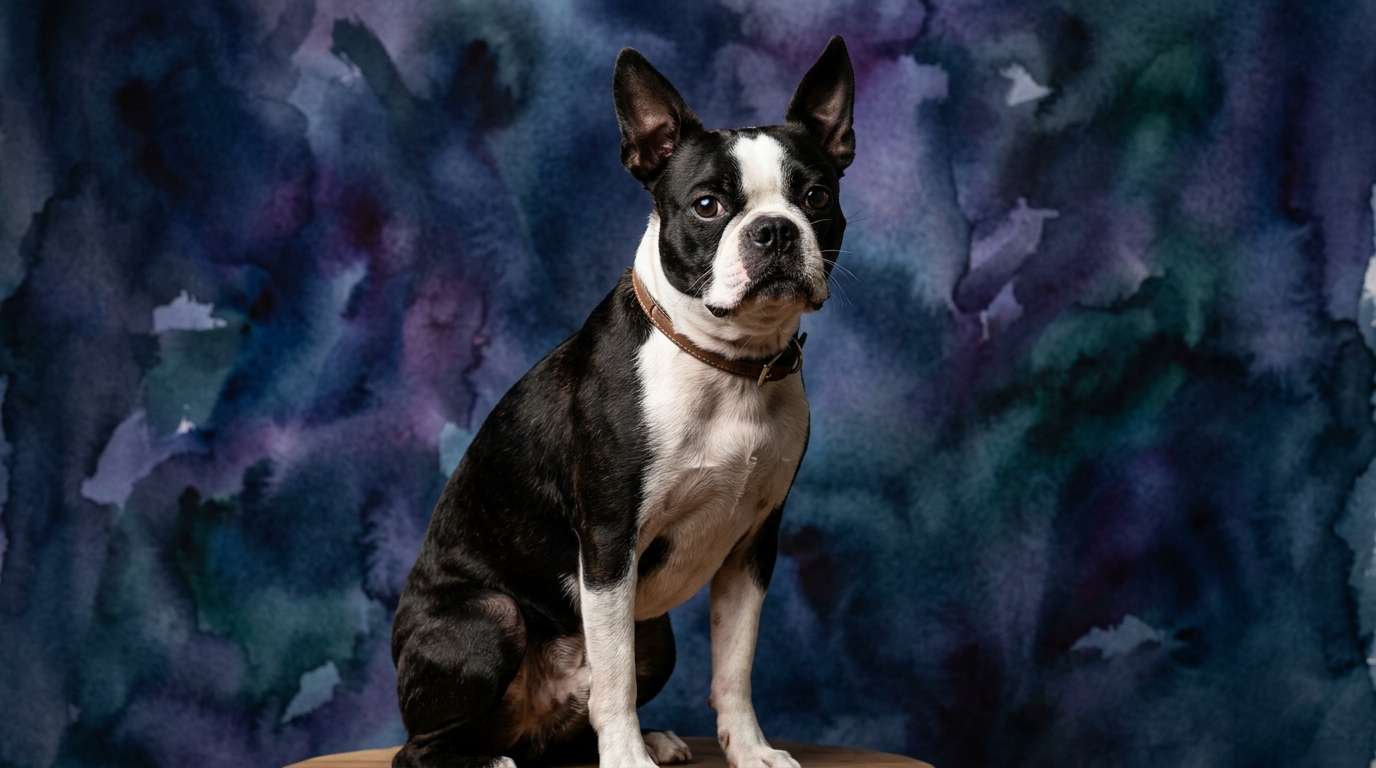
The Boston Terrier, often celebrated for its lively personality, exhibits a balanced yet specific set of cognitive strengths. In Problem Solving (3/5), they demonstrate a practical intellect, adept at navigating their immediate environment to achieve goals like finding a favorite toy or a comfortable sunbeam. This isn't about complex abstract reasoning, but rather an efficient understanding of cause and effect within their daily routines. Their Training Speed (3/5) is moderate; they grasp new commands with consistent, positive reinforcement, often motivated by their desire for interaction and tasty rewards. While they are generally eager to please, a characteristic stubborn streak can emerge if training isn't engaging or if they perceive a task as boring. Social Intelligence (4/5) is a prominent feature of the Boston Terrier's mind. They are remarkably attuned to human emotions, body language, and household dynamics, making them highly responsive companions who often seem to anticipate their owners' needs or moods. This deep social connection underpins much of their adaptability. Instinctive Drive (2/5) is relatively low. Unlike breeds bred for hunting or herding, Boston Terriers possess minimal innate drive to chase, dig, or guard. Their core instincts are geared towards companionship and interaction, making them less prone to independent, instinct-driven behaviors that might conflict with domestic life. Finally, their Memory (3/5) is solid, allowing them to retain learned behaviors, recognize familiar faces and places, and recall established routines. This memory contributes significantly to their ease of house-training and their ability to integrate seamlessly into family life.
The Black and Tan Coonhound, a breed forged for the challenging pursuit of game, presents a cognitive profile deeply shaped by its working heritage. Their Problem Solving (3/5) ability, while numerically similar to the Boston Terrier, manifests very differently. For the Coonhound, problem-solving is intrinsically linked to scent work; they are masterful at deciphering complex scent trails, navigating varied terrains, and independently tracking their quarry—a highly specialized form of environmental intelligence. In terms of Training Speed (3/5), Coonhounds learn at a moderate pace, but their independent nature and powerful focus on scent can make them appear less biddable. They require patient, consistent training methods, often needing high-value rewards and compelling motivation to override their natural inclination to follow their nose. Their Social Intelligence (3/5) is generally good; they are affable and can form strong bonds with their families. However, their primary cognitive engagement is often outward-facing, focused on the environment and its rich olfactory tapestry, rather than solely on human emotional nuances. They are companions who appreciate human presence but are not as deeply attuned to subtle social cues as the Boston Terrier. The Instinctive Drive (3/5) of a Black and Tan Coonhound is a defining and powerful force. Their drive to track, scent, and bay is profound, often overriding other learned behaviors when a compelling trail is present. This robust instinct is what makes them exceptional at their traditional work but also poses unique challenges in a domestic setting. Their Memory (3/5) is robust, particularly for scent patterns, terrain features, and established hunting routes. They can recall learned commands, though, like their training speed, this recall can be momentarily eclipsed by the overwhelming allure of a fresh scent, a testament to their strong instinctive focus.
Where the Boston Terrier Excels Cognitively
The Boston Terrier clearly excels in areas demanding human interaction and adaptability to a structured domestic environment. Their superior Social Intelligence (4/5) means they possess a nuanced understanding of human communication, often picking up on subtle cues and emotional states that might elude a more independently minded breed. This makes them remarkably intuitive companions, capable of adapting their behavior to fit family dynamics and routines with impressive ease. Their lower Instinctive Drive (2/5) means they are less prone to being distracted by external stimuli like scents or passing wildlife, allowing them to remain more focused on human direction during training and daily interactions. This cognitive profile makes them highly responsive to verbal commands and body language, fostering a more collaborative partnership in daily life where the goal is often harmonious co-existence and shared experiences.
Where the Black and Tan Coonhound Shows Cognitive Prowess
Conversely, the Black and Tan Coonhound demonstrates a distinct cognitive advantage in tasks requiring independent decision-making, specialized sensory processing, and sustained focus on a singular, instinct-driven goal. Their prowess in Problem Solving (3/5), while numerically the same as the Boston Terrier, is fundamentally different in its application; they are masters of environmental navigation and scent deciphering, capable of following intricate trails over vast distances and varied terrains. This requires a sophisticated level of sensory integration and memory for olfactory information, allowing them to process and interpret a world invisible to human perception. Their robust Instinctive Drive (3/5), though challenging in a home, is a cognitive strength in its original context, enabling them to maintain relentless pursuit and make autonomous decisions in the field, exhibiting a tenacious mental fortitude that few breeds can match.
Ease of Training: A Comparative Look
When considering ease of training for typical companion dog tasks, the Boston Terrier generally presents a more straightforward experience. Both breeds share a Training Speed (3/5) score, indicating they can learn at a moderate pace. However, the Boston Terrier's distinct advantage lies in its higher Social Intelligence (4/5) and significantly lower Instinctive Drive (2/5). A Boston Terrier is inherently more motivated to please its human companions and is less likely to be sidetracked by environmental distractions. They are more attuned to human feedback, eager for praise and interaction, which makes them responsive to positive reinforcement. Their desire for social connection fuels their willingness to engage in training sessions, fostering a cooperative learning environment. In contrast, the Black and Tan Coonhound, while capable of learning, faces the constant challenge of its powerful Instinctive Drive (3/5) to follow scents. Even with consistent training, a compelling scent can override learned commands, demanding immense patience and creativity from the owner. Their independent nature, a strength in the field, means they are less inherently motivated by human approval alone and require more substantial, high-value rewards to maintain focus against their natural inclinations. Therefore, for general obedience and domestic manners, the Boston Terrier’s cognitive architecture makes for an easier, more predictable training journey.
Matching Breeds to Lifestyles: Active vs. Relaxed Owners
The choice between a Boston Terrier and a Black and Tan Coonhound often comes down to an owner’s lifestyle and capacity for activity. The Boston Terrier, with its moderate Instinctive Drive (2/5) and strong social orientation, can adapt well to both active and more relaxed households. While they enjoy regular walks, playtime, and mental stimulation, their exercise needs are generally manageable, and they are typically content to curl up on the sofa after a good outing. Their adaptability makes them suitable for apartment living or homes with smaller yards, provided their social and moderate exercise requirements are met. They thrive on companionship, making them excellent choices for owners who want an interactive, present companion without the demand for extensive outdoor adventures. The Black and Tan Coonhound, however, is unequivocally suited for active owners. Their powerful Instinctive Drive (3/5), coupled with their heritage as endurance hunters, means they require substantial daily exercise, ideally including opportunities for long walks, runs, or off-leash exploration in secure areas where they can engage their formidable sense of smell. Owners who enjoy hiking, trail running, or scent work activities will find a willing and capable partner in a Coonhound. A relaxed owner who cannot provide outlets for their physical and mental energy will likely find a Coonhound challenging, as boredom and pent-up energy can lead to undesirable behaviors like excessive baying or destructive tendencies. Their need to follow a scent also means they are not ideal candidates for off-leash walks in unfenced areas unless extensively trained, requiring a commitment to secure environments or long-line walks.
The Verdict
Choose a Boston Terrier if you desire a highly socially intelligent, adaptable companion who thrives on interaction and integrates smoothly into a variety of home environments.
Opt for a Black and Tan Coonhound if you lead an active lifestyle, appreciate an independent spirit, and can provide ample opportunities for them to engage their powerful scent-driven cognitive strengths.
🧠 Find Your Pet's IQ Score
Our Pet IQ Lab assessment covers 25+ tests across 5 cognitive dimensions — personalized to your breed.
Take the Full IQ Test →Frequently Asked Questions
Are Boston Terriers good for first-time dog owners?
Yes, Boston Terriers often make excellent companions for first-time dog owners due to their high social intelligence, manageable exercise needs, and eagerness to please. Their cognitive profile makes them relatively straightforward to train for basic obedience and house manners, provided training is consistent and positive.
Can Black and Tan Coonhounds live in apartments?
While possible, Black and Tan Coonhounds are generally not ideal for apartment living due to their strong instinctive drive and significant exercise requirements. They need ample space to move and opportunities to engage their powerful sense of smell, which is harder to provide in a confined urban setting without dedicated effort.
How much exercise do these breeds need?
Boston Terriers require moderate daily exercise, typically a couple of short walks and indoor playtime, to stay content. Black and Tan Coonhounds, conversely, need substantial daily activity, often an hour or more of vigorous exercise, including opportunities for long walks or runs where they can follow scents.