Side-by-Side Cognitive Profile: Boston Terrier vs. Black Russian Terrier
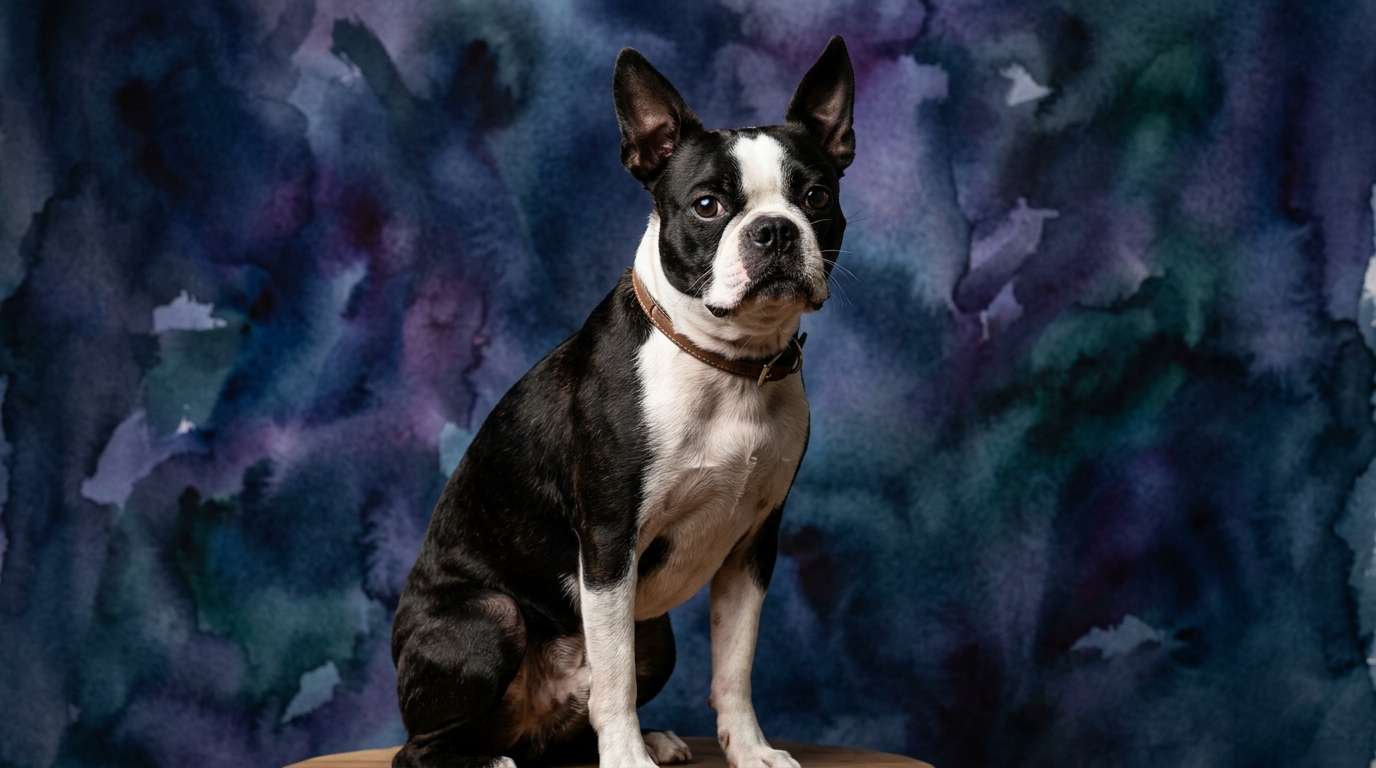
At The Cosmic Pet Pet IQ Lab, we delve into specific cognitive dimensions to understand what makes each breed tick. For the Boston Terrier, a Non-Sporting breed, their Coren ranking of #54 places them squarely in the category of solid learners. Their cognitive scores paint a picture of an adaptable companion: Problem Solving at 3/5 indicates a capable mind for everyday challenges, while Training Speed also at 3/5 suggests they learn new commands at a steady, moderate pace with consistent effort. Where they truly shine is Social Intelligence, scoring 4/5, highlighting their strong attunement to human cues and social dynamics. Their Instinctive Drive is lower at 2/5, meaning less emphasis on independent working or prey drive, and Memory sits at a respectable 3/5, allowing them to retain learned behaviors and experiences effectively.
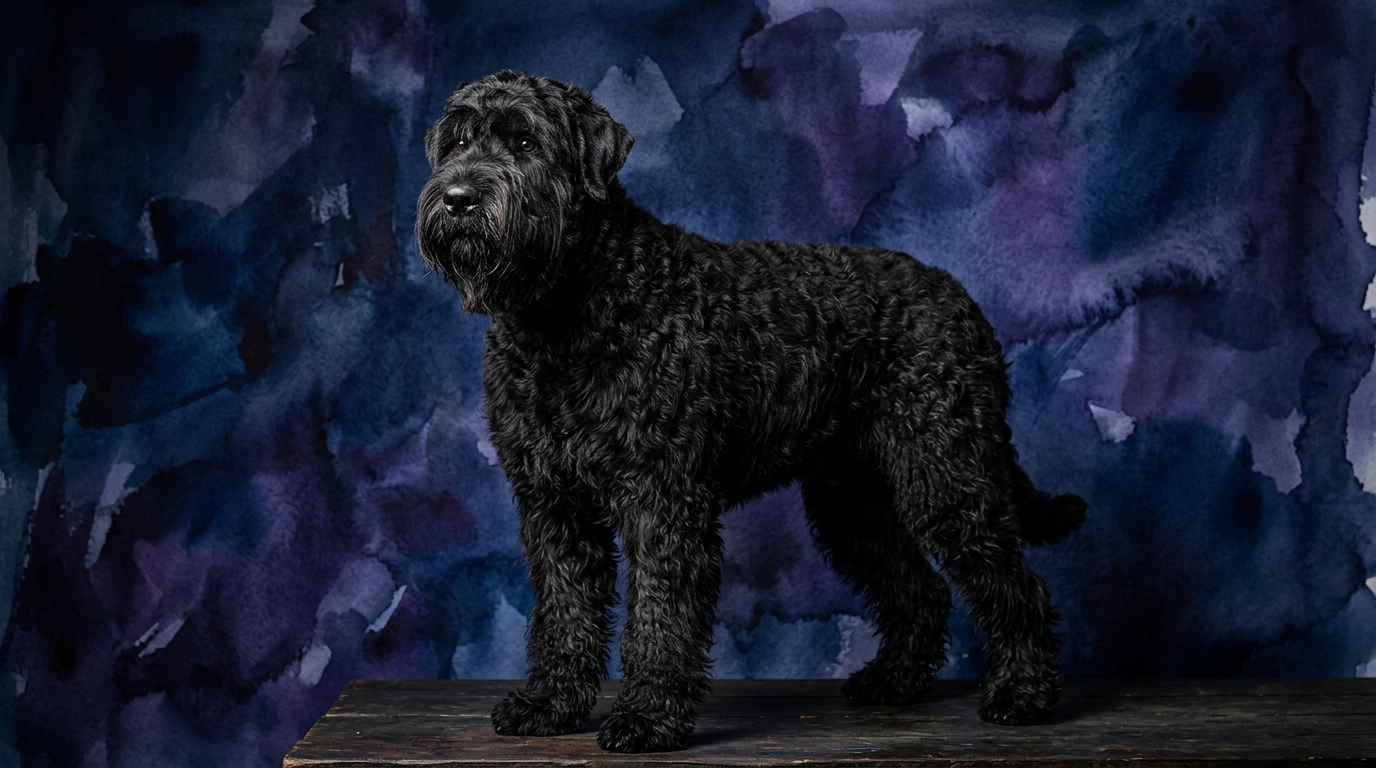
The Black Russian Terrier, a formidable Working breed, does not have a Coren ranking, often due to their more recent development and specialized roles. Their cognitive profile, however, reveals a robust and purposeful mind. Their Problem Solving ability matches the Boston Terrier at 3/5, indicating a similar capacity for navigating complex situations, though perhaps with a more methodical approach. Training Speed also registers 3/5, suggesting they learn at a comparable rate, albeit potentially with a different motivational drive. Social Intelligence for the Black Russian Terrier is 3/5, indicating strong bonds within their chosen family but perhaps less overt engagement with strangers compared to the Boston. Their Instinctive Drive is higher at 3/5, reflecting their inherent protective and guarding tendencies, while their Memory, like the Boston, is 3/5, ensuring they retain their training and experiences well over time.
Where the Boston Terrier Excels Cognitively
The Boston Terrier’s primary cognitive advantage lies in their superior Social Intelligence, scoring a 4/5 compared to the Black Russian Terrier’s 3/5. This higher score means Boston Terriers are typically more perceptive of human emotions and social cues, often anticipating their owners’ moods or desires with ease. This heightened social awareness makes them exceptionally responsive companions, eager to engage in interaction and quick to understand subtle non-verbal communication. They thrive on being part of the family unit, often seeking out companionship and providing comfort.
Furthermore, their lower Instinctive Drive (2/5 versus the BRT’s 3/5) contributes to this social focus. With fewer strong independent working or hunting urges, Boston Terriers are generally less distracted by external stimuli like small animals or distant sounds. This allows them to dedicate more cognitive energy to their human interactions and training, making them very present and attentive pets in a home environment. Their cognitive makeup leans towards being an engaging, people-oriented companion rather than an independent operator.
Where the Black Russian Terrier Demonstrates Cognitive Strengths
The Black Russian Terrier’s cognitive profile, particularly their higher Instinctive Drive (3/5 compared to the Boston Terrier’s 2/5), showcases their strengths in areas requiring purpose and resilience. This drive is intrinsically linked to their historical role as a protective working dog, meaning they possess an innate capacity for vigilance, assessment of their environment, and a strong sense of territory. While not directly an "intelligence" score, this drive underpins their ability to perform tasks requiring focus, endurance, and independent decision-making in a protective context, which is a specific form of cognitive application.
Their slightly more reserved Social Intelligence (3/5) can also be seen as an advantage in certain situations. While the Boston Terrier is overtly social, the Black Russian Terrier’s more measured social engagement allows them to maintain a watchful composure, assessing new individuals or situations without immediately seeking effusive interaction. This cognitive characteristic is crucial for a breed intended for guarding and protection, where a calm, discerning presence is more valuable than immediate friendliness. Their problem-solving skills, while similar in raw score, are often applied with a more independent and determined approach, reflecting their working heritage.
Training Aptitude: Which Breed is Easier and Why?
When considering ease of training, both breeds share a Training Speed score of 3/5, suggesting neither is inherently faster or slower to grasp commands. However, the *approach* to training and the *consistency* required differ significantly due to their other cognitive traits. The Boston Terrier’s higher Social Intelligence (4/5) and lower Instinctive Drive (2/5) generally make them easier to train for the average owner. They are highly motivated by human approval and interaction, making positive reinforcement exceptionally effective. Their desire to please and their focus on their human companions means they are less likely to be distracted by internal urges or environmental stimuli, leading to more straightforward and enjoyable training sessions. They thrive on collaborative learning and direct engagement.
The Black Russian Terrier, while equally capable of learning (3/5 Training Speed), often requires a more experienced and consistent handler. Their moderate Instinctive Drive (3/5) means they possess a natural independence and a strong will, which, if not channeled correctly, can lead to stubbornness. They need clear, consistent leadership and a training regimen that respects their working heritage and provides mental stimulation alongside physical exercise. Their slightly lower Social Intelligence (3/5) suggests they might not be as overtly eager to please as a Boston, requiring the trainer to build trust and demonstrate the value of cooperation. Training a Black Russian Terrier is often about partnership and mutual respect, rather than simply eliciting a response.
Matching Breed to Lifestyle: Active vs. Relaxed Owners
The cognitive profiles of these two breeds offer clear guidance for potential owners regarding lifestyle compatibility. The Boston Terrier, with their high Social Intelligence and lower Instinctive Drive, is an ideal fit for more relaxed owners or those seeking a devoted, interactive companion for family life. Their moderate exercise requirements mean they are content with daily walks and indoor play, thriving on companionship and mental engagement through puzzles or short training sessions. They are adaptable to various living situations, provided they receive ample human interaction, which is their primary cognitive need. Their perceptive nature makes them a joyful and responsive presence in a bustling household, often acting as a cheerful shadow.
Conversely, the Black Russian Terrier is best suited for active owners who are prepared to commit to significant physical exercise, rigorous training, and consistent mental stimulation. Their moderate Instinctive Drive and robust physical presence demand an outlet for their energy and working capabilities. Owners must be prepared to engage them in activities that challenge their problem-solving skills and harness their protective instincts, such as advanced obedience, protection sports, or extensive outdoor adventures. This breed thrives with a clear purpose and consistent leadership, making them an excellent choice for experienced individuals or families who understand the demands of a powerful, intelligent working dog and can provide the necessary structure and engagement.
The Verdict
Choose a Boston Terrier if you seek a highly social, adaptable companion who thrives on family interaction and has moderate exercise needs, offering perceptive engagement and cheerful companionship.
Opt for a Black Russian Terrier if you are an experienced owner prepared for a dedicated training regimen, significant exercise, and a protective, strong-willed companion who excels when given a 'job' and thrives with consistent mental engagement.
🧠 Find Your Pet's IQ Score
Our Pet IQ Lab assessment covers 25+ tests across 5 cognitive dimensions — personalized to your breed.
Take the Full IQ Test →Frequently Asked Questions
Which breed is better with children?
The Boston Terrier's higher social intelligence and generally more amiable nature often make them a more natural fit for families with children, being more tolerant and interactive. The Black Russian Terrier can be good with children in their own family but requires early socialization and careful supervision due to their protective instincts and powerful build.
Do Boston Terriers and Black Russian Terriers have similar memory capabilities?
Yes, both breeds score 3/5 in memory, indicating they have similar capabilities for retaining commands, routines, and experiences. This means both can be trained effectively over time, but the motivation and method of training might differ due to their other cognitive traits.
Which breed is more independent?
The Black Russian Terrier tends to be more independent due to their moderate instinctive drive, which historically equipped them for working roles requiring self-reliance. The Boston Terrier, with a lower instinctive drive and higher social intelligence, is generally more focused on human interaction and less inclined towards independent endeavors.