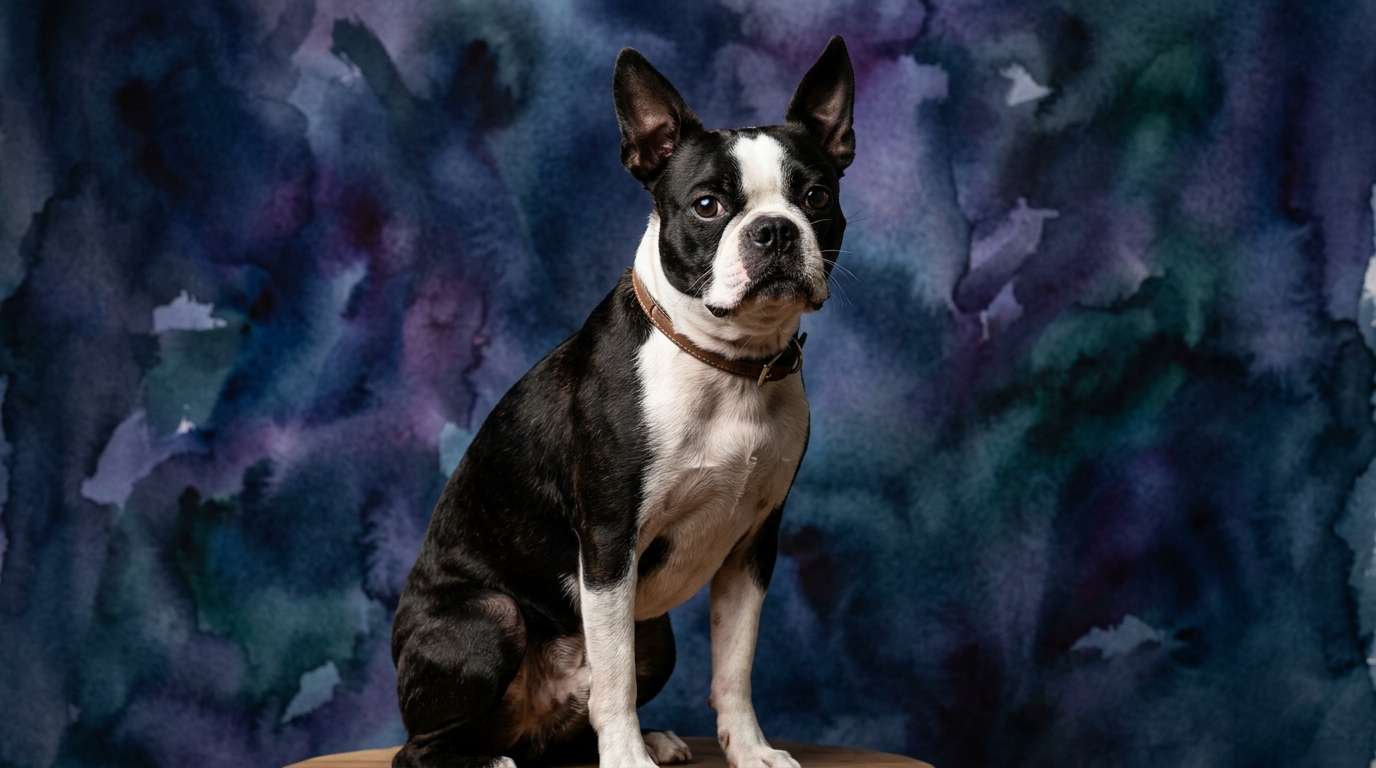
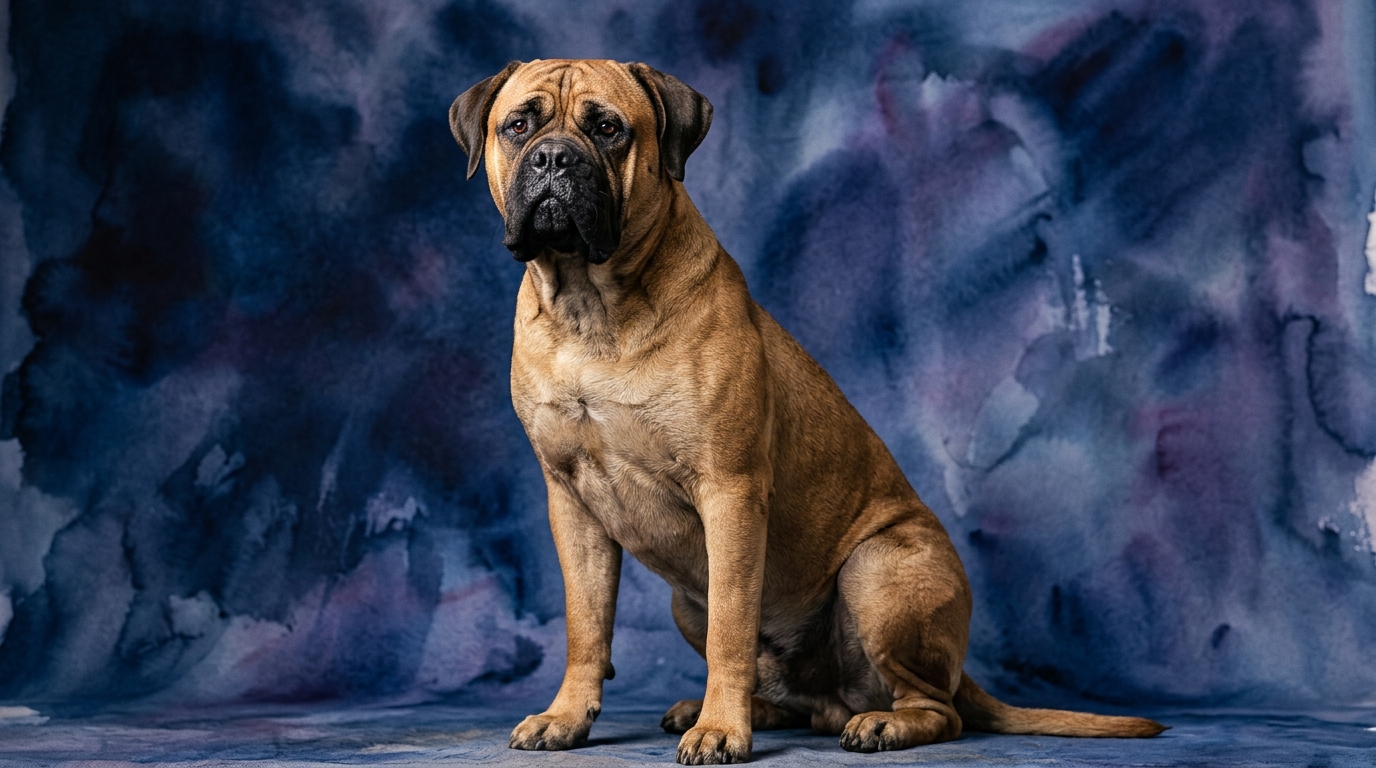
Side-by-Side IQ Profile: Boston Terrier vs. Bullmastiff
To truly understand the cognitive makeup of these two distinct breeds, The Cosmic Pet Pet IQ Lab employs a five-dimensional framework, allowing for a nuanced comparison of their mental aptitudes. Here’s how the Boston Terrier and Bullmastiff stack up:
**Boston Terrier (Coren Rank #54)**
**Problem Solving (3/5):** Boston Terriers exhibit a moderate capacity for independent thought and figuring out novel situations. They can often work through simple puzzles or learn to manipulate objects to achieve a goal, but complex multi-step challenges might require significant guidance.
**Training Speed (3/5):** Their ability to pick up new commands and routines is average. While not the fastest learners, consistent positive reinforcement typically yields steady progress, allowing them to master a good repertoire of behaviors over time.
**Social Intelligence (4/5):** This is where the Boston Terrier truly shines, demonstrating a superior aptitude for understanding human emotions, body language, and subtle vocal cues. They are adept at adapting their behavior to social contexts, making them highly responsive companions.
**Instinctive Drive (2/5):** Possessing a relatively low instinctive drive, Boston Terriers are less prone to strong primal urges like hunting, herding, or guarding. This often translates into fewer behavioral challenges stemming from deeply ingrained natural behaviors.
**Memory (3/5):** Their memory is moderate, allowing them to recall learned commands, routines, and past experiences with reasonable accuracy. They generally remember their training and the people they've encountered, contributing to their adaptability.
**Bullmastiff (Coren Rank #69)**
**Problem Solving (3/5):** Bullmastiffs share a similar moderate problem-solving capacity with Boston Terriers. They are capable of assessing situations and making decisions, particularly when it to their primary role as guardians, but are not typically known for intricate, independent problem-solving.
**Training Speed (3/5):** Like the Boston Terrier, Bullmastiffs learn at an average pace. They require patience and consistent methods, and while they can master complex commands, their progress is often steady rather than rapid, reflecting a thoughtful rather than impulsive approach to learning.
**Social Intelligence (3/5):** Bullmastiffs possess a moderate level of social intelligence, allowing them to understand human interactions and cues. While they form deep bonds, their expression of social understanding can be more reserved compared to the Boston Terrier, often expressed through quiet vigilance rather than overt eagerness.
**Instinctive Drive (3/5):** Their instinctive drive is notably higher than the Boston Terrier's, primarily manifesting as a strong protective and territorial instinct. This drive makes them natural guardians, but also requires careful socialization and training to ensure appropriate expression of these deep-seated urges.
**Memory (3/5):** Bullmastiffs exhibit a moderate memory, enabling them to retain training, recognize familiar faces, and remember past events. This contributes to their reliability as guardians and their ability to maintain learned boundaries over time.
Where the Boston Terrier Wins Cognitively
The Boston Terrier's standout cognitive advantage lies in its superior Social Intelligence, scoring 4/5 compared to the Bullmastiff's 3/5. This higher aptitude means Boston Terriers are exceptionally attuned to their human companions' moods, intentions, and communication nuances. They are often described as being 'in tune' with their families, readily adapting their behavior based on subtle cues like a change in vocal tone or body language. This cognitive strength makes them remarkably empathetic and responsive pets, eager to engage in shared activities and quick to offer comfort.
Their lower Instinctive Drive (2/5 versus 3/5 for the Bullmastiff) also contributes to their ease of integration into diverse home environments. With fewer overpowering primal urges, they are less likely to act on strong predatory or territorial instincts, making them more pliable and generally less prone to independent, instinct-driven behaviors that might conflict with household rules. This combination of heightened social awareness and manageable innate drives allows the Boston Terrier to excel in roles requiring close companionship and adaptable social interaction, making them superb at navigating complex human social structures.
Where the Bullmastiff Wins Cognitively
The Bullmastiff's cognitive strengths are deeply rooted in its heritage as a guardian breed, evident in its higher Instinctive Drive (3/5 compared to the Boston Terrier's 2/5). This drive is predominantly channeled into protection and territoriality, making them exceptionally vigilant and discerning observers of their environment. While their Problem Solving and Training Speed scores mirror the Boston Terrier's, the Bullmastiff's particular drive means they excel at assessing potential threats and making independent judgments regarding safety.
This isn't about complex abstract problem-solving, but rather practical, situation-specific decision-making related to their protective duties. They possess a calm self-assurance and a natural inclination to stand their ground, a cognitive trait that, when properly channeled through training, makes them formidable and reliable protectors. Their moderate Social Intelligence (3/5) ensures they understand their family's place within their protective circle, while their strong memory (3/5) helps them distinguish between welcome guests and potential intruders, reinforcing learned boundaries and fostering a consistent sense of security within their domain. This unique blend of cognitive attributes allows the Bullmastiff to be an effective, thoughtful guardian.
Which Is Easier to Train and Why?
While both breeds share a Training Speed score of 3/5, suggesting a similar pace for learning new commands, the Boston Terrier generally presents as an easier dog to train for general obedience within a family setting. This distinction largely stems from their superior Social Intelligence (4/5) and lower Instinctive Drive (2/5). Boston Terriers are highly motivated by human interaction and praise, and their keen ability to read cues means they often anticipate what is expected of them. They are eager to please and less likely to be sidetracked by strong internal urges, making them more consistently focused during training sessions.
Conversely, the Bullmastiff, with its moderate Social Intelligence (3/5) and stronger Instinctive Drive (3/5), can be more independent and requires a different approach. Their protective instincts, while valuable, can sometimes lead to a more deliberate, independent decision-making process that might be perceived as stubbornness if not understood. Training a Bullmastiff often demands a more patient, firm, and consistent handler who can establish clear leadership and channel their natural drives productively, rather than relying solely on eagerness to please. For a new dog owner seeking a relatively straightforward training experience focused on household manners and companionship, the Boston Terrier's cognitive profile offers a more adaptable and less challenging path.
Suitability for Active vs. Relaxed Owners
When considering lifestyle compatibility, the Boston Terrier often aligns well with owners who appreciate a blend of activity and companionship. Despite their small stature, Boston Terriers are generally energetic and enjoy regular walks, interactive games, and mental stimulation. Their high social intelligence means they thrive on being included in family activities, whether it's a brisk walk around the neighborhood or a trip to a dog-friendly cafe. They are adaptable to apartment living but benefit immensely from owners who can provide consistent engagement and varied experiences, making them suitable for active owners who enjoy incorporating their dog into daily routines without requiring extreme endurance activities.
The Bullmastiff, in contrast, suits owners who might be described as 'relaxed' in terms of high-octane physical activity, but are exceptionally 'committed' in terms of training, socialization, and providing a stable environment. While they need consistent, moderate exercise to maintain their health and prevent boredom, they are not built for extensive running or high-impact sports. Their cognitive profile, with its stronger instinctive drive towards guarding, means they require an owner who understands and can manage their protective nature through consistent, positive reinforcement training from a young age. They thrive with owners who provide a calm, confident leadership, offering structured routines and ample space. Bullmastiffs are best suited for individuals or families who value a watchful, devoted companion and are prepared to invest significant time in their socialization and ongoing behavioral guidance, rather than seeking a dog for intense athletic pursuits.
The Verdict
Opt for a Boston Terrier if you seek a highly socially intelligent, adaptable companion eager to engage in family life and relatively straightforward to train for general household manners.
Choose a Bullmastiff if you are a committed, confident owner looking for a devoted, protective presence who will thrive with consistent guidance and appreciate a calm, structured routine.
🧠 Find Your Pet's IQ Score
Our Pet IQ Lab assessment covers 25+ tests across 5 cognitive dimensions — personalized to your breed.
Take the Full IQ Test →Frequently Asked Questions
Are Boston Terriers good with children?
Yes, Boston Terriers often excel with children due to their high social intelligence and adaptable nature, enjoying playful interactions and forming strong bonds with family members. Supervision is always recommended, especially with very young children, to ensure respectful play from both sides.
Do Bullmastiffs require a lot of exercise?
Bullmastiffs require moderate, consistent exercise to stay healthy and prevent boredom, but they are not high-energy dogs. Daily structured walks and some yard play are usually sufficient, rather than intense athletic activities.
How do their guarding instincts differ?
The Bullmastiff possesses a strong, inherent guarding instinct (3/5) making them natural protectors, while the Boston Terrier has a significantly lower instinctive drive (2/5) and is primarily a companion, less inclined towards territorial defense.