
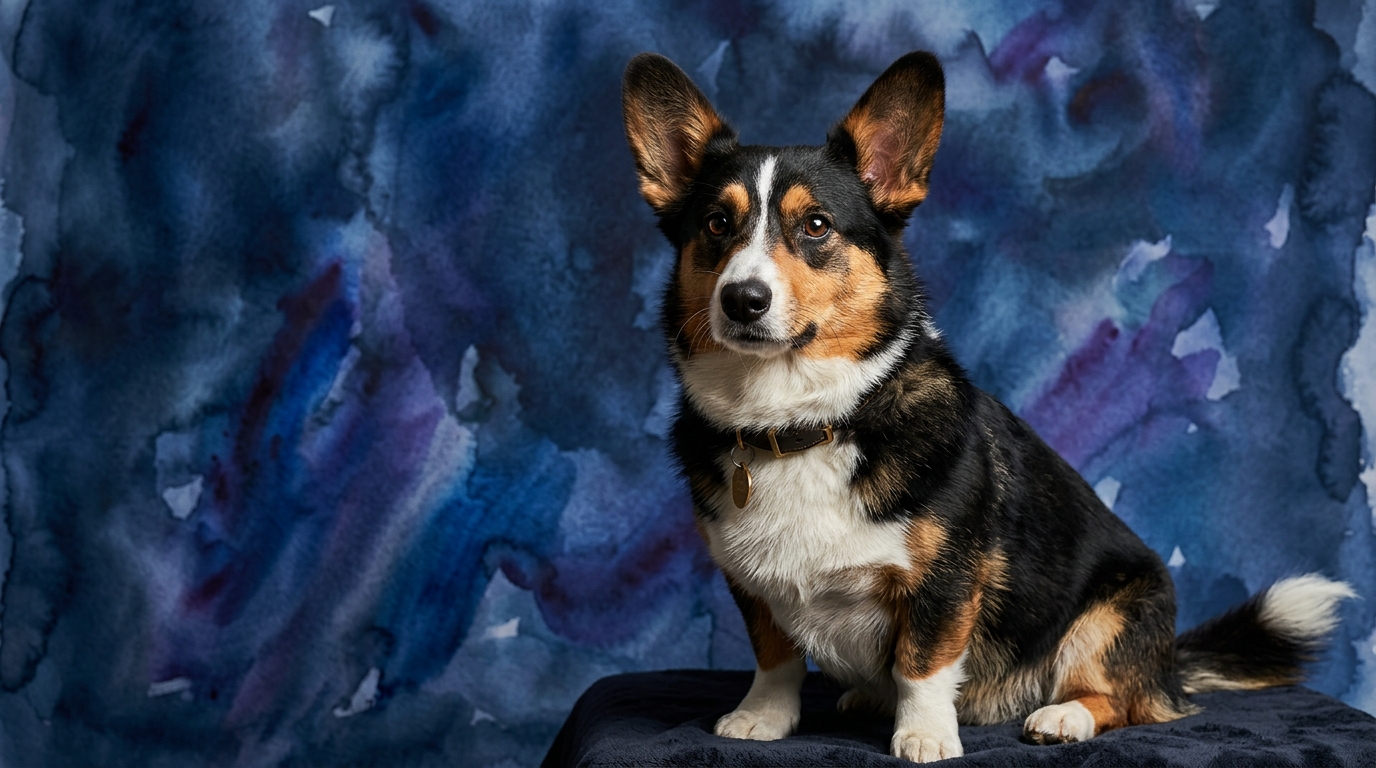
Side-by-Side IQ Profile: Boston Terrier vs. Cardigan Welsh Corgi
At The Cosmic Pet Pet IQ Lab, we delve into the nuanced cognitive architecture of various breeds, and the Boston Terrier and Cardigan Welsh Corgi present a compelling study in contrasts. The Boston Terrier, a Non-Sporting Group member with a Coren rank of #54, showcases a cognitive profile geared towards companionship and social harmony. Their Problem Solving is 3/5, indicating a capacity to learn routines and navigate familiar environments, though they might require more structured guidance for novel, complex challenges. Training Speed stands at 3/5; they respond well to consistent, positive reinforcement, yet mastering intricate sequences could necessitate more repetition. A significant strength lies in their Social Intelligence, scoring 4/5, highlighting their exceptional attunement to human emotions and subtle social cues, making them intuitive companions. Their Instinctive Drive is 2/5, meaning motivations are primarily directed towards interaction and play rather than complex, independent working tasks. Finally, Memory is 3/5, allowing them to retain learned commands and associations effectively, particularly when regularly reinforced.
In contrast, the Cardigan Welsh Corgi, a Herding Group member with a higher Coren rank of #26, exhibits a more task-oriented and adaptable intellect. Their Problem Solving capacity is notably higher at 4/5, demonstrating a strong aptitude for deciphering novel situations and creatively adapting strategies, a direct legacy of herding ancestry where quick, independent thinking was essential. Their Training Speed also rates 4/5, signifying an impressive ability to acquire new commands and behaviors with fewer repetitions, often displaying keen eagerness to learn. Social Intelligence for the Corgi is 3/5; while they engage well with humans, interactions can be more focused on task execution rather than purely emotional attunement, reflecting their working background. An Instinctive Drive of 3/5 means they possess a moderate to strong inherent motivation for purposeful activities, such as herding simulations or advanced obedience. Their Memory, at 4/5, is robust, enabling them to retain intricate learned tasks, long sequences, and environmental details, allowing them to build upon past experiences with remarkable efficiency.
Where the Boston Terrier Shines Cognitively
The Boston Terrier’s cognitive advantage distinctly resides in their superior Social Intelligence, scoring an impressive 4/5. This isn't merely about being affectionate; it's a specific, highly developed cognitive skill that allows them to perceive, interpret, and respond to the subtle emotional states and intentions of their human companions. They excel at reading body language, vocal inflections, and even anticipating needs before they are explicitly communicated, making them profoundly empathetic partners. This nuanced understanding enables them to integrate seamlessly into diverse family dynamics, providing comfort and companionship with an intuitive grace that few breeds can match. While their problem-solving and training speed are perfectly adequate for navigating household life, it is their capacity for deep social connection and emotional resonance that truly sets them apart. They thrive in environments where reciprocal emotional exchange is valued, offering a quiet, perceptive presence that enriches the human experience through profound social attunement rather than complex task execution.
Where the Cardigan Welsh Corgi Excels Intellectually
The Cardigan Welsh Corgi’s cognitive strengths are rooted in a suite of interconnected intellectual capabilities, notably their Problem Solving (4/5), Training Speed (4/5), and Memory (4/5). These dimensions combine to create a highly capable and adaptable learner. Their problem-solving prowess allows them to approach new challenges with an analytical mind, devising strategies to overcome obstacles, whether it's figuring out a complex puzzle toy or navigating a novel environment. This capacity for quick, strategic thinking is a direct inheritance from their herding lineage, where independent decision-making was crucial. Coupled with their impressive training speed, Corgis absorb new information and commands rapidly, often requiring fewer repetitions to solidify learning and generalize behaviors. Their robust memory further enhances this, enabling them to build an extensive repertoire of learned experiences and apply past knowledge to future situations with remarkable efficiency. This makes them exceptionally adept at advanced obedience, agility, and other mentally stimulating activities, thriving when given opportunities to engage their sharp intellect in purposeful tasks.
Training Dynamics: Which Breed Learns More Easily?
When considering ease of training, the Cardigan Welsh Corgi generally presents a more straightforward experience, largely attributable to their higher scores in Training Speed (4/5) and Problem Solving (4/5). They tend to grasp new concepts quickly and are often eager to engage in mentally stimulating activities, viewing training as an interesting challenge. However, their herding instincts and moderate instinctive drive (3/5) can sometimes translate into a strong will or independent streak, requiring consistent, fair leadership to channel their intelligence effectively. They might attempt to "herd" children or other pets, a specific behavioral difference needing early redirection. Boston Terriers, with a Training Speed of 3/5, still respond very well to positive reinforcement and consistency, but they might require more patience and repetition for complex sequences or generalizing behaviors. Their high social intelligence (4/5) makes them highly motivated by owner approval and the desire to please, which can be a powerful lever in training. Yet, their focus might waver if the task isn't sufficiently engaging or the reward isn't clear. For both breeds, early socialization and consistent, positive reinforcement methods are paramount, but the Corgi often progresses through advanced training stages with greater alacrity.
Matching Breeds to Lifestyles: Active vs. Relaxed Owners
The distinct cognitive profiles of these two breeds naturally align with different owner lifestyles. For those seeking a more relaxed companion, the Boston Terrier often proves ideal. Their moderate energy levels and exceptional social intelligence (4/5) mean they thrive on companionship and integration into daily household routines, rather than demanding constant, high-intensity mental or physical exertion. While they enjoy regular walks and play, their primary need is for social interaction and emotional closeness. They are content to share a quiet evening, fulfilling their role as affectionate, intuitive companions without requiring an endless stream of complex intellectual challenges beyond basic training and engaging interaction.
Conversely, the Cardigan Welsh Corgi is better suited for more active and engaged owners. Their higher scores in problem-solving (4/5), training speed (4/5), and a moderate instinctive drive (3/5) indicate a breed that benefits immensely from consistent mental and physical stimulation. Owners who enjoy teaching new tricks, participating in dog sports like agility or obedience, engaging in scent work, or providing a variety of puzzle toys will find the Corgi a highly rewarding and enthusiastic partner. Their compact size belies significant energy and a keen intellect that needs appropriate outlets. Without sufficient structured activities, a Corgi’s intelligence can lead to boredom or mischievous behaviors, making them less suited for a purely sedentary lifestyle.
The Verdict
Choose the Boston Terrier if you prioritize an exceptionally empathetic companion who thrives on social interaction and offers unwavering affection, content with moderate activity and a deep emotional bond.
Opt for the Cardigan Welsh Corgi if you're an active owner seeking a bright, quick-witted partner eager for mental challenges, advanced training, and engaging activities that tap into their problem-solving prowess.
🧠 Find Your Pet's IQ Score
Our Pet IQ Lab assessment covers 25+ tests across 5 cognitive dimensions — personalized to your breed.
Take the Full IQ Test →Frequently Asked Questions
Are Boston Terriers good with children?
Boston Terriers generally possess excellent social intelligence, making them patient and gentle companions for children who understand how to interact respectfully with dogs. Their affectionate nature means they often form strong bonds with family members, including the youngest.
Do Cardigan Welsh Corgis bark a lot?
Cardigan Welsh Corgis can be vocal, a trait stemming from their herding lineage where barking was used to move livestock and alert to threats. Consistent training from a young age can help manage excessive barking, but they will likely remain effective watchdogs.
What kind of mental stimulation do Cardigan Welsh Corgis need?
Due to their high problem-solving and memory scores, Cardigan Welsh Corgis thrive on activities like puzzle toys, advanced obedience training, agility courses, and even scent work. Providing varied mental challenges prevents boredom and channels their natural drive constructively.