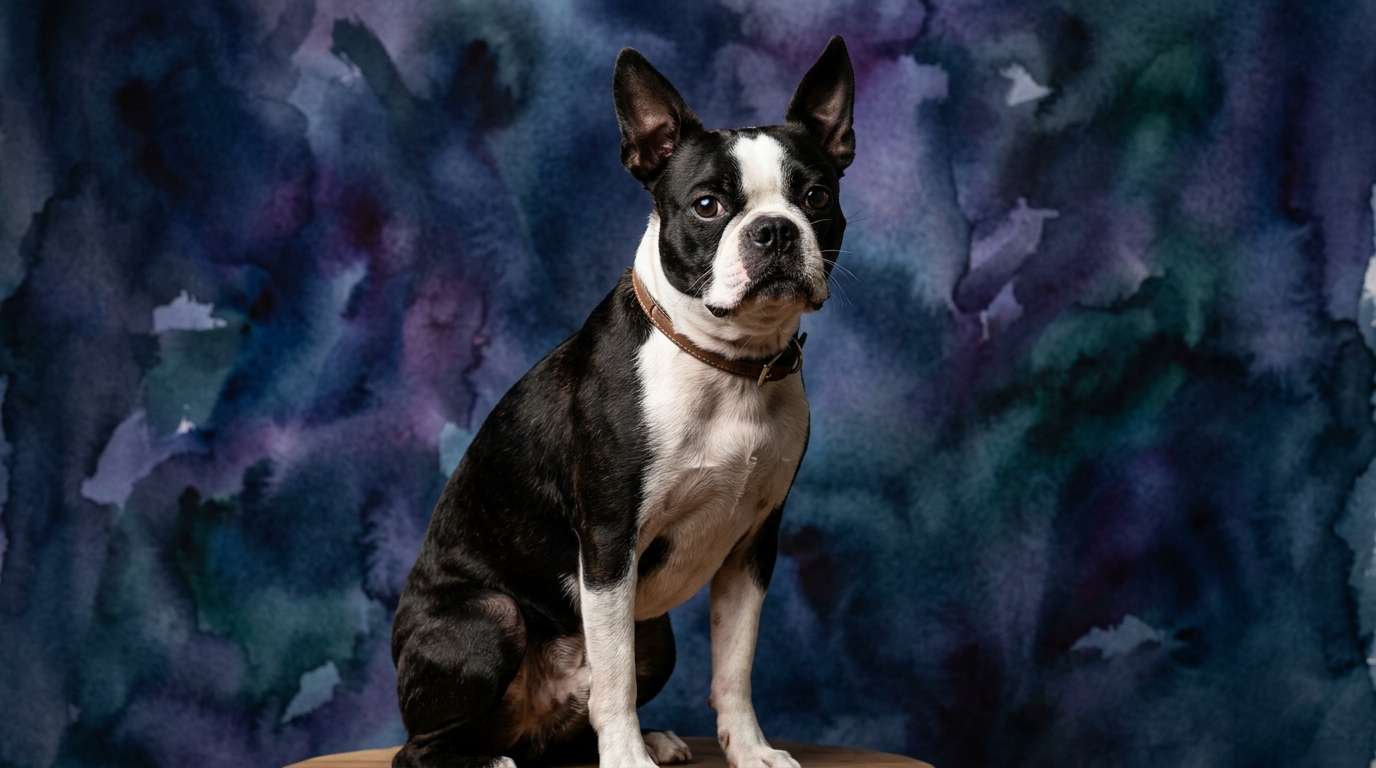
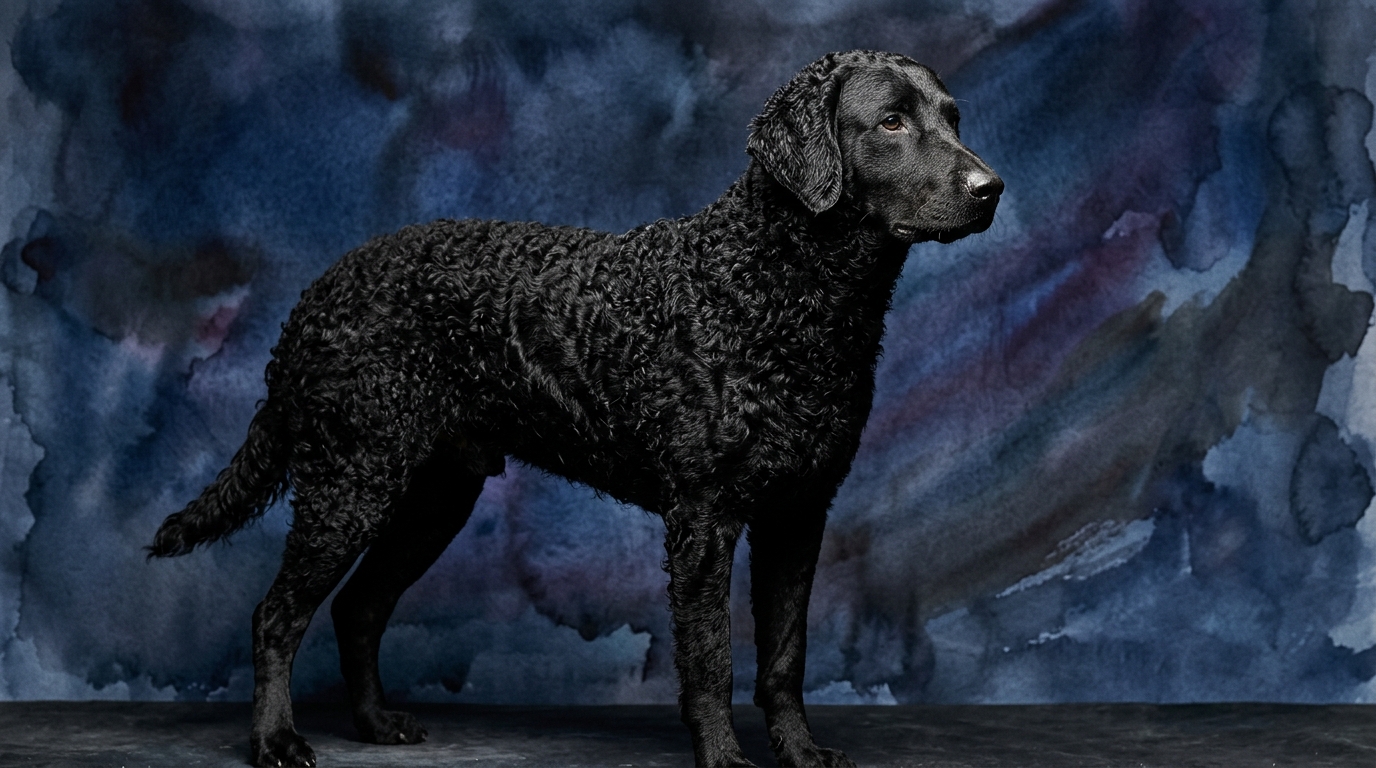
Side-by-Side IQ Profile
The Cosmic Pet Pet IQ Lab assesses canine intelligence across five crucial dimensions, offering a detailed lens into each breed's unique mental landscape. Understanding these scores helps us appreciate their inherent predispositions and capabilities.
For the **Boston Terrier (Coren Rank #54)**, their cognitive strengths are quite distinct. Their Problem Solving is rated 3/5, indicating a solid, practical ability to navigate moderate challenges, such as figuring out how to retrieve a toy from under furniture or learning the sequence to open a treat-dispensing puzzle. They often rely on observation and a steady application of learned behaviors rather than spontaneous innovation, showing thoughtful consideration for familiar problems. Their Training Speed is 3/5, meaning they absorb new commands and routines at a consistent pace, responding well to clear, positive reinforcement to integrate new behaviors. A standout trait is their Social Intelligence at 4/5; these dogs excel at deciphering human cues, emotional states, and the subtle dynamics within their family unit, often anticipating their owner's needs and offering comfort. Their Instinctive Drive is 2/5, reflecting relatively subdued natural urges for extensive hunting or guarding tasks, preferring human direction. Finally, their Memory is 3/5, allowing them to retain learned commands, familiar routes, and past interactions with reasonable clarity, without exceptional long-term recall for intricate sequences.
The **Curly-Coated Retriever (Coren Rank #41)** presents a different cognitive blueprint. Their Problem Solving also scores 3/5, demonstrating a robust, practical intellect for tackling challenges, especially those involving their environment or retrieving tasks. They show a steady capacity to figure out how to navigate obstacles or strategize during a scent game, applying learned skills effectively. Their Training Speed is 3/5, indicating they learn new lessons and commands at a consistent and reliable rate, responding well to structured methods that emphasize clarity. Their Social Intelligence is 3/5; while capable of forming deep bonds, their focus is often more on partnership in tasks rather than deciphering complex emotional nuances, prioritizing clear directives or games over subtle emotional attunement. A moderate Instinctive Drive of 3/5 means their inherent urges for retrieving, swimming, and working alongside a human are present, providing a natural internal motivation for purposeful activities. A significant cognitive asset is their Memory at 4/5; they demonstrate a superior capacity for remembering commands, intricate sequences, and past experiences, allowing them to recall complex multi-step routines and elaborate field patterns over extended periods.
Where Boston Terrier Wins Cognitively
The Boston Terrier's primary cognitive advantage lies in its exceptional Social Intelligence, scoring a notable 4/5 compared to the Curly-Coated Retriever's 3/5. This higher score isn't just about friendliness; it signifies a profound ability to understand and respond to human emotions and social cues. A Boston Terrier is often described as 'reading the room,' intuitively sensing when their person is happy, sad, or stressed, and adjusting their behavior accordingly. This acute sensitivity allows them to offer comfort during moments of distress or engage playfully when the mood is light.
This superior social cognition translates into a unique companionship experience. Boston Terriers are often highly attuned to their family's routines and expectations, making them remarkably cooperative housemates. They thrive on close interaction and can pick up on subtle non-verbal cues that other breeds might miss, fostering an exceptionally strong, empathetic bond. This makes them particularly well-suited for roles where emotional support and intuitive understanding are paramount, even without formal training. Their cognitive strength here is in their capacity for nuanced social engagement, making them highly responsive and emotionally intelligent companions in daily life.
Where Curly-Coated Retriever Wins Cognitively
The Curly-Coated Retriever shines with its superior Memory, scoring 4/5 against the Boston Terrier's 3/5, and a more pronounced Instinctive Drive at 3/5 compared to the Boston Terrier's 2/5. This combination creates a dog with remarkable capacity for retaining and executing complex, multi-step tasks over extended periods. Their excellent memory allows them to solidify intricate training sequences, remember specific locations, and recall detailed instructions with impressive accuracy, making them highly reliable for advanced obedience, field work, or competitive dog sports.
Coupled with their moderate instinctive drive, particularly for retrieving and working, the Curly-Coated Retriever possesses an internal motivation to engage in purposeful activities. This drive, combined with a strong memory, means they not only remember *what* to do but are also inherently inclined to follow through with sustained focus. They excel in environments where consistent application of learned skills and the recall of complex patterns are valued, demonstrating a cognitive prowess that makes them adept at tasks requiring both mental and physical endurance. Their ability to remember intricate sequences and apply them with purpose is a significant cognitive advantage for active, goal-oriented pursuits.
Which is Easier to Train and Why
Both the Boston Terrier and the Curly-Coated Retriever share a Training Speed score of 3/5, suggesting they learn new commands at a consistent, average pace. However, the *ease* of training can differ significantly based on their other cognitive strengths and motivations. For the Boston Terrier, their high Social Intelligence (4/5) often makes them highly motivated by pleasing their human. They are keen observers of human expectations and respond well to relationship-based training, where the bond and social interaction serve as powerful motivators. This means they might pick up on subtle nuances in training faster due to their desire for connection, even if the sheer rate of learning new commands is average. However, their lower Instinctive Drive (2/5) might mean they lack the inherent motivation for repetitive or physically demanding training sessions if not socially engaged, potentially leading to boredom if the training isn't interactive.
The Curly-Coated Retriever, with its superior Memory (4/5) and moderate Instinctive Drive (3/5), offers a different training dynamic. While their social intelligence is average (3/5), they excel at solidifying complex training sequences and recalling them reliably. Their inherent drive provides an internal motivation for work, especially retrieving or active tasks, making them receptive to task-oriented training. They might require more purpose-driven rewards or clear goals rather than solely social appeasement. Therefore, while both breeds learn at a similar pace, the Boston Terrier might feel 'easier' for owners who prioritize a responsive, relationship-driven approach, while the Curly-Coated Retriever might be 'easier' for those focused on teaching complex, multi-step tasks that leverage their memory and drive for work.
Which Suits Active Owners vs. Relaxed Owners
When considering lifestyle compatibility, the cognitive profiles of these two breeds offer clear distinctions. The Curly-Coated Retriever, originating from the Sporting group, is unequivocally better suited for active owners. Their moderate Instinctive Drive (3/5) means they thrive on engagement, physical activity, and tasks that challenge both their physical stamina and their superior Memory (4/5). They are natural partners for long hikes, retrieving games, swimming, dog sports like agility or obedience, and any activity that provides a 'job.' An owner who cannot provide consistent mental and physical stimulation might find a Curly-Coated Retriever restless, bored, and potentially prone to finding their own (often undesirable) outlets for their energy and problem-solving abilities.
Conversely, the Boston Terrier, a member of the Non-Sporting group, is an ideal match for more relaxed owners. Their lower Instinctive Drive (2/5) and high Social Intelligence (4/5) mean they are generally content with moderate exercise and thrive on companionship and indoor activities more than strenuous outdoor work. While they certainly enjoy walks and play, their cognitive strengths lean towards being a devoted, attentive house companion who finds satisfaction in close proximity to their family. They don't typically require a 'job' in the same way a retriever does, preferring to engage socially and be an integral part of family life, making them highly adaptable to various living situations, including apartment life, provided they receive regular interaction and moderate activity.
The Verdict
Choose the Boston Terrier if you seek an emotionally attuned companion who thrives on close social interaction and moderate activity, excelling at reading your moods and offering comfort.
Opt for the Curly-Coated Retriever if you are an active individual or family seeking a capable, task-oriented partner for outdoor adventures, dog sports, or complex training, valuing strong recall and purpose.
🧠 Find Your Pet's IQ Score
Our Pet IQ Lab assessment covers 25+ tests across 5 cognitive dimensions — personalized to your breed.
Take the Full IQ Test →Frequently Asked Questions
Are Boston Terriers good at puzzle toys?
With a Problem Solving score of 3/5, Boston Terriers generally enjoy and can manage puzzle toys of moderate difficulty. Their social nature might mean they prefer to solve them with human interaction, but they possess the cognitive capacity for such challenges.
How does a Curly-Coated Retriever's memory benefit its training?
The Curly-Coated Retriever's superior memory (4/5) means they can retain complex sequences of commands and learned behaviors over long periods. This makes them excellent candidates for advanced obedience, field work, and remembering intricate routines.
Which breed is more adaptable to different living situations?
The Boston Terrier, with its strong social intelligence and lower instinctive drive, tends to be more adaptable to various living situations, including apartment life, as long as it receives adequate companionship and moderate exercise. The Curly-Coated Retriever's higher drive requires more consistent physical and mental engagement, making them better suited for active environments.