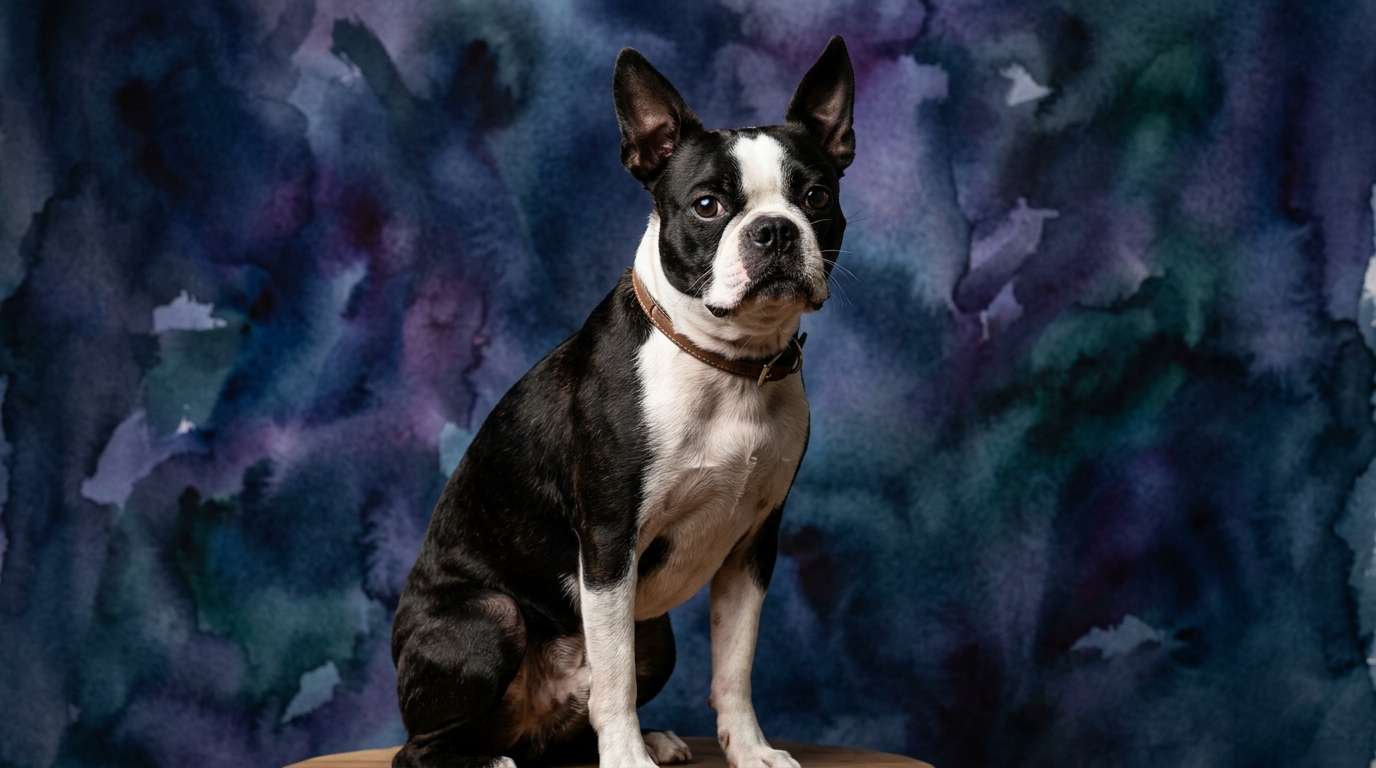

Side-by-Side IQ Profile: Boston Terrier vs. Dandie Dinmont Terrier
At The Cosmic Pet's IQ Lab, we delve into five key dimensions of canine intelligence to provide a nuanced understanding of each breed. For the Boston Terrier, a Non-Sporting breed, its cognitive blueprint highlights a moderate Problem Solving ability (3/5), where they navigate novel situations effectively, often through learned patterns. Their Training Speed is also moderate (3/5), indicating they pick up commands at an average pace, aided by their willingness to engage. A standout trait is their high Social Intelligence (4/5), reflecting exceptional attunement to human cues and strong empathetic bonding. Their Instinctive Drive is relatively low (2/5), making them more companion-oriented, and their Memory registers as average (3/5), supporting consistent behavior.
The Dandie Dinmont Terrier, a member of the Terrier group, shares a similar Problem Solving score (3/5), often employing persistence and terrier ingenuity to overcome obstacles, especially if a reward is anticipated. Their Training Speed also stands at a moderate 3/5, though their independent spirit can sometimes require more patient approaches. Social Intelligence for the Dandie is solid (3/5), allowing them to understand human moods and form close bonds, albeit with a touch more independence. Their Instinctive Drive is notably higher (3/5) than the Boston's, reflecting their strong heritage for digging, tracking, and pursuit. Finally, their Memory is also rated as average (3/5), enabling them to retain commands and routines effectively.
Where the Boston Terrier Wins Cognitively
The Boston Terrier's clear advantage lies in its elevated Social Intelligence (4/5 versus the Dandie's 3/5), indicating a superior innate capacity for understanding and responding to human emotional states, body language, and vocal inflections. A Boston is often described as 'in tune' with its owner, displaying a remarkable ability to gauge moods and react accordingly, whether offering comfort or initiating play. This social acumen makes them exceptionally adaptable and highly motivated by human interaction, thriving on being part of the family unit. Their cognitive strength makes the Boston Terrier a quintessential companion, adept at navigating the complex social world of humans with grace and intuition, fostering deep, emotionally resonant relationships.
Where the Dandie Dinmont Terrier Wins Cognitively
The Dandie Dinmont Terrier exhibits a distinct cognitive edge in its Instinctive Drive (3/5 versus the Boston's 2/5), reflecting its deep-rooted terrier heritage where innate behaviors like hunting, digging, and exploration are more pronounced. This moderate drive means Dandies are inherently more motivated to engage with their environment, follow scents, and investigate potential 'prey.' While their overall problem-solving is similar, it's often underpinned by this persistent, instinct-driven approach, especially when a task involves seeking or manipulating objects. This stronger drive translates into a dog that is often more self-directed and tenacious, offering a stimulating companion for owners who appreciate a dog with clear purpose and spirited engagement with its surroundings.
Which is Easier to Train and Why
While both breeds share a 'Training Speed' rating of 3/5, suggesting they learn at an average pace, the underlying cognitive profiles hint at different training experiences. The Boston Terrier's superior Social Intelligence (4/5) often makes it *feel* easier to train for many owners. Bostons are highly attuned to human feedback and eager to please, meaning they are more likely to offer desired behaviors and respond promptly to cues because they value the social reward of owner approval and interaction. Their lower instinctive drive also means fewer distractions from independent pursuits like chasing or digging, allowing for more focused attention during sessions.
In contrast, the Dandie Dinmont Terrier's moderate training speed is often tempered by its stronger Instinctive Drive (3/5). While capable learners, Dandies can be more independent and occasionally stubborn, driven by their inherent desire to explore or follow a scent. This means training a Dandie may require more patience, creativity, and consistent effort to make sessions engaging enough to compete with their natural urges. Owners might need to work harder to maintain a Dandie's focus, using high-value rewards and varied exercises to channel their terrier tenacity into desired behaviors.
Which Suits Active Owners vs. Relaxed Owners
For relaxed owners seeking a devoted and adaptable companion, the Boston Terrier often presents an ideal match. Their lower Instinctive Drive (2/5) means they are generally content with moderate daily exercise, such as walks or indoor play, rather than requiring extensive outdoor adventures. Their high Social Intelligence (4/5) further enhances this suitability, as they thrive on human companionship and are typically happy to settle down for cuddles or quiet time indoors, making them excellent apartment dwellers or companions for those with a less strenuous lifestyle.
Conversely, the Dandie Dinmont Terrier, with its more pronounced Instinctive Drive (3/5), is better suited for owners who enjoy a moderately active lifestyle and are keen to engage with a dog's natural terrier behaviors. While not requiring extreme athleticism, Dandies benefit greatly from opportunities to explore, dig in a designated area, or participate in scent work. Their independent streak and curiosity mean they appreciate owners who can provide consistent mental and physical stimulation, whether through varied walks, puzzle toys, or structured play that allows them to 'work.'
The Verdict
Choose the Boston Terrier if you prioritize a highly socially intelligent companion eager to please and easily integrated into a relaxed family life, thriving on close human connection. They excel in understanding your cues and settling into a less demanding routine.
Opt for the Dandie Dinmont Terrier if you appreciate a spirited, tenacious companion with a stronger independent streak, ready for moderate activity that engages their natural instincts. They offer a rewarding partnership for owners who enjoy channeling a terrier's drive.
🧠 Find Your Pet's IQ Score
Our Pet IQ Lab assessment covers 25+ tests across 5 cognitive dimensions — personalized to your breed.
Take the Full IQ Test →Frequently Asked Questions
Does the Boston Terrier's higher social intelligence make it easier to live with?
Generally, yes. Their superior ability to read human cues and strong desire for companionship often translates into a dog that is more adaptable to household routines and more intuitive about owner expectations, fostering a harmonious living environment. They tend to be very responsive to their family's moods and needs.
How does the Dandie Dinmont Terrier's instinctive drive manifest in daily life?
The Dandie's moderate instinctive drive often appears as a keen interest in digging, tracking scents, and playfully 'hunting' small toys or perceived critters. Owners might observe them investigating every rustle in the bushes or attempting to excavate a soft spot in the yard, requiring outlets for these natural behaviors. Providing appropriate channels like designated digging spots or scent games is beneficial.
Are either of these breeds recommended for first-time dog owners based on their IQ profiles?
Both breeds can be suitable for first-time owners, though with different considerations. The Boston Terrier's high social intelligence and eagerness to please make them quite forgiving and responsive to new owners. The Dandie Dinmont Terrier's independent streak and instinctive drives mean a first-time owner should be prepared for consistent, positive training and providing outlets for their terrier nature, potentially seeking guidance to channel their tenacity effectively.