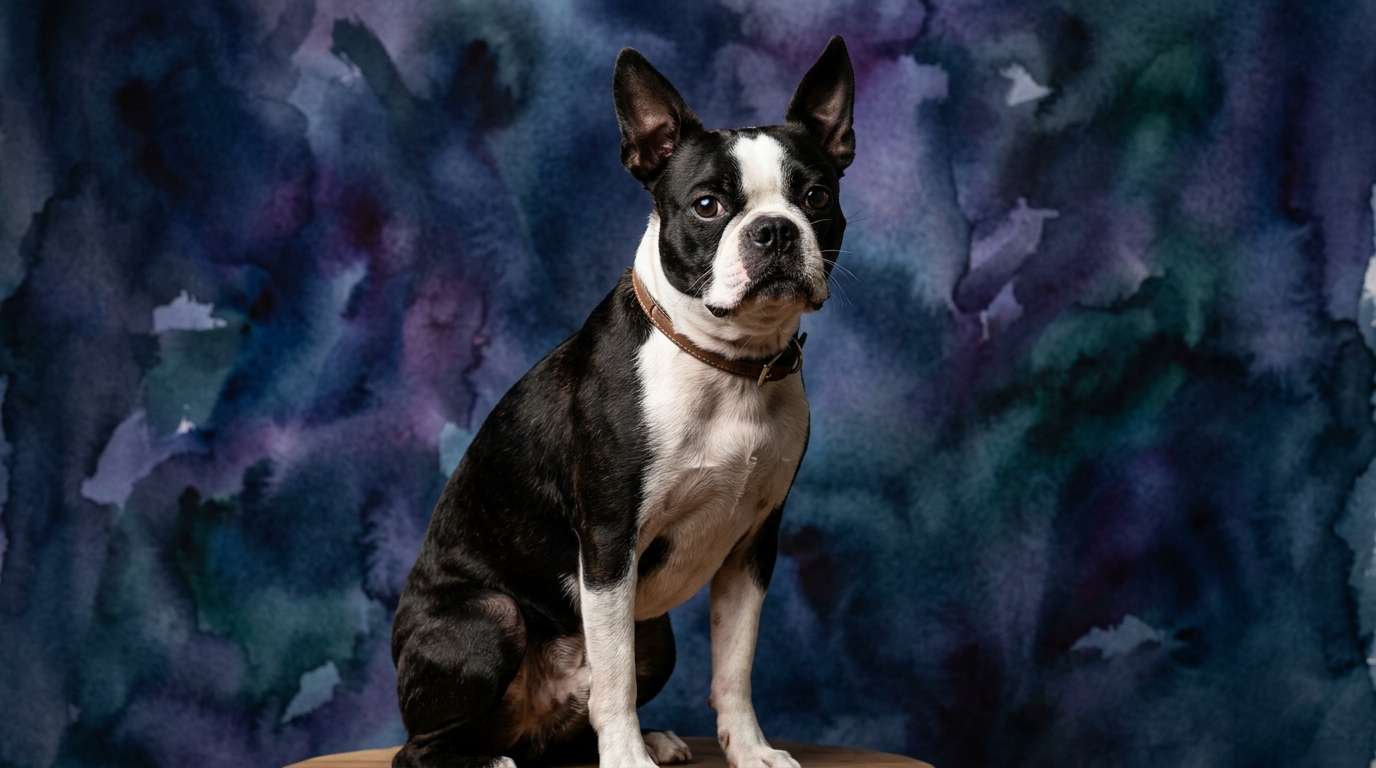
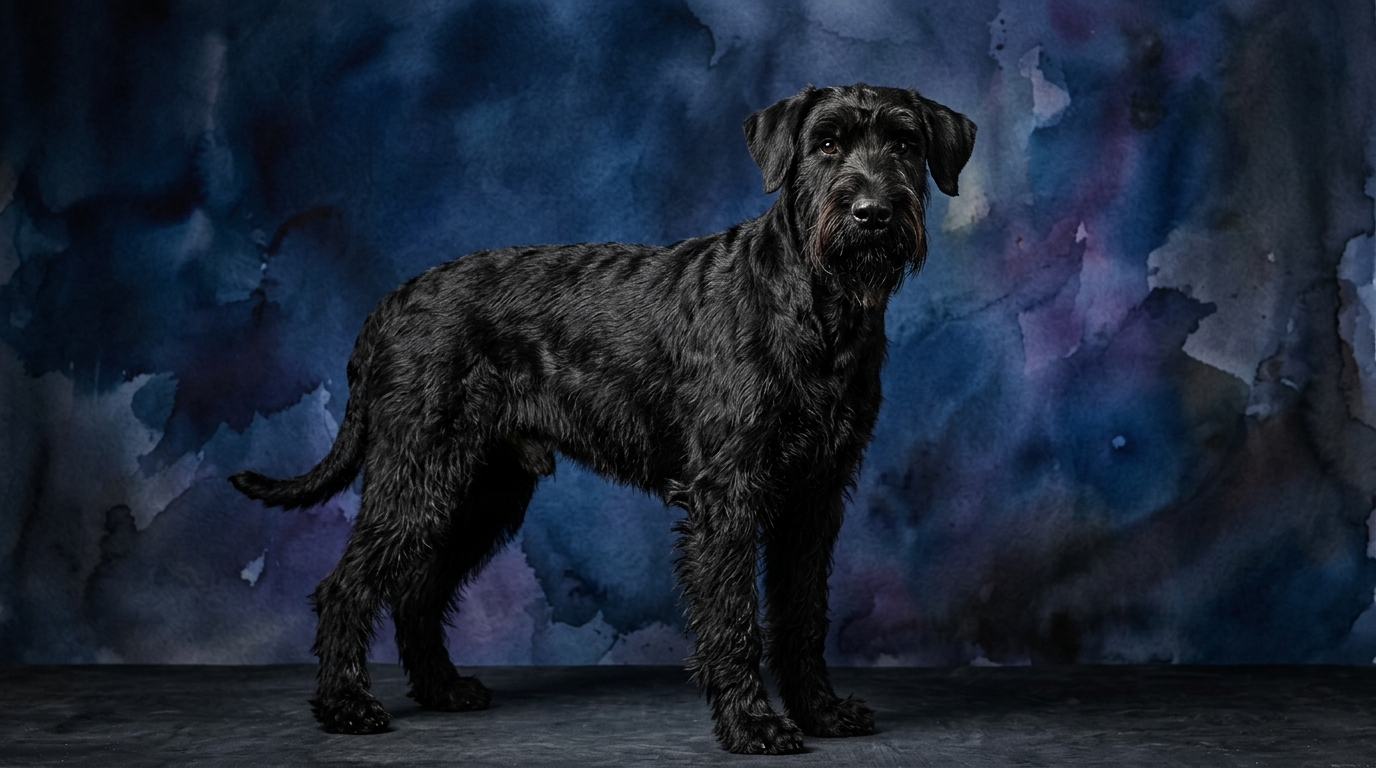
Side-by-Side IQ Profile: Boston Terrier vs. Giant Schnauzer
The Cosmic Pet Pet IQ Lab employs a five-dimensional framework to assess canine intelligence, moving beyond simple obedience to encompass problem-solving, training speed, social intelligence, instinctive drive, and memory. For the Boston Terrier, a member of the Non-Sporting group, and the Giant Schnauzer, from the Working group, these dimensions paint distinct cognitive portraits.
The Boston Terrier, ranking #54 in Coren's intelligence scale, presents a balanced profile. Their Problem Solving is rated 3/5, indicating a capacity for navigating moderately complex situations, perhaps figuring out how to get to a favorite toy, but not necessarily devising intricate strategies. Training Speed also scores 3/5, meaning they are responsive to instruction and can learn new commands at a steady pace, though they may require consistent repetition. Where Boston Terriers truly shine is in Social Intelligence, earning a 4/5; they are adept at reading human cues, understanding household dynamics, and forming deep, intuitive bonds with their families. Their Instinctive Drive is 2/5, suggesting a lower inclination for independent 'work' or strong prey drive, making them more focused on companionship. Finally, their Memory is 3/5, indicating a solid ability to recall learned behaviors and experiences.
In contrast, the Giant Schnauzer, a Working breed with a Coren rank of #28, exhibits a profile geared towards utility and structured tasks. Their Problem Solving capability is 4/5, reflecting a strong aptitude for analyzing situations and independently finding solutions, whether it's navigating complex agility courses or understanding multi-step commands. Training Speed is also 4/5, demonstrating a rapid uptake of new commands and a keen desire to engage in structured learning, making them highly receptive students. Social Intelligence for the Giant Schnauzer is 3/5; while they form strong bonds, their primary focus might be less on subtle emotional attunement and more on their role or task within the family unit. Their Instinctive Drive is 3/5, a moderate score that speaks to their heritage in guarding and herding, providing a foundation for purposeful activity. A Memory score of 4/5 means they retain information and training exceptionally well, building a robust internal library of experiences.
Where the Boston Terrier Cognitively Excels
The Boston Terrier's standout cognitive strength lies in their exceptional Social Intelligence, scoring 4/5. This isn't just about being friendly; it's a sophisticated ability to interpret human emotions, body language, and subtle vocal cues. They often seem to anticipate their owner's moods and desires, making them remarkably empathetic and adaptable companions within a family setting. Their talent for seamlessly integrating into diverse household routines and understanding complex social dynamics sets them apart.
Furthermore, their lower Instinctive Drive (2/5) can be a cognitive advantage in a domestic context. Unlike breeds with strong working instincts that may require extensive outlets for herding or guarding, Boston Terriers are generally less inclined to act on independent drives that could conflict with family life. This cognitive predisposition allows them to focus their mental energy more intensely on social interaction and companionship, making them highly present and responsive family members rather than dogs constantly seeking a 'job'.
Where the Giant Schnauzer Cognitively Prevails
The Giant Schnauzer demonstrates clear cognitive advantages across several dimensions, particularly in Problem Solving (4/5) and Training Speed (4/5). Their higher problem-solving capacity means they are more likely to analyze novel situations and devise effective strategies, whether it's figuring out how to open a gate or understanding the sequence of actions required for a complex trick. This makes them exceptional candidates for advanced obedience, protection work, or competitive dog sports where independent thought and strategic action are valued.
Their superior Training Speed allows them to absorb and integrate new commands with remarkable efficiency, often requiring fewer repetitions than many other breeds. Coupled with their strong Memory (4/5), this means lessons learned are retained for extended periods, building a deep foundation of knowledge and skills. This cognitive resilience makes them highly reliable in performing complex tasks and executing commands even after long breaks. Their moderate Instinctive Drive (3/5) also provides a natural inclination towards structured activity and purpose, which, when channeled through training, becomes a powerful cognitive asset for focused learning and task completion.
Ease of Training: Behavioral Differences
When considering ease of training, the Giant Schnauzer generally presents a more straightforward path for owners seeking a highly obedient and task-oriented dog. Their higher Training Speed (4/5) and Memory (4/5) mean they pick up commands quickly and retain them well, often thriving on the mental challenge of learning. Their moderate Instinctive Drive (3/5) can be effectively channeled into structured activities like obedience, agility, or protection work, where their natural focus and desire for purpose are rewarded. They respond well to clear, consistent instruction and often possess a strong work ethic, making them highly motivated students.
The Boston Terrier, with a Training Speed of 3/5 and Memory of 3/5, is certainly trainable but may require a different approach. They can learn a wide array of commands, but might need more consistent positive reinforcement and patience to solidify behaviors. Their lower Instinctive Drive (2/5) means they might not be as inherently motivated by 'work' or complex tasks; instead, their motivation often stems from their strong Social Intelligence (4/5) and desire to please their human companions. Training a Boston Terrier often benefits from making it a fun, interactive social experience, leveraging their desire for connection rather than relying on a strong inherent drive for structured work. Owners might find that while a Boston Terrier understands what is asked, their performance can be more dependent on their mood or the immediate social reward.
Matching Canine Cognition to Owner Lifestyles
For the active owner who thrives on engagement, structured activities, and a canine partner eager for mental challenges, the Giant Schnauzer is an exceptional fit. Their superior problem-solving abilities, rapid training speed, and excellent memory mean they excel in dog sports like agility, obedience trials, or even roles requiring advanced training such as search and rescue or protection work. These dogs benefit immensely from owners who can provide consistent mental stimulation, engage in regular training sessions, and channel their inherent drive into purposeful activities. An owner who enjoys a partnership in learning and performance will find the Giant Schnauzer's cognitive profile deeply rewarding.
Conversely, the Boston Terrier is ideally suited for the more relaxed owner seeking a devoted, socially intelligent companion. Their moderate problem-solving and training speed mean they can certainly learn, but they don't demand constant, intense mental challenges. Their high social intelligence allows them to seamlessly integrate into a family's daily rhythms, finding joy in companionship, cuddles, and moderate play. These dogs are content with regular walks, interactive games, and being an integral part of family life, rather than needing a 'job' to feel fulfilled. Owners who appreciate a sensitive, adaptable, and emotionally attuned presence will find the Boston Terrier's cognitive makeup perfectly aligned with a less demanding, yet deeply connected, lifestyle.
The Verdict
Choose the Boston Terrier if you prioritize a highly social, adaptable, and emotionally intuitive companion who thrives on close family interaction and a less demanding mental workload.
Opt for the Giant Schnauzer if you desire a sharp, trainable, and task-oriented partner eager for complex challenges, structured training, and an active lifestyle focused on purposeful engagement.
🧠 Find Your Pet's IQ Score
Our Pet IQ Lab assessment covers 25+ tests across 5 cognitive dimensions — personalized to your breed.
Take the Full IQ Test →Frequently Asked Questions
Do Boston Terriers and Giant Schnauzers require different types of mental stimulation?
Yes, their cognitive profiles suggest different needs. Boston Terriers benefit from social interaction, puzzle toys that aren't overly complex, and interactive games that foster connection. Giant Schnauzers thrive on advanced training exercises, complex problem-solving tasks, and activities that challenge their strong memory and learning speed, such as dog sports or advanced obedience.
Which breed is better for first-time dog owners based on intelligence?
The Boston Terrier might be a more forgiving choice for first-time owners due to their higher social intelligence and lower instinctive drive, making them generally easier to integrate into a family without intense training demands. The Giant Schnauzer's cognitive strengths require an owner dedicated to consistent, structured training and mental engagement, which can be a significant commitment for a novice.
How does social intelligence impact daily life with these breeds?
A Boston Terrier's high social intelligence means they are often highly attuned to family dynamics and human emotions, making them sensitive and adaptable companions. A Giant Schnauzer's moderate social intelligence, combined with higher problem-solving and drive, means they might be more independent and task-focused, relating to their family through shared activities and a clear sense of purpose rather than constant emotional mirroring.