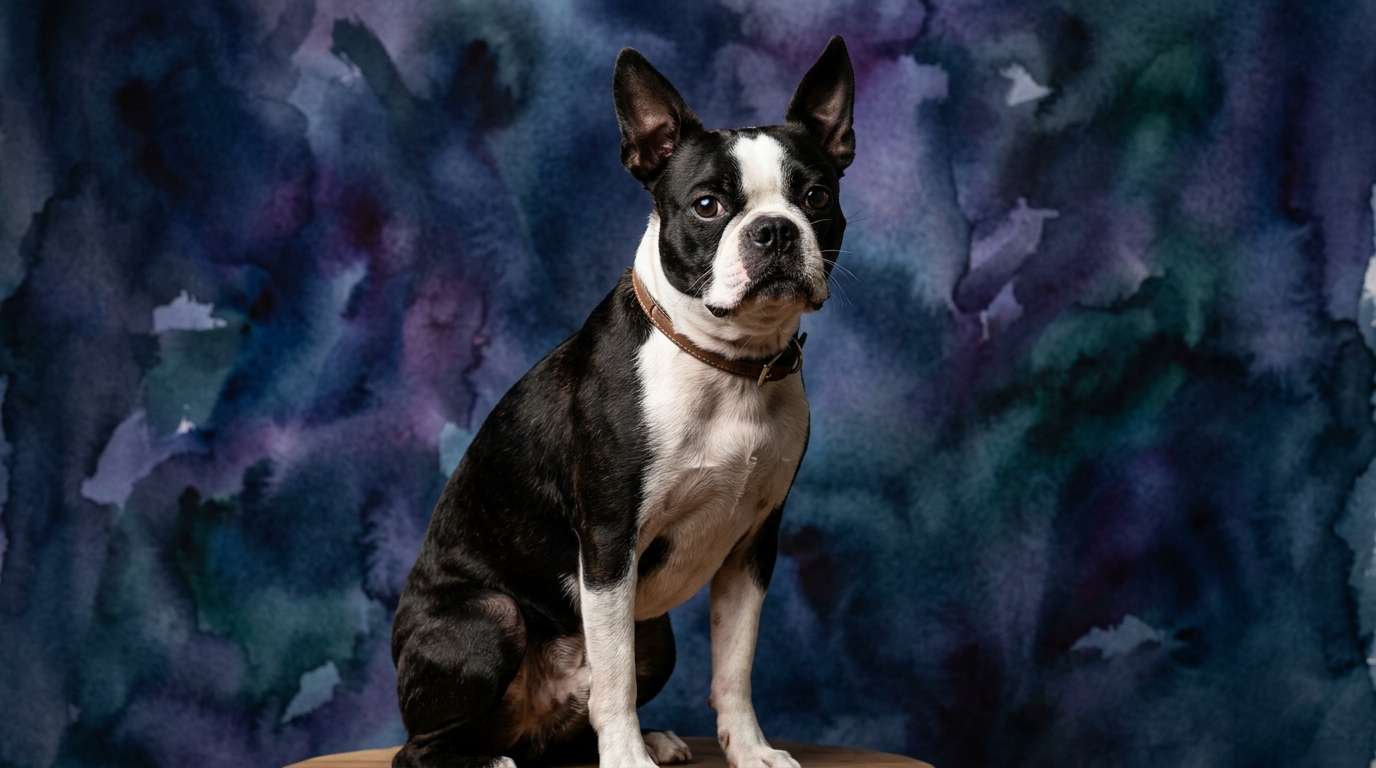
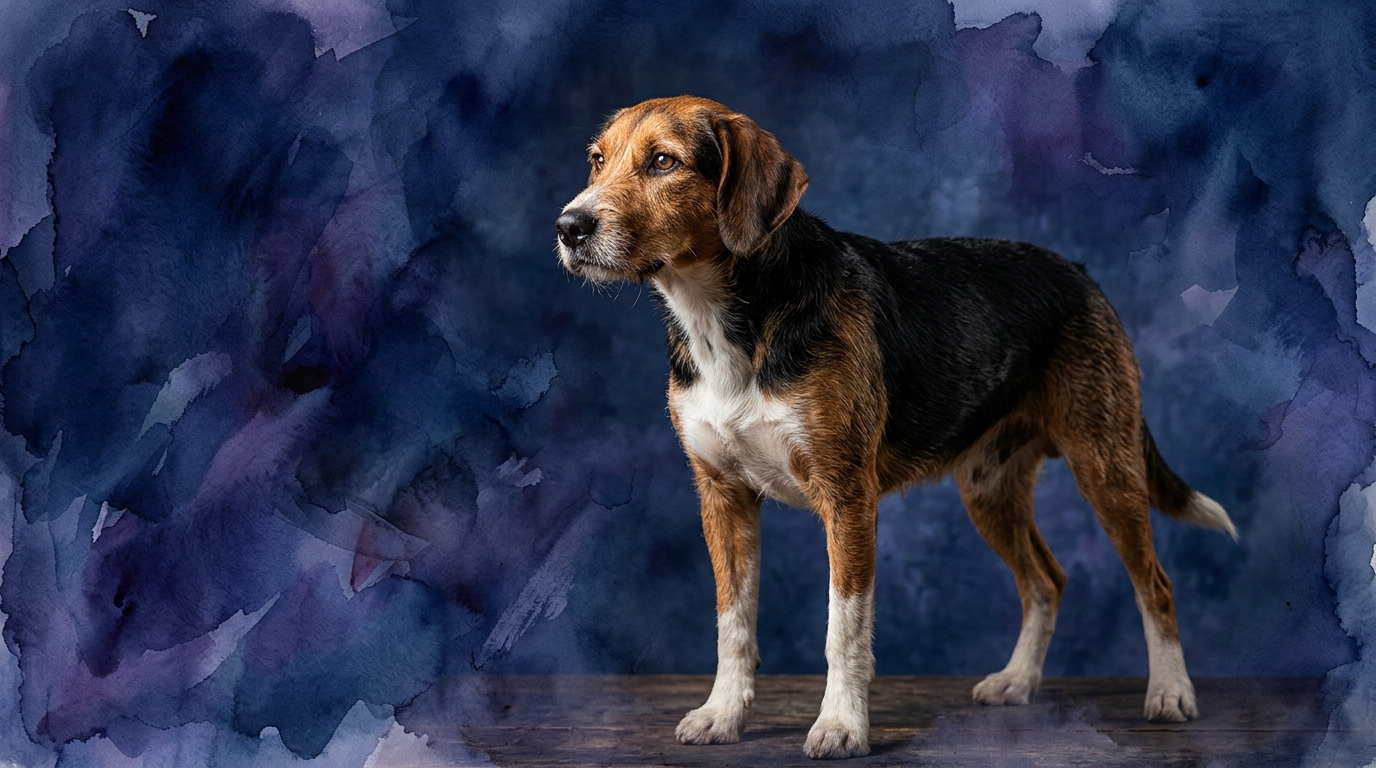
Side-by-Side IQ Profile
The Cosmic Pet Pet IQ Lab employs a multi-dimensional approach to evaluating canine intelligence, encompassing a holistic view of cognitive function beyond simple obedience. For the Boston Terrier, a Non-Sporting Group member, their Coren rank of #54 indicates a solid capacity for learning. Their Problem Solving score of 3/5 reflects an aptitude for navigating common household challenges, like manipulating toys for rewards. Training Speed, also 3/5, suggests they learn new commands and routines at a moderate pace, thriving on consistency. The Boston Terrier truly shines in Social Intelligence, scoring 4/5; they are highly attuned to human emotions and social cues, often anticipating moods. Their Instinctive Drive, at 2/5, is relatively low, meaning a reduced propensity for chasing, making them generally content domestically. Memory, rated 3/5, allows them to retain a good repertoire of commands and routines.
The Harrier, a robust Hound breed, lacks a Coren ranking, underscoring its working scent hound role where traditional metrics might not fully capture its strengths. Their Problem Solving ability, 3/5, is channeled through incredible olfactory senses; they excel at unraveling scent puzzles and tracking intricate trails. Training Speed, rated 3/5, indicates they learn commands, but their focus can be significantly influenced by environmental distractions, especially compelling scents. Social Intelligence, at 3/5, reflects their pack-oriented nature; they form strong bonds but exhibit a more independent social demeanor compared to the Boston Terrier. Their Instinctive Drive is a notable 3/5, driven by a powerful scenting ability and an innate desire to track. Memory, also 3/5, is exceptional for retaining complex scent patterns and recalling commands relevant to working tasks.
Where the Boston Terrier Wins Cognitively
The Boston Terrier's cognitive strengths distinctly align with their companion role, giving them an edge in areas crucial for harmonious domestic life. Their superior Social Intelligence (4/5 vs. Harrier's 3/5) means a remarkable capacity for interpreting human emotions and intentions. This sensitivity allows them to form exceptionally deep, empathetic connections, often appearing to understand their owner's moods without verbal cues. This heightened social awareness makes them incredibly responsive to human interaction and inclined to seek close proximity. Furthermore, their lower Instinctive Drive (2/5) is a cognitive advantage in a home environment; it translates to less distraction from external stimuli like squirrels, making them generally more focused on human companions and less prone to independent pursuits. This profile makes Boston Terriers more easily integrated into varied family dynamics and urban living.
Where the Harrier Wins Cognitively
The Harrier’s cognitive architecture is a testament to its specialized breeding as a tireless scent hound, excelling in dimensions critical for its historical purpose. Their robust Instinctive Drive (3/5) is a profound cognitive advantage for tasks requiring endurance, focused sensory input, and independent problem-solving outdoors. This drive fuels their relentless pursuit of scent trails, allowing them to maintain concentration for extended periods through challenging terrain. While their Problem Solving is 3/5, the *nature* differs; Harriers excel at complex spatial reasoning related to tracking, like deducing a quarry's path or navigating obstacles while maintaining a scent. Their pack-oriented Social Intelligence (3/5) equips them with the ability to cooperate effectively within a group for a common goal, making them adept at working alongside other dogs or handlers in field activities.
Which is Easier to Train and Why
When considering ease of training in a typical pet home, the Boston Terrier generally presents a more straightforward experience due to their cognitive leanings. Their higher Social Intelligence means they are inherently more motivated to please their human companions and are more receptive to direct instruction. They pick up on subtle cues and respond well to positive reinforcement, eager to engage in training sessions as social interaction. Their lower Instinctive Drive means fewer internal distractions; a Boston Terrier is less likely to abandon a "stay" command due to a captivating scent. This makes house training, leash manners, and basic obedience often quicker to establish and more reliably executed.
Conversely, while Harriers also score 3/5 in Training Speed, their strong Instinctive Drive and independent pack-oriented social intelligence can make training more challenging. A Harrier's nose is a powerful cognitive tool, constantly processing information, and a compelling scent can easily override focus on human commands. Training a Harrier requires understanding their hound nature, employing high-value rewards, consistent repetition, and incorporating their natural tracking abilities. They may learn commands, but execution can be conditional on the absence of more stimulating environmental factors. Owners must be prepared to work *with* their instincts, making training a more involved process.
Which Suits Active Owners vs Relaxed Owners
The cognitive and behavioral profiles of these two breeds clearly delineate their suitability for different owner lifestyles. The Boston Terrier, with its moderate exercise needs and high social intelligence, is an ideal fit for more relaxed owners or those living in urban environments. Their lower instinctive drive means they are generally content with shorter walks, indoor play, and significant cuddle time. They thrive on human companionship and are typically less demanding physically, making them excellent apartment dwellers. Their cognitive focus is on interaction and comfort within the home, requiring mental stimulation primarily through games involving their human family.
The Harrier is unequivocally suited for active owners who can meet their substantial physical and mental stimulation requirements. Their robust instinctive drive and capacity for endurance mean they need vigorous, extended outdoor activity, ideally engaging their powerful sense of smell. Owners who enjoy hiking, running, or dog sports like tracking and agility will find a Harrier a willing and enthusiastic partner. Their cognitive satisfaction comes from engaging their natural abilities, requiring owners to provide outlets for their strong scent drive and need for exploration. A relaxed owner attempting to integrate a Harrier into a sedentary lifestyle would likely face challenges.
The Verdict
Choose the Boston Terrier if you prioritize a highly socially intelligent companion who thrives on close human interaction, adapts well to varied home environments, and requires moderate physical activity.
Choose the Harrier if you lead an active outdoor lifestyle, can provide extensive opportunities for vigorous exercise and scent work, and appreciate a dog with a robust, independent working drive.
🧠 Find Your Pet's IQ Score
Our Pet IQ Lab assessment covers 25+ tests across 5 cognitive dimensions — personalized to your breed.
Take the Full IQ Test →Frequently Asked Questions
Is a Boston Terrier prone to wandering if off-leash?
A Boston Terrier's lower instinctive drive means they are generally less prone to wandering off to follow scents compared to a Harrier, making them potentially more reliable off-leash in secure areas, though supervision is always advised.
Can a Harrier live in an apartment?
While a Harrier can technically live in an apartment, their strong instinctive drive and high energy levels demand significant daily exercise and mental stimulation, making it challenging without a dedicated, active owner providing ample outdoor time.
Which breed is better with children?
Both breeds can be good with children; however, the Boston Terrier's higher social intelligence and lower instinctive drive often make them more attuned to a child's temperament and less likely to accidentally bowl over a small child in pursuit of a scent.