Side-by-Side Cognitive Profiles
The Cosmic Pet Pet IQ Lab employs five key dimensions to evaluate a breed's cognitive capabilities, providing a nuanced understanding beyond simple obedience. Let's examine how the Boston Terrier and Irish Terrier stack up across these critical areas.
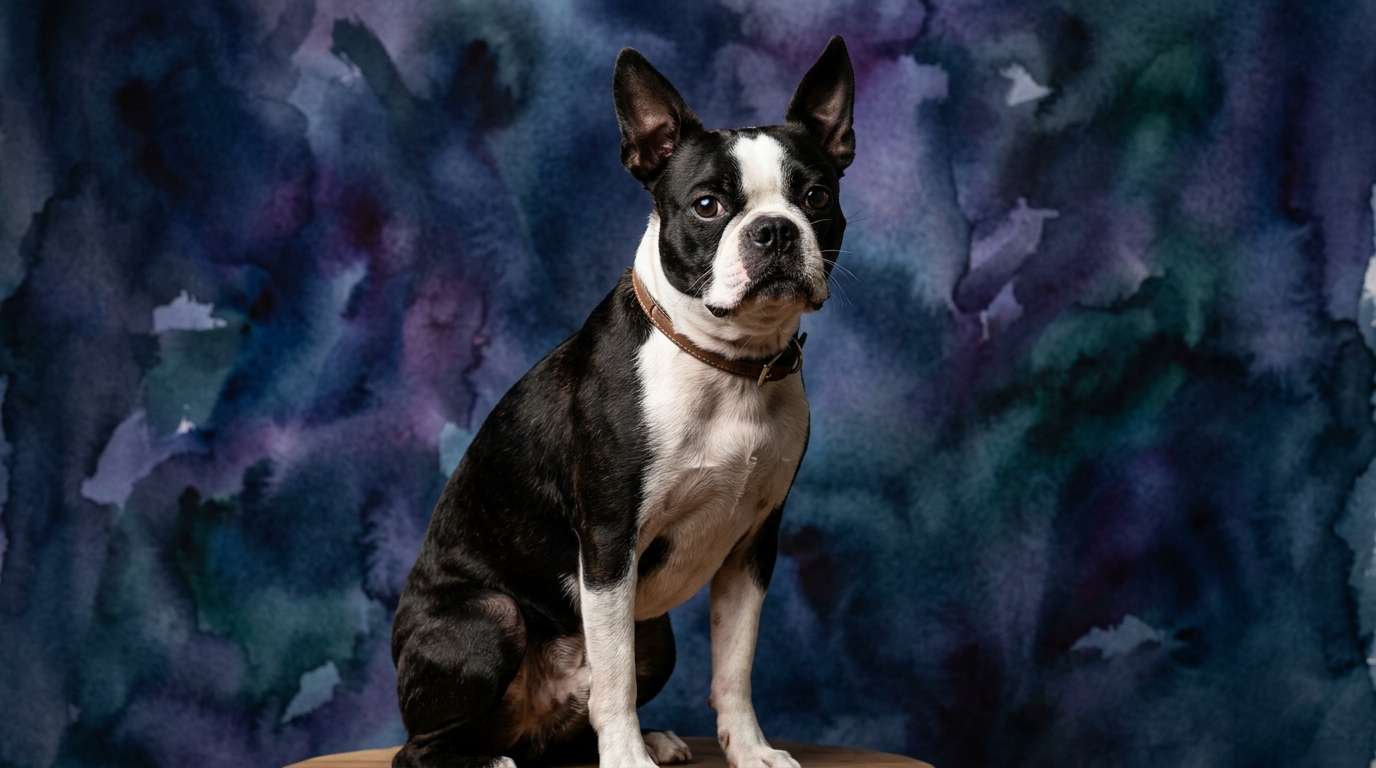
The Boston Terrier, a Non-Sporting breed with a Coren ranking of #54, showcases a balanced yet socially oriented cognitive profile. Their Problem Solving is rated 3/5, indicating an ability to navigate moderately complex tasks and learn routines effectively. Training Speed also stands at 3/5, suggesting a steady learning pace responsive to consistent methods. A standout feature is their Social Intelligence at 4/5, reflecting a deep attunement to human cues and family dynamics. Their Instinctive Drive is lower at 2/5, aligning with their companion heritage, while Memory is a solid 3/5, enabling them to retain commands and experiences.
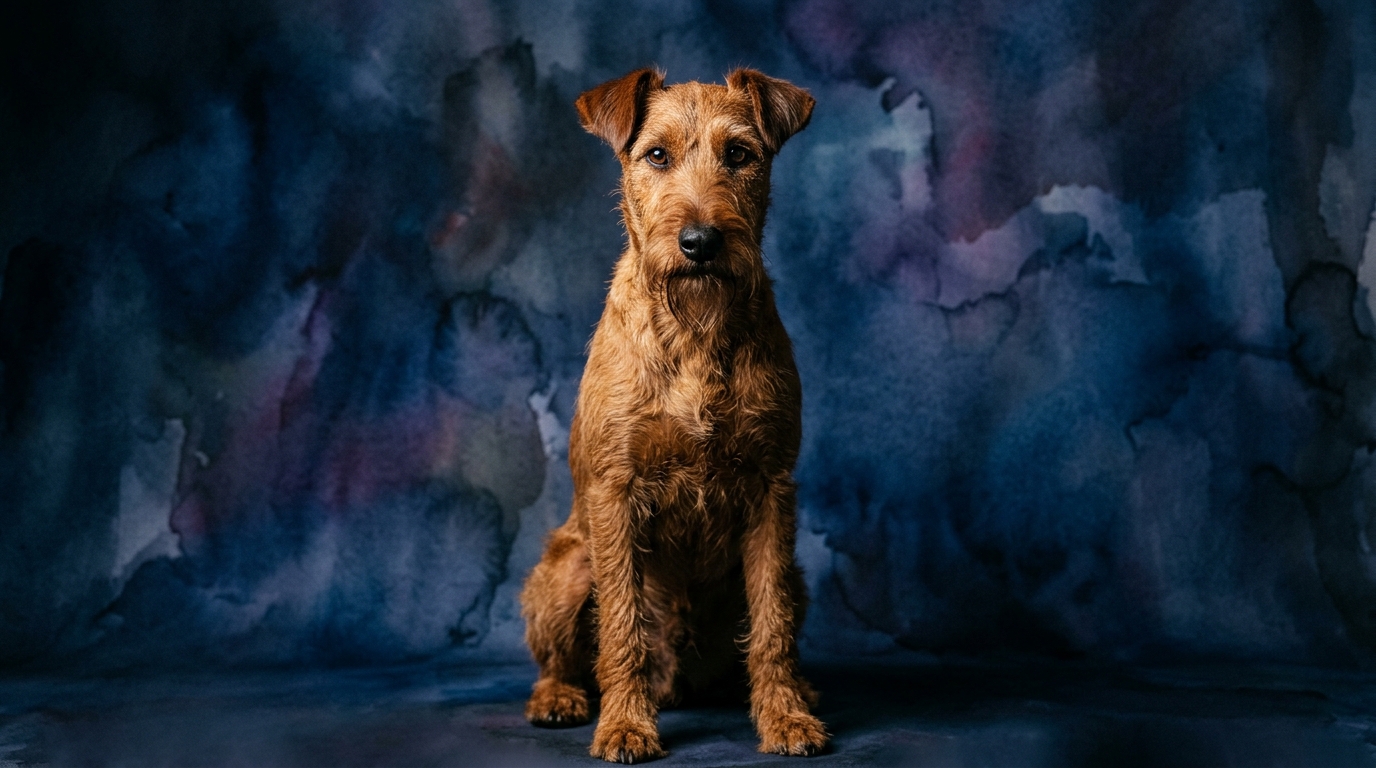
In contrast, the Irish Terrier, a robust member of the Terrier group without a Coren ranking, presents a profile rooted in their working lineage. Their Problem Solving capability is also 3/5, often fueled by tenacity, and their Training Speed matches at 3/5, though often requiring more engaging approaches. Social Intelligence for the Irish Terrier is 3/5, indicating strong family bonds but a slightly more independent nature compared to the Boston. A notable difference is their Instinctive Drive, rated 3/5, reflecting their natural inclination for chasing, digging, and exploration. Like the Boston, their Memory is scored 3/5, ensuring they retain learned behaviors and past interactions.
Where the Boston Terrier Excels Cognitively
The Boston Terrier’s primary cognitive advantage lies in its exceptional Social Intelligence, scoring 4/5 compared to the Irish Terrier's 3/5. This dimension signifies a profound ability to interpret human emotions, body language, and subtle social cues. Boston Terriers are often described as being deeply 'in tune' with their owners, anticipating needs and responding empathetically. This heightened social awareness makes them incredibly responsive companions, often seeking to be involved in family activities and demonstrating a clear desire for connection. They might pick up on a change in an owner's mood without a single word being spoken, offering comfort or seeking interaction accordingly.
Another area where the Boston Terrier's cognitive makeup offers a distinct advantage, particularly in a domestic context, is their lower Instinctive Drive (2/5 compared to 3/5 for the Irish Terrier). While not a 'win' in terms of raw intellectual power, this lower drive means less cognitive energy is dedicated to managing strong primal urges like hunting, digging, or intense territoriality. This translates to a dog that is generally less distracted by external environmental stimuli related to prey or independent exploration, making them more present and focused on human interaction within a structured home environment. Their minds are less preoccupied with instinctual tasks, allowing for greater attentiveness to their human family.
Where the Irish Terrier Shines Cognitively
The Irish Terrier's cognitive strengths are deeply intertwined with their heritage as a working terrier, particularly reflected in their Instinctive Drive (3/5 vs. the Boston's 2/5). This higher drive indicates a cognitive framework geared towards independent action, persistence, and engaging with the environment in a purposeful way. This manifests as a strong will and a determined approach to tasks, whether it's solving a puzzle toy or pursuing a scent. Their minds are wired for exploration and activity, which, when channeled appropriately, makes them formidable partners in dog sports or activities that require tenacity and self-motivation. They possess an inherent curiosity and a robust drive to interact with their surroundings.
While both breeds share a 3/5 rating in Problem Solving, the Irish Terrier's approach is often distinguished by their intrinsic terrier determination. Their higher instinctive drive fuels a more persistent and sometimes more independent engagement with challenges. They are less likely to give up on a task once committed, often employing various strategies through trial and error until they achieve their objective. This isn't necessarily about finding faster solutions, but rather about a robust, self-motivated engagement with cognitive challenges, demonstrating a relentless spirit in their pursuit of understanding or achieving a goal.
Training Amenability: Boston vs. Irish Terrier
Both the Boston Terrier and Irish Terrier score 3/5 in Training Speed, but their inherent behavioral differences significantly shape the training experience. The Boston Terrier's higher Social Intelligence (4/5) and lower Instinctive Drive (2/5) generally make them more amenable to training in a typical domestic setting. They are often eager to please their human companions, responding well to positive reinforcement and consistent methods. Their responsiveness to social cues means they frequently pick up on what their owner desires faster, and their innate desire for connection makes them cooperative learners. They thrive on clear communication and consistent praise, becoming well-mannered and integrated family members.
Conversely, while the Irish Terrier also learns at a consistent pace (3/5 Training Speed), their training journey can be more nuanced due to their higher Instinctive Drive (3/5) and slightly lower Social Intelligence (3/5). Their independent terrier spirit means they can exhibit a strong will and require a trainer who understands how to motivate a dog that isn't always driven solely by a desire to please. Training sessions need to be engaging, varied, and challenging to harness their problem-solving skills and provide outlets for their natural drives. Consistency, patience, and a firm but fair approach are paramount to navigating their independent streak and fostering a strong working relationship. They are not difficult to train, but demand a more nuanced and stimulating approach.
Suitability for Active vs. Relaxed Owners
The cognitive and physical profiles of these two breeds offer clear guidance for owner lifestyles. The Boston Terrier, with its moderate energy levels and lower Instinctive Drive, is an excellent match for more relaxed owners or those in urban environments. They enjoy daily walks and engaging playtime but are equally content to settle down for a quiet evening on the sofa. Their high Social Intelligence means they thrive on being an integrated part of family activities, regardless of the intensity. They don't demand constant vigorous mental or physical stimulation, making them highly adaptable to a less rigorous daily schedule and suitable for apartment living.
The Irish Terrier, however, with its higher Instinctive Drive and robust energy levels, is better suited for active owners who can provide consistent outlets for their vitality. They require regular, vigorous exercise and substantial mental stimulation to prevent boredom and the redirection of their drives into unwanted behaviors. Owners who enjoy activities like hiking, running, competitive dog sports (such as agility, earthdog trials, or obedience), or who have a large, securely fenced yard will find the Irish Terrier a willing and energetic partner. They need a 'job' or consistent engagement to feel fulfilled and content, making them less suited for purely sedentary lifestyles.
The Verdict
If you prioritize a sensitive, highly social companion deeply attuned to family dynamics and content with a more relaxed pace of life, the Boston Terrier is an excellent choice.
Opt for the Irish Terrier if you are an active owner seeking a tenacious, spirited partner for outdoor adventures and dog sports, and are prepared to engage with a dog that possesses a strong, independent will.
🧠 Find Your Pet's IQ Score
Our Pet IQ Lab assessment covers 25+ tests across 5 cognitive dimensions — personalized to your breed.
Take the Full IQ Test →Frequently Asked Questions
Are Boston Terriers good with children?
Yes, their high social intelligence and gentle nature often make them excellent family dogs, especially with respectful children. They generally enjoy interaction and can adapt well to a bustling household, often forming strong bonds with younger family members.
Do Irish Terriers require extensive grooming?
Irish Terriers have a wiry coat that requires regular brushing and hand-stripping a few times a year to maintain its texture and health. This process removes dead hair and keeps their skin healthy, preventing matting and promoting their characteristic appearance.
Which breed is more prone to separation anxiety?
Given their higher social intelligence and desire for companionship, Boston Terriers might be slightly more prone to developing separation anxiety if left alone for extended periods. Irish Terriers, while affectionate, tend to be a bit more independent, which can sometimes make them more resilient to solitude, though no dog should be left isolated for too long.