
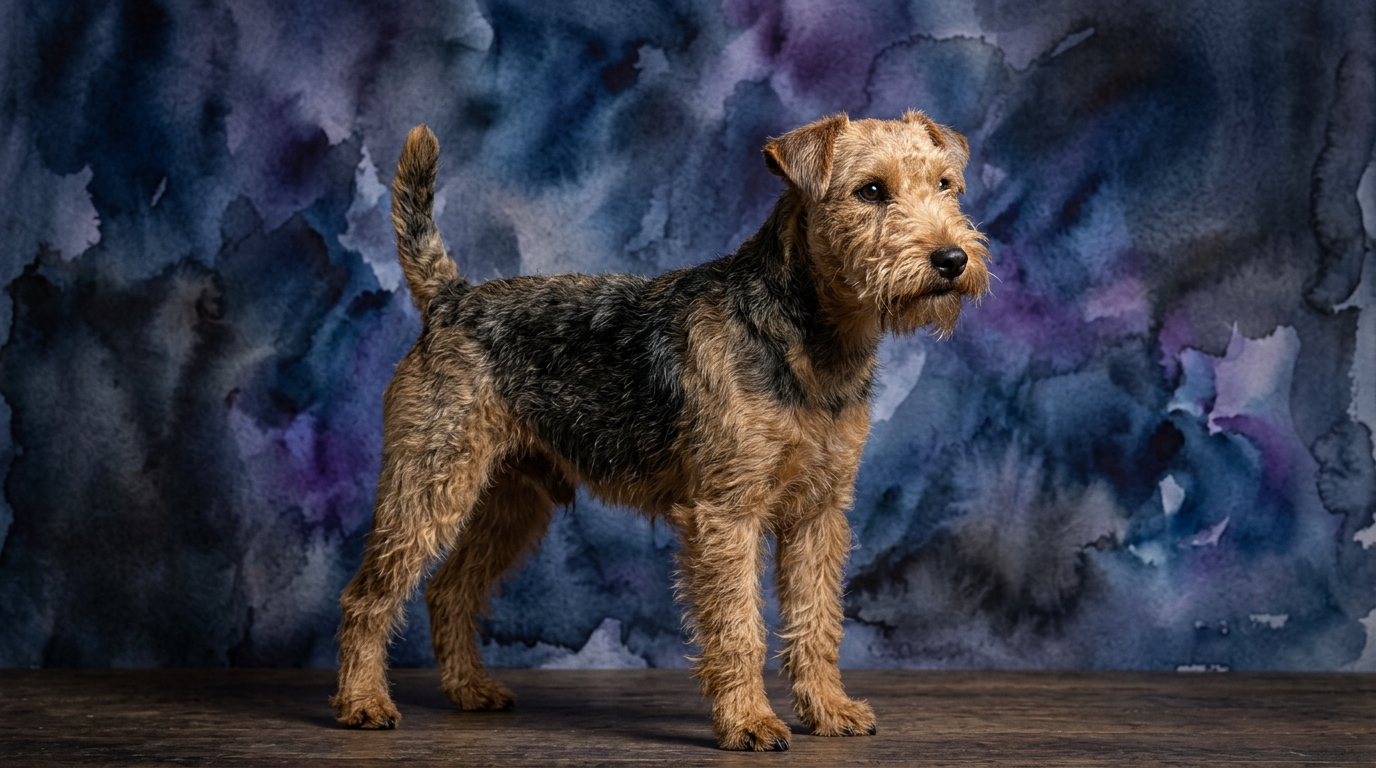
Side-by-Side IQ Profile: Boston Terrier vs. Lakeland Terrier
At The Cosmic Pet Pet IQ Lab, we analyze canine intelligence across five key dimensions, providing a granular view of each breed's cognitive architecture. Understanding these profiles helps prospective owners align their lifestyle with a dog's inherent abilities and needs.
The **Boston Terrier**, a Non-Sporting Group member, holds a Coren rank of #54, indicating a respectable position among breeds for overall trainability and working intelligence. Their IQ profile is marked by: **Problem Solving (3/5)**, suggesting a moderate capacity for navigating novel situations and devising solutions, adapting well to new environments but not necessarily seeking out complex challenges independently. **Training Speed (3/5)** indicates they learn new commands and routines at a reasonable pace, receptive to consistent positive reinforcement. Their standout feature is **Social Intelligence (4/5)**, reflecting a high aptitude for understanding human cues, moods, and social structures, making them exceptionally attuned companions who excel at forming deep bonds. **Instinctive Drive (2/5)** is lower, meaning they are less compelled by innate urges like hunting or intense exploration, generally content in a home environment. Finally, **Memory (3/5)** signifies a reliable ability to recall learned commands, routines, and experiences over time.
The **Lakeland Terrier**, a member of the Terrier Group, is not Coren-ranked, which often points to cognitive strengths that lie outside traditional obedience metrics, emphasizing their independent working nature. Their IQ profile presents with: **Problem Solving (3/5)**, similar to the Boston, but often manifesting in practical ways, such as finding routes or overcoming obstacles to achieve a goal, a reflection of their independent working heritage. **Training Speed (3/5)** means they also learn new behaviors at a moderate pace, though their independent spirit often requires engaging their intrinsic motivation for training to be most effective. **Social Intelligence (3/5)** is moderate; they form strong bonds but tend to be more self-reliant than Boston Terriers, less overtly seeking human approval and more confident in their own decisions within social contexts. Their notable trait is **Instinctive Drive (3/5)**, a moderate but persistent drive rooted in their historical role as vermin hunters, translating to an inherent desire to explore, dig, and pursue. Their **Memory (3/5)** is sound, supporting their ability to learn and their capacity for independent action and recall of past experiences.
Where the Boston Terrier Wins Cognitively
The Boston Terrier's clear cognitive advantage lies in their superior Social Intelligence, scoring 4/5 compared to the Lakeland Terrier's 3/5. This translates into a profound ability to interpret human intentions, emotional states, and subtle body language, making them exceptionally attuned companions. A Boston is more likely to anticipate a handler’s next move, respond empathetically to a shift in tone, or adjust their behavior based on the family's mood, fostering a truly seamless household integration.
This heightened social acumen also enhances their cooperative learning. While both breeds share a 3/5 Training Speed, the Boston’s stronger social drive means they are often more intrinsically motivated by human praise and connection, making them more willing participants in training sessions focused on companionship and shared activity. They actively seek to engage with their people, often initiating interaction and demonstrating a clear desire to be part of the family's daily rhythm, a trait that lessens the need for constant external motivation.
Where the Lakeland Terrier Wins Cognitively
The Lakeland Terrier exhibits a distinct cognitive edge in its Instinctive Drive, rated 3/5 compared to the Boston Terrier's 2/5. This higher score reflects a robust internal motivation for exploration, pursuit, and independent action, a legacy of their heritage as working terriers. A Lakeland is more likely to exhibit sustained focus on a task, such as tracking a scent or digging purposefully, even without direct human intervention.
This pronounced drive also influences their problem-solving in a practical, self-directed manner. While both breeds score 3/5 for Problem Solving, the Lakeland's higher instinctive drive often translates into a more persistent and independent approach to overcoming physical obstacles or achieving self-motivated goals. They possess a tenacious spirit that fuels their determination to achieve what they set out to do, whether it's navigating a complex backyard or figuring out how to retrieve a toy from a tight spot, showcasing a resilient and self-reliant cognitive style.
Which is Easier to Train and Why
While both breeds share a 3/5 Training Speed, the Boston Terrier is generally perceived as easier to train, primarily due to their superior Social Intelligence (4/5) and lower Instinctive Drive (2/5). A Boston Terrier's strong desire to engage with and please their human companions means they are often more attentive during training sessions, readily seeking feedback and responding positively to praise and connection. Their reduced innate drive to pursue independent activities minimizes distractions, allowing them to focus more intently on the tasks presented by their handler.
Conversely, the Lakeland Terrier's 3/5 Instinctive Drive can present a more significant training challenge. Their natural inclination to independently explore, chase, or dig means they may be more easily distracted by environmental stimuli or their own internal motivations. While capable of learning, their training often requires a more creative approach that channels their drive into desired behaviors, potentially through engaging games or tasks that mimic their natural instincts, rather than relying solely on social rewards. An owner must understand and work with this inherent tenacity, rather than against it, to achieve consistent results.
Which Suits Active Owners vs. Relaxed Owners
For active owners seeking a partner for adventure and purposeful engagement, the Lakeland Terrier is often the more suitable choice. Their 3/5 Instinctive Drive and inherent tenacity mean they thrive on regular physical activity and mental stimulation that taps into their working heritage. Activities like hiking, agility, earthdog trials, or extended sessions of vigorous play are not just appreciated but often necessary to keep a Lakeland content and prevent boredom-induced behaviors. Their independent spirit means they enjoy exploring and problem-solving on their own terms, making them excellent companions for those who enjoy outdoor pursuits.
Relaxed owners, or those seeking a more adaptable companion for a calmer home environment, will likely find the Boston Terrier a better fit. Their lower Instinctive Drive (2/5) combined with their high Social Intelligence (4/5) means they are content with moderate daily walks and extensive social interaction within the home. Boston Terriers are typically happy to curl up on the couch, participate in gentle indoor games, and simply be near their human family. Their strong desire for companionship makes them ideal for individuals or families who prioritize shared quiet moments and social connection over intense physical demands.
The Verdict
Opt for the Boston Terrier if you prioritize a highly socially intelligent companion who thrives on close connection and adapts seamlessly to a relaxed home environment, requiring moderate exercise and consistent positive social interaction.
Select the Lakeland Terrier if you are an active owner prepared to channel a tenacious, driven spirit into purposeful activities and appreciate an independent problem-solver with a moderate need for physical and mental engagement.
🧠 Find Your Pet's IQ Score
Our Pet IQ Lab assessment covers 25+ tests across 5 cognitive dimensions — personalized to your breed.
Take the Full IQ Test →Frequently Asked Questions
Do Boston Terriers get along well with other pets?
With their 4/5 Social Intelligence, Boston Terriers generally adapt well to living with other pets, especially when properly socialized from a young age. Their cooperative nature helps them integrate into multi-pet households, often forming friendly bonds.
Are Lakeland Terriers good with children?
Lakeland Terriers, with their 3/5 Social Intelligence and 3/5 Instinctive Drive, can be good with respectful children, particularly if raised with them. Their tenacity means they appreciate play, but supervision is key to ensure interactions are positive and their independent nature is understood.
What kind of mental stimulation do Lakeland Terriers need?
Due to their 3/5 Problem Solving and 3/5 Instinctive Drive, Lakeland Terriers benefit greatly from activities that engage their independent thinking and natural urges. Puzzle toys, scent work, training for tricks, and structured exploration opportunities are excellent for their cognitive well-being.