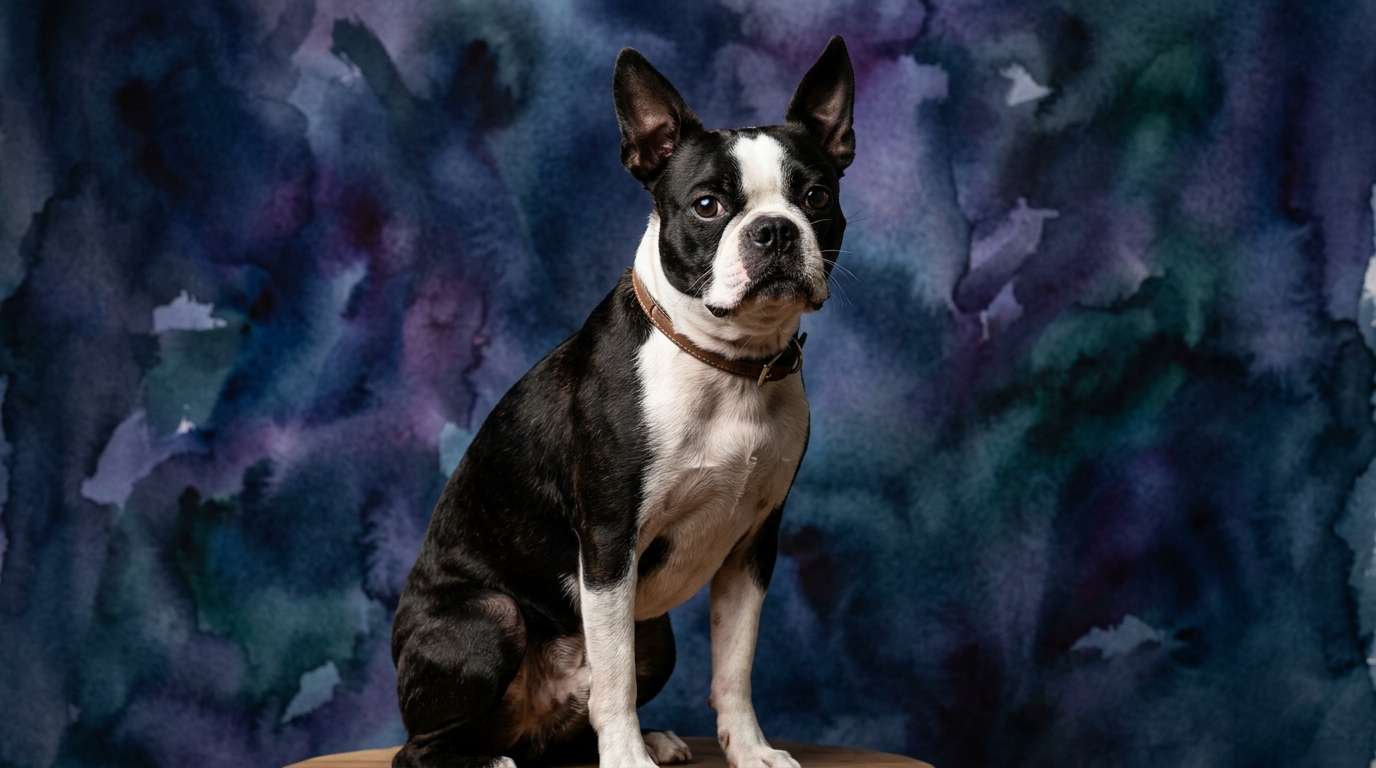

Side-by-Side Cognitive Profiles
The Cosmic Pet Pet IQ Lab's granular analysis uncovers distinct cognitive profiles for the Boston Terrier (Coren Rank #54) and the Lhasa Apso (Coren Rank #68), offering a deeper understanding than traditional obedience rankings alone. Here’s a detailed breakdown of their five key intelligence dimensions.
**Boston Terrier IQ Profile:** Problem Solving (3/5) – Exhibits a moderate capacity for navigating novel challenges, often relying on learned patterns rather than innovative solutions. Training Speed (3/5) – Possesses an average pace in acquiring new commands, generally requiring consistent, positive reinforcement to solidify learning. Social Intelligence (4/5) – Demonstrates a strong aptitude for interpreting human emotions and social cues, often forming deep, responsive bonds with their families. Instinctive Drive (2/5) – Their inherent drives, such as prey drive or guarding instincts, are relatively low, making them less prone to independent pursuit of such behaviors. Memory (3/5) – Retains learned information and routines at an average level, benefiting from regular reinforcement of commands and experiences.
**Lhasa Apso IQ Profile:** Problem Solving (3/5) – Shows a similar moderate ability to tackle new problems, often approaching them with a degree of deliberation and self-reliance. Training Speed (3/5) – Also learns at an average rate, though their independent streak can sometimes make consistent application of training principles more critical. Social Intelligence (3/5) – Understands human interactions competently, but often displays a more reserved or selective social engagement compared to the Boston Terrier. Instinctive Drive (3/5) – Possesses a moderate level of inherent drives, particularly a watchful and protective instinct stemming from their historical role as sentinels. Memory (3/5) – Exhibits an average recall for commands and past events, capable of retaining information with consistent practice.
Where the Boston Terrier Excels Cognitively
The Boston Terrier's standout cognitive advantage lies in its Social Intelligence, scoring a notable 4 out of 5. This breed demonstrates a superior capacity for reading and responding to human emotional states and social signals. They often integrate seamlessly into family dynamics, showing a nuanced understanding of household routines and individual moods. This heightened social awareness contributes to their reputation as companion animals who are deeply attuned to their owners, making them particularly responsive to human-centric interaction and communication. Their lower Instinctive Drive (2/5) also means they are less likely to be distracted by primal urges, allowing for greater focus on human interaction and social learning scenarios. This focus on their human companions is a key cognitive differentiator.
Where the Lhasa Apso Shines Cognitively
The Lhasa Apso edges out the Boston Terrier primarily in its Instinctive Drive, which, at 3 out of 5, is more pronounced than the Boston's. This manifests as a more inherent watchfulness and a self-sufficient nature, traits honed over centuries in their original role as temple guardians. This moderate instinctive drive provides them with a robust sense of their surroundings and a natural inclination to alert. While both breeds share a Problem Solving score of 3/5, the Lhasa Apso's problem-solving often comes with a distinctive independent streak, meaning they might devise solutions that suit their own agenda rather than always seeking human direction. This self-reliant cognitive approach contributes to their dignified and sometimes stubborn demeanor, allowing them to navigate their environment with a unique blend of awareness and autonomy.
Trainability: Boston Terrier vs. Lhasa Apso
Comparing their Training Speed, both breeds score 3 out of 5, indicating neither is an outlier in rapid command acquisition. However, the Boston Terrier's superior Social Intelligence (4/5) gives it a practical advantage in trainability. Boston Terriers are generally more eager to please and more attuned to their handler's cues and desires, making them more receptive to instruction. Their lower Instinctive Drive (2/5) means fewer distractions from ingrained urges, allowing them to concentrate better on the task at hand and focus on human direction.
In contrast, the Lhasa Apso, with its more moderate Social Intelligence (3/5) and slightly higher Instinctive Drive (3/5), combined with a historically independent nature, can present more challenges. While equally capable of learning, a Lhasa Apso might require more patience, creativity, and a stronger motivational strategy to overcome their inherent self-determination and ensure consistent compliance. They learn just as well, but their motivation to perform for a human might be less immediate, often preferring to act on their own terms if not properly incentivized.
Lifestyle Suitability: Active vs. Relaxed Owners
The Boston Terrier, with its moderate energy levels and strong social drive, generally suits owners who enjoy a balance of activity and companionship. They appreciate regular walks, playtime, and interactive games but are equally content to cuddle on the couch. Their higher social intelligence means they thrive on being an integral part of family activities, making them a good fit for owners who want an engaged canine companion for various daily routines, from errands to park visits. They adapt well to urban living, provided they receive sufficient mental and physical enrichment, and enjoy being the center of attention.
The Lhasa Apso, while possessing a protective instinct, is typically less demanding in terms of high-intensity physical activity. Their moderate instinctive drive and independent nature make them well-suited for more relaxed owners or those with smaller living spaces who can provide consistent, moderate exercise. They are content with daily walks and indoor play but do require mental stimulation to prevent boredom. Their self-sufficient demeanor means they can be comfortable with periods of quiet introspection, making them ideal for individuals who appreciate a dignified, less overtly needy companion, though they still bond deeply and form strong attachments with their families.
The Verdict
If you prioritize a highly socially attuned companion eager to integrate into family life and respond readily to your emotional cues and training efforts, the Boston Terrier is an excellent choice.
Opt for a Lhasa Apso if you value a more independent, watchful companion with a dignified demeanor, and are prepared to engage with a dog that learns steadily but requires consistent, patient motivation.
🧠 Find Your Pet's IQ Score
Our Pet IQ Lab assessment covers 25+ tests across 5 cognitive dimensions — personalized to your breed.
Take the Full IQ Test →Frequently Asked Questions
Are Boston Terriers good with children?
Boston Terriers, with their high social intelligence and adaptable nature, often integrate well into families with children, displaying patience and a playful demeanor, especially when properly socialized from a young age. Supervision is always recommended to ensure respectful interactions from both dog and child.
Do Lhasa Apsos bark a lot?
Lhasa Apsos, due to their historical role as watchdogs and their moderate instinctive drive, can be prone to barking to alert their owners to new sounds or visitors. Consistent training and early socialization can help manage this natural tendency, directing their protective instincts appropriately.
What is the primary difference in cognitive approach between the two breeds?
The Boston Terrier typically approaches cognitive tasks with a greater emphasis on social interaction and pleasing its human, while the Lhasa Apso often exhibits a more independent and self-reliant problem-solving style, sometimes prioritizing its own agenda and requiring more convincing.