
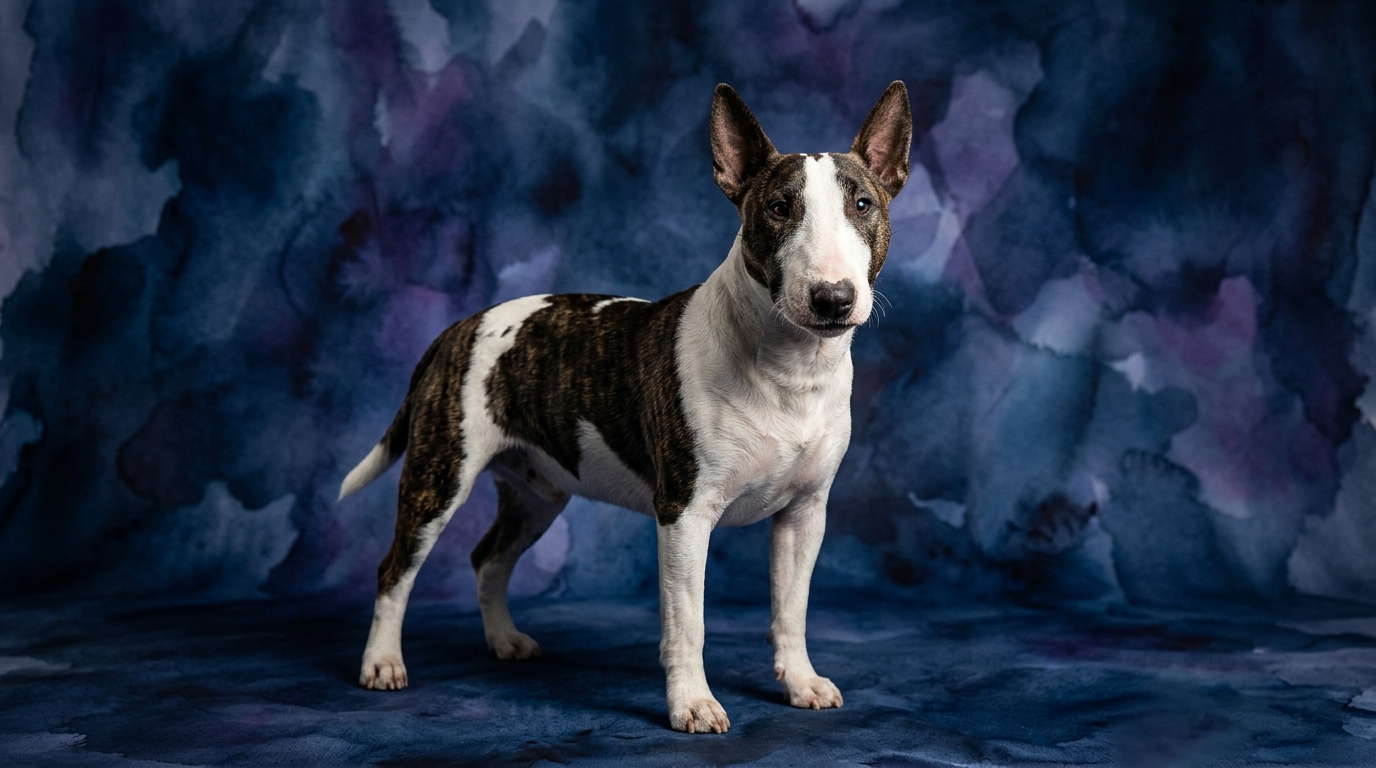
Side-by-Side IQ Profile: Boston Terrier vs. Miniature Bull Terrier
**Boston Terrier (Coren Rank #54)**: This charming companion presents a specific cognitive blueprint. Their **Problem Solving (3/5)** shows a moderate capacity for navigating challenges, often applying learned behaviors to simple puzzles or desired objects, though complex, multi-step tasks might require more guidance. **Training Speed (3/5)** is also moderate; while generally eager to please, varying attention spans necessitate consistent, positive reinforcement and repetition to embed new skills effectively. The Boston Terrier truly shines in **Social Intelligence (4/5)**, excelling in understanding human cues, body language, and emotional tones, forming strong, reciprocal bonds with their families. Their **Instinctive Drive (2/5)** is notably low, meaning subdued natural urges make them less prone to chasing small animals or exhibiting strong guarding tendencies. Finally, their **Memory (3/5)** functions moderately, allowing them to retain learned commands, routines, and experiences, influencing future behavior.
**Miniature Bull Terrier (Not Coren-Ranked)**: This tenacious terrier offers a distinct cognitive makeup. Their **Problem Solving (3/5)** demonstrates a moderate aptitude for tackling mental obstacles, resolving straightforward problems like opening a gate with tenacity, though more abstract challenges might require guidance. **Training Speed (3/5)** is similar to the Boston Terrier; effective learning requires patient, consistent methods, but their independent streak means lessons must be engaging and rewarding to maintain focus. **Social Intelligence (3/5)** is moderate; they bond closely with family but may be more reserved or take longer to warm up to strangers, with connections being deep but often more selective. Their **Instinctive Drive (3/5)** is moderate, including a noticeable prey drive and confident territorial awareness, implying a potential inclination to chase or assert dominance, requiring socialization. Like the Boston Terrier, their **Memory (3/5)** capacity is moderate, enabling recall of commands, routines, and significant past events, shaping their responses in various environments.
Where the Boston Terrier Wins Cognitively
The Boston Terrier truly distinguishes itself through its elevated social intelligence, scoring 4 out of 5 compared to the Miniature Bull Terrier's 3. This indicates a more refined ability to interpret human emotions, body language, and vocal inflections. This manifests as a profound capacity for empathy and connection, making them exceptionally attuned companions who often seem to anticipate their owner's moods. They excel where nuanced communication and reciprocal emotional understanding are valued, forming deep, intuitive bonds. Furthermore, their lower instinctive drive (2/5) sets them apart. This reduced inclination for behaviors like intense prey chase or territorial guarding means Boston Terriers are generally less distracted by environmental triggers, possessing a calmer internal landscape that translates to greater social focus and a relaxed demeanor.
Where the Miniature Bull Terrier Wins Cognitively
While the Boston Terrier excels in social attunement, the Miniature Bull Terrier's cognitive strengths lie in its balanced, yet pronounced, instinctive drive. Scoring 3 out of 5, this breed possesses a robust internal motivation that, when channeled appropriately, makes them incredibly resilient and determined. This moderate drive is an asset in activities requiring persistence, such as structured play or dog sports where a natural inclination to pursue and engage is beneficial. Unlike the Boston Terrier's lower drive, the Miniature Bull Terrier's inherent tenacity means they approach tasks with a confident, sometimes unyielding, spirit. This drive, combined with their problem-solving ability, enables them to navigate situations with self-assured independence, pushing through challenges that might deter a less driven breed. Their focused determination provides a distinct cognitive advantage in scenarios demanding grit.
Which is Easier to Train, and Why
When considering ease of training, the Boston Terrier generally presents a slightly smoother path, primarily due to its higher social intelligence and lower instinctive drive. Both breeds share an identical training speed score of 3/5. However, the Boston Terrier's superior social intelligence (4/5) means it is often more motivated by human approval and connection, making them highly responsive to positive reinforcement and less prone to stubbornness. They are deeply attuned to their owner's desires and emotional responses. In contrast, the Miniature Bull Terrier, with its social intelligence of 3/5 and a higher instinctive drive of 3/5, can exhibit a more independent streak. While capable learners, their training requires a more engaging, consistent, and creative approach to maintain their focus against internal drives. Their tenacity can manifest as stubbornness if commands aren't immediately rewarding or if instincts pull them elsewhere. Managing a Miniature Bull Terrier's moderate prey drive, for example, often requires more dedicated training for reliable recall around distractions than with a Boston Terrier.
Which Suits Active Owners vs. Relaxed Owners
The Boston Terrier, with its lower instinctive drive (2/5) and high social intelligence (4/5), tends to be an excellent match for more relaxed owners or those seeking a companion primarily for indoor living and moderate outdoor excursions. Their subdued chasing instincts mean they are often content with gentle walks, secure yard play, and extensive cuddle sessions. They thrive on close human interaction and are less prone to restlessness if exercise needs are met consistently. Conversely, the Miniature Bull Terrier, possessing a moderate instinctive drive (3/5), aligns better with active owners who enjoy structured activities and can provide consistent mental and physical engagement. Their inherent drive and tenacity mean they benefit from regular, vigorous exercise. Owners who enjoy hiking or certain dog sports will find the Miniature Bull Terrier a willing and robust participant, as their cognitive makeup suggests a need for purposeful activity to channel their natural terrier energy.
The Verdict
Choose the Boston Terrier if you prioritize a deeply empathetic, highly social companion who is less driven by instinctual urges and thrives on close emotional connection within a more relaxed home environment.
Opt for the Miniature Bull Terrier if you are an active owner seeking a tenacious, confident partner for structured activities, willing to engage with their moderate instinctive drives through consistent training and purposeful exercise.
🧠 Find Your Pet's IQ Score
Our Pet IQ Lab assessment covers 25+ tests across 5 cognitive dimensions — personalized to your breed.
Take the Full IQ Test →Frequently Asked Questions
Do Boston Terriers and Miniature Bull Terriers handle new environments differently?
Yes, due to their differing social intelligence and instinctive drives. Boston Terriers, with their higher social intelligence, might adapt more readily to new social situations, seeking reassurance from their owners. Miniature Bull Terriers, with their moderate social intelligence and higher drive, might approach new environments with more curiosity and independence, potentially needing more structured introductions to unfamiliar people or dogs.
Is one breed more prone to destructive behaviors if not mentally stimulated?
While both breeds require mental engagement, the Miniature Bull Terrier's moderate instinctive drive means they might be slightly more prone to channeling boredom into undesirable behaviors if not adequately stimulated. Their tenacity can lead to persistent digging or chewing if their energy isn't directed constructively. Boston Terriers, with their lower drive, might become restless or vocal but are generally less inclined towards destructive outlets.
How does their memory impact training long-term?
Both breeds have a moderate memory score (3/5), meaning they retain commands and experiences well over time. This indicates that once a behavior is thoroughly learned, it tends to stick. However, consistency remains crucial for both; sporadic training could lead to a deterioration of recall, as with any breed, but their foundational memory capacity supports long-term learning.