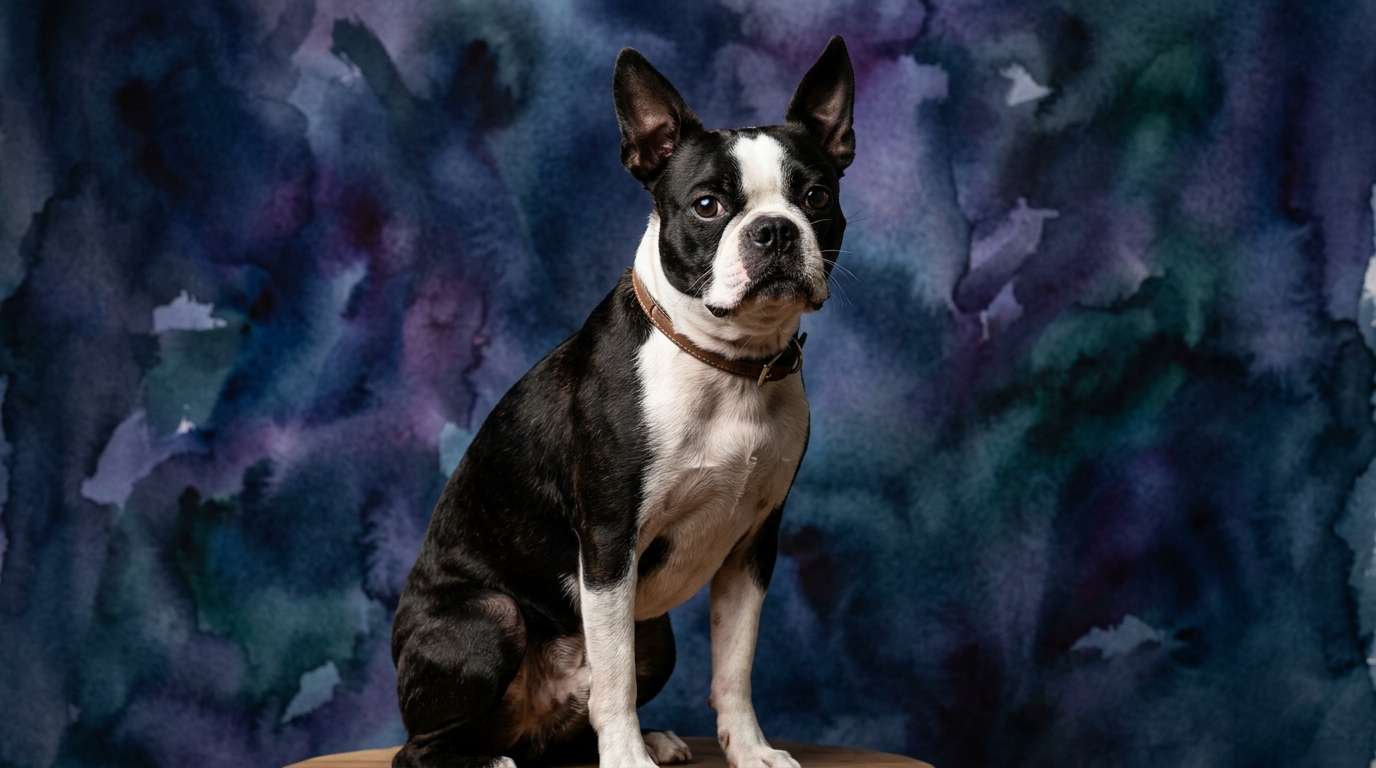

Unpacking Their Cognitive Profiles: Boston Terrier vs. Parson Russell Terrier
At The Cosmic Pet Pet IQ Lab, we dissect the unique mental architectures of various breeds, moving beyond general perceptions to specific cognitive dimensions. Our comparison of the Boston Terrier and the Parson Russell Terrier reveals nuances rooted in their historical roles and selective breeding. The Boston Terrier, a member of the Non-Sporting Group, holds a respectable Coren rank of #54, indicating a solid capacity for obedience and working intelligence. In contrast, the Parson Russell Terrier, a true Terrier Group member, is not Coren-ranked, which often implies a different kind of working intelligence—one less focused on human-directed obedience and more on independent problem-solving.
For the Boston Terrier, our IQ assessment shows a Problem Solving score of 3/5, suggesting they are capable of navigating routine challenges and understanding cause-and-effect within their environment, but are not typically inclined towards complex innovation. Their Training Speed is also 3/5; they respond well to consistent, positive reinforcement methods and are generally eager to learn, though they may have moments of charming stubbornness. Where they truly shine is Social Intelligence, scoring 4/5, indicating an exceptional ability to read human emotions, understand social cues, and adapt their behavior to maintain harmony. Their Instinctive Drive is a modest 2/5, reflecting their primary role as companions rather than working dogs with strong prey or herding instincts. Finally, their Memory is rated 3/5, allowing them to retain learned commands and routines effectively over time.
The Parson Russell Terrier presents a slightly different cognitive blueprint. Their Problem Solving also scores 3/5, but this is often fueled by a tenacious spirit and a desire to overcome obstacles, especially when a perceived 'prey' or task is involved. Training Speed matches the Boston at 3/5; they are quick to grasp new concepts, but their independent nature and high energy mean training must be engaging and consistent to hold their attention. Their Social Intelligence is 3/5, meaning they are capable of forming strong bonds but might be less attuned to subtle human emotional shifts compared to the Boston and often prefer to engage on their own terms. A key differentiator is their Instinctive Drive, rated 3/5, a clear nod to their heritage as hunting dogs, which manifests as a strong prey drive, a love for digging, and an innate curiosity to explore. Their Memory is 3/5, similar to the Boston, allowing them to remember commands and experiences, particularly those that are stimulating and reinforced regularly.
Where the Boston Terrier Excels Cognitively
The Boston Terrier’s primary cognitive advantage lies in its superior Social Intelligence, scoring a notable 4/5 compared to the Parson Russell Terrier's 3/5. This higher score signifies a profound ability to interpret human cues, including body language, tone of voice, and even subtle emotional states. They possess an innate desire for companionship and harmony, making them incredibly intuitive pets who often adjust their behavior to match the mood of their household. This makes them exceptional emotional support animals or family companions, thriving on close human interaction and often anticipating their owner's needs.
Another cognitive 'win' for the Boston Terrier is its lower Instinctive Drive, rated at 2/5. While this might seem like a deficit to some, it translates into a dog less inclined towards independent, self-assigned 'tasks' like chasing small animals or digging up the garden. Their focus is predominantly on their human companions, leading to fewer distractions during training and a general preference for shared activities over solitary pursuits. This characteristic makes them more predictable in urban environments and less prone to bolting after a squirrel, offering a calmer, more human-centric cognitive approach.
Where the Parson Russell Terrier Shows Its Cognitive Strengths
The Parson Russell Terrier's cognitive strengths are deeply intertwined with its working heritage. Its higher Instinctive Drive, rated 3/5, while sometimes challenging, is a significant asset in specific contexts. This drive fuels a tenacious persistence and an unwavering focus when pursuing a goal, whether it's a hidden toy, a scent trail, or a perceived 'critter.' This tenacity translates into a dog that is less likely to give up on a task, demonstrating impressive endurance and determination in activities like agility, earthdog trials, or even complex scent work.
While both breeds share a 3/5 in Problem Solving, the Parson Russell Terrier's approach is often distinguished by its resourcefulness and drive. Their problem-solving is frequently motivated by their independent spirit and innate desire to explore or 'hunt.' This might manifest as creatively figuring out how to open a gate, scale a low fence, or uncover a buried treasure in the yard. Their cognitive efforts are often directed towards achieving a self-determined objective, showcasing a blend of cunning and determination that makes them exceptionally adept at navigating complex physical environments when motivated.
Ease of Training: Understanding Behavioral Differences
When considering ease of training, both breeds score 3/5 for Training Speed, indicating a general capacity to learn. However, their behavioral differences significantly influence the training experience. The Boston Terrier, with its higher Social Intelligence and lower Instinctive Drive, tends to be more straightforward to train. They possess a strong desire to please their human companions, making them highly responsive to positive reinforcement and praise. Their focus is often fixed on their owner, leading to fewer distractions in a training setting. They are less likely to be sidetracked by environmental stimuli like passing squirrels or interesting smells, allowing for more consistent and effective learning sessions. Training a Boston often feels like a cooperative effort, where their eagerness to connect with their person drives their learning.
The Parson Russell Terrier, while equally capable of learning quickly, presents a different kind of training challenge due to its independent nature and higher Instinctive Drive. Their keen senses and natural curiosity mean they are more easily distracted by the world around them. A rustling leaf, a distant scent, or an unknown sound can quickly divert their attention from a training command. To succeed with a Parson, training must be engaging, varied, and leverage their natural drives, perhaps incorporating toys, scent games, or agility exercises to keep them mentally stimulated. Repetitive drills can lead to boredom and a lack of cooperation. Trainers must be creative, firm, and consistent, understanding that a Parson Russell Terrier will often weigh the perceived value of obeying against the thrill of pursuing their own agenda. Their intelligence is there, but so is their strong will and independent streak.
Lifestyle Match: Active vs. Relaxed Owners
The cognitive and behavioral profiles of these two breeds naturally align with different owner lifestyles. For individuals or families seeking a more relaxed, companion-focused pet, the Boston Terrier is often the ideal choice. Their lower Instinctive Drive means they are generally content with moderate daily exercise, such as a couple of brisk walks, and thrive on indoor companionship. Their high Social Intelligence makes them excellent 'velcro dogs' who prefer to be involved in family activities, even if those activities involve nothing more strenuous than cuddling on the couch. They adapt well to apartment living and urban environments, provided they receive sufficient social interaction and mental enrichment through playtime and gentle training.
Conversely, the Parson Russell Terrier is a perfect match for active owners who enjoy an adventurous lifestyle and are prepared to provide significant physical and mental stimulation. Their higher Instinctive Drive and boundless energy demand consistent outlets, whether through dog sports like agility, flyball, or earthdog trials, long hikes, or vigorous daily playtime. These dogs need a 'job' to do, and without sufficient engagement, their intelligence and drive can manifest as boredom-driven behaviors like excessive digging, barking, or destructive chewing. Owners of Parson Russell Terriers should be committed to channeling their dog's tenacious spirit into productive activities, ensuring their cognitive and physical needs are met to foster a well-adjusted companion.
The Verdict
Choose the Boston Terrier if you desire a highly socially attuned companion who thrives on human interaction and is content with a more relaxed pace of life, offering a relatively straightforward training experience.
Opt for the Parson Russell Terrier if you're an active individual or family seeking a tenacious, driven partner for adventures and dog sports, prepared to channel their independent spirit and inherent working instincts.
🧠 Find Your Pet's IQ Score
Our Pet IQ Lab assessment covers 25+ tests across 5 cognitive dimensions — personalized to your breed.
Take the Full IQ Test →Frequently Asked Questions
Are Boston Terriers good with children?
Yes, their high social intelligence and gentle nature often make them excellent family pets, provided children are taught to interact respectfully. They enjoy being part of the family unit and are typically patient companions.
Do Parson Russell Terriers require a lot of exercise?
Absolutely. Their significant instinctive drive and energy levels demand substantial daily exercise and mental stimulation to prevent boredom and destructive behaviors. They thrive on activity and benefit from consistent engagement.
How do their problem-solving abilities differ in everyday life?
While both score 3/5, a Boston Terrier might problem-solve to get closer to you (e.g., nudging a door open), whereas a Parson Russell Terrier might problem-solve to pursue a perceived 'prey' (e.g., digging under a fence to chase a squirrel), driven by different motivations and instincts.