
Side-by-Side IQ Profile: Boston Terrier vs. Pekingese
At The Cosmic Pet Pet IQ Lab, we analyze canine intelligence across five key dimensions. This detailed breakdown provides a nuanced understanding of each breed's cognitive strengths and inclinations, moving beyond superficial observations.
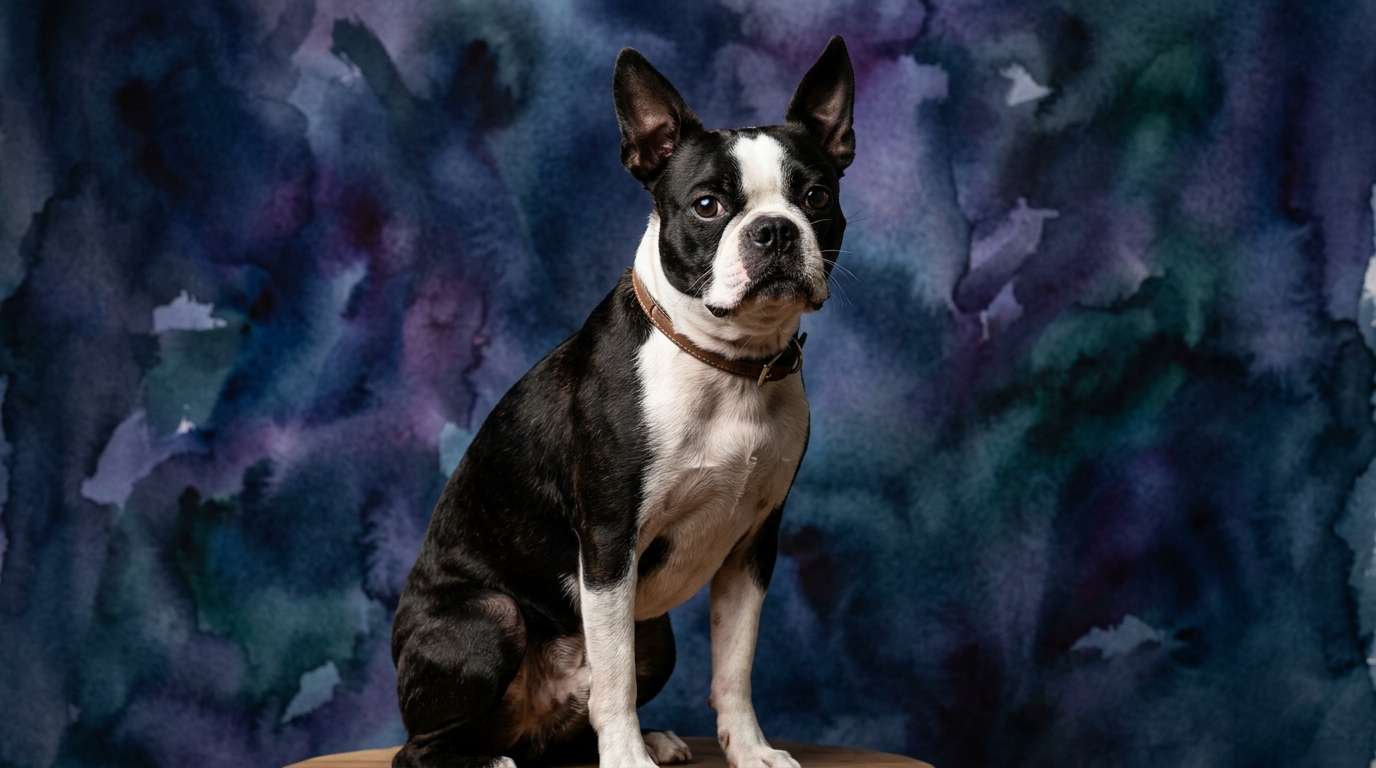
The Boston Terrier, ranking #54 on the Coren scale and a member of the Non-Sporting Group, presents a cognitive profile geared towards engaging companionship. Boston Terriers exhibit a moderate capacity for navigating novel challenges, solving simple puzzles or accessing desired toys. Complex, multi-step problems might require more guidance, as their solutions often stem from observation and a desire to please. Boston Terriers absorb new commands at a moderate pace, generally eager to learn. Consistent, positive reinforcement is crucial, as their enthusiasm can sometimes translate into playful stubbornness, requiring patient and engaging sessions. A standout trait, Boston Terriers excel in understanding human cues and intentions, highly attuned to family moods and social dynamics. This makes them exceptionally responsive, interactive companions who thrive on engagement. Boston Terriers possess relatively low inherent drives for hunting, herding, or guarding. While they might chase a squirrel playfully, it's not a deep compulsion, making them less prone to strong instinct-driven behaviors. Boston Terriers have a moderate memory, retaining learned commands, routines, and experiences. They remember past interactions, aiding in building upon lessons, though occasional refreshers help for less frequent cues.
The Pekingese, ranking #77 on the Coren scale and belonging to the Toy Group, offers a different, yet equally compelling, cognitive blueprint rooted in its regal history. Pekingese exhibit a moderate ability to solve problems, often figuring out ways to achieve personal comfort or access preferred spots with cleverness. Their problem-solving is frequently geared towards outcomes that directly benefit them. Pekingese learn commands at a moderate speed, but their independent nature means they are often motivated by self-interest. Training requires patience, consistency, and high-value rewards to capture their attention and cooperation. Pekingese possess moderate social intelligence, connecting deeply with chosen family. While understanding basic human cues, they might not be overtly eager to please or attuned to subtle emotional shifts, preferring dignified interactions. Pekingese have moderate instinctive drives, retaining a self-preservation instinct and discerning nature. This can manifest as territoriality or caution with strangers, focusing on self-importance and guarding personal space rather than strong prey drives. Pekingese possess a moderate memory, recalling routines, people, and past experiences. They remember favorite spots and preferred humans, making them creatures of habit who appreciate predictability.
Where the Boston Terrier Wins Cognitively
The Boston Terrier's most distinct cognitive strength lies in its superior Social Intelligence, scoring a 4 out of 5 compared to the Pekingese's 3. This elevated social acuity allows Boston Terriers to excel at interpreting the nuances of human communication, including subtle shifts in tone, facial expressions, and body language. They possess an almost uncanny ability to gauge their owner's emotional state, often responding with comforting gestures or initiating play at opportune moments. For instance, a Boston Terrier might observe their owner looking stressed and instinctively offer a gentle nuzzle or bring a favorite toy, demonstrating a profound understanding of social cues and a genuine desire to connect. This deep attunement means they often anticipate needs, making them exceptionally responsive and intuitive companions. Their cognitive framework supports a highly communicative partnership, where mutual understanding extends beyond learned commands into a shared emotional space. This inherent drive to engage and understand fosters a dynamic bond, positioning them as perceptive participants in family dynamics, constantly seeking to align with their human counterparts.
Where the Pekingese Wins Cognitively
The Pekingese exhibits a notable cognitive advantage in its Instinctive Drive, registering a 3 out of 5 against the Boston Terrier’s 2. While not manifesting as strong prey or working instincts, this drive in the Pekingese translates into a pronounced sense of self-possession and a discerning independence. Their historical role as cherished companions for Chinese royalty instilled a certain regal confidence and a keen awareness of their personal space and comfort. This manifests cognitively as a strong internal compass, guiding their choices towards what benefits their well-being or preference. For example, a Pekingese might instinctively seek out the warmest sunbeam or the softest cushion, demonstrating a clear, self-directed preference without needing human prompting. They approach new situations with a cautious, evaluative stance, relying on their innate judgment rather than immediate social approval. This moderate instinctive drive underpins their self-reliant nature, allowing them to be content in their own company and possess a dignified assertiveness. It makes them masters of their own domain, capable of making independent decisions about their comfort and interactions.
Which is Easier to Train and Why
When assessing ease of training, the Boston Terrier typically presents a more straightforward experience, largely owing to its superior Social Intelligence. Both breeds share a moderate Training Speed score of 3/5, indicating similar capacities for learning commands. However, the Boston Terrier's 4/5 Social Intelligence means they are inherently more motivated by human interaction and the desire to please. They readily interpret positive reinforcement, such as praise and enthusiastic encouragement, as significant social rewards, which fuels their willingness to engage and repeat desired behaviors. A Boston Terrier often approaches training as a collaborative activity, eager to understand and comply with their owner’s expectations. In contrast, the Pekingese, with its 3/5 Social Intelligence and a stronger, self-directed Instinctive Drive, tends to be more selective in its cooperation. While equally capable of learning, a Pekingese will often require more compelling, high-value incentives to maintain focus and enthusiasm, as their motivation is more internally driven rather than centered on social approval. This difference in cognitive drivers means that while both are trainable, the Boston Terrier's innate social responsiveness often leads to a more cooperative, less challenging, and ultimately more rewarding training journey for the average owner.
Which Suits Active Owners vs. Relaxed Owners
Considering their distinct cognitive profiles, the Boston Terrier is generally a better match for active owners, while the Pekingese aligns perfectly with a more relaxed lifestyle. The Boston Terrier’s high Social Intelligence, coupled with its moderate energy levels, makes it an enthusiastic participant in family activities. They thrive on shared experiences, whether it's brisk walks, playful games, or accompanying their owners on errands, driven by their cognitive inclination to connect and engage. Their lower Instinctive Drive means they are less prone to independent pursuits, preferring to be involved with their human companions. This makes them ideal partners for owners who enjoy an interactive pet that integrates seamlessly into an active, social routine. Conversely, the Pekingese, with its moderate Social Intelligence and a more pronounced Instinctive Drive towards personal comfort and self-preservation, is wonderfully suited for relaxed owners. They appreciate short, leisurely strolls but are generally content with periods of quiet companionship, often choosing a comfortable spot to observe their surroundings. Their independent streak means they do not demand constant engagement, making them excellent companions for individuals or families who prefer a calm, dignified presence and less demand for vigorous physical or mental activity.
The Verdict
Choose the Boston Terrier if you seek a highly interactive, socially intuitive companion eager to participate in family life and respond readily to your cues and emotional states.
Opt for the Pekingese if you prefer a dignified, self-possessed companion who thrives on comfortable routines and offers quiet loyalty, valuing their independence within a relaxed home environment.
🧠 Find Your Pet's IQ Score
Our Pet IQ Lab assessment covers 25+ tests across 5 cognitive dimensions — personalized to your breed.
Take the Full IQ Test →Frequently Asked Questions
Are Boston Terriers good at understanding human emotions?
Yes, Boston Terriers score 4/5 in Social Intelligence, meaning they are notably adept at picking up on human emotional cues and body language, making them very empathetic companions. They often respond intuitively to their owner's moods.
Do Pekingese enjoy learning new tricks?
Pekingese have a Training Speed of 3/5, so they are capable of learning new tricks. However, their independent nature means training must be highly engaging and rewarding to capture their interest and encourage consistent participation.
Which breed is more independent, the Boston Terrier or the Pekingese?
The Pekingese generally exhibits more independence due to its moderate Instinctive Drive and focus on self-interest, compared to the Boston Terrier's higher social intelligence and eagerness to please. Pekingese are often content with quiet companionship rather than constant interaction.